
On open-source mythology, immortal characters, and why this might be the best time in history to build worlds from India
In August 2024, a Chinese game studio called Game Science did something that nobody, not even the most optimistic gaming analysts, expected. Their debut title, Black Myth: Wukong, sold 10 million copies in three days.
Not a sequel. Not a franchise extension. A brand new IP, built by a relatively unknown team, rooted entirely in the 16th-century Chinese novel Journey to the West. By the end of its first month, it had moved over 20 million units, making it one of the fastest-selling games in history.
Because what Wukong really proved wasn’t that a Chinese studio could hang with the best in the world. It proved that a story rooted deeply in one culture’s mythology could travel globally without diluting itself. The Monkey King didn’t need to be Westernised to sell in America. He just needed to be brilliantly rendered.
I’ve been thinking about that a lot lately. Because the question it raises for India is obvious and uncomfortable: we have, conservatively, the richest mythology on the planet. We have one of the world’s largest gaming audiences. We have a film industry that moves hundreds of millions of people every year. And yet, where is our Wukong?
This piece is my attempt at an answer. Or at least, a map of where the answer might be hiding.
The unfair advantage nobody talks about
Here’s a thought experiment. Imagine you’ve built a character that people love. Not a product, not a service, a character. A person (or god, or demon, or talking mongoose) that lives in people’s heads.
Now imagine you own the rights to that character.
You can put them in a film. A game. A TV show. A theme park ride. A clothing line. A Seiko watch (more on that in a minute). You can license that character to anyone who wants to borrow the emotional connection your audience has already built with them, and charge for the privilege. This can go on for decades. Centuries, even.
That is what IP, intellectual property, does. It creates a legal monopoly over a story. And when the story is good enough, that monopoly compounds in ways that almost nothing else in business can match.
The Harry Potter universe was valued at $25 billion in 2023. But here’s the thing. J.K. Rowling finished writing the books in 2007. The films wrapped in 2011. And yet the universe keeps generating value: Hogwarts Legacy sold 24 million copies in its first year. The Cursed Child has sold over fourteen million theatre tickets across nine years. A new HBO series is in production. The flywheel doesn’t stop because the story doesn’t die. It just finds new hosts.
Pokemon is three decades old. Mario is pushing 45. The fact that Pokemon Legends: Z-A sold 5.8 million copies in its first week, for what is roughly the 25th core game in the series, tells you everything about what happens when a character achieves immortality.
This is the business case for narrative IP. Not content. Not “entertainment.” Worlds. Worlds that can live across media, across decades, across borders. And the most interesting thing about this moment in India is that we’re finally starting to build them.
A quick detour through Seoul, Tokyo, and Shanghai
Before we get to India, it’s worth understanding how other countries pulled this off. Not because they hand us a playbook, every country’s path is different, but because the pattern is instructive.
Start with South Korea. In 1997, the Asian financial crisis gutted the Korean economy. The won collapsed. The IMF stepped in with a $57 billion bailout. It was, by every measure, a national humiliation.
What happened next was counterintuitive. As part of its recovery, Korea bet heavily on cultural exports. The government lifted long-standing censorship over the entertainment industry, and the Ministry of Culture began coordinating with broadcasters, music labels, and film studios to push Korean content overseas. Satellite television was expanding across East and Southeast Asia at the same time, and K-dramas flooded into that vacuum.
The rest is history. K-pop, K-dramas, Korean cinema, Korean beauty, Korean food, the entire Hallyu (Korean Wave) can be traced, in part, to a financial crisis that forced the government to think about culture as an export engine rather than a domestic luxury.
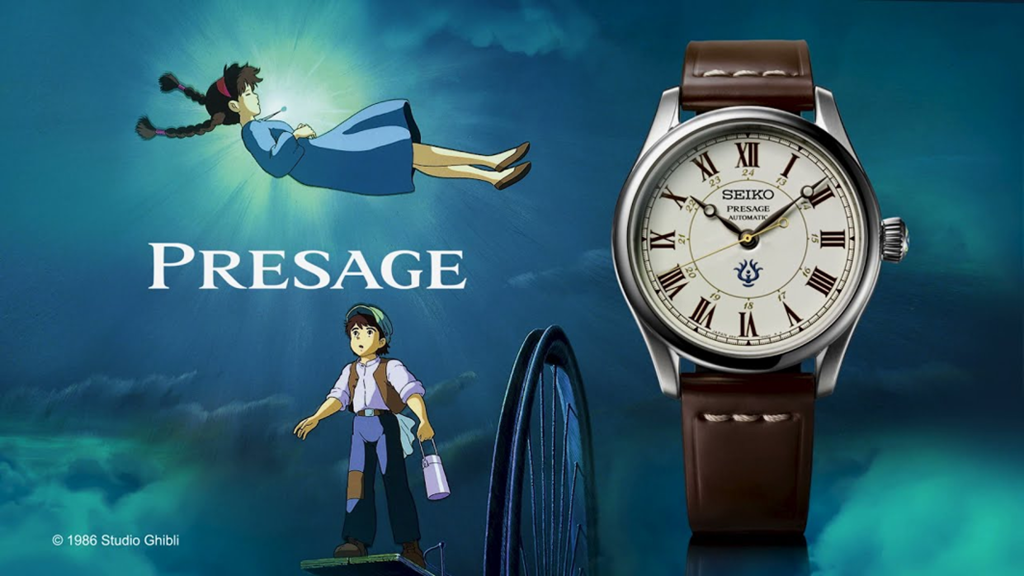
Japan followed a different but parallel track. METI (the Ministry of Economy, Trade and Industry) led the “Cool Japan” initiative, supporting the overseas distribution of anime, manga, games, and film. Japan’s content exports hit ¥4.7 trillion by 2023. That figure includes everything from One Piece to Final Fantasy to Studio Ghibli. Speaking of Ghibli, they collaborate with Seiko almost every two years to release limited-edition watches under the Presage collection. Those watches are impossibly hard to get. I know because they’re a dream of mine. But what they really represent is two beloved, proudly Japanese institutions finding each other, and the world lining up to buy the result.
And then there’s China. Both Ne Zha (2019) and Ne Zha 2 (2025) broke records. Ne Zha 2 became the highest-grossing animated film of all time, the first to cross $2 billion at the global box office. Wukong did the same for gaming.
In all three cases, the sequence was similar. The government creates the conditions. Industry builds the stories. The stories reshape how the world perceives the country. Ask the average 25-year-old in Berlin or São Paulo what they know about South Korea and you won’t hear about the IMF bailout. You’ll hear about Squid Games.
Which brings us home.
India has been here before
The funny thing is, India isn’t starting from zero. We’re starting from a position most countries would envy, we just haven’t fully recognised it yet.
Go back to 1967. A man named Anant Pai is sitting in the audience of a quiz show and watches Indian children correctly answer questions about Greek mythology while fumbling on questions about the Ramayana and Mahabharata. He’s so bothered by this that he creates Amar Chitra Katha, a comic book series that would eventually span over 600 titles in 20 languages, sell over 5 million copies annually, and become the way an entire generation of Indians first encountered their own mythological heritage visually.
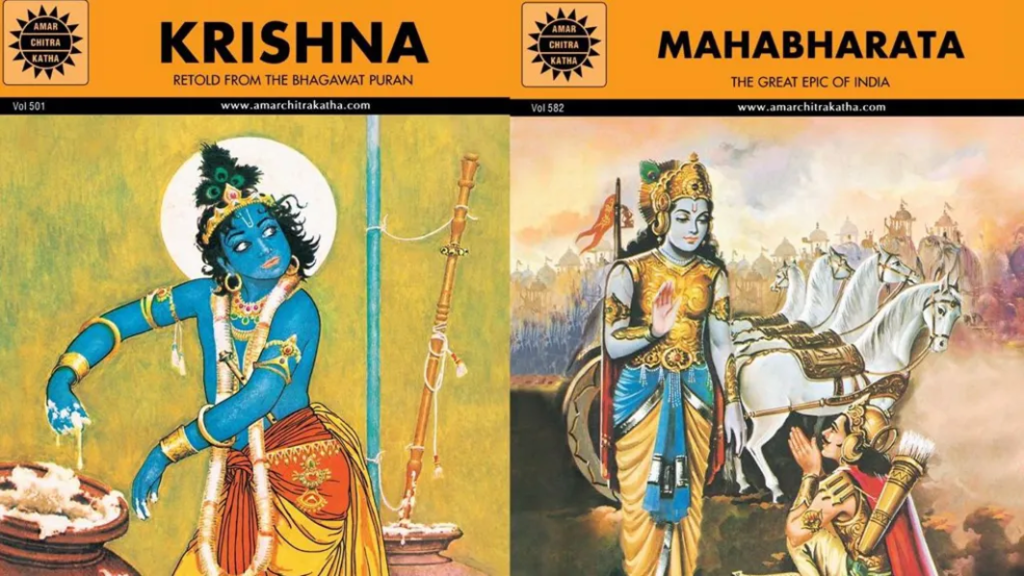
(Credits: BBC)
That was world-building. It happened in India. In 1967.
Tinkle and Suppandi built fandoms that persisted across generations. Chhota Bheem, love it or hate it, has aired for over a decade and reached audiences in nearly 190 countries. The Amul girl has been doing topical commentary since 1966, which is basically the world’s longest-running meme. These are Indian IPs with real staying power.
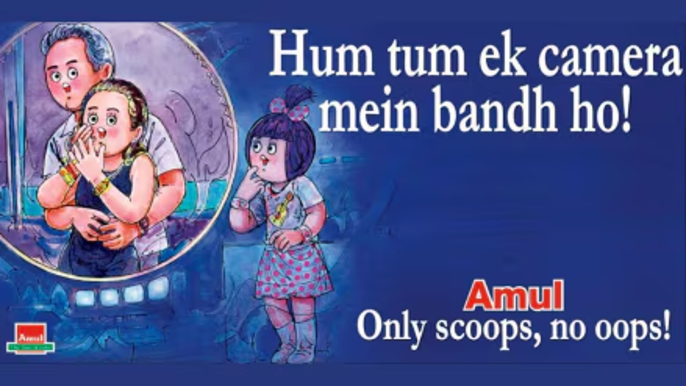
(Amul’s comic on the Coldplay concert controversy)
And yet, for decades, India’s relationship with the global narrative economy was defined by something else entirely: service work.
DNEG, formerly Double Negative, has won 8 Academy Awards for Best Visual Effects. Their work spans Inception, Interstellar, Blade Runner 2049, Tenet, Dune. After a $200 million investment from Abu Dhabi in 2024, DNEG was valued at over $2 billion. Indian talent powered some of the most iconic visual moments in cinema history.
But here’s the catch. DNEG doesn’t own the IP. Neither do the hundreds of Indian studios doing asset development, QA, and post-production for Hollywood and global gaming studios. Even today, an estimated 85-90% of India’s animation and VFX revenue comes from services, with only 10-15% tied to owned IP.
We’ve been building other people’s worlds. The shift that’s happening now, slowly, unevenly, but unmistakably, is that Indians are starting to build their own.
The open-source advantage
Here’s where things get interesting.
Indian mythology is, in effect, open-source. The Ramayana, the Mahabharata, the Puranas, the Jataka tales, no single entity owns them. Anyone can use them. Anyone can reinterpret them.
That’s not a weakness. It’s possibly our greatest asset.
Think about what Rick Riordan did with Greek mythology. Percy Jackson & the Olympians is built on stories that are thousands of years old and belong to no one. Riordan just added a layer, modern kids, a summer camp, a fresh voice, and the result was over 180 million books sold, film adaptations, and a Disney+ series that clocked over 110 million hours streamed in its first season.
He’s since expanded to Hindu mythology through Roshani Chokshi’s Aru Shah series under his imprint. Let that sink in for a moment. An American publisher is building commercially successful universes on top of Indian mythology, because the source material is that rich.
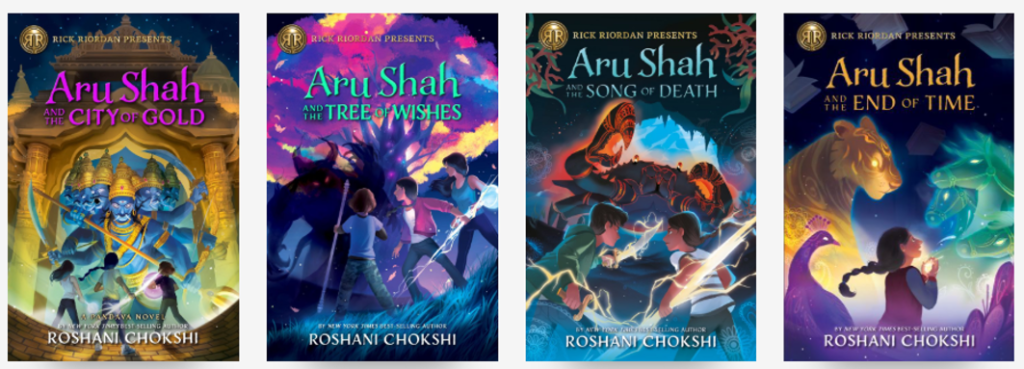
(The adventures of Aru Shah under Rick Riordan’s imprint)
Enola Holmes did something similar with Sherlock, a public domain character reimagined through a new lens. Hades, the video game, took Greek myths and reinterpreted them with contemporary sensibilities to massive critical and commercial success.
The lesson is simple: reverence doesn’t require repetition. Reinvention is not disrespect, it’s how stories stay alive.
And this is exactly what’s starting to happen in India. Chitra Banerjee Divakaruni’s The Palace of Illusions retold the Mahabharata through Draupadi’s eyes. The Forest of Enchantments reframed the Ramayana through Sita’s inner life. These weren’t gimmicks, they were perspective shifts that unlocked entirely new audiences.
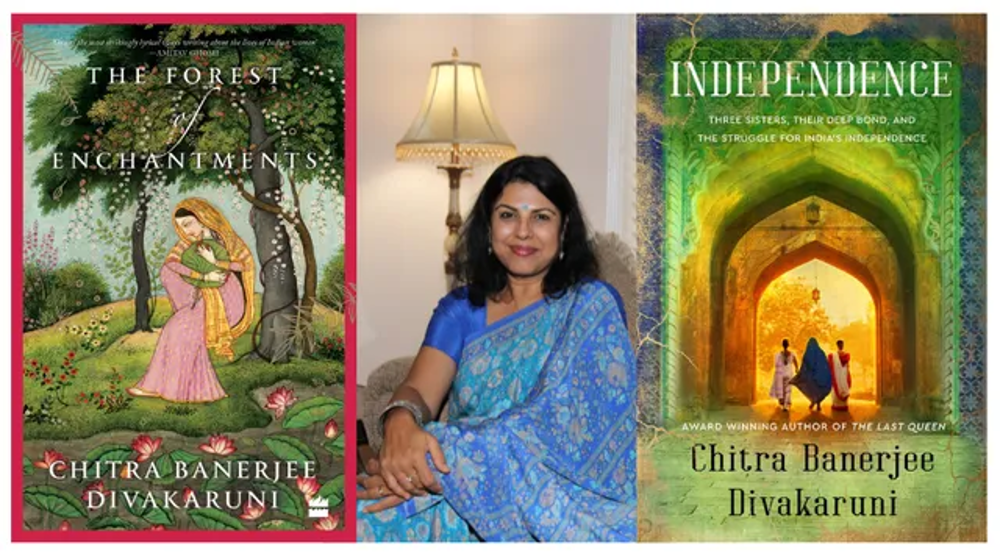
(It would be impossible to mention this point and not give a shout-out to Chitra Banerjee Divakaruni’s incredible books)
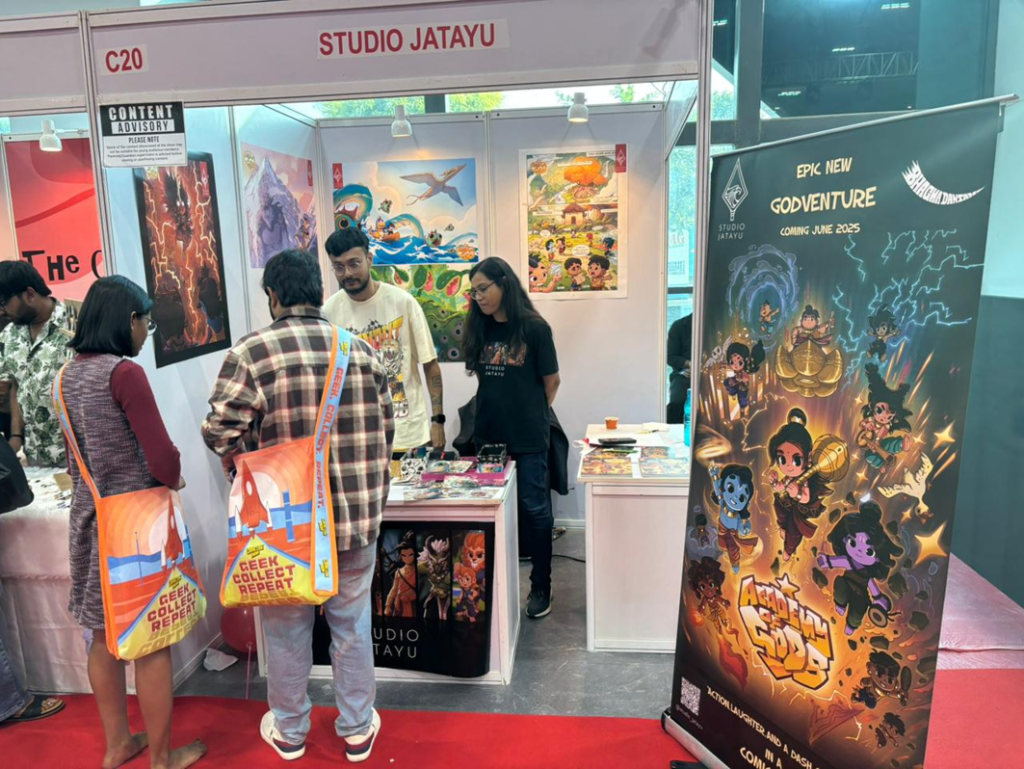
At Bengaluru Comic Con 2025, I stumbled across a booth for Studio Jatayu. Their concept? Hindu gods attending school together. It sounds absurd until you remember that Percy Jackson is literally “Greek gods, but their kids go to summer camp.” The format isn’t new. The mythology is.
The Lokah universe crossed INR 300 crore at the global box office, becoming the highest-grossing Malayalam film ever. Mahavatar Narsimha, built around one of the lesser-known avatars of Vishnu, also crossed INR 300 crore, and announced an entire cinematic universe from day one.
We’re no longer asking “can Indian mythology travel?” Kantara answered that question. A film steeped in Tulu folk traditions, Bhoota Kola rituals, and a hyper-local identity that made zero concessions to mainstream palatability, it crossed INR 400 crore globally. Not because it was “accessible.” Because it was specific. Specificity, it turns out, is what travels.
The better question now is: how far can this go, and what forms can it take? Because once an IP proves it can move audiences, it starts attracting something else entirely: brand capital. The same flywheel that turns Pokemon into a lunchbox empire or Marvel into a sneaker collaboration pipeline is available to any Indian IP that earns enough cultural gravity. We’re not there yet. But the trajectory is right.
Vibe is the moat
While working on this piece, I had a conversation with Varun Mayya, the person behind Aeos Labs, whose game Unleash the Avatar pulled something off that still blows my mind.
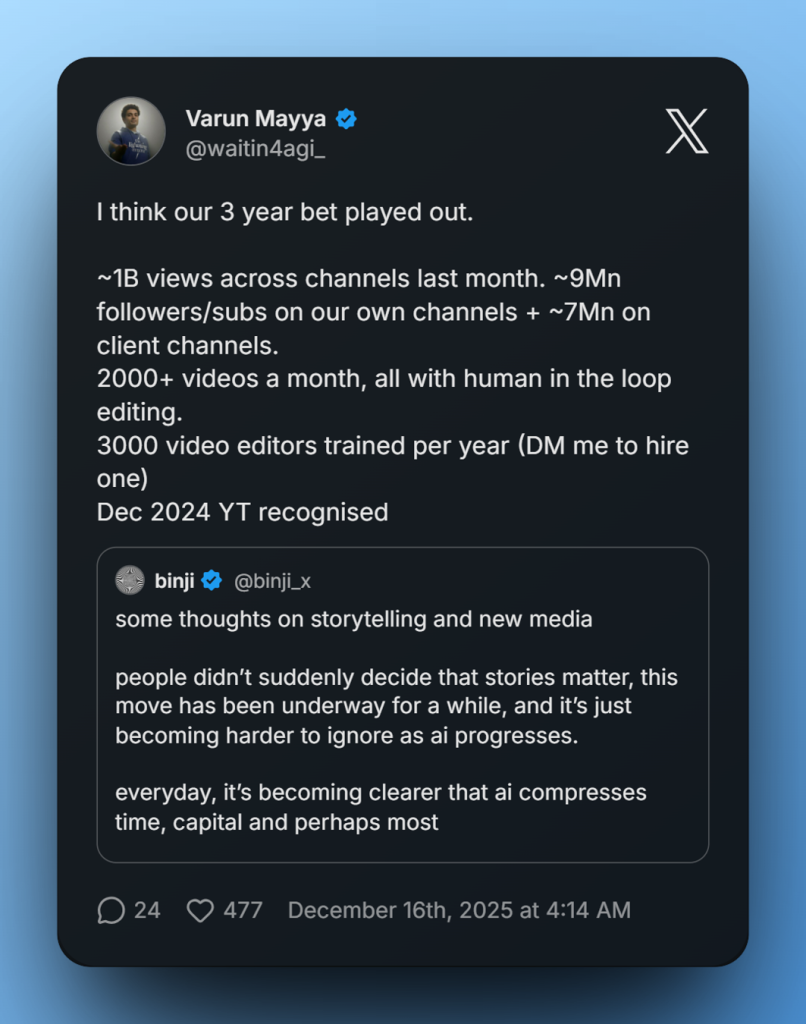
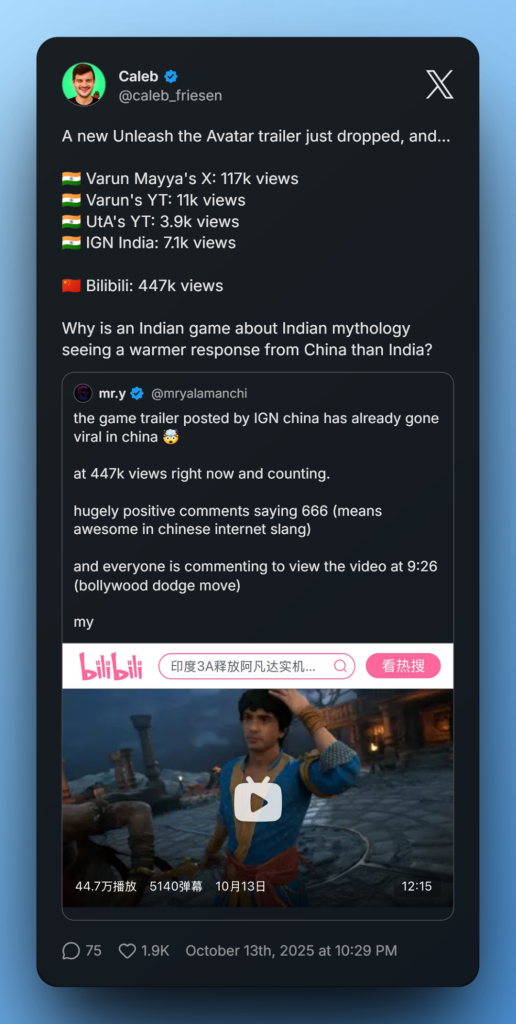
Their trailer didn’t just do well in India. It went big in China. On IGN China, it pulled tens of thousands of comments. On Bilibili, China’s answer to YouTube, and the platform where Wukong built its initial fanbase, engagement was within striking distance of GTA VI trailers. For a debut title from an Indian studio, rooted in Indian mythology, that is almost absurd.
Varun’s take on why it worked reframed how I think about this whole space. He talked about how game economics are changing: asset scanning, AI-assisted workflows, and better tools mean small teams can build large worlds at a fraction of what it cost even five years ago. Aeos Labs scanned the entire town of Chanderi to build hyper-real environments. The budget ceiling that once kept Indian studios out of AAA territory is dropping fast.
But the insight that stayed with me wasn’t about technology. It was about taste.
“Story is often the smallest risk,” Varun said. “International markets are saturated with narratives. What differentiates is vibe.”
And then he dropped a line I haven’t been able to stop thinking about:
“There are fewer than 20 people who have actually studied why Dangal worked so well in China.”
That sent me down a rabbit hole.
Dangal grossed over $200 million in China alone, more than it made in India. Aamir Khan became so beloved that Chinese fans gave him the nickname “Mi Shu” (Uncle Aamir). But the why goes deeper than star power. Khan’s films acted as a kind of mirror for a Chinese audience grappling with the pressures of the Gaokao education system, rapid modernisation, shifting gender roles, and patriarchal traditions. The emotional grammar of Bollywood, the big feelings, the dramatic stakes, the hero who fights the system, resonated on a frequency that Hollywood couldn’t reach.
Varun’s claim, and I think he’s right, is that Bollywood’s over-the-top emotional language is uniquely suited to games. It’s expressive, dramatic, stylised. The hero saves the day. In fact, Bollywood-style character mods already appear in games like Wukong and Sekiro: Shadows Die Twice. India doesn’t have an equivalent of Chinese wuxia, but Bollywood itself fills that gap.
There’s a larger point here. India’s competitive advantage in the global IP race won’t be technical sophistication (we’ll get there, but we’re not there yet). It’ll be emotional sophistication. We’re a country that produces stories drenched in feeling, melodrama, sacrifice, duty, love, betrayal, and it turns out the world has an appetite for exactly that, if the execution is right.
The cringe tax (and how to avoid paying it)
That last bit, “if the execution is right”, is the whole ballgame.
Because here’s the uncomfortable truth: Indian IP has a credibility problem. Not because the stories are bad. Because too many attempts at bringing them to screen have been.
The contrast between Baahubali and Brahmastra makes this painfully clear. Baahubali worked because its world, tone, and writing were internally consistent and confident. It didn’t apologise for being Indian. It didn’t try to be a Marvel film. It was its own thing, done with conviction.
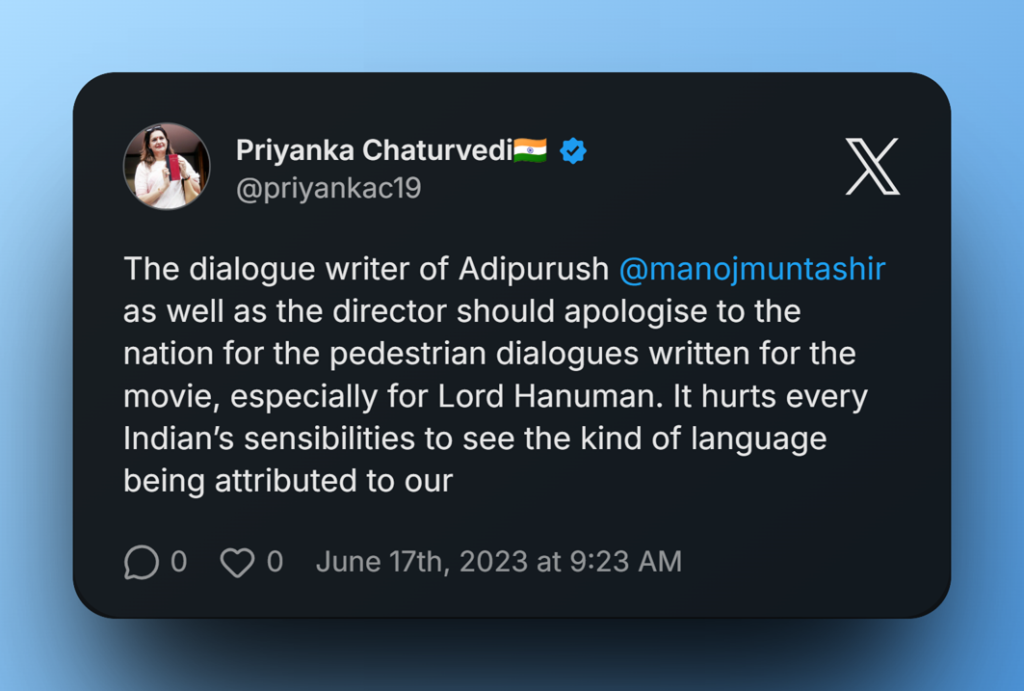
Brahmastra, despite enormous scale and ambition, stumbled on script and dialogue. Adipurush was worse. The budgets were there. The intent was there. What was missing was craft.
Half-hearted attempts don’t just fail locally, they actively damage the credibility of Indian IP globally. If you’re a distributor in Southeast Asia or a platform buyer in North America, every bad Indian fantasy film makes you less likely to bet on the next one. Cringe is a tax no IP can afford to pay.
There’s also a sensitivity dimension that anyone working with Indian mythology needs to understand. In the early 1990s, a Japanese artist created an animated adaptation of the Ramayana. The backlash was severe enough to shut down similar cross-cultural projects for years. That film has since been reconsidered and even adored, but at the time, the hostile reception was real.
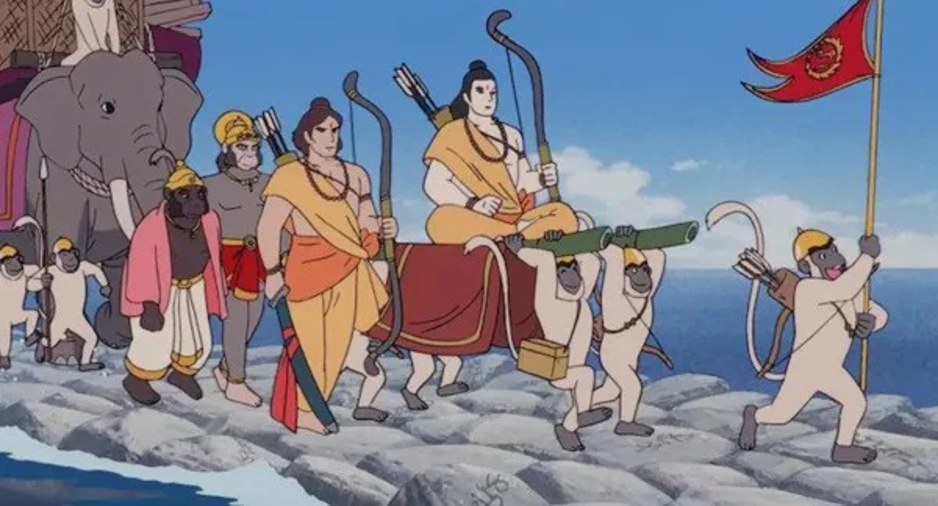
(A film I hold dear in my heart, the Japanese animated adaptation of the Ramayana has a fascinating history, from eventually overcoming its hostile reception to achieving widespread adoration decades later.)
Cultural sensitivity in India has eased over time, but it hasn’t disappeared. Supernatural faced heat for its portrayal of Hindu gods. Episodes of Record of Ragnarok were banned. The lesson isn’t that these stories shouldn’t be told. It’s that they must be told with care. Intent alone doesn’t cut it. Execution matters. Respect matters. And “respect” doesn’t mean timidity, it means knowing the source material well enough to reinvent it without cheapening it.
The worlds being built right now and the blueprint (if there is one)
Let me show you what “right” looks like in practice, because it’s already happening.
Gaming is the sharpest edge. India is seeing a wave of games that want to compete globally, not just culturally but technically. Nodding Head Games’ Raji: An Ancient Epic got critical success and international recognition, and they’ve since announced Raji: Kaliyuga. Tara Gaming is developing Age of Bharat with Amish Tripathi and Amitabh Bachchan. Ayelet Studio is building Son of Thanjai, set in 11th-century South India. These projects aren’t equals to God of War yet. But the fact that they now have the potential to compete is itself a massive shift.
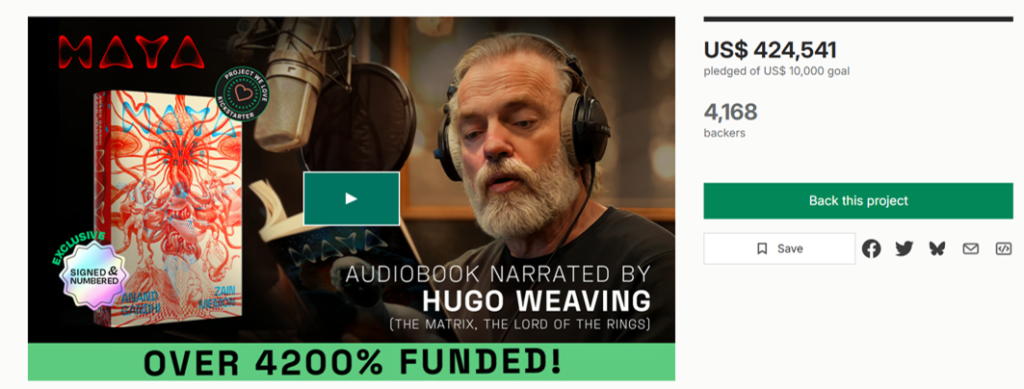
Transmedia-first universes are emerging too. One project I love is Maya Universe, created by Zain Memon (who made the breakout board game Shasn) and filmmaker Anand Gandhi. Maya is a neo-mythological world planned from day one across books, board games, potential video games, and future screen adaptations. Unlike many Indian projects that rely on domestic financing, Maya raised over $420,000 on Kickstarter, most of it from backers in the United States. That’s the universe coming first, and the formats following. World-building as infrastructure, not content. That instinct is what separates one-off successes from durable IP.
Story factories are becoming IP factories. A conversation with Ranjeet from Pratilipi crystallised this for me. He talked about how IP creation that once took 10-15 years can now happen in weeks. A single story can begin as text on Pratilipi, test its resonance, and rapidly evolve into audio, video, or screen adaptations. Shaitan Se Samjhauta, which started as a story on their platform, crossed 50 million views on YouTube as a TV series. That pipeline, text to audio to video to franchise, is the kind of plumbing that builds durable IP at scale.
Merchandising is wide open. As someone who collects LEGO sets, I can tell you: the appeal isn’t the bricks. It’s the nostalgia and emotional connection to IPs like Indiana Jones or Hocus Pocus. Adults aren’t buying toys, they’re buying memory. Indian IPs have barely scratched this surface. BWO and its subsidiary A47, which produces everything from official ISRO merchandise to cultural collectibles, shows what’s possible. If Montblanc can collaborate with Naruto, cross-cultural IP partnerships aren’t experimental anymore, they’re proven.

And then there are the collabs happening right here. Comet, an Indian sneaker brand, collaborated with Naru, a ramen fine-dining restaurant in Bangalore. The sneaker sold out almost instantly. Twenty years ago, a sneaker brand teaming up with a ramen restaurant would have sounded like a fever dream. Today, it’s what happens when two brands figure out they share a cultural vocabulary, and their audiences do too.
(I’ve been to Naru twice, by the way. It’s actually pretty good. You should give it a shot.)

For all the momentum in mythology-based IP, there are entire genres of Indian storytelling that remain almost completely unexplored.
- Consider India’s relationship with cricket. Japan turned volleyball into Haikyuu!! and football into Blue Lock, animated series with massive global followings. India has the world’s most emotionally invested cricket audience and… nothing comparable. Where is the larger-than-life animated cricket universe?
- Indian science fiction barely exists as a commercial genre, despite the source material being extraordinary. China’s Three-Body Problem drew on Chinese philosophy and history while engaging with modern physics, and became a global phenomenon. Indian philosophy and cosmology, the concept of cyclical time in the Vedas, the multiverse in Jain cosmology, the mathematical traditions of ancient India, could be the backbone of an equally compelling sci-fi universe.
- Horror and folklore? India has millennia of material, churails, pishachas, vetala tales, and a massive domestic appetite for the genre. The enduring success of CID, including its resurgence on streaming platforms, proves that appetite for Indian crime and thriller narratives is durable.
- What’s stopping a locally rooted Indiana Jones-style adventure about lost Harappan cities or forgotten manuscripts from Nalanda? What’s stopping a Byomkesh Bakshi 2.0 from emerging as a modern franchise?
I don’t think there’s a prescriptive playbook here. But there are a few observations that feel hard to argue with.
The first is that the next Disney won’t look like a movie studio. It might look like Pratilipi. It might look like Aeos Labs. It might be a platform that doesn’t create stories at all, but builds distribution and community infrastructure for the people who do. India has an abundance of storytellers. It also has an abundance of software engineers. What’s emerging now is the connective tissue between the two.
The second is that AI is lowering the barrier to experimentation in ways that matter. Not as a replacement for human creativity, god, no, but as a tool for prototyping, testing aesthetics, and reducing iteration cycles. We’re seeing AI-augmented Mahabharata series on JioHotstar, Instagram creators building speculative worlds using AI-generated visuals, and storytellers using AI to extend their reach without losing their voice. The cost of asking “what if?” has never been lower.
The third, and maybe the most important, is that what makes stories travel isn’t technology or budgets. It’s an emotion. The particular ache of wanting to make your family proud while also wanting to be free. The comedy of a joint family. The fury of injustice. India produces these feelings in industrial quantities. We also produce the people capable of turning them into films, games, comics, and platforms. What we lacked, for a long time, was the will to experiment. That’s the part that’s changing.
The government seems to recognise this too. The WAVES summit, the national AVGC-XR policy, state-level initiatives in Karnataka and Maharashtra, the new Indian Institute of Creative Technologies in Mumbai, the institutional scaffolding is being erected. Whether it’s enough, and whether it’s fast enough, remains to be seen. But the direction of travel is clear.
The economic fundamentals reinforce this case. India’s media and entertainment sector is projected to cross USD 100 billion by 2030, driven by digital consumption and creative-tech growth. The country enjoys a 40–60 percent cost advantage in animation and VFX services, supported by a large skilled workforce. Nearly 25 percent of viewership for Indian OTT content already comes from overseas audiences, underscoring that Indian stories are no longer consumed only at home.
Institutionally, this shift is becoming tangible. In 2024, the Indian Institute of Creative Technologies (IICT) was unveiled in Mumbai as the National Centre of Excellence for AVGC-XR, bringing academia, industry, and government onto a single platform. At the state level, momentum is accelerating. Karnataka implemented one of India’s first dedicated AVGC-XR policies (2024–2029), focused on skilling, incubation, and global competitiveness. Maharashtra followed with its AVGC-XR Policy 2025, backed by a INR 3,268 crore financial plan and a roadmap extending to 2050, aimed at investment attraction, job creation, and production-cluster development.
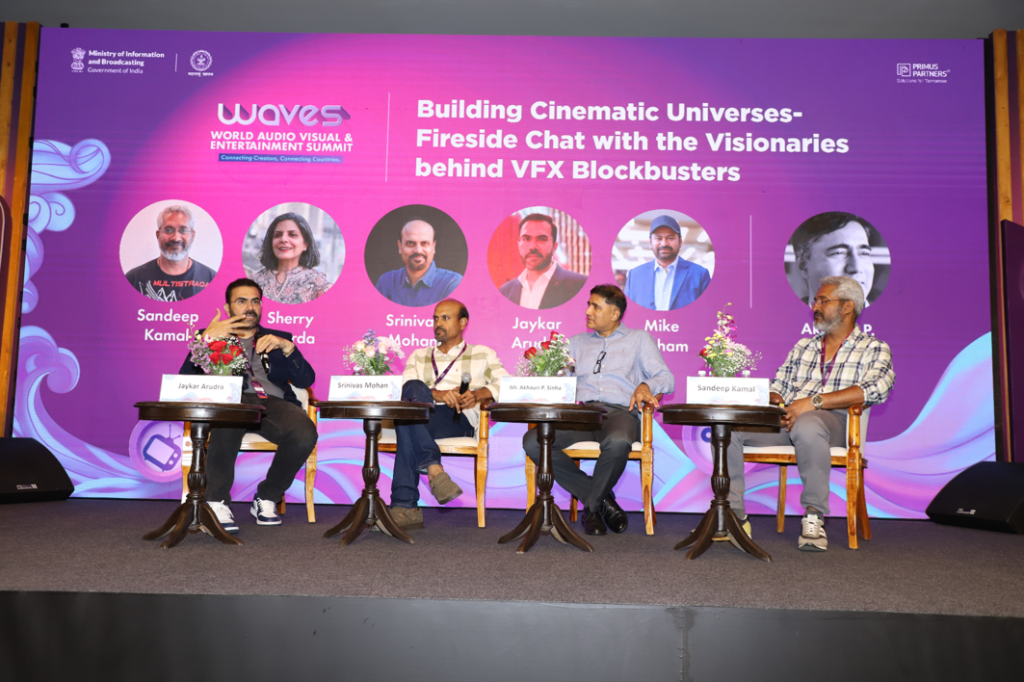
(Still from WAVES 2025 | 1-4 May 2025 | Jio World Centre, Mumbai)
Most of these bets won’t pay off. That’s fine. The point isn’t that every Indian IP will become the next Pokemon. The point is that for the first time, the conditions exist for it to happen: the tools, the talent, a massive domestic market, growing global appetite, and platforms that didn’t exist five years ago.
This is India’s narrative gold rush. And if you’re a creator, a builder, a founder, or just someone who grew up reading Amar Chitra Katha and always wished those worlds were bigger, the door hasn’t just opened. It’s been kicked off its hinges.