
Zetwerk came to us through a founder we had decided not to invest in. That founder sent them our way anyway. We still think about that: good faith travels further than you expect.
When we ran reference calls on the team, one answer stuck: “They’re a one-in-a-million team. Don’t make the mistake of over-diligencing and missing out.” We led the seed round in 2018, and doubled down at every opportunity after that.
It also fit something we had been looking for. After Porter in our first fund, we had started spending real time on SMEs and manufacturing. What stood out about Zetwerk was the approach: bottom up, from the factory floor, with an early team made up of manufacturing people rather than startup people. The founders were almost missionary about how manufacturing in India needed to be solved, and they had a problem and a business model nobody else was working on.
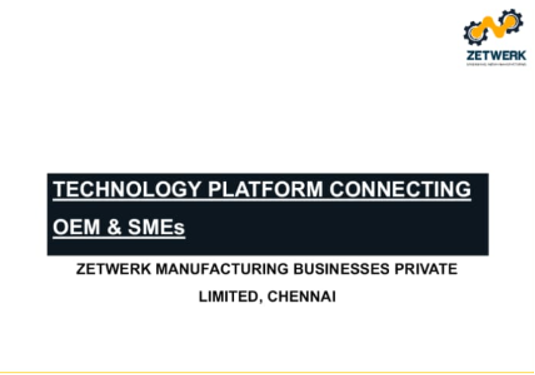
Slide one of the first deck Zetwerk sent us, in 2018.
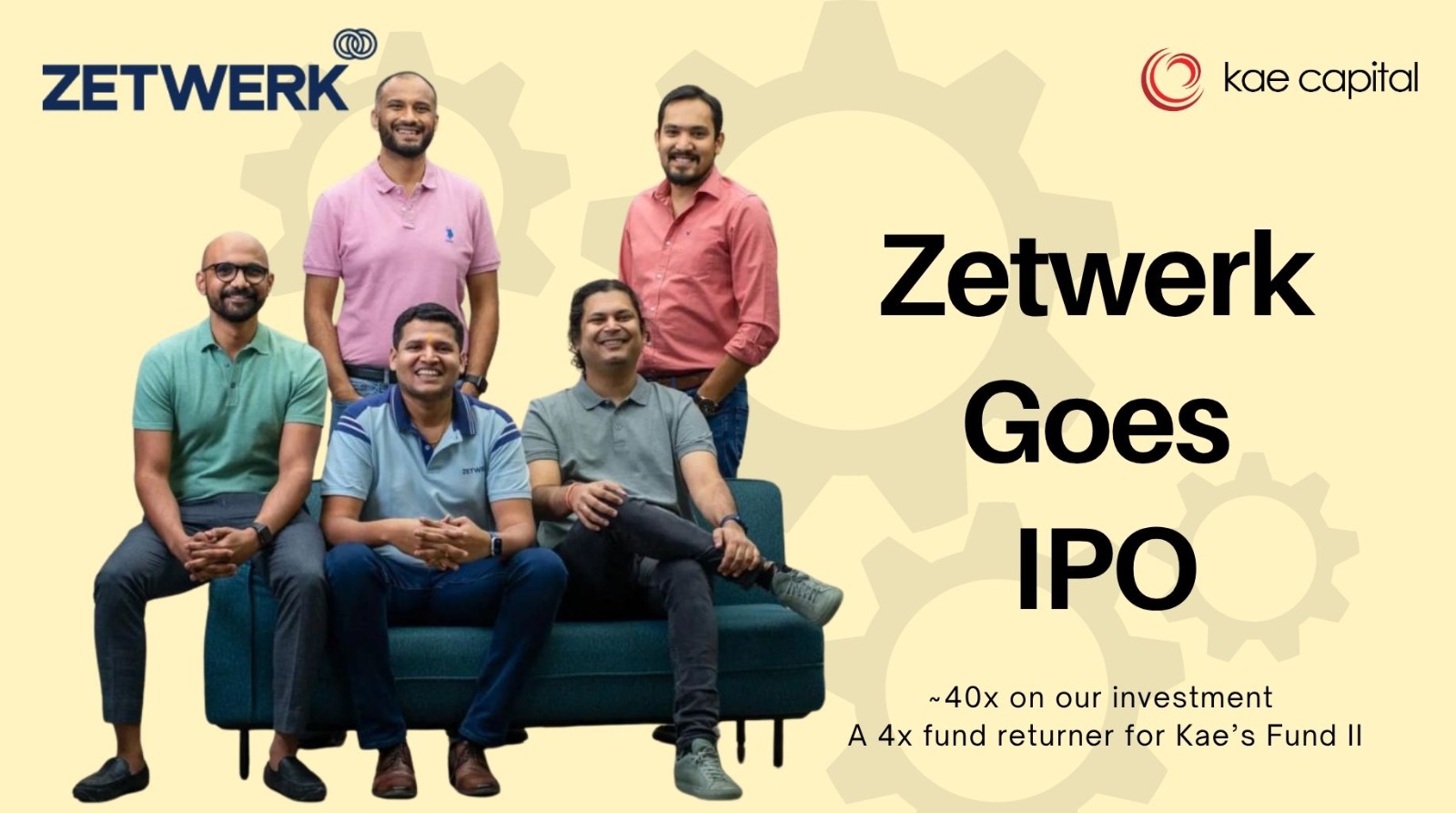
Today, Zetwerk lists on the BSE and NSE. It’s a big day for Amrit, Srinath, Vishal, Rahul, Ankit and everyone who built this with them.
For us, it’s the kind of outcome a seed fund is built for. At the IPO price, our investment is worth roughly 40x what we put in, and Zetwerk alone returns Kae’s Fund II four times over. We’re taking a partial exit and holding the rest.
Day one
Zetwerk began with a problem both founders knew first-hand. Amrit Acharya had spent years at ITC building a factory, managing more than a hundred suppliers on Excel sheets because no software existed to do it. Srinath Ramakkrushnan, his friend from IIT Madras, had grown up close to the same problem: his father ran a steel fabrication business in Coimbatore and was constantly scrambling for reliable suppliers. In 2018, the two of them started Zetwerk with Vishal Chaudhary, Rahul Sharma and Ankit Fatehpuria.
The first idea was software to help large manufacturers manage their suppliers. It didn’t stay that way for long. Customers kept asking whether it could help them find new suppliers, so Zetwerk became a marketplace. When suppliers struggled to deliver on time, the founders took on the orders themselves and split large jobs across several partner factories so they could be built in parallel. The first of those shifts came within a month, before our seed cheque had even landed, and each one took the company closer to where the real value was.
What they ended up building sits between two very different needs. A large buyer wants one accountable partner, not forty workshops. A workshop wants a steady order that pays on time. Zetwerk takes the order, finds the right factories, and owns the outcome on quality and delivery.
The hard part was trust. For a small workshop, an order from an unknown company is a risk: will they pay, and on what terms? In 2018, Zetwerk was that unknown company, and if you searched for it online you found nothing. So the early work was credibility, built one order at a time. By March 2019, more than 1,000 suppliers were working with Zetwerk.
Road to IPO
Zetwerk became a unicorn about three years after it was founded, and listed eight years and five months in.
The founders set out to help one factory manage a hundred suppliers. Eight years later, Zetwerk runs 26 manufacturing facilities of its own across India, the US, Germany and Spain, alongside 6,979 third-party suppliers in 26 countries, all coordinated through its own software. Its customers span utilities, renewables, consumer electronics, aerospace, space and defence, and increasingly AI infrastructure. In FY26 it generated ₹15,913 crore in revenue, with nearly 30% of its manufacturing revenue coming from outside India.
Manufacturing, then and now
When Zetwerk started, building a tech company in Indian manufacturing was close to a contrarian bet. Margins were thin, working capital was heavy, sales cycles were long and the quality bar was unforgiving. Most venture capital was chasing consumer internet. In all of 2018, Indian manufacturing tech startups raised about $20 million in venture funding.
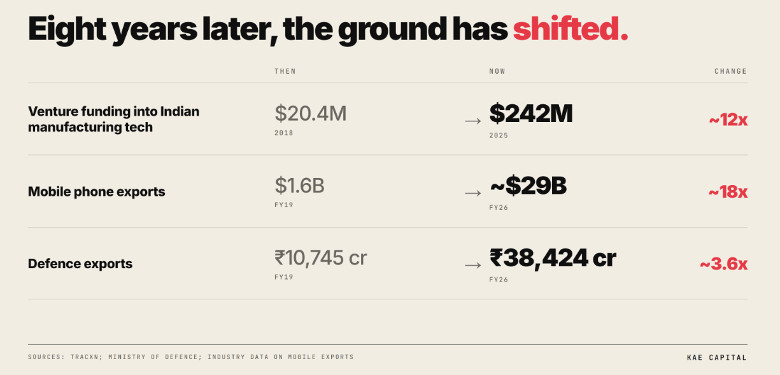
Zetwerk didn’t cause all of this, but it changed what people believed was possible in the space. It showed that software and operations could stitch thousands of independent factories into what its prospectus calls a “universal factory”. It showed that a tech company could carry the working capital, quality risk and delivery promises of physical manufacturing at scale. And it showed that capital would follow: Zetwerk has raised more than any other Indian manufacturing tech company, about $931 million by Tracxn’s count.
The window is open now. The world is redrawing where things get made, and buyers in energy, electronics, defence and AI infrastructure want more than one place to build. India is increasingly on that list, and much of its capacity sits across thousands of small manufacturers who rarely have the reach or working capital to win a global contract alone. That is exactly the gap Zetwerk was built to close, and why we think the next decade of Indian manufacturing will produce many more companies like it.
More than one company
Most IPOs are a story about one company. Zetwerk’s reaches further.
A quiet backbone for Indian manufacturing. By March 2026, Zetwerk had delivered ₹69,588 crore worth of products and raw materials, and its customers include 16 of the Nifty 50. For thousands of the manufacturers in its network, Zetwerk has been the bridge to buyers and export markets they could not have reached alone, and a steady source of orders that let them plan, hire and invest.
A founder factory. Zetwerk’s business model has changed enormously over eight years. Its culture of transparency, bias to action, ownership and frugality has not. That culture keeps producing founders who learned to build on shop floors, not just in spreadsheets. We’ve had the chance to back some of them: STCH, started by former Zetwerk executives Narahari Payala and Aseem Chitkara, and Enerzolve, founded by Abhay Adya, which is building Indian power electronics for the electricity grid.
Talent that knows both worlds. Over eight years, Zetwerk has trained a generation of operators who understand software and shop floors equally well. That combination used to be rare in India. It is one of the most valuable things an ecosystem that wants to build physical products can have, and it will keep compounding long after today.
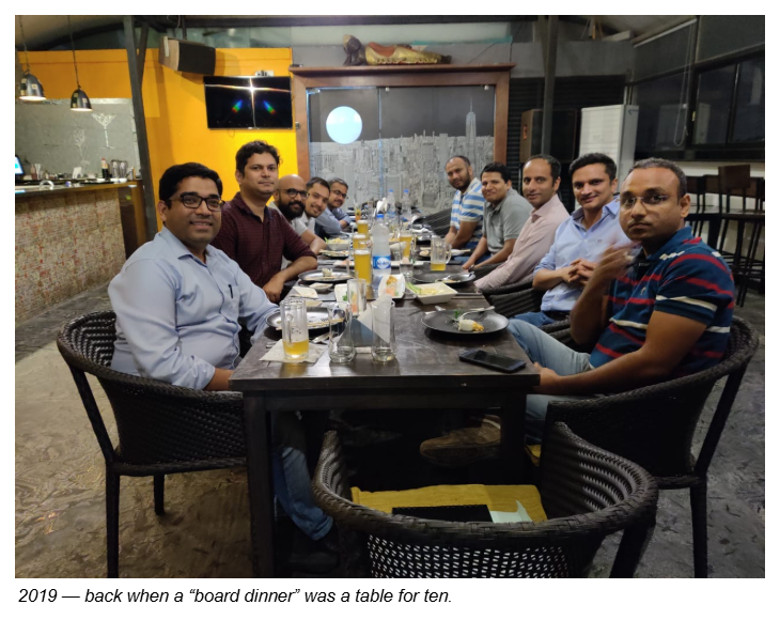
Eight years and counting. To Amrit, Srinath, Vishal, Rahul, Ankit and everyone at Zetwerk: thank you for the ride. Day one was in 2018. Today is day one again.