Most advice on raising venture capital is written for Silicon Valley. It tells you to show exponential growth curves, talk about network effects, reference comparable exits in the US, and demonstrate product-market fit within six months of launch.
If you apply this playbook to raising seed funding in India, you will confuse most investors and misrepresent your opportunity.
India’s seed stage is different. The markets are different, the founder profiles are different, the timelines are different, and what constitutes a compelling signal at early stage is different. After 12 years of backing founders from day one, here is what Indian VCs, including Kae Capital, are actually evaluating when you walk into the room.
1. Insight, not just opportunity
Every pitch deck in India opens with a market size slide. Most of them say the same things: India has 1.4 billion people, internet penetration is growing, the middle class is expanding. These facts are true and also completely useless to an investor evaluating your specific company.
What Indian VCs are actually looking for is whether you have a piece of insight that explains why this problem exists and why it hasn’t been solved yet.
The best founders we’ve met don’t lead with market size. They lead with an observation: something they noticed that others missed. The Zetwerk founders saw that India’s manufacturing buyers and suppliers had no trusted way to find each other outside of personal relationships, and that this single friction point was strangling the growth of the entire industrial sector. That insight, specific, structural, and India-native, is what makes a seed pitch compelling.
If your insight is “this works in the US, therefore it should work in India,” you don’t have India insight. You have a hypothesis that needs to be tested with local context.
2. Founder-market fit over founder pedigree
Credentials carry weight in early-stage investing. Prior operational experience, academic background, and track record are all useful signals. But they are proxies, not predictors.
The founders who build category-defining companies in India often have something more valuable than credentials: they have lived the problem. They were the logistics manager who couldn’t find reliable last-mile partners. They were the MSME owner who got rejected for a loan despite running a profitable business for ten years. They were the rural healthcare worker who watched patients travel four hours for a consultation that could have happened over video.
This is founder-market fit: a deep, visceral understanding of the problem that no amount of desk research can replicate. When evaluating founders at seed, Indian VCs weight this heavily. It predicts resilience, it predicts product decisions, and it predicts the ability to build trust with customers who are often skeptical of outsiders.
3. India-specific timing arguments
Every good seed investment has a timing argument: a reason why this company, built now, will work when it might not have worked two or three years ago.
In India, these timing arguments are usually structural. They relate to infrastructure that recently became available, regulation that recently changed, or behaviour that recently shifted.
Examples of strong India-specific timing arguments:
The Account Aggregator framework (2022) made MSME cashflow data accessible for the first time, enabling a new generation of credit products
The PLI schemes (2020 onwards) created pull demand for manufacturing enablement technology that didn’t exist before
UPI’s rural penetration (2023-24) crossed a threshold that makes Bharat-first fintech businesses viable at scale
Founders who can say “this window opened 18 months ago and we are the right team to walk through it” are the ones who have done the work.
4. Customer signals, not revenue targets
At seed stage in India, most investors are not looking for consistent revenue. They are looking for evidence that real people with real problems find your solution genuinely useful.
This can take many forms:
Letters of intent from customers willing to pay once the product is ready
Paid pilots at below-commercial pricing with design partners
Waitlists with unusually high conversion rates
Qualitative feedback from 20 customer conversations that reveals a consistent, urgent problem
What Indian VCs are evaluating here is not the number. It is the quality of the signal. Ten customers who are pulling the product out of your hands are more compelling than 100 sign-ups from a Facebook ad campaign.
The critical test: if you stopped selling and went silent for a month, would your early customers chase you down? If yes, you have a real signal. If not, you may have interest but not urgency.
5. Capital efficiency as a worldview
India’s best founders are structurally more capital efficient than their global counterparts. This is partly necessity. The Indian market rewards founders who can do more with less. But it is also a worldview.
The founders we back who go on to build durable companies share a characteristic: they don’t spend money to validate what they can learn by talking to customers. They don’t build features before they know customers will use them. They think hard about unit economics before they think about growth.
At seed stage, Indian VCs are not looking for frugality for its own sake. They are looking for evidence that a founder understands what money is for: buying learning, not buying comfort.
6. Ability to attract and retain talent in a competitive market
India’s talent market for technology has evolved dramatically. The best engineers, product managers, and business operators have many options: large tech companies, well-funded startups, global remote opportunities.
A seed-stage founder who can convince talented people to join at below-market salaries for equity they may never see is demonstrating something important: they can sell a vision, they have a reputation worth betting on, and they understand that a great company is built by great people who chose to be there.
Indian VCs watch this closely. Who is on the team? How did they get there? Would they follow this founder through hard quarters?
What Most Founders Get Wrong
Pitching the product before the problem: Indian VCs are evaluating whether the problem is real and large before they evaluate whether the solution is good. If we don’t feel the urgency of the problem in the first five minutes, the solution doesn’t matter.
Benchmarking against US companies: “We’re the Stripe of India” or “we’re building the Shopify for India” tells us you’ve done market research. It doesn’t tell us you understand what is different about the Indian market that makes your specific approach the right one.
Treating traction as a substitute for insight: Early traction is valuable. But traction without an explanation of why it’s happening, what insight led to it, what makes it defensible, is not enough at seed stage. We want to understand the mechanism, not just the number.
Not knowing who else is building in the space: Indian VCs know the ecosystem well. If you don’t know who your competitors are, or you dismiss them as irrelevant, it suggests you haven’t done the work. Know the landscape. Have a clear view on why your approach is different.
The Kae Capital Lens
At Kae, we back founders at pre-seed to pre-Series A across Consumer AI, Deeptech, B2B, Manufacturing, Fintech, Healthtech, and AI & Automation. Our initial cheque is $1.5M–2M.
What we weight most: clarity of mind, audacity, and India-specific insight. In 12 years of doing this, the founders who have built the most significant companies were not always the ones with the strongest credentials. They were the ones who understood their problem better than anyone else in the room, with the conviction to keep building when everyone else was uncertain.
Indian VCs at seed stage evaluate founder-market fit (whether the founder has lived the problem), a specific India-native insight that explains the opportunity, a timing argument rooted in structural changes in the Indian market, early customer signals demonstrating genuine urgency, and capital efficiency as a demonstrated worldview.
How is raising seed funding in India different from the US?
India’s seed stage rewards founders with deep market-specific insight over those with strong credentials or US-comparable traction. Timing arguments in India are structural, relating to new government infrastructure (UPI, Account Aggregator), regulatory changes, or shifts in consumer behaviour specific to India. Generic global playbooks rarely translate directly.
What is founder-market fit and why do Indian VCs care about it?
Founder-market fit means the founder has personal, operational experience with the problem they’re solving, not just research knowledge. Indian VCs weight this because it predicts product decisions, customer trust-building, and resilience through hard periods. Many of India’s most successful founders built companies around problems they had lived personally.
Do I need revenue to raise seed funding in India?
No. Most Indian seed funds, including Kae Capital, invest before consistent revenue. What matters at seed stage is the quality of early signals: paid pilots, letters of intent, strong qualitative feedback from customer conversations, or waitlists with high conversion rates. The signal matters more than the number.
What do Indian VCs mean by a timing argument?
A timing argument explains why this business works now when it wouldn’t have worked two or three years ago. In India, strong timing arguments are usually structural: a new government infrastructure layer became available, a regulation changed, or a threshold in consumer behaviour was crossed. “The market is large and growing” is not a timing argument.
How should I pitch to an Indian VC at seed stage?
Lead with the problem and your specific insight into why it exists, not with market size. Explain the timing argument. Show early customer signals and what they reveal about urgency. Be clear on what makes your approach India-specific rather than a transplant of a global model. Then cover team, use of funds, and milestones.
India has produced companies that are genuinely global. Zoho serves customers in 150+ countries from its headquarters in Chennai. Freshworks listed on Nasdaq in 2021 with revenue from customers across the US, Europe, and Asia. Postman, built by Indian founders, became the API platform of choice for developers worldwide before the company was widely known outside the tech community.
The question for Indian founders is no longer whether it is possible to build a global company from India. It is how, when, and through which path. Those answers are more specific than most of the advice circulating about international expansion, and they depend heavily on what kind of company you’re building.
The Two Types of Indian Companies That Go Global
The first thing to understand is that “going global” means different things depending on what you built.
Type 1: Built global from day one: These are companies where the product’s natural customer is a global buyer regardless of where the company is incorporated. Developer tools, API infrastructure, horizontal SaaS, cybersecurity products. The Indian founder who built Postman was solving a problem for every developer on the planet, not for Indian developers specifically. BrowserStack’s customer was any software team with a testing problem, anywhere. For these companies, “going global” isn’t a second act. It’s the only act. The India headquarters is an operational choice, not a market choice.
Type 2: Built for India, then expanded: These are companies that found genuine product-market fit in India first, built a real business, and then used that foundation to expand to a second geography. Freshworks is the clearest example. The company spent years building a real SMB helpdesk business in India and among global SMBs before it became a publicly traded company on Nasdaq. The global expansion was funded by real Indian revenue, not by a narrative.
The distinction matters because the strategy is different. Type 1 companies should think globally from the first line of code. Type 2 companies should build the India foundation first and expand from a position of strength, with real revenue and a clear understanding of why the product works.
When Not to Go Global
The right time to think seriously about international expansion is when the India business is generating predictable, compounding revenue and you have figured out why. Not when it “seems to be working.” When you can explain, specifically, what is driving retention, what the sales motion is, what makes customers stay and what makes them leave. That clarity is the foundation for transplanting anything internationally.
The mistake is going global because:
The India market feels crowded: If your India market feels crowded, adding a second geography adds operational complexity without solving the crowding problem. You now have two markets where you’re not winning.
You want to raise from US or global funds: Some founders add a global narrative to their pitch because they believe it’s what international investors want to hear. It sometimes works in the short term and almost always creates problems when the fund asks for international traction at Series B.
A customer asked you to: One enterprise customer in Singapore who wants your product is not a market. Following individual customers into new geographies without a broader market thesis is a common path to building a services business instead of a product company.
You’re running out of India runway: International expansion is expensive and slow. A company that goes global because it’s struggling in India is compressing two problems into one. Fix the India problem first.
The US Is Harder Than It Looks
For most Indian founders, the US is the aspirational market. It has the largest B2B software spend in the world, the highest willingness to pay, and the most liquid exit environment. These things are true.
What is also true: the US is the most competitive market in the world for almost every category of software. Customer acquisition costs are multiples of what they are in India. Enterprise sales cycles are long and require a local presence. US buyers have strong incumbent relationships with US vendors and need a compelling reason to evaluate an unknown Indian company.
The Indian companies that have succeeded in the US have generally done so through one of three specific paths:
The price wedge: Freshworks entered the US SMB helpdesk market at a price point significantly below Zendesk and offered a product that was genuinely good enough for that segment. The price delta was large enough to overcome the switching cost and the unfamiliarity risk. This works when the incumbent is overpriced for a real segment and your cost structure allows you to sustain the discount.
The diaspora bridge: Some Indian companies have used the Indian diaspora in US companies (particularly in technology and finance) as a bridge to their first enterprise accounts. This is a real entry point but a limited one. The diaspora is not a market. It’s a warm introduction to a market. If the product can’t sell to the non-diaspora US buyer, the strategy runs out quickly.
Developer-led, bottom-up: Products that developers adopt individually before companies buy them can go global without a sales team. If an Indian developer tool gets adopted by developers in the US and Europe organically, you can build US revenue before you have a US office. Postman grew this way. Chargebee got early global traction through inbound developers who found it through search. This path requires a product that has genuine technical differentiation and a category where developers have purchasing influence.
If your company doesn’t fit one of these three paths, the US is probably not your second market. That is not a failure. It is a correct diagnosis.
The Markets That Actually Work as a Second Geography
Southeast Asia
For many Indian B2B companies, Southeast Asia is the most natural second market. The economic structure is similar in important ways: large informal economies being formalized, MSME customer bases, mobile-first populations, and regulatory environments that are navigating digital transformation in real time.
Indonesia is the largest economy in the region and has a genuine tech ecosystem. Singapore functions as both a market and a regional hub; many Indian companies open a Singapore entity before they open a US entity. Vietnam, Thailand, and the Philippines are earlier-stage but growing fast.
The meaningful caveat: Southeast Asia is not one market. Indonesia, Vietnam, Thailand, Malaysia, Singapore, and the Philippines have different languages, different regulatory frameworks, different payment infrastructure, and different B2B buying behaviors. A company that treats SEA as one geography and spreads thin across all six countries will underperform a company that picks Indonesia or Singapore seriously and owns it.
Middle East
The Gulf Cooperation Council countries, particularly the UAE and Saudi Arabia, have become a serious market for Indian technology companies. Several structural factors make this work:
The Indian diaspora is large and influential in GCC business communities. There is strong government willingness to pay for technology that supports national digitization agendas. The B2B spending capacity is high relative to the competitive intensity. And the geographic and timezone proximity to India is workable in a way that the US is not.
Indian companies in fintech, healthtech, edtech, and enterprise SaaS have found real traction in the UAE as a first international market. It is not the largest market in the world, but it is a market where an Indian company can win without the structural disadvantages it faces in the US.
Africa
Africa is the most frequently discussed and least frequently executed international market for Indian companies. The infrastructure parallels are real: large unbanked populations, mobile-first economies, MSME-dominated commercial activity, and digital payments infrastructure being built in real time. The companies that have succeeded are ones that built specifically for the African market rather than transplanting an India product.
The honest assessment: Africa is a more complex entry than founders expect. Currency volatility, regulatory fragmentation across 54 countries, and thin formal distribution infrastructure make it a market that requires longer time horizons and more operational depth than a single geographic expansion usually allows. It is a better third or fourth market than a second market for most Indian companies.
What Your Product Category Tells You
The product category is the most reliable signal for whether and when global expansion makes sense.
Developer tools and API infrastructure: Global from day one. The customer is a developer. Developers are globally connected, discover tools through the same channels, and make individual-level purchasing decisions. There is no reason to sequence India first.
Horizontal SaaS (CRM, helpdesk, finance, HR): Can go global, but needs a wedge. The US market has strong incumbents in every category. The wedge is usually price, a specific underserved segment, or a genuinely superior product experience. Going to Southeast Asia or the Middle East first is often a lower-friction path to international revenue.
Vertical SaaS for India-specific industries: Almost never global early. If your product is built for Indian textile manufacturers or Indian insurance agents or Indian logistics operators, the market is India. There are analogous industries in other countries, but the product usually needs significant rework to serve them. Build the India business fully before asking whether the vertical translates.
Consumer: Rarely global early. Consumer behavior is deeply local. Language, payment methods, social context, and trust mechanisms differ enough across markets that a consumer product built for India has limited transferability. The exceptions tend to be entertainment and content categories where the Indian diaspora is a real customer base.
Fintech and lending: Highly regulated, highly local. Every market has its own licensing regime, its own credit bureau infrastructure, its own payment rails. A fintech that goes global early is usually making a licensing bet, not a product bet. Sequence carefully and get legal counsel in each jurisdiction before committing capital.
The Operational Reality
Founders who decide to expand internationally tend to underestimate what it costs in time and attention before it costs money.
The founder time problem: International expansion in the early stages is founder-led. It is not something you can delegate to a hire you haven’t made yet. The founder who decides to expand to the UAE will spend a significant fraction of their time, for 12 to 18 months, on that expansion. That time comes from somewhere. Usually it comes from the India business.
Hiring locally is not optional: You cannot sell B2B software in a new market entirely from Bengaluru. Enterprise buyers want a local contact who understands their regulatory context, speaks their language, and can be in a room with them. The first local hire in any new market is the most important hire in that geography and the hardest to get right from a distance.
The legal and compliance overhead is real: Each new jurisdiction means new entity structures, new tax obligations, new employment law, new data residency requirements, and often new product compliance requirements. A company expanding to the EU needs GDPR compliance that affects the product architecture. A fintech expanding to Singapore needs MAS engagement before it can operate. These are not afterthoughts. They take time and legal spend before the first dollar of revenue arrives.
Currency exposure compounds quickly: If your revenue is in Singapore dollars, UAE dirhams, and Indian rupees, and your costs are primarily in rupees, you have a currency position that needs active management. This is not a problem at the pilot stage. It becomes a problem at scale.
Frequently Asked Questions
When should an Indian startup think about going global? When the India business has predictable, compounding revenue and the founder can explain clearly what is driving it. For most companies, this happens at Series A or Series B, not at seed stage. The exceptions are products with genuinely global customers from the start, such as developer tools or API infrastructure.
Which is the best first international market for an Indian company? It depends on the product category. Southeast Asia (particularly Singapore and Indonesia) and the Middle East (particularly the UAE) are the most common successful first markets for Indian B2B companies. The US is the most aspirational but requires a specific wedge to work. There is no universal answer.
Can Indian companies compete with US companies in the US market? Yes, but usually through price, a specific underserved segment, or bottom-up developer adoption. Indian companies that have succeeded in the US have generally not tried to compete head-on with incumbents. They found a segment the incumbents underserved and owned it.
Should Indian founders relocate to expand internationally? Not necessarily, but they need to spend significant time in the new market in the early stages. Most successful expansions involve the founder being physically present in the new market for months, not weeks. Hiring locally is essential; remote management of a new geography from India rarely works.
On open-source mythology, immortal characters, and why this might be the best time in history to build worlds from India
In August 2024, a Chinese game studio called Game Science did something that nobody, not even the most optimistic gaming analysts, expected. Their debut title, Black Myth: Wukong, sold 10 million copies in three days.
Not a sequel. Not a franchise extension. A brand new IP, built by a relatively unknown team, rooted entirely in the 16th-century Chinese novel Journey to the West. By the end of its first month, it had moved over 20 million units, making it one of the fastest-selling games in history.
Because what Wukong really proved wasn’t that a Chinese studio could hang with the best in the world. It proved that a story rooted deeply in one culture’s mythology could travel globally without diluting itself. The Monkey King didn’t need to be Westernised to sell in America. He just needed to be brilliantly rendered.
I’ve been thinking about that a lot lately. Because the question it raises for India is obvious and uncomfortable: we have, conservatively, the richest mythology on the planet. We have one of the world’s largest gaming audiences. We have a film industry that moves hundreds of millions of people every year. And yet, where is our Wukong?
This piece is my attempt at an answer. Or at least, a map of where the answer might be hiding.
The unfair advantage nobody talks about
Here’s a thought experiment. Imagine you’ve built a character that people love. Not a product, not a service, a character. A person (or god, or demon, or talking mongoose) that lives in people’s heads.
Now imagine you own the rights to that character.
You can put them in a film. A game. A TV show. A theme park ride. A clothing line. A Seiko watch (more on that in a minute). You can license that character to anyone who wants to borrow the emotional connection your audience has already built with them, and charge for the privilege. This can go on for decades. Centuries, even.
That is what IP, intellectual property, does. It creates a legal monopoly over a story. And when the story is good enough, that monopoly compounds in ways that almost nothing else in business can match.
The Harry Potter universe was valued at $25 billion in 2023. But here’s the thing. J.K. Rowling finished writing the books in 2007. The films wrapped in 2011. And yet the universe keeps generating value: Hogwarts Legacy sold 24 million copies in its first year. The Cursed Child has sold over fourteen million theatre tickets across nine years. A new HBO series is in production. The flywheel doesn’t stop because the story doesn’t die. It just finds new hosts.
Pokemon is three decades old. Mario is pushing 45. The fact that Pokemon Legends: Z-A sold 5.8 million copies in its first week, for what is roughly the 25th core game in the series, tells you everything about what happens when a character achieves immortality.
This is the business case for narrative IP. Not content. Not “entertainment.” Worlds. Worlds that can live across media, across decades, across borders. And the most interesting thing about this moment in India is that we’re finally starting to build them.
A quick detour through Seoul, Tokyo, and Shanghai
Before we get to India, it’s worth understanding how other countries pulled this off. Not because they hand us a playbook, every country’s path is different, but because the pattern is instructive.
Start with South Korea. In 1997, the Asian financial crisis gutted the Korean economy. The won collapsed. The IMF stepped in with a $57 billion bailout. It was, by every measure, a national humiliation.
What happened next was counterintuitive. As part of its recovery, Korea bet heavily on cultural exports. The government lifted long-standing censorship over the entertainment industry, and the Ministry of Culture began coordinating with broadcasters, music labels, and film studios to push Korean content overseas. Satellite television was expanding across East and Southeast Asia at the same time, and K-dramas flooded into that vacuum.
The rest is history. K-pop, K-dramas, Korean cinema, Korean beauty, Korean food, the entire Hallyu (Korean Wave) can be traced, in part, to a financial crisis that forced the government to think about culture as an export engine rather than a domestic luxury.
Japan followed a different but parallel track. METI (the Ministry of Economy, Trade and Industry) led the “Cool Japan” initiative, supporting the overseas distribution of anime, manga, games, and film. Japan’s content exports hit ¥4.7 trillion by 2023. That figure includes everything from One Piece to Final Fantasy to Studio Ghibli. Speaking of Ghibli, they collaborate with Seiko almost every two years to release limited-edition watches under the Presage collection. Those watches are impossibly hard to get. I know because they’re a dream of mine. But what they really represent is two beloved, proudly Japanese institutions finding each other, and the world lining up to buy the result.
And then there’s China. Both Ne Zha (2019) and Ne Zha 2 (2025) broke records. Ne Zha 2 became the highest-grossing animated film of all time, the first to cross $2 billion at the global box office. Wukong did the same for gaming.
In all three cases, the sequence was similar. The government creates the conditions. Industry builds the stories. The stories reshape how the world perceives the country. Ask the average 25-year-old in Berlin or São Paulo what they know about South Korea and you won’t hear about the IMF bailout. You’ll hear about Squid Games.
Which brings us home.
India has been here before
The funny thing is, India isn’t starting from zero. We’re starting from a position most countries would envy, we just haven’t fully recognised it yet.
Go back to 1967. A man named Anant Pai is sitting in the audience of a quiz show and watches Indian children correctly answer questions about Greek mythology while fumbling on questions about the Ramayana and Mahabharata. He’s so bothered by this that he creates Amar Chitra Katha, a comic book series that would eventually span over 600 titles in 20 languages, sell over 5 million copies annually, and become the way an entire generation of Indians first encountered their own mythological heritage visually.
(Credits: BBC)
That was world-building. It happened in India. In 1967.
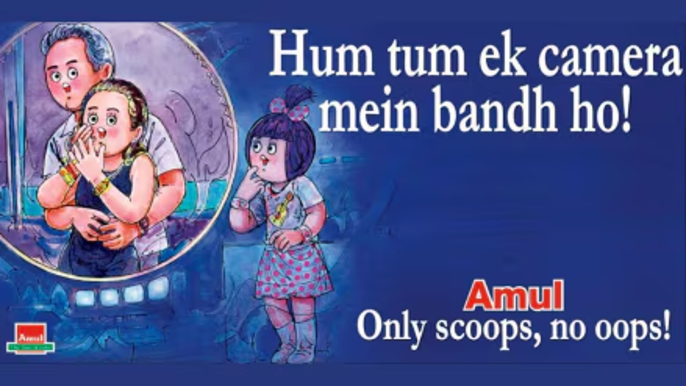
Tinkle and Suppandi built fandoms that persisted across generations. Chhota Bheem, love it or hate it, has aired for over a decade and reached audiences in nearly 190 countries. The Amul girl has been doing topical commentary since 1966, which is basically the world’s longest-running meme. These are Indian IPs with real staying power.
(Amul’s comic on the Coldplay concert controversy)
And yet, for decades, India’s relationship with the global narrative economy was defined by something else entirely: service work.
DNEG, formerly Double Negative, has won 8 Academy Awards for Best Visual Effects. Their work spans Inception, Interstellar, Blade Runner 2049, Tenet, Dune. After a $200 million investment from Abu Dhabi in 2024, DNEG was valued at over $2 billion. Indian talent powered some of the most iconic visual moments in cinema history.
But here’s the catch. DNEG doesn’t own the IP. Neither do the hundreds of Indian studios doing asset development, QA, and post-production for Hollywood and global gaming studios. Even today, an estimated 85-90% of India’s animation and VFX revenue comes from services, with only 10-15% tied to owned IP.
We’ve been building other people’s worlds. The shift that’s happening now, slowly, unevenly, but unmistakably, is that Indians are starting to build their own.
The open-source advantage
Here’s where things get interesting.
Indian mythology is, in effect, open-source. The Ramayana, the Mahabharata, the Puranas, the Jataka tales, no single entity owns them. Anyone can use them. Anyone can reinterpret them.
That’s not a weakness. It’s possibly our greatest asset.
Think about what Rick Riordan did with Greek mythology. Percy Jackson & the Olympians is built on stories that are thousands of years old and belong to no one. Riordan just added a layer, modern kids, a summer camp, a fresh voice, and the result was over 180 million books sold, film adaptations, and a Disney+ series that clocked over 110 million hours streamed in its first season.
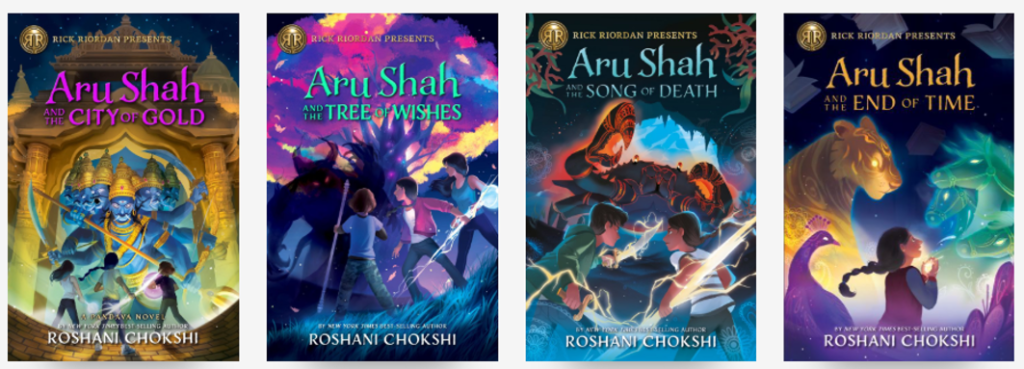
He’s since expanded to Hindu mythology through Roshani Chokshi’s Aru Shah series under his imprint. Let that sink in for a moment. An American publisher is building commercially successful universes on top of Indian mythology, because the source material is that rich.
(The adventures of Aru Shah under Rick Riordan’s imprint)
Enola Holmes did something similar with Sherlock, a public domain character reimagined through a new lens. Hades, the video game, took Greek myths and reinterpreted them with contemporary sensibilities to massive critical and commercial success.
The lesson is simple: reverence doesn’t require repetition. Reinvention is not disrespect, it’s how stories stay alive.
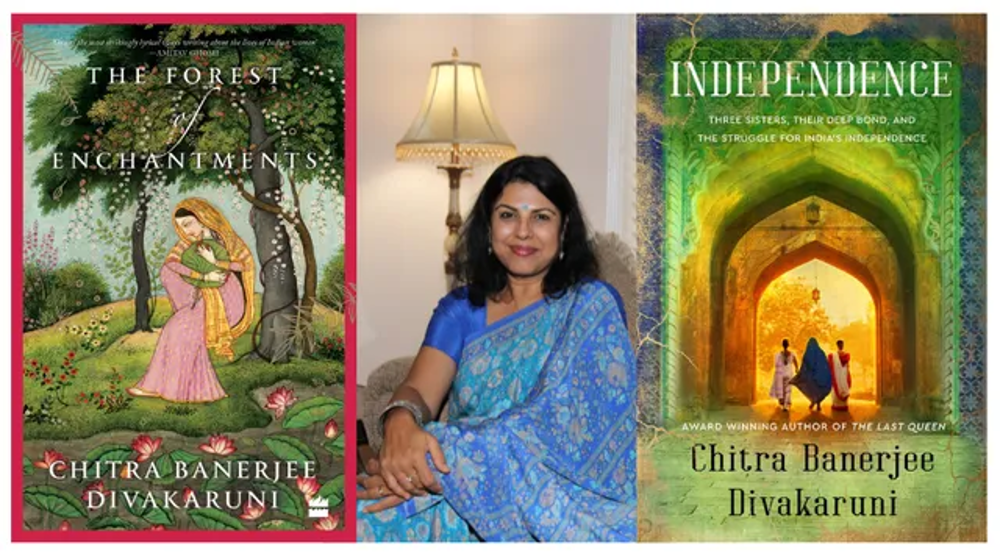
And this is exactly what’s starting to happen in India. Chitra Banerjee Divakaruni’s The Palace of Illusions retold the Mahabharata through Draupadi’s eyes. The Forest of Enchantments reframed the Ramayana through Sita’s inner life. These weren’t gimmicks, they were perspective shifts that unlocked entirely new audiences.
(It would be impossible to mention this point and not give a shout-out to Chitra Banerjee Divakaruni’s incredible books)
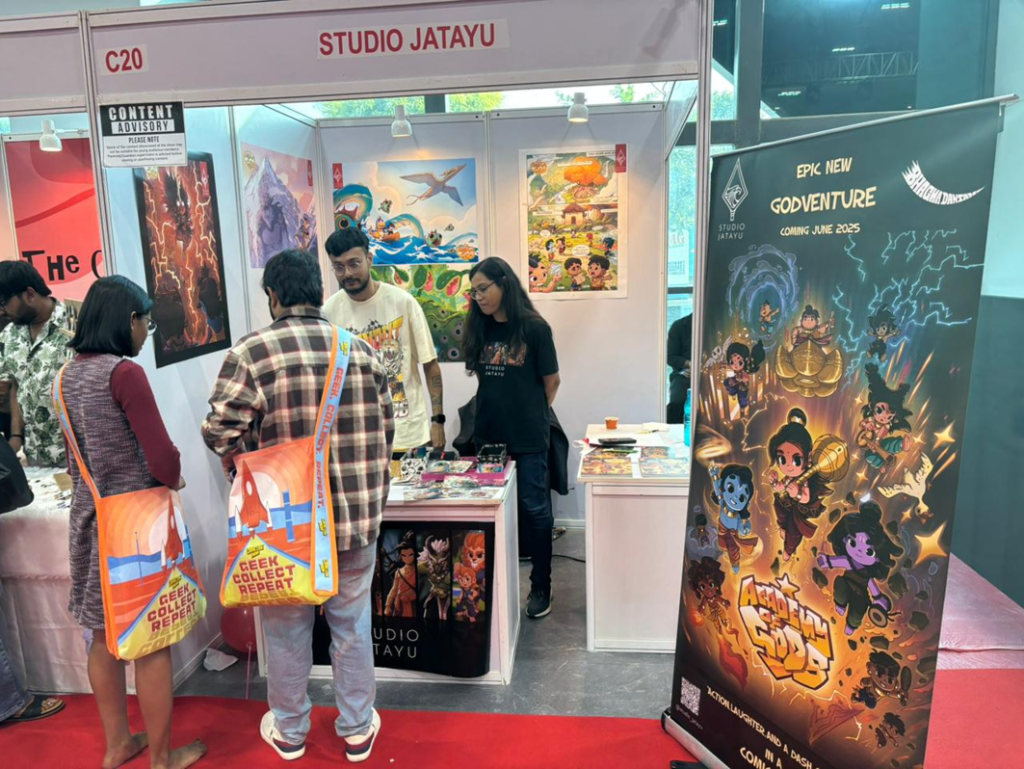
At Bengaluru Comic Con 2025, I stumbled across a booth for Studio Jatayu. Their concept? Hindu gods attending school together. It sounds absurd until you remember that Percy Jackson is literally “Greek gods, but their kids go to summer camp.” The format isn’t new. The mythology is.
The Lokah universe crossed INR 300 crore at the global box office, becoming the highest-grossing Malayalam film ever. Mahavatar Narsimha, built around one of the lesser-known avatars of Vishnu, also crossed INR 300 crore, and announced an entire cinematic universe from day one.
We’re no longer asking “can Indian mythology travel?” Kantara answered that question. A film steeped in Tulu folk traditions, Bhoota Kola rituals, and a hyper-local identity that made zero concessions to mainstream palatability, it crossed INR 400 crore globally. Not because it was “accessible.” Because it was specific. Specificity, it turns out, is what travels.
The better question now is: how far can this go, and what forms can it take? Because once an IP proves it can move audiences, it starts attracting something else entirely: brand capital. The same flywheel that turns Pokemon into a lunchbox empire or Marvel into a sneaker collaboration pipeline is available to any Indian IP that earns enough cultural gravity. We’re not there yet. But the trajectory is right.
Vibe is the moat
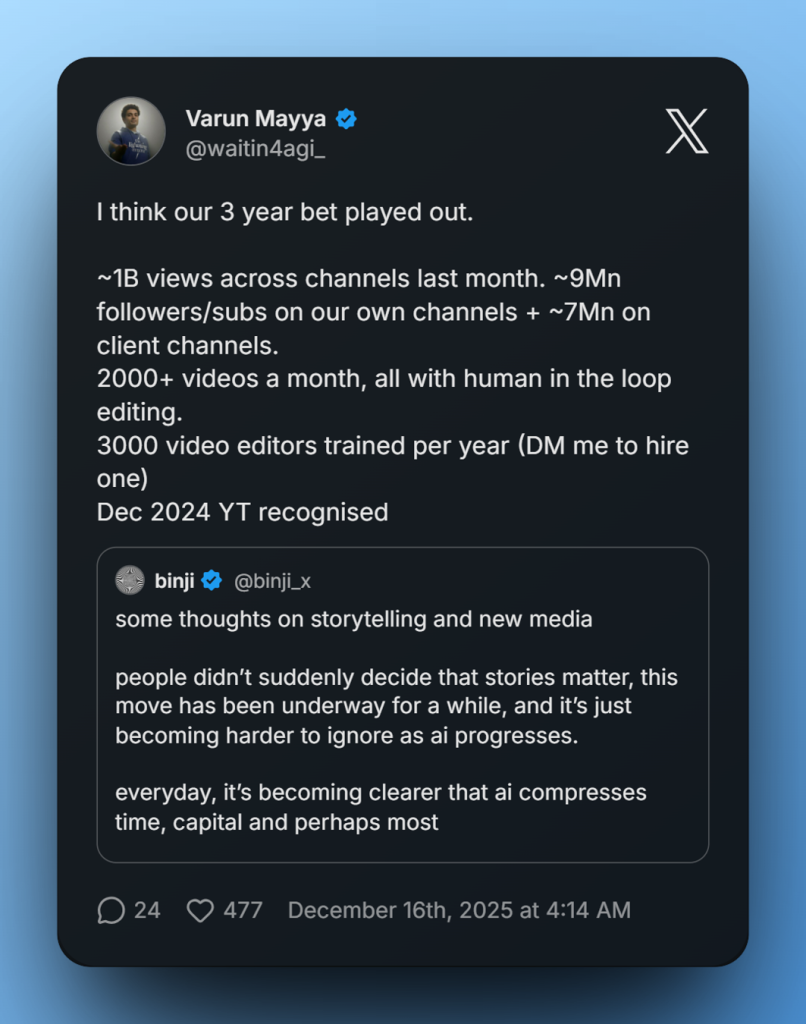
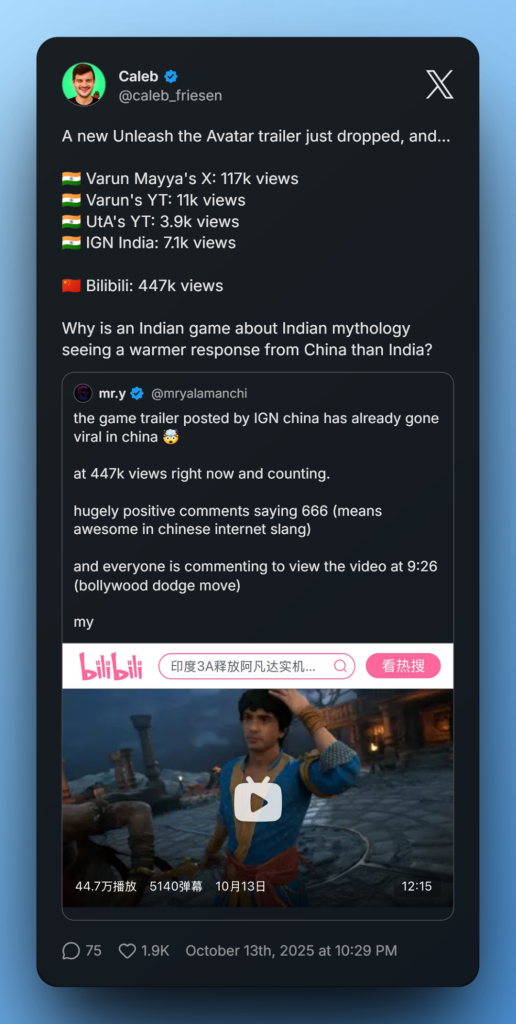
While working on this piece, I had a conversation with Varun Mayya, the person behind Aeos Labs, whose game Unleash the Avatar pulled something off that still blows my mind.
Their trailer didn’t just do well in India. It went big in China. On IGN China, it pulled tens of thousands of comments. On Bilibili, China’s answer to YouTube, and the platform where Wukong built its initial fanbase, engagement was within striking distance of GTA VI trailers. For a debut title from an Indian studio, rooted in Indian mythology, that is almost absurd.
Varun’s take on why it worked reframed how I think about this whole space. He talked about how game economics are changing: asset scanning, AI-assisted workflows, and better tools mean small teams can build large worlds at a fraction of what it cost even five years ago. Aeos Labs scanned the entire town of Chanderi to build hyper-real environments. The budget ceiling that once kept Indian studios out of AAA territory is dropping fast.
But the insight that stayed with me wasn’t about technology. It was about taste.
“Story is often the smallest risk,” Varun said. “International markets are saturated with narratives. What differentiates is vibe.”
And then he dropped a line I haven’t been able to stop thinking about:
“There are fewer than 20 people who have actually studied why Dangal worked so well in China.”
That sent me down a rabbit hole.
Dangal grossed over $200 million in China alone, more than it made in India. Aamir Khan became so beloved that Chinese fans gave him the nickname “Mi Shu” (Uncle Aamir). But the why goes deeper than star power. Khan’s films acted as a kind of mirror for a Chinese audience grappling with the pressures of the Gaokao education system, rapid modernisation, shifting gender roles, and patriarchal traditions. The emotional grammar of Bollywood, the big feelings, the dramatic stakes, the hero who fights the system, resonated on a frequency that Hollywood couldn’t reach.
Varun’s claim, and I think he’s right, is that Bollywood’s over-the-top emotional language is uniquely suited to games. It’s expressive, dramatic, stylised. The hero saves the day. In fact, Bollywood-style character mods already appear in games like Wukong and Sekiro: Shadows Die Twice. India doesn’t have an equivalent of Chinese wuxia, but Bollywood itself fills that gap.
There’s a larger point here. India’s competitive advantage in the global IP race won’t be technical sophistication (we’ll get there, but we’re not there yet). It’ll be emotional sophistication. We’re a country that produces stories drenched in feeling, melodrama, sacrifice, duty, love, betrayal, and it turns out the world has an appetite for exactly that, if the execution is right.
The cringe tax (and how to avoid paying it)
That last bit, “if the execution is right”, is the whole ballgame.
Because here’s the uncomfortable truth: Indian IP has a credibility problem. Not because the stories are bad. Because too many attempts at bringing them to screen have been.
The contrast between Baahubali and Brahmastra makes this painfully clear. Baahubali worked because its world, tone, and writing were internally consistent and confident. It didn’t apologise for being Indian. It didn’t try to be a Marvel film. It was its own thing, done with conviction.
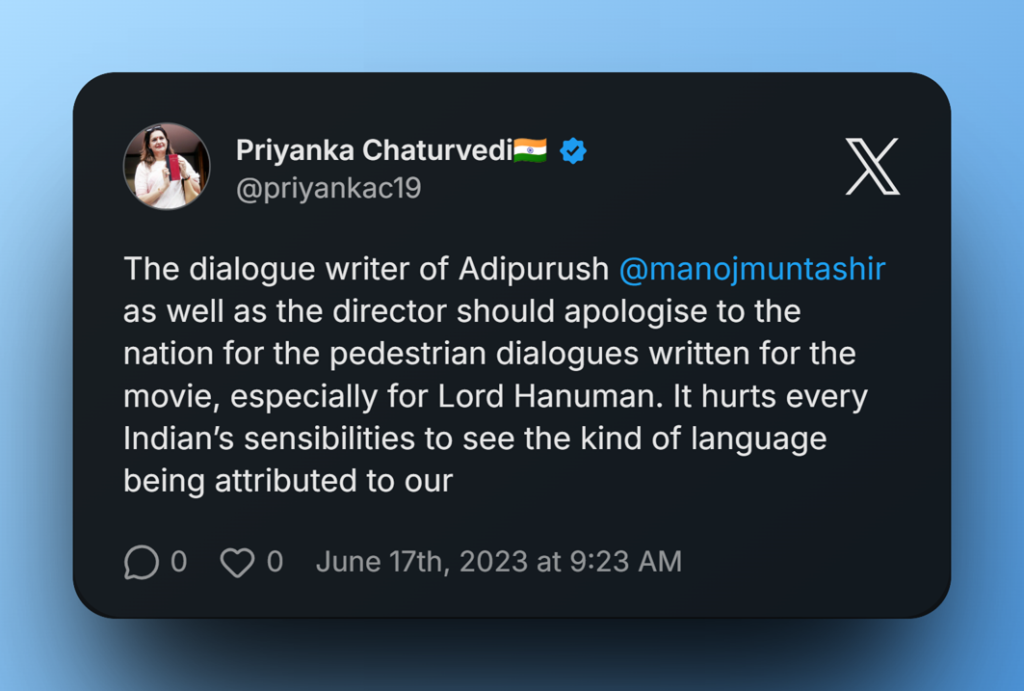
Brahmastra, despite enormous scale and ambition, stumbled on script and dialogue. Adipurush was worse. The budgets were there. The intent was there. What was missing was craft.
Half-hearted attempts don’t just fail locally, they actively damage the credibility of Indian IP globally. If you’re a distributor in Southeast Asia or a platform buyer in North America, every bad Indian fantasy film makes you less likely to bet on the next one. Cringe is a tax no IP can afford to pay.
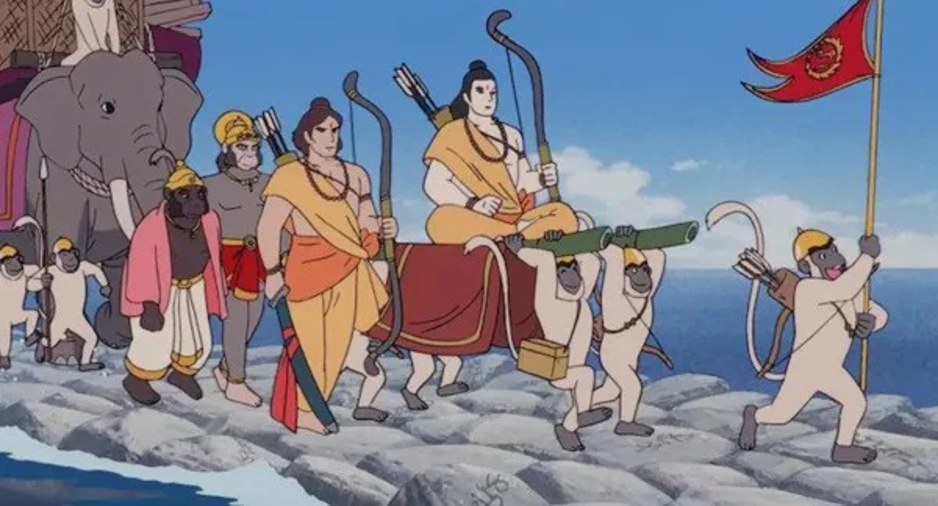
There’s also a sensitivity dimension that anyone working with Indian mythology needs to understand. In the early 1990s, a Japanese artist created an animated adaptation of the Ramayana. The backlash was severe enough to shut down similar cross-cultural projects for years. That film has since been reconsidered and even adored, but at the time, the hostile reception was real.
(A film I hold dear in my heart, the Japanese animated adaptation of the Ramayana has a fascinating history, from eventually overcoming its hostile reception to achieving widespread adoration decades later.)
Cultural sensitivity in India has eased over time, but it hasn’t disappeared. Supernatural faced heat for its portrayal of Hindu gods. Episodes of Record of Ragnarok were banned. The lesson isn’t that these stories shouldn’t be told. It’s that they must be told with care. Intent alone doesn’t cut it. Execution matters. Respect matters. And “respect” doesn’t mean timidity, it means knowing the source material well enough to reinvent it without cheapening it.
The worlds being built right now and the blueprint (if there is one)
Let me show you what “right” looks like in practice, because it’s already happening.
Gaming is the sharpest edge. India is seeing a wave of games that want to compete globally, not just culturally but technically. Nodding Head Games’ Raji: An Ancient Epic got critical success and international recognition, and they’ve since announced Raji: Kaliyuga. Tara Gaming is developing Age of Bharat with Amish Tripathi and Amitabh Bachchan. Ayelet Studio is building Son of Thanjai, set in 11th-century South India. These projects aren’t equals to God of War yet. But the fact that they now have the potential to compete is itself a massive shift.
Transmedia-first universes are emerging too. One project I love is Maya Universe, created by Zain Memon (who made the breakout board game Shasn) and filmmaker Anand Gandhi. Maya is a neo-mythological world planned from day one across books, board games, potential video games, and future screen adaptations. Unlike many Indian projects that rely on domestic financing, Maya raised over $420,000 on Kickstarter, most of it from backers in the United States. That’s the universe coming first, and the formats following. World-building as infrastructure, not content. That instinct is what separates one-off successes from durable IP.
Story factories are becoming IP factories. A conversation with Ranjeet from Pratilipi crystallised this for me. He talked about how IP creation that once took 10-15 years can now happen in weeks. A single story can begin as text on Pratilipi, test its resonance, and rapidly evolve into audio, video, or screen adaptations. Shaitan Se Samjhauta, which started as a story on their platform, crossed 50 million views on YouTube as a TV series. That pipeline, text to audio to video to franchise, is the kind of plumbing that builds durable IP at scale.
Merchandising is wide open. As someone who collects LEGO sets, I can tell you: the appeal isn’t the bricks. It’s the nostalgia and emotional connection to IPs like Indiana Jones or Hocus Pocus. Adults aren’t buying toys, they’re buying memory. Indian IPs have barely scratched this surface. BWO and its subsidiary A47, which produces everything from official ISRO merchandise to cultural collectibles, shows what’s possible. If Montblanc can collaborate with Naruto, cross-cultural IP partnerships aren’t experimental anymore, they’re proven.
And then there are the collabs happening right here. Comet, an Indian sneaker brand, collaborated with Naru, a ramen fine-dining restaurant in Bangalore. The sneaker sold out almost instantly. Twenty years ago, a sneaker brand teaming up with a ramen restaurant would have sounded like a fever dream. Today, it’s what happens when two brands figure out they share a cultural vocabulary, and their audiences do too.
(I’ve been to Naru twice, by the way. It’s actually pretty good. You should give it a shot.)
For all the momentum in mythology-based IP, there are entire genres of Indian storytelling that remain almost completely unexplored.
Consider India’s relationship with cricket. Japan turned volleyball into Haikyuu!! and football into Blue Lock, animated series with massive global followings. India has the world’s most emotionally invested cricket audience and… nothing comparable. Where is the larger-than-life animated cricket universe?
Indian science fiction barely exists as a commercial genre, despite the source material being extraordinary. China’s Three-Body Problem drew on Chinese philosophy and history while engaging with modern physics, and became a global phenomenon. Indian philosophy and cosmology, the concept of cyclical time in the Vedas, the multiverse in Jain cosmology, the mathematical traditions of ancient India, could be the backbone of an equally compelling sci-fi universe.
Horror and folklore? India has millennia of material, churails, pishachas, vetala tales, and a massive domestic appetite for the genre. The enduring success of CID, including its resurgence on streaming platforms, proves that appetite for Indian crime and thriller narratives is durable.
What’s stopping a locally rooted Indiana Jones-style adventure about lost Harappan cities or forgotten manuscripts from Nalanda? What’s stopping a Byomkesh Bakshi 2.0 from emerging as a modern franchise?
I don’t think there’s a prescriptive playbook here. But there are a few observations that feel hard to argue with.
The first is that the next Disney won’t look like a movie studio. It might look like Pratilipi. It might look like Aeos Labs. It might be a platform that doesn’t create stories at all, but builds distribution and community infrastructure for the people who do. India has an abundance of storytellers. It also has an abundance of software engineers. What’s emerging now is the connective tissue between the two.
The second is that AI is lowering the barrier to experimentation in ways that matter. Not as a replacement for human creativity, god, no, but as a tool for prototyping, testing aesthetics, and reducing iteration cycles. We’re seeing AI-augmented Mahabharata series on JioHotstar, Instagram creators building speculative worlds using AI-generated visuals, and storytellers using AI to extend their reach without losing their voice. The cost of asking “what if?” has never been lower.
The third, and maybe the most important, is that what makes stories travel isn’t technology or budgets. It’s an emotion. The particular ache of wanting to make your family proud while also wanting to be free. The comedy of a joint family. The fury of injustice. India produces these feelings in industrial quantities. We also produce the people capable of turning them into films, games, comics, and platforms. What we lacked, for a long time, was the will to experiment. That’s the part that’s changing.
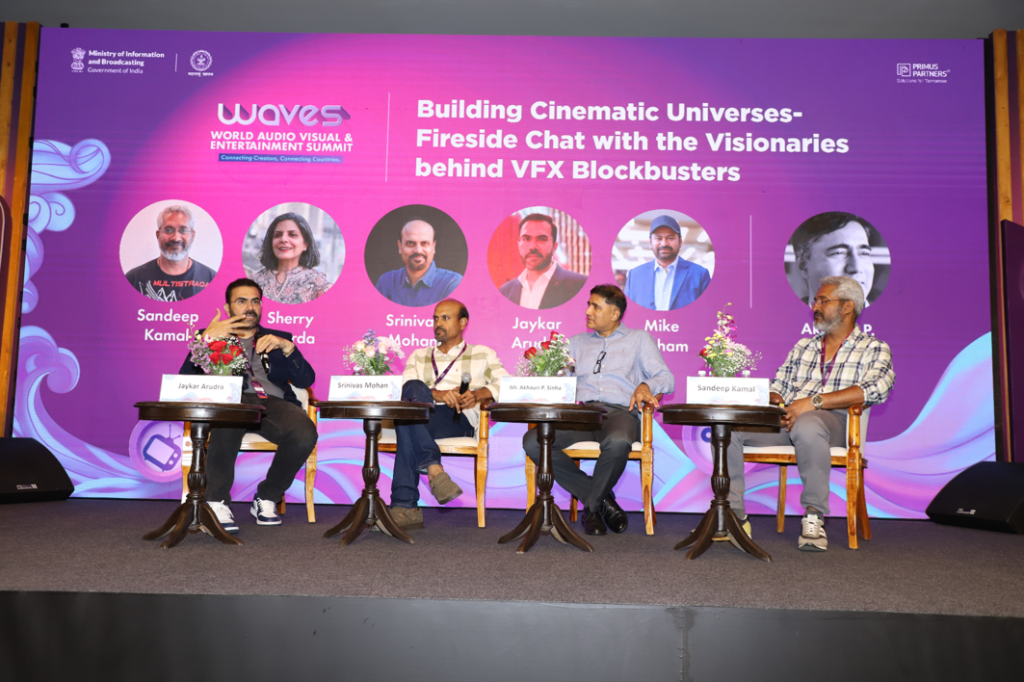
The government seems to recognise this too. The WAVES summit, the national AVGC-XR policy, state-level initiatives in Karnataka and Maharashtra, the new Indian Institute of Creative Technologies in Mumbai, the institutional scaffolding is being erected. Whether it’s enough, and whether it’s fast enough, remains to be seen. But the direction of travel is clear.
The economic fundamentals reinforce this case. India’s media and entertainment sector is projected to cross USD 100 billion by 2030, driven by digital consumption and creative-tech growth. The country enjoys a 40–60 percent cost advantage in animation and VFX services, supported by a large skilled workforce. Nearly 25 percent of viewership for Indian OTT content already comes from overseas audiences, underscoring that Indian stories are no longer consumed only at home.
Institutionally, this shift is becoming tangible. In 2024, the Indian Institute of Creative Technologies (IICT) was unveiled in Mumbai as the National Centre of Excellence for AVGC-XR, bringing academia, industry, and government onto a single platform. At the state level, momentum is accelerating. Karnataka implemented one of India’s first dedicated AVGC-XR policies (2024–2029), focused on skilling, incubation, and global competitiveness. Maharashtra followed with its AVGC-XR Policy 2025, backed by a INR 3,268 crore financial plan and a roadmap extending to 2050, aimed at investment attraction, job creation, and production-cluster development.
(Still from WAVES 2025 | 1-4 May 2025 | Jio World Centre, Mumbai)
Most of these bets won’t pay off. That’s fine. The point isn’t that every Indian IP will become the next Pokemon. The point is that for the first time, the conditions exist for it to happen: the tools, the talent, a massive domestic market, growing global appetite, and platforms that didn’t exist five years ago.
This is India’s narrative gold rush. And if you’re a creator, a builder, a founder, or just someone who grew up reading Amar Chitra Katha and always wished those worlds were bigger, the door hasn’t just opened. It’s been kicked off its hinges.