How to Raise Your Seed Round in India

The Seed Fundraising Playbook for Indian Startups: A Founder’s Guide to Getting Your First Institutional Cheque

If you’re reading this, you’ve probably hit that inflection point. You’ve built something people want, you’re out of runway in 3-4 months, and you need capital to take this from a side project to a real company.

Seed fundraising in India isn’t what it used to be. In 2024, seed funding dropped 25%, and investors are being more selective than ever. But here’s the thing: strong startups are still raising money. The bar is just higher.

This isn’t a guide about “crushing your pitch” or “hacking the VC game.” It’s about understanding exactly what investors are looking for, when you should raise, how much to ask for, and how to actually get the money in your bank account.

Let’s get into it.

Part 1: Should You Even Be Raising Money Right Now?

Before you waste 6 months pitching investors, ask yourself these three questions:

1. Do you have something investors can evaluate?

You don’t need revenue, but you need something. A working product, early users, evidence that people want what you’re building. If you’re still figuring out what to build, you’re not ready.

Investors at seed stage are betting on potential, but they need proof of concept. That could be:

    • 500 people on a waitlist who actually engage with your updates
    • 50 paying beta customers
    • Strong month-over-month growth in a key metric (signups, engagement, GMV)
    • A product that solves a real problem you’ve personally experienced

2. Can you articulate why now is the right time for this company?

Markets change. Technology unlocks new possibilities. Regulations shift. What’s changed in the last 12-24 months that makes your startup possible or necessary now?

If your answer is “nothing,” that’s a problem. Investors want to back companies riding waves, not fighting tides.

3. Are you prepared to give up 15-25% of your company?

Startups typically reserve 10-20% of equity for seed rounds. If you’re not comfortable with dilution at this stage, you’re not ready to raise institutional capital. Bootstrap longer or find angels who’ll write smaller cheques.

Part 2: How Much Should You Raise?

Here’s the honest answer: enough to hit your next major milestone with 18-24 months of runway.

The Indian seed funding landscape in 2024:

Between January and June 2025, Indian startups raised $6.65 billion across 769 equity funding rounds. Startups founded by operators with prior execution experience raised an average of $1.56 million between 2022-2024.

Most seed rounds in India fall between $300K and $2M. Here’s how to think about sizing:

  • $300K-$600K: Finishing your product and getting to initial traction. This works if you’re capital-efficient, have a co-founder splitting equity, and can operate lean for 12-15 months.
  • $600K-$1.2M: Building a small team (3-5 people), scaling from 10 customers to 100, proving product-market fit. This is the “standard” seed round for most B2B SaaS and tech-enabled services.
  • $1.2M-$2M+: Larger rounds for companies with more expensive customer acquisition, longer sales cycles, or hardware/deep tech requirements. Technology-led startups accounted for most capital raised in early 2025.

How to calculate your number:

  1. List every expense for the next 18 months (salaries, marketing, infrastructure, legal, buffer)
  2. Add 25% contingency (things always cost more)
  3. That’s your number

Don’t inflate it to “grow faster.” Don’t deflate it to “look capital-efficient.” Be honest about what you need.

Part 3: When to Raise
(Timing Matters More Than You Think)

The wrong time to raise:

  • When you’re 2 months away from running out of money (desperation shows)
  • Right after launching with zero data

The right time to raise:

  • When you have 6-9 months of runway left
  • When a key metric is consistently growing month-over-month
  • When you’ve just landed a significant customer or partnership
  • When you can show clear progress since your last update

Pro tip: Start conversations with investors 3-4 months before you actually need the money. If they say “come back when you have more traction,” you have time to build it. If they’re interested now, you can close quickly.

Part 4: The Actual Process
(From First Email to Bank Transfer)

Month 1-2: Preparation

Build your target list (50-75 investors)

Not every VC is right for you. Research firms that:

  • Invest at seed stage (check their portfolio)
  • Back companies in your sector or adjacent spaces
  • Have written cheque sizes that match what you’re raising
  • Are actively deploying (check recent announcements)

Create a simple spreadsheet: Firm name, Partner name, Email, Warm intro path, Status.

Get your materials ready:

  • Pitch deck (10-12 slides): Problem, solution, why now, traction, business model, market size, team, ask. Keep it visual, not text-heavy.
  • Financial model: 3-year projection showing revenue, costs, burn rate, key assumptions. Nothing fancy, just a Google Sheet that shows you understand your unit economics.
  • One-pager: Deck compressed into a single page. Some investors prefer this for initial review.

Month 2-3: Outreach & Meetings

The warm intro is everything.

Cold emails and mass LinkedIn messages rarely yield results, but warm introductions through mutual connections are far more effective.

Your best paths:

  • Other founders in the VC’s portfolio
  • Angels who’ve backed you
  • Advisors with credibility in the ecosystem
  • Accelerator/incubator networks

Don’t spray and pray. Reach out to 10-15 investors per week with thoughtful, personalized intros.

Initial meetings are about fit, not pitch perfection.

First meetings rarely end with term sheets. Investors want to:

  • Understand what you’re building
  • Assess if you’re coachable and self-aware
  • Determine if this fits their thesis
  • See if they like working with you

Be conversational. Tell your story. Ask about their portfolio and what they look for. This is a two-way street.

Month 3-4: Due Diligence & Closing

Once you have 2-3 investors showing serious interest, things move fast.

What investors will dig into:

  • Product demo and technical architecture
  • Early customer conversations
  • Founder background checks
  • Financial model assumptions
  • Cap table and any existing agreements

Term sheet negotiations:

The two numbers that matter most:

  • Valuation: Early-stage startups in India typically see $2M-$8M post-money valuations at seed, depending on traction and sector.
  • Pro-rata rights: Investors want the option to invest in your next round. This is standard, don’t fight it.

Everything else (board seats, liquidation preferences, drag-along rights) is usually standard at seed. Don’t over-negotiate.

Closing takes 3-6 weeks after term sheet.

Legal documentation, fund transfer logistics, regulatory filings. Factor this into your cash flow planning.

Part 5: Structures & Instruments
(SAFEs, Convertibles, Equity)

In seed funding, SAFEs have become common instruments, comprising 64% of seed deals from Q3 2023 to Q3 2024.

Here’s what each means:

1. SAFE (Simple Agreement for Future Equity)

  • Not equity now, converts to equity in your next priced round
  • No interest rates or maturity dates, unlike convertible notes
  • Includes a valuation cap (protects the investor if your valuation jumps)
  • Fastest to close, least paperwork

Best for: First-time founders, quick closures, when you’re not sure of valuation yet.

2. Convertible Note

  • Debt that converts to equity later
  • Includes interest rate and maturity date
  • If no conversion event happens, you technically owe the money back

Best for: Situations where SAFE isn’t suitable, or when investor prefers debt structure.

3. Priced Equity Round

  • You set a valuation now, issue shares immediately
  • More expensive (legal fees), takes longer
  • Cleaner cap table, everyone knows their ownership

Best for: When you have strong leverage, clear valuation, and want certainty.

Most Indian seed rounds in 2024-25 are closing on SAFEs or convertibles. Save the priced round for when you have serious traction.

Part 6: Common Mistakes That Kill Seed Rounds

  1. Raising on a dream, not a plan
    “We’ll figure out monetization later” doesn’t fly anymore. You need a credible path to revenue, even if it’s 12-18 months out.
  2. Being vague about competition
    “We have no competitors” = “I haven’t done my homework.” Every startup has competitors, even if they’re incumbents or alternative solutions. Show you understand the landscape.
  3. Optimizing for valuation over partnership
    A $6M valuation from an investor who ghosts you after signing is worse than a $4M valuation from someone who opens doors and helps you hire. Pick your partners carefully.
  4. Talking to one investor at a time
    Fundraising is a pipeline game. You need multiple conversations happening simultaneously to create momentum and optionality.
  5. Not asking for help
    The founders who raise fastest are those who actively ask for intros, feedback, and support. Your network is your biggest asset. Use it.

Part 7: After You Get the Money

The cheque hits your account. Now what?

First 30 days:

  • Send investor update #1 (what you’re focused on, key hires, early wins)
  • Set up monthly reporting cadence
  • Make your first key hires
  • Ship the features that’ll move your core metric

First 90 days:

  • Hit the milestones you promised in your deck
  • Build relationships with your investors (monthly calls, ask for intros)
  • Start thinking about your next round (18 months flies by)

Seed funding isn’t the finish line. It’s the starting gun.

Seed Fundraising Checklist

Pre-Fundraise (4-6 weeks before)

  • Build investor target list (20-30 names)
  • Create pitch deck (10-12 slides)
  • Build financial model (3-year projections)
  • Prepare one-pager summary
  • Set up data room (product, metrics, legal docs)
  • Map warm intro paths for top 10 investors
  • Practice pitch with other founders

Active Fundraise (8-12 weeks)

  • Send 10-15 warm intros per week
  • Take all first meetings (even if investor seems like a stretch)
  • Follow up within 24 hours after each meeting
  • Track all conversations in spreadsheet (stage, next steps, timeline)
  • Share updates every 2 weeks with interested investors
  • Run diligence process with 2-3 serious investors simultaneously
  • Negotiate term sheets (valuation, pro-rata, board seat)
  • Close legal paperwork (3-6 weeks)

Post-Funding (First 90 days)

  • Send first investor update within 2 weeks
  • Make first key hires
  • Execute on deck promises (product launches, customer targets)
  • Set up monthly investor reporting
  • Start planning 18-month milestones for Series A

Closing Thoughts

Raising a seed round in 2025 is harder than it was in 2021, but it’s far from impossible. The companies getting funded are those with real traction, clear thinking, and founders who understand their business cold.

Focus on building something people want. Raise money to accelerate that, not to figure it out.

And remember: every successful company you admire went through this exact same process. The difference isn’t luck. It’s preparation, persistence, and clarity of thought.

Now go raise that round.

Why We Think Bodycare Is the Next Big Wave in Beauty

The first wave of D2C brands in beauty and personal care (BPC) won on distribution. They understood Instagram early, built micro communities, and reached consumers who were shopping online for the first time. That channel edge was enough then.

But the consumer has matured. Today, a great product is just table stakes. What truly matters is the story behind the brand. It can’t be an afterthought, it needs to be built into the brand from day one.

You can see this clearly in how the US market evolved around 2015. My favourite example is Sol de Janeiro. The brand is built around a single idea, Brazilian confidence, and every product reinforces that story. When someone picks up the Bum Bum Cream, they are subconsciously buying into that narrative of body positivity and joy.

The larger the truth your brand stands for, the larger the market you can chase. As disposable incomes in India rise, consumers will slowly move beyond buying for function and start buying for identity. Global incumbents already understand this. The only real defence Indian brands have is pricing. Local manufacturing and avoiding import duties allow us to meet aspiration without overpricing.

The Bum Bum Cream costs ₹2,460 for 75ml. That tells you everything about the opportunity. If we continue to think function-first, we’ll miss the chance to build truly outstanding, emotionally resonant brands.

Why We’re Not Worried About the Flood of Insta Brands

The backend of consumer goods is completely commoditised, whether you’re producing in China or India. Anyone with some hustle can find a factory and start selling a product through aggressive Instagram ads.

That can get you your first purchases. It won’t get you repeats.

A few of these businesses might reach ₹20–40 lakh a month in revenue with single-digit or low double-digit EBITDA. But they’ll hit a ceiling because repeat purchases and loyalty require two things: real product differentiation and meaningful brand building.

The Niche We’ve Identified

Bodycare is shaping up to be the next wave for challenger brands.

Take a look at Nykaa’s category pages:

In all of these, legacy brands dominate. Challenger brands have barely touched them. Even in categories like deodorants and body mists, where newer brands have managed some penetration, the products haven’t really evolved. The same sticky, heavy formulations persist, which simply don’t work in India’s humid climate.

Each of these categories is ripe for disruption.

The Opportunity Across the Routine

Pre-shower: Think Sunday oils that act as a barrier against hard water damage.

In-shower: Gentle scrubs that exfoliate without harming the skin barrier. Body washes and shower oils that leave you feeling hydrated rather than tight and dry.

Post-shower: Lightweight body mists that double as moisturisers. Creams that absorb fast without heaviness. Sunscreen sprays that are convenient and actually usable daily.

Most Indians don’t need thick body butters for most of the year. What they do need are modern, climate-suited alternatives that feel indulgent yet practical.

Products like Supergoop’s SPF body oil and Forest Essentials’ shower oil are great references, but both are priced at ₹1,500 and above, leaving the mass-premium segment wide open.

Strategy

  • Start with bodycare.
  • Expand into fragrances.
  • Then move into haircare.

Around this, create focused ranges for pregnancy (stretch marks, scrubs, haircare) and menopause (bodycare + fragrance). Dove has already begun these wellness-oriented ranges in the US. India, with its declining age of menopause and growing awareness of women’s health, will be an important market for this next wave of products.

If we build with care, intention, and real consumer empathy, we’ll win.

Why Bodycare Has the Potential to Be Bigger

Bodycare is one of the few beauty categories that cuts across genders. Most Indian households share bathrooms, and therefore, products.

Men may not moisturise or use sunscreen, but they bathe. That makes bath and body products the easiest way to bring them into a self-care brand. Our customer visits have shown that men are just as engaged in bath care as women. This behaviour doesn’t always carry over to face or hair, where their concerns are different (think hair fall or balding).

That’s why our bath range avoids overtly feminine colours and naming. The idea is to make it universal.

How the Global Bodycare Landscape Is Evolving

Globally, bodycare is being redefined by brands that are turning everyday routines into intentional rituals. Indie players are moving the category beyond simple hygiene or moisturisation into experiences built around wellness, confidence and mood.

  • Hanni recently raised $2M as it built a bodycare line centred on “ritual over routine,” now retailing at Sephora.
  • Salt & Stone is redefining deodorants as a lifestyle product rooted in clean, high-performance ingredients.
  • OLLY has expanded from supplements into mood-boosting bodycare that links scent and skincare to emotional wellbeing.
  • And Dove has launched a women’s wellness range addressing menopause care, an early signal that large incumbents are starting to serve more nuanced life stages.

Across these examples, one pattern stands out: bodycare is evolving from a functional category into an emotional one. It’s about how people feel in their bodies, not just how they look. India is entering that same phase, only this time, we have the advantage of scale, climate-specific needs, and a young consumer base ready to adopt brands that speak to them more personally.

What’s Happening in the Market

India’s household BPC spending is at a turning point as disposable income rises. The country sits in a sweet spot for consumption growth.

One interesting data point: female labour force participation (FLFPR) jumped from 23.3% in 2017–18 to 41.7% in 2023–24. The share of “own-account workers or employers” rose sharply, especially in rural areas, from 19% to 31.2%. Experts see this as a shift toward independent work and entrepreneurship.

Add to that a historic decline in birth rates and smaller families. People have more discretionary income and are choosing to make their everyday purchases feel more elevated.

A growing female workforce also bodes well for BPC as women continue to drive innovation and early adoption in the category.

Unilever is already gearing up to go after body wash in India as premium consumers shift from soaps to washes. Their recent acquisition of Minimalist signals the same intent at the premium face care level. Personal care contributed nearly ₹9,000 crore to Unilever’s topline last year. The signal is clear: bodycare and adjacent wellness categories are becoming key growth engines.

The Moment Ahead

India’s beauty market has matured past the “Instagram-first” phase. The next decade belongs to brands that can build emotional resonance and product excellence in equal measure.

Bodycare sits right at that intersection. It’s functional, high-frequency, gender-inclusive, and underdeveloped. The opportunity is sitting there. The only question is who will build for it with enough conviction and care.

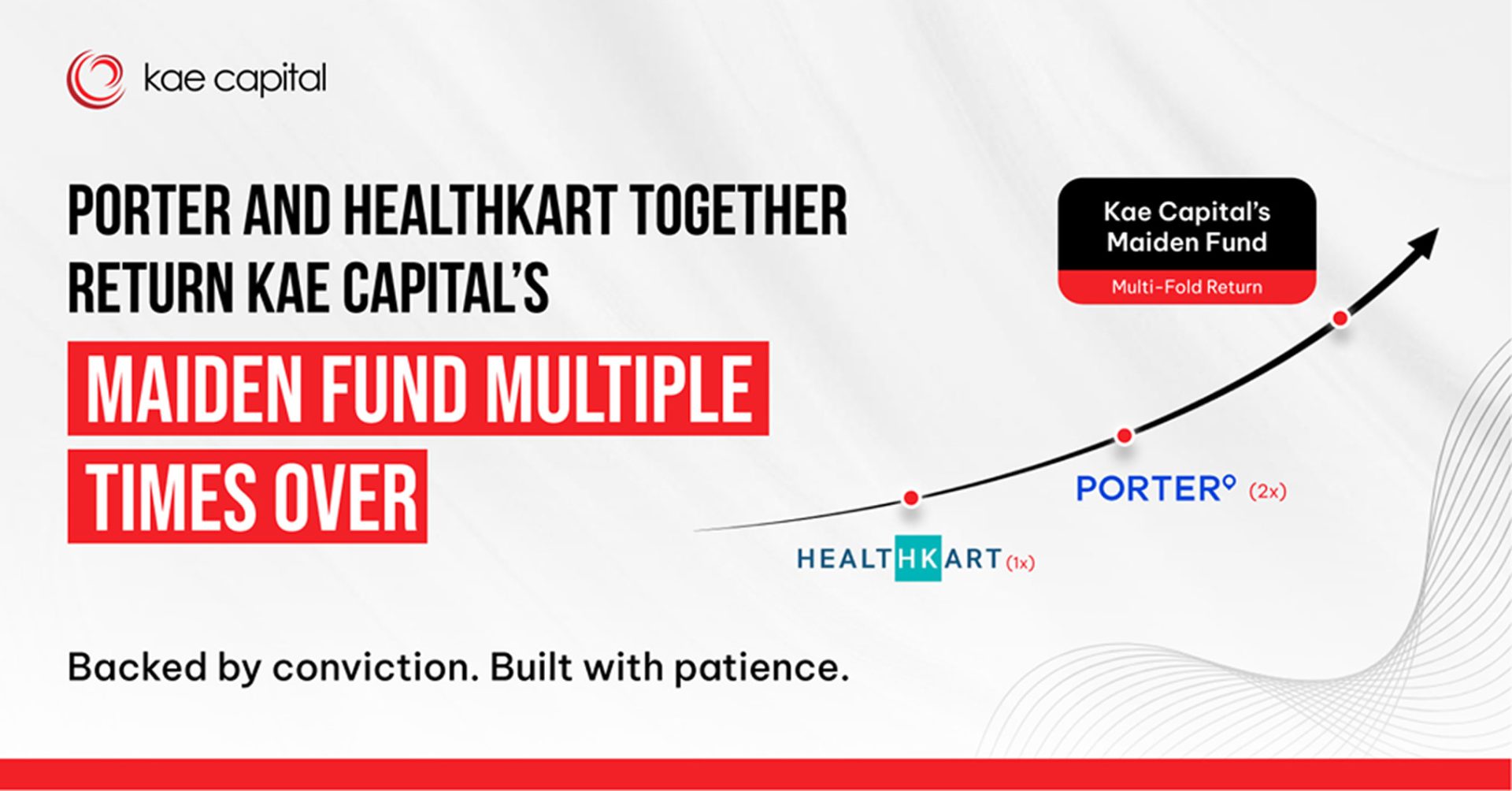
Porter and HealthKart Together Return Kae Capital’s Maiden Fund Multiple Times Over

Fund-returners Porter (~2x) and HealthKart (1x) anchor one of the strongest seed track records in the country

When we started Kae Capital in 2012, institutional seed investing in India barely existed. The startup ecosystem was young, and the idea of writing structured pre-seed and seed cheques felt unconventional. But we believed India’s most iconic companies would be built from bold, untested ideas; ideas that simply needed conviction, capital, and care early on.

That conviction has compounded.

Today, we’re proud to share a milestone that underscores that belief: Porter and HealthKart, two of Kae Capital’s earliest investments, have together returned our maiden Fund I multiple times over.

Following a series of recent secondary transactions, Porter has already returned more than 2x the fund, while HealthKart has returned the fund on its own, with meaningful upside still ahead. These are not just standout portfolio outcomes, they represent proof that India’s early-stage venture model can deliver real distributions and enduring impact.

A Landmark Fund Performance

Launched in 2012, Fund I backed 32 companies across India and the US. Many of these grew into category-defining leaders that reshaped their sectors and validated India’s potential to produce global-scale companies from the earliest stages.

Kae Capital’s Fund I India vehicle fully exited with a DPI of 3.6x as of September 2023, while the overseas vehicle is on track to deliver over 5x DPI. Together, they mark one of the strongest maiden fund performances by a homegrown venture capital firm, not only in India but benchmarked against global peers.

The portfolio features enduring leaders such as 1MG, now the country’s largest online pharmacy under the Tata umbrella, and Certa, a fast-scaling global compliance and risk platform. Other notable outcomes include Fynd (formerly Shopsense, acquired by Reliance), Dailyround, Airwoot, and Eventifier, each contributing to the fund’s stellar performance and ecosystem impact.

In total, Fund I catalyzed over $900 million in follow-on capital, created more than 56,000 jobs, and enabled over $2.7 billion in enterprise value across its portfolio.

When we raised Fund I, seed investing in India was almost unheard of. Our goal was simple, back extraordinary founders at their earliest stages and stand with them across cycles. To now deliver a top decile DPI number on that very first fund is deeply gratifying. It is a milestone shared with our founders, LPs, and the ecosystem that believed in us before it was fashionable to do so,” said Sasha Mirchandani, Founding Partner, Kae Capital.

Building a Model for Early-Stage Venture

Fund I’s legacy is not just measured in multiples. It established a new way of approaching early-stage venture; one rooted in conviction, discipline, and deep partnership with founders.

This foundation shaped every fund that followed. With Fund II, Kae backed companies that have gone on to define their categories: Zetwerk, now one of India’s most successful manufacturing platforms and a soon-to-be public market entity; Nazara, India’s first listed gaming unicorn; and Snapmint, a pioneering BNPL and embedded finance platform enabling consumer credit inclusion at scale.

Fund III, launched in 2022, is already showing strong momentum with fast-scaling brands like Traya, Foxtale, and RecommerceX, reflecting Kae’s continued commitment to backing durable, high-scale businesses driven by innovation and execution.

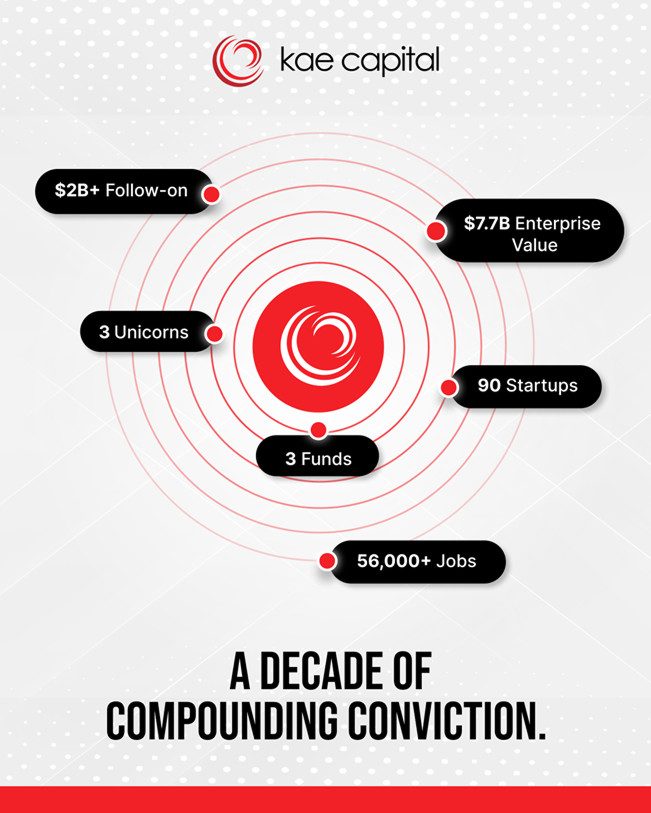
Across its three funds, Kae Capital has backed three unicorns, generated $7.7 billion in enterprise value, attracted over $2 billion in follow-on capital, seeded five companies with $100 million-plus in revenue, and contributed to tens of thousands of new jobs in the Indian economy.

“Fund I’s DPI is not just a number; it’s a symbol of what’s possible when early conviction meets enduring partnership,” said Gaurav Chaturvedi, Partner, Kae Capital. “We are proud to have played a role in shaping some of India’s most exciting companies and even prouder of the trust placed in us by our founders and LPs. This is only the beginning.”

What Fund I Taught Us

Every fund leaves behind a set of lessons. Fund I gave us principles that continue to define how we think, invest, and partner with founders today.

  • Patience compounds
    Enduring companies take time. The ability to stay invested, mentally and financially, through the quiet years often determines the eventual outcome.
  • Resilience over momentum
    Markets shift. Business models evolve. The founders who last are those who adapt fast but stay anchored to first principles.
  • Founder first, always
    When things break, markets and models matter less than trust. Honest, early conversations often save more companies than strategies ever do.
  • Teams are the true moat
    Strong, complementary teams outperform solo brilliance. Founders who can disagree well tend to outlast the rest.

These lessons became the DNA of Kae’s platform. They informed the construction of Fund II and Fund III, which are today backing some of India’s most transformative companies.

All Weather Partner

Kae’s performance is inseparable from its philosophy. The firm has consistently partnered with founders through pivots, crises, and inflection points.

Amrit Acharya, Co-Founder of Zetwerk, recalls:From our first round to navigating COVID and scaling into a large company, Kae has been thoughtful, proactive, and solution-driven. They’ve consistently added value.

Pranav Goel, Co-Founder of Porter, adds:Having Kae Capital since the very start has been a sheer delight. Their unwavering support, especially during tough times, helped us cut through the clutter and focus on building.

Such endorsements reflect a core truth: Kae’s success is built on trust. The firm remains one of the few VCs in India to track founder NPS, which stands at 88%.

Looking Ahead

As India enters its next wave of innovation, Kae is deepening its focus on sectors that will define the country’s next decade; AI, intelligent automation, manufacturing resilience, and deeptech. These are the technologies that will drive self-reliance, productivity, and global competitiveness.

Kae’s mission remains unchanged: to back visionary founders from the first cheque through scale, helping them build enduring, globally competitive companies.

Fund I is a strong reminder for us that conviction, patience, and partnership are the most valuable currencies in venture capital, and that, sometimes, belief compounds faster than capital.

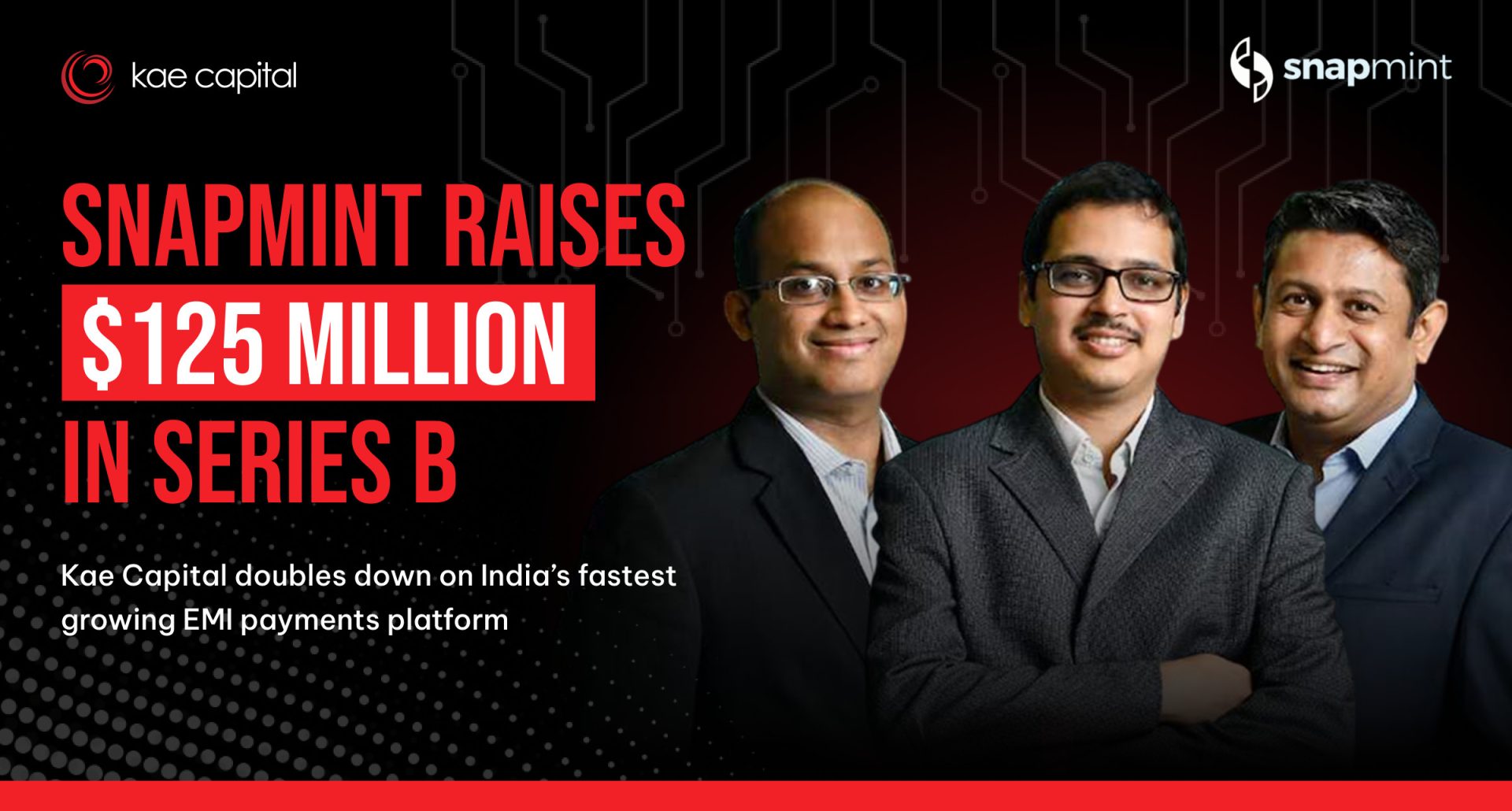
Snapmint Raises $125M Series B: Pioneering the Future of Credit in India

We’re thrilled to announce our continued support for Snapmint as they close a landmark $125 million Series B funding round led by General Atlantic, with participation from Prudent Investment Managers, Elev8 Venture Partners, and several existing angel investors.

What makes this fundraise particularly noteworthy is not just its size, but the context in which it was raised. Unlike many fintech companies still chasing scale at the expense of profitability, Snapmint has achieved that rare combination of hypergrowth and healthy unit economics, a feat that caught the attention of one of the world’s leading growth investors.

The Snapmint Story: Democratizing Credit Through Innovation

Founded in 2017 by three IIT Bombay alumni; Nalin Agrawal, Anil Gelra, and Abhineet Sawa, Snapmint set out to solve a fundamental problem in India’s consumer finance landscape. With credit card penetration remaining stubbornly low and traditional lending failing to serve the mass affluent segment, millions of Indians were locked out of flexible payment options that could help them afford more.

Snapmint was founded to bring honest and transparent EMI offerings to mass affluent consumers of India without the need of a credit card. The company’s breakthrough came in 2020 when they pioneered EMI-on-UPI, recognizing that India’s digital payments revolution through UPI presented a once-in-a-generation opportunity to leapfrog credit cards entirely.

The thesis was simple yet powerful: if UPI could democratize payments, why couldn’t it democratize credit? By building seamless installment payment capabilities directly into the UPI infrastructure that millions of Indians were already using, Snapmint created a frictionless credit experience that required no new cards, no complex applications, and no hidden charges.

The Growth Journey

Snapmint’s growth trajectory has been nothing short of remarkable. The platform currently serves 7 million monthly active users across 23,000 pincodes in India and funds over 1.5 million purchases per month. These aren’t just vanity metrics, they represent real people gaining access to credit in Tier 2 and Tier 3 cities where traditional financial services have historically struggled to reach.

But what truly sets Snapmint apart is their path to profitability. For the fiscal year ending March 2025, the company reported an 80% year-on-year increase in revenue to Rs 158.5 crore and turned profitable with a net profit of Rs 15 crore. In an ecosystem where profitability often feels like a distant dream, Snapmint has demonstrated that responsible lending and strong unit economics can coexist with rapid growth.

Looking ahead, co-founder Agrawal says the company expects to double its revenue in FY26, underscoring the company’s focus on sustainable, profitable growth even as it continues to scale aggressively. In the two years leading up to this funding, the company has grown from 1 million purchase financing transactions a year to over 5 million annual transactions, a 5x increase that speaks to the massive market pull for their product.

The Market Opportunity: Riding India’s Digital Credit Wave

Snapmint operates at the intersection of two mega-trends reshaping India’s economy: the explosion of digital payments and the democratization of credit access. The BNPL market in India is expected to grow by 13.4% annually to reach $21.95 billion in 2025, with projections suggesting it could reach approximately $35.07 billion by 2030.

This isn’t just about market size, it’s about the fundamental transformation of how India accesses credit. Snapmint offers installment-based credit solutions that allow shoppers to buy products such as mobiles, electronics, and home essentials on easy payment terms. Beyond conventional categories like electronics and travel, Snapmint shoppers also use its EMI-on-UPI offering for fashion, furnishing and other lifestyle purchases.

The company’s digital platform, Nimbus, has become a powerful enabler for partner brands. Snapmint has enabled brands to increase their sales by 10 to 20% with their offering, creating a win-win ecosystem where merchants benefit from higher conversions while consumers gain access to affordability.

What excites us most is the whitespace that remains. With over 5 million active monthly users today, Snapmint is just scratching the surface of a market where hundreds of millions of Indians lack access to formal credit. The company’s vision to bring EMI payment solutions to more than 100 million consumers in the next few years isn’t just ambitious, it’s achievable.

Kae Capital’s Perspective: Why We Remain Convicted

At Kae Capital, we’ve been proud backers of Snapmint’s journey, and our continued participation in this round reflects our deep conviction in the team and their mission. Several factors reinforce our belief that Snapmint is building something truly transformational:

Product-Market Fit at Scale: The company’s ability to finance 1.5 million purchases monthly while maintaining healthy credit metrics demonstrates they’ve cracked the code on responsible lending at scale. This isn’t easy, it requires sophisticated underwriting, robust risk management, and deep understanding of consumer behavior.

Pioneer Advantage: As pioneers of EMI on UPI since 2020, Snapmint has built significant technological and operational moats. Their early-mover advantage in this space has translated into valuable partnerships, proprietary data, and brand recognition that will be hard for competitors to replicate.

Founder Quality: Nalin, Anil, and Abhineet have demonstrated the rare ability to balance growth with discipline. Their engineering background from IIT Bombay shows in the product’s technical sophistication, while their business acumen is evident in the path to profitability they’ve charted.

Timing: India’s UPI revolution has created the perfect infrastructure for Snapmint’s vision. As co-founder Nalin Agrawal notes, “We believe India will leapfrog credit cards and go straight to EMI on UPI”. We couldn’t agree more, and Snapmint is perfectly positioned to lead this transition.

Deployment of Fresh Capital: Building for the Next Phase

The new funding will be deployed strategically across three key areas. First, the company plans to significantly expand its merchant network, deepening integrations with both large e-commerce platforms and emerging D2C brands. The startup will use the new capital to expand its merchant network, integrate with more shopping portals, and grow its balance sheet for increased lending capacity.

Second, Snapmint will invest heavily in enhancing its technology stack, particularly around credit underwriting, fraud prevention, and personalization. As the company scales to serve 100 million+ users, maintaining low default rates while improving approval rates will be critical.

Third, roughly 50% of the funds will capitalize the company’s in-house NBFC, providing the balance sheet strength to support increased lending capacity. This vertical integration gives Snapmint greater control over the entire customer experience while improving unit economics.

Looking Ahead: The Road to 100 Million Users

India stands at an inflection point in its financial inclusion journey. While traditional banks and credit cards have struggled to penetrate beyond tier-1 cities, the combination of smartphone adoption, UPI infrastructure, and innovative fintech companies like Snapmint are rewriting the rules.

Snapmint’s mission extends beyond just providing credit; it’s about enabling aspiration, removing barriers to purchase, and giving millions of Indians the financial flexibility that was previously out of reach. Every EMI processed represents a student buying a laptop for education, a young professional purchasing their first smartphone, or a family upgrading their home appliances.

As Snapmint embarks on this next chapter backed by world-class investors, we’re excited to continue our partnership with a team that’s not just building a successful business, but genuinely expanding financial access for underserved segments. The journey from 7 million to 100 million users will be challenging, but if the past few years have taught us anything, it’s that Snapmint has both the vision and execution capability to get there.

The future of credit in India won’t look like credit cards or traditional loans, it will look like Snapmint’s seamless, UPI-integrated, merchant-embedded EMI solution. And we’re proud to be backing the team that’s making this future a reality.