The Transformative Power of GenAI in Media & Entertainment

In the second part of this series, we delve into the unique blend of opportunities and challenges that the rise of GenAI in media & entertainment has brought about, along with evolving consumer preferences.


Current Landscape

The decline in traditional media globally contrasts sharply with the digital transformation successes seen in India. Digital platforms like Disney+ Hotstar’s utilization of cricket broadcasting rights to amass a large subscriber base exemplifies the potential for innovative monetization strategies despite the high costs associated with content and rights acquisition. In 2022, their strategy led to a 30% increase in subscribers during the IPL season alone, demonstrating the power of targeted content delivery.

The industry’s pivot towards premium content across sectors, despite existing monetization challenges, is also notable. While homegrown vernacular social media platforms have struggled to find monetisation models, the road for more niche communities and content is just being paved.

The audio segment, along with the comic book and gaming industry, points towards a thriving ecosystem ripe for innovation, with new-age platforms like Pratilipi, Dashtoons and Mugafi paving the way for new intellectual property (IP) development.


The GenAI Disruption

GenAI is setting the stage for a revolution in content creation and distribution. The technology’s capacity to generate personalized, engaging content at scale offers unprecedented opportunities for M&E companies. This cutting-edge technology is already reshaping how content is produced, from pre-production and development to distribution and marketing.

Tools like Midjourney and Stable Diffusion are paving the way for new forms of art. Audio platforms like PocketFM are using GenAI to scale up hits. Sora, Descript and RunwayML are expanding from generative video editing to creation. In India, startups like Rephrase.ai and HippoVideo in India are harnessing GenAI to create hyper-personalized video content, indicating the technology’s transformative potential across text, image, video and audio.

Tyler Perry has already halted his $800m Hollywood studio expansion plans in the face of this seismic shift to new models of production.


Predictions and Future Trends

These are my bets for some of the next-generation startup models we’ll see emerge in this sector:

1) Everyone is now a creator:

Given the rise of LLMs, everyone is now a creator. Supply is no longer the constraint across formats- moderating quality, generating demand and rethinking search are the real moats to building at scale. We will see the rise of entirely new AI-first platforms focused on highly personalized content and digital goods, with Gumroad leading the way.

2) Rethinking search and monetisation:

Regardless of the format you choose- audio, video, comic books, or animation- if you’re building a content marketplace in 2024, the game-changers will unlock or create a new category of consumer behavior when it comes to discovery or monetization. Wobot Intelligence, an Indian startup, is pioneering AI-driven solutions that transform content marketplaces.

3) Hacking for hits:

If you’re building a content platform, you will still have to show your path to either generating a ‘hit’ or building on existing IP. Every generational media business- whether it’s Disney, Netflix or T-series- is built on one IP that ‘works’ to begin with, and you can only hack or buy distribution up to a certain point. You have to hack both supply and demand until you get that elusive ‘hit’

4) Gaming gets more immersive:

Gaming will be reimagined and will become the largest category in this sector. We will see entirely new fantasy sports, virtual worlds, and never-ending games as GenAI changes the way we build games and makes them increasingly immersive. Real-time AI integration, as seen with Epic Games’ Unreal Engine, allows creators to build dynamic, responsive worlds, pushing the boundaries of user interaction.Kae is investing in a company which helps users create 3D assets from text using Gen AI, which could have interesting applications in gaming. A16z has already set up a new arm that focuses on investing in the disruption of gaming.

5) Social media gets less social:

The next generation of social media networks will go deeply vertical and niche, focusing on AI friendships like or being highly private. There is no middle ground. The rise of platforms that pioneer personal AI interactions like Replika, Anima, and CharacterAI are already showing that we’re finding solace in AI.


Conclusion

While the rise of GenAI does pose several challenges when applied in this industry such as lack of originality, deep fakes, intense competition for creators and IP minefields, the evolving landscape of India’s M&E sector offers a golden opportunity for founders to innovate and thrive.

Embracing GenAI, understanding nuanced consumer behaviors, and pioneering new models in content creation and distribution will be key to navigating this sector successfully.

If you’re building in this brave new world, do reach out (natasha@kae-capital.com). I’d love to brainstorm with you on staying close to the user and going deep on understanding their pain points, building for retention and quality, and hacking growth.

E-commerce enablers: Manufacturing and distribution

The Indian e-commerce landscape has witnessed multiple changes over the last decade. While back in the early 2010s, most Indian consumers were only getting acclimated to the idea of e-retail, today the skepticism has given way to widespread adoption. It was in 2020, when the pandemic marked a true inflection point for e-retail adoption, where we saw a surge in online usage. From online food delivery to quick commerce, a new form of commerce was set afoot, and today, we cannot imagine a world without being able to purchase anything digitally.

There are over 230M Indian online shoppers spread across diverse segments. A large part of Indian shoppers come from Tier 2+ cities and GenZ has become a key micro-segment. Multiple factors such as rising internet penetration due to access to cheap data, high smartphone penetration and increasing per capita GDP have all been drivers of this e-commerce surge.

While the story above looks good and e-commerce penetration in India has been on an uptick, it remains relatively low when compared to other countries. Online spending in India is 5-6% of total retail, while it’s 25% in USA and 35% in China. This shows the massive headroom for growth. To fuel this growth, a new age of startups has cropped up known as e-commerce enablers. They are a form of service providers that mitigate the inefficiencies in the current e-commerce landscape and improve the potential that can be achieved. India will need models that help businesses scale, and cater to the varying needs of its diverse shopper base – with different price sensitivities, language requirements, quality expectations and delivery timelines.

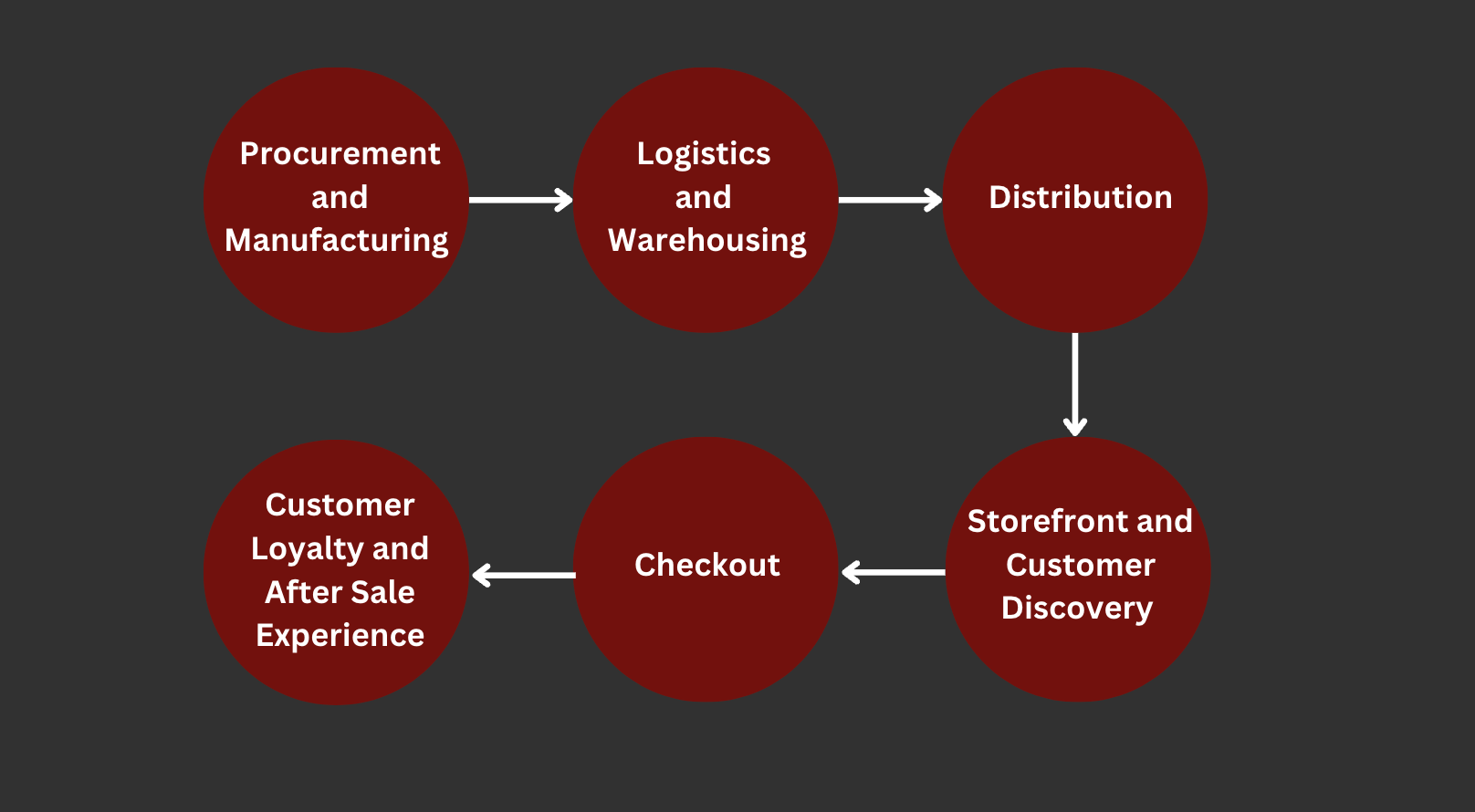
If we look at the entire value chain from the procurement of raw materials until the product reaches the consumer, multiple checkpoints and stakeholders are involved. Below is a brief visual of the value chain.

In this blog, we dive deeper into 2 parts of the value chain – manufacturing and distribution


Manufacturing

Manufacturing is the first step in the supply chain.

The need: Gone are the days when large segments of the population were making do with brands that were available at the nearest store. The segmentation was mostly done on price points and it was a distribution-led era. Today, Indian consumers comprise more granular segments, each with its own preferences. Over the last few years, there has been and will continue to be a proliferation of brands to cater to such segments that are primarily online first. These brands will be at a relatively smaller scale and will need more agile and responsive manufacturing facilities; that can offer good quality products at low (minimum order quantity) MOQs, at low cost and quick turnaround time (TAT). In addition, global commerce has become more decentralized and countries look at different hubs to source and manufacture critical components.

Where we are: While the Indian manufacturing industry has been growing quickly and is amidst rapid transformation, there are still multiple points of friction that persist. The manufacturing sector contributes ~5% to the GDP and India’s export contribution to global trade is only 1.6%. While the government has been pushing to revitalize the sector with initiatives for what is known as modern manufacturing, the infrastructure around it remains mired in the industrial age. However, with multiple tailwinds, India has an opportunity to emerge as a global manufacturing hub; not only are multiple Indian companies looking at manufacturing in their homeland but also international companies are shifting their manufacturing bases here. Electronics manufacturing could expand by 21% to touch $604B by 2032.

The gaps: Many manufacturers still rely on old technology and traditional production methods that lead to inefficient production processes. Most new-age D2C brands require agile manufacturing, with small batches to meet constantly changing consumer preferences and in order to keep up with a highly competitive landscape. Production methods are capex intensive, and to cover costs, manufacturers operate with high volumes, while brands have to struggle to deal with high inventory and long working capital cycles. Outdated machinery and high dependence on manual labour lead to delayed production timelines and inconsistent quality. Limited use of modern technology inhibits the manufacturers from adequate resource planning, monitoring machinery utilisation or inventory planning. This results in longer lead time and therefore lost sales / high inventory for their customers (brands). These are only a few of the multiple bottlenecks that prevent the manufacturing sector from operating productively.

Emerging whitespaces: Today, primary innovation has been on different modes of mechanization and automation. A convergence of digital, biological, and physical innovations, is transforming the entire value chain. It integrates digital technologies like IIoT, AI, cloud computing, advanced industrial robotics and 3D printing with various sectors, enhancing on-ground manufacturing, quality management, supply chain, maintenance, and customer service. These changes in the manufacturing sector have also been tagged under the next revolution of Industry 5.0.

We have identified various segments within the manufacturing value chain that have seen innovation over the last few years and will continue to do so:

  1. Capacity utilisation: Technologies that increase the efficiency of the factory operations and maximise resources at hand such as digital assembly mechanisation, AI-powered process controls, remote production optimisation, energy consumption prediction and collaborative robotics.
  2. Capacity maintenance: Real-time asset monitoring and predictive maintenance to ensure timely maintenance and repair for the long-term durability of factory equipment and machinery.
  3. Quality Management: IOT-led quality management to bring about standardisation within quicker timelines.
  4. Capacity modernisation: New form of manufacturing such as on-demand manufacturing, with lower MOQs and precision machinery to ensure capacity efficiency.
  5. Automated designing and product development: Predictive analytics for product demand, AI-enabled designing, cobot-led product development for sampling and resource planning
  6. Automated fulfilment support: Predictive planning for warehousing and logistics, delivery vendor network management.


We have had the opportunity to speak to different startups across this space such as startups building nano factories with production bots to industrial software providers using AI and IOT devices. We have understood that there is a large scope to optimize manufacturing functions, enabling the factories to build for India and the world. However, few challenges remain around being able to build large outcomes, as key stakeholders in the manufacturing industry are often reluctant to adopt new technologies. We are hopeful that the multiple tailwinds such as high computational connectivity, government-led initiatives, and the influx of AI-ML technologies make it the correct time to build and solve for the inefficiencies in the sector. While it may be a challenging sector to enter, identifying a relevant problem and building with a clear GTM will allow for a compelling new-age startup.


Distribution

The need: Over the past decade, e-commerce has grown from a niche market to a global powerhouse, reshaping traditional distribution strategies and blurring the lines between online and offline retail. As businesses learn to navigate this e-commerce revolution, they must adapt and embrace the changing dynamics of distribution. While multiple start-ups have been set up across various segments of the logistics industry from aggregator to last-mile delivery, in this blog, we focus on the transition between offline and online distribution.

Where are we: The India logistics and distribution market is huge and has undergone significant transformation over the years. Boom of e-commerce, government reforms, changing consumer preferences and evolving tech infrastructure have been propellers of this change. India’s logistics sector would expand at a CAGR of 10%+, from $200 billion in early 2020 to at least $320 billion in 2025. While till a few years back, most distribution channels were offline, it was during the pandemic the different channels of facilitating e-retail took shape. However, today, most businesses are recognizing that customers not only shop online but also want the experience of “touch and feel”. Many online first brands are exploring the offline route. The likes of BigBasket, Lenskart, Nykaa, and MamaEarth have redirected their efforts towards offline channels in a significant departure from their established digital dominance.

The gaps: Offline presence is not merely about brick-and-mortar stores, but also about personalised experiences to their customers. However, strategically establishing their offline presence either via owned stores or shop-in-shop experiences, online-first brands are trying to navigate this new territory. Offline distribution is expensive and brands struggle with successfully identifying the correct distributor, their sales channels, and retailer outlets. Large brands such HUL or P&G have the scale to work with individual distributors and can dictate their final outcome regarding which retailers they want to sell at. However, smaller brands with less than INR 100 crore in revenue have lesser negotiating power and the end-to-end operating costs to get distribution can be as high as 35-50% of their revenue. Getting efficacy from their sales force to get the retailers to stock products and manage the sales force churn are other major issues. Further, there is a demand generation problem, as fighting for visibility in a new environment where there are no targeted advertisements as in the digital world, becomes tough.

Retailers on the other hand have low bargaining power and are left at the hands of the distributors in deciding what products to keep in stores and the amount of inventory to stock. Additionally, the Indian retailer landscape has also evolved – from small brick-and-mortar stores to modern shopping malls, brands can choose multiple avenues to reach their customers. Innovative formats like hypermarkets, luxury boutiques, and shop-in-shop have also gained popularity, further enriching the offline shopping experience.

Emerging whitespaces: Here we have identified a few spaces we feel have the potential to solve for:

  1. Access to new brands for retailers: Allows brands to discover new retailers and even allows access to niche retailers in new geographies. These platforms which work with multiple brands can often club the distribution channels for different brands and help brands select the right retailers thereby reducing costs and achieving higher margins. However, churn of brands may be a potential challenge.
  2. Listing on demand platforms (ONDC): Brands can take advantage of listing through ONDC distributors, especially for products with high AOV and high frequency  .
  3. Additional services: Other services for brands such as payment reconciliation, surplus product disposal, store set-up for modern trade, and improvement of footfall conversion to name a few
  4. Hyperlocal delivery: As a form of replacement for local retailers. Many players have entered this space, especially focusing on grocery.


We have spoken to multiple startups in the aforementioned segments. There have been platforms that look at facilitating brands setting up shop-in-shop outlets and upselling their products, as well as startups that help create SKU bundles and sell the entire basket of products to retailers. While some might focus on a particular segment such as electronics or only T2+ cities, some are more widespread and look at an array of product types or geographies. While building out an early-stage startup in this space, it is key to not only help brands expand their offline presence, reduce inventory held and thereby bring down their distribution costs, but also help with additional services such as vendor management, GNR generation, payment reconciliation etc. Further, the team needs to have strong ops experience and a clear GTM strategy to be able to execute correctly.


Our view

We at Kae, are bullish about the e-commerce enabler system and feel there is vast potential that lies beneath it to tap. With the advent of online marketplaces, mobile shopping apps, and secure payment gateways, consumers have been provided with unprecedented access to a vast array of products and services from the comfort of their homes or on the go. The change has been nothing short of remarkable and has given a host of opportunities for other new-age exciting startups to be created.

We will follow this up with more blogs that trace the development of other enablers along the product value chain. If you’re building in this space, feel free to reach out to me at urvashi@kae-capital.com

The Indian SMB Story

The SMB (small and medium business) story is not a new one in India. Contributing to over 30% of the Indian GDP, the MSME sector is the bedrock of aspirational India. Incumbents like Tally, IndiaMART, and Zoho solved for various key organisation activities (like accounting/bookkeeping, vendor/buyer discovery and CRM respectively), paving the way for a wave of mobile-first technology tools.

We saw the first wave between 2014-18 which saw the emergence of mobile accounting/bookkeeping solutions like Khatabook, OkCredit, storefront solutions like Dukaan and miscellaneous business op solutions (which include ERPs/CRMs). The same period saw the emergence of B2B marketplaces like Udaan which solved for procurement and eventually the emergence of managed service marketplaces like Zetwerk and OfBusiness. The emergence of commerce necessitated the emergence of financing solutions (anchor-led and non-anchor-led) such as Mintifi, Rupifi, etc.

The perennial question remains, where do sustainable profit pools lie? Please note the key term sustainable profit pools – which implies profit pools backed by non-commoditized offerings and protected margin profiles. Is it in financial services? Is it in software + financial services? Is it in commerce (which includes credit by extension)? Where is the gap in the market? What use cases are yet to be solved? With models like Zetwerk and Mintifi turning operationally profitable, we are seeing signs that rapid scale and profitability can be achieved in tandem by tapping into SMB spending.

After having spoken to a few hundred founders solving for the Indian SMB space, we wanted to get a pulse from the SMBs themselves. We spoke to SMBs with the aim of understanding their day-to-day activities, motivations, which services they consider critical and which ones they don’t. We brainstormed with them to understand what they would build in-house and what they would prefer to outsource, what is critical and what isn’t.


Understanding the general workflows in manufacturing and services –

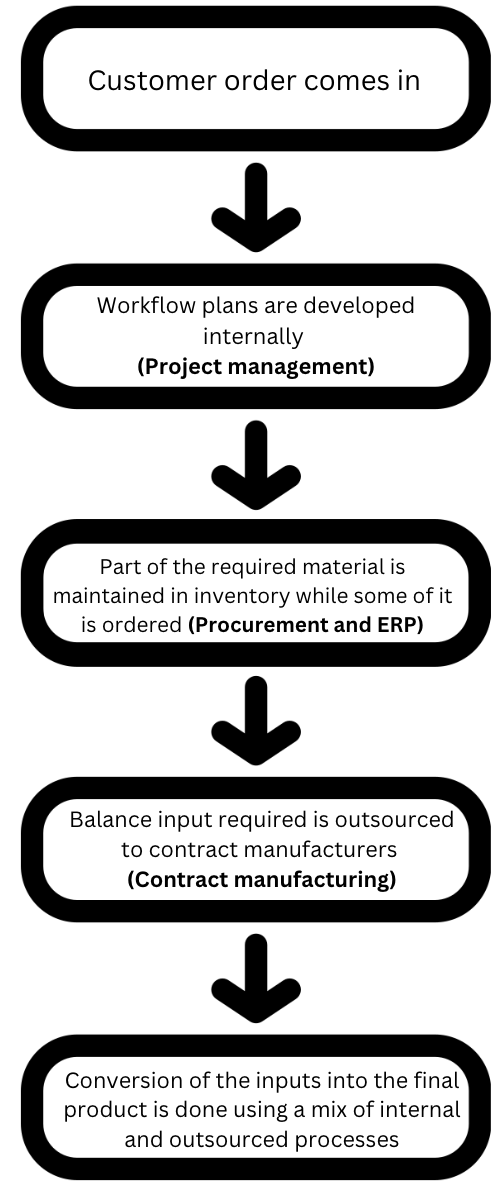
A sample manufacturing workflow (and key bottlenecks/ key points of disruption which can be solved using technology have been mentioned in brackets) can be as follows:


Procuring Financing at various stages is also critical to the entire workflow.

Services workflows are more varied – they differ significantly from logistics service providers to restaurants/hospitality service providers to construction services. However, the core workflows can be abstracted out as follows  – discovery (finding customers), financing, procurement and project management.

Beyond the above-mentioned key activities, there are several compliance-related pain points/activities which are industry-specific. For example, pollution control is critical for textile printing businesses.

“Pollution is a big headache – factories are across the state. Water pollution is an issue for textiles across the board. Water needs to be treated well, current solutions are not satisfactory.”
–  Small business (Textile printing)

“Our main problem is dealing with so many policies, every state has a different required label with different MRPs, different warnings to be put- logistically it’s a lot of extra effort for the company”
– Large business (Alcohol) 


Software solutions
 seem to be attracting attention as well, however, we are uncertain of the underlying profit pools.

“ If a software comes up that allows us to manage our projects more efficiently, we’d be willing to pay for it. Labour shouldn’t be occupied in things like accounting.”
–  Residential Business construction, small business (Construction)

Automation solutions are in demand for large SMBs (think INR 100 Cr+)

“Limitation of lower levels of automation is that the Indian scale of industrial manufacturing of companies like ours is 5x lower than abroad.”
– Large company (Industrials)


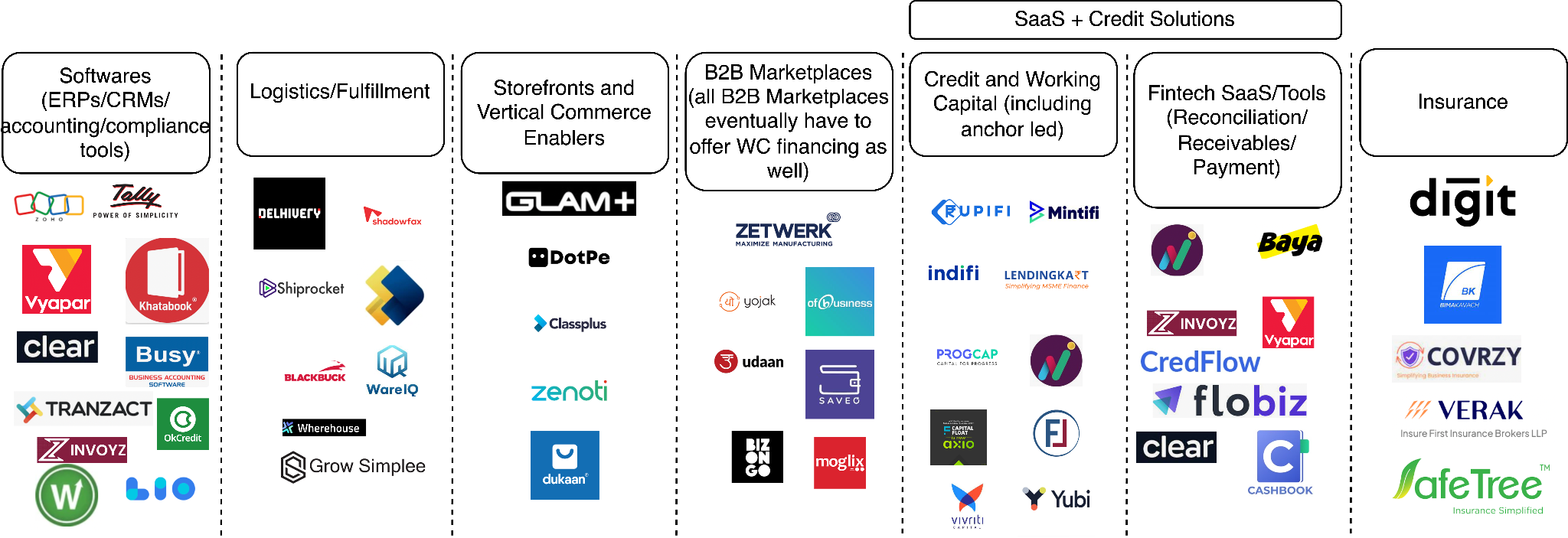
Sharing a market map which highlights all the core use cases and some of the models solving for the same –


Our attempts to neatly map unsolved use cases onto parts of the workflow yielded interesting insights:

SMBs can be broken down by size and sector. In our study, we broke down our sample by size of business (< INR 5 Cr, 5- 20 Cr, 20 Cr – 100 Cr, 100 Cr+) and by sectors of businesses [manufacturing – which includes electricals, industrials, chemicals, construction, etc.; services – logistics, hospitality, etc.]

However, the goals of the promoter are what stood out as a key insight. Most businesses’ intent to adopt technology (and pay for solutions) seems to be a function of their desire to grow. For example, we spoke to a business which was < INR 5 Cr and grew to over INR 20 Cr year-on-year. The promoters were excited about growing the business to an INR 100 Cr+ size and were thinking actively about their expansion strategy. They were open to adopting technology-enabled solutions which would not be efficiently solvable in-house, i.e. their existing supplier/vendor base was not enough or they did not have the necessary personnel/know-how to pull it off.

While they have a sense of where they want to reach from a scale standpoint, there are several unanswered questions on how to get there. Often, promoters do not have a clear idea of the challenges they will face going forward as they scale their business and seem to be broadly open to new technology solutions and financing options.

Larger businesses (INR 150 Cr+) with growth-centric founders tend to be more keen on building everything in-house (including technology).

“We tried using Salesforce, but it was not specific to our sector and the licensing fees were very high. Now we have created an in-house integrated ERP (CRM +ERP) which we’re building for commercial sale and use as well.”
– Mid-sized company (Industrials)


Discussions with promoters on technology adoption irrespective of size boil down to a build v/s buy debate.

Small businesses (<5Cr) have the highest friction to technology adoption and don’t tend to do so unless there is a compliance need OR their anchor customers/vendors make them adopt the tech. Small businesses (<5Cr) which are more than a generation old tend to remain in status quo with little incentive for the promoter to adopt tech solutions or want to grow.


ImportanceINR 1 – 35 Cr INR 35 – 100 CrINR 100 Cr +
Procurement/InputsLow-MidMidMid
Project/Workflow ManagementLowMidMid
Automation SolutionsLowMidHigh
ERP/CRM SaaS SolutionsLow-MidMidMid – High

(would prefer company company-specific solution)

Payment Recon/B2B Payments and collection (Fintech SaaSMid/HighMid/HighMid
Financing + Fintech SaaSMidMidMid
ComplianceHighHighHigh
OthersIndustry dependentIndustry dependentIndustry dependent


Despite the challenges, we feel the Indian SMB story is a promising one

If you feel you are building in the space, please do reach out to us!

Generating the Future: Transforming SaaS with GenAI

In the last 6 months, the world of generative AI has seen an explosion of interest and hype. There is no denying that GenAI is changing the landscape of software development. GenAI is disrupting the industries, software and the way we work, and it is happening at an incredibly fast pace. Every knowledge worker is playing the game of catching up with so many AI models and sexy tools getting launched every week.

SaaS as an industry is undergoing a complete disruption; nearly all the startups we have evaluated in the last 3 months were using GenAI in some form. The GenAI tech stack has been rapidly evolving, with the emergence of several new models and tools.


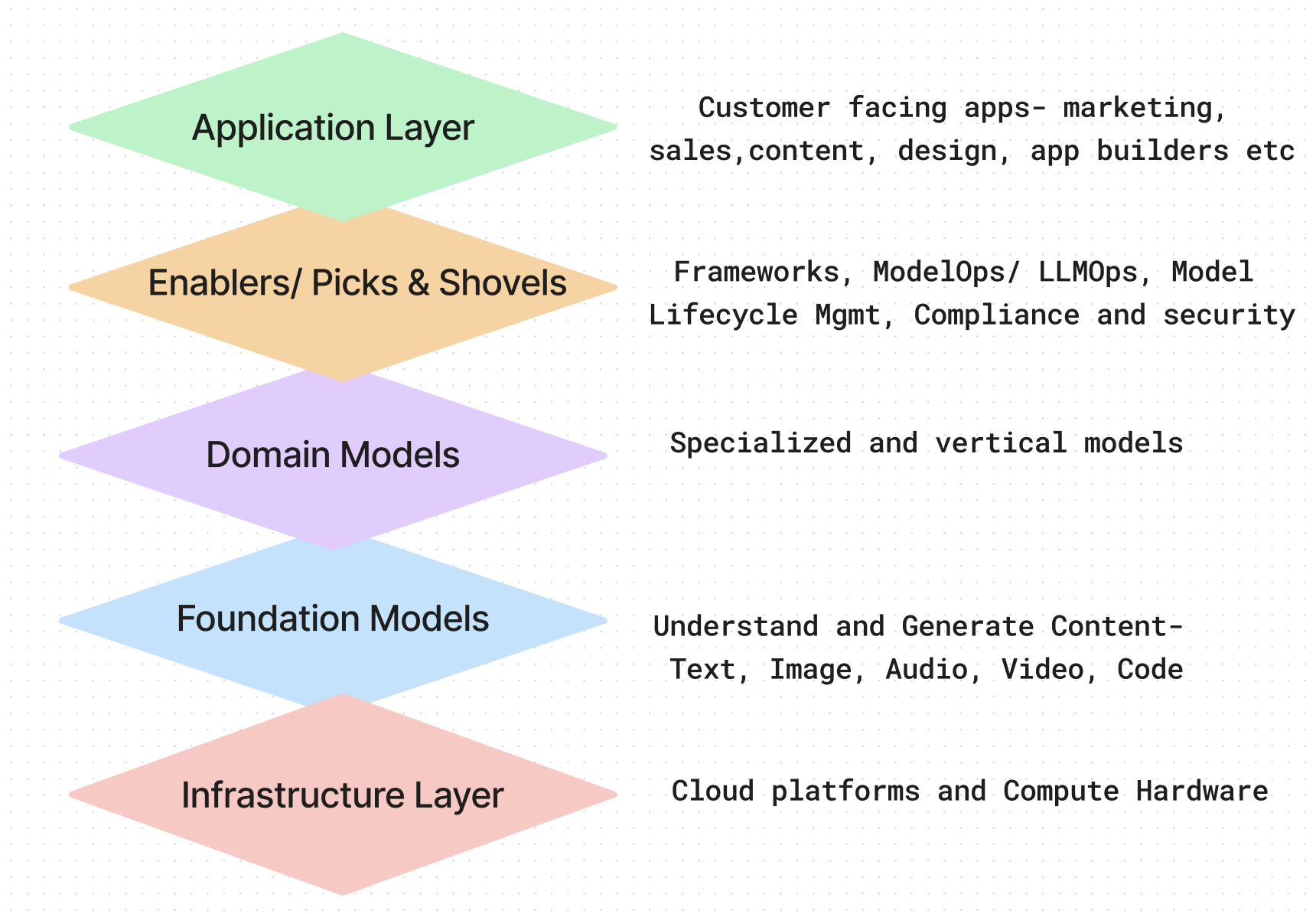
We broadly look at the existing stack in five layers-

Infrastructure layer includes hardware and cloud platforms which provide compute hardware and GPU. This includes companies such as Nvidia, AWS, GCP, Azure.

Foundation Models are GenAI models on top of which the entire stack is being built. They are AI neural networks trained on massive unlabeled datasets, enabling them to perform a diverse range of tasks, including test/ image/ audio/ code generation, text translation, and summarization. GPT-3, PaLM2, LLaMa are the well-known LLMs. Some open-source models trained on much smaller parameters are also getting interest for specific use cases.

Companies are using a combination of different models to increase accuracy and performance. A layer of domain/ vertical-specific models (health, legal, ecommerce, finance etc.) over foundation models has become a well adopted practice.

Next is a layer of tools that enables the use of these models, which we call Enablers. These tools are critical for the rapid adoption of foundation models by developers/ businesses, facilitating the shift where every company large or small is working towards adding GenAI capabilities to their products. Building production-ready AI apps is a challenging task that involves various steps. Starting with infrastructure setup, model hosting, database configuration, data collection and preparation tools, model selection, training or fine-tuning with your data, orchestrating different models based on use cases, integrating with your systems, deployment and maintenance of models, monitoring performance and cost of these models – all are part of this complex process. Hence, the emergence of enablers. Enablers offer capabilities such as orchestration, model management, observability, compliance, security, and more. Pinecone and Langchain are the most popular ones in this layer. Pinecone is a managed, cloud-native vector database with a simple API and no infrastructure hassles. Langchain is a framework for developing applications powered by language models.

Next is the Application layer, where customer-facing applications are built on top of GenAI models. It includes tools like Jasper, Glean, Copy.ai, Rephrase.ai. With GenAI, companies are providing better personalized customer experience, the conversation interface is taking over the clunky software UI and reducing their time to value.

Beyond all the excitement, it’s important to note that building and scaling an AI native tool is not as easy as it looks from all the Twitter chatter. We have spoken to many GenAI founders and tried to understand the challenges they are facing in customer adoption and product building. There are few interesting insights –

  1. Most of the GenAI tools from India are very early. They are seeing a lot of excitement and adoption from the market. Users are trying out different tools, but there is high churn. Prosumers and SMBs are the initial adopters of these products, but founders have to crack the retention and path to monetisation.
  2. Generational and non-critical use cases are seeing more traction. Generational use cases are some kind content generation- text, image, blog, code, audio etc. Non-critical use cases are business use cases where the cost of failure is not high and can work with not-so-high accuracy – sales, marketing, hiring etc. In high value use cases like cybersecurity, there is a cautious adoption of GenAI.
  3. GTM motion for enterprise SaaS remains the same. There is a sense of curiosity among enterprises regarding GenAI and acceptance to use it in their workflow but they are cautious. Their concerns about data privacy, security, and compliance persist, and there is limited trust in public LLMs. We are seeing a trend of building on the client’s VPC, which can increase the time to adoption.
  4. ChatGPT has changed the customers’ expectations. Customers are conversing with tools in natural language, they are not only asking for information or insights from the data, they are expecting end-to-end tasks to be done. The expectation is AGI (Artificial General Intelligence). We spoke with an AI native marketing product from India where customers are spending more than 30 min every session and asking in one single command to look into the data, identify cart dropout and design and send a campaign to them.
  5. There is a lot of adoption of picks and shovels- libraries, tools helping developers build apps for different use cases. Autonomous agents have become very popular. SuperAGI is one of our portfolio companies, which has gained more than 7k GitHub stars in two weeks. It is one of the trending repositories on GitHub. It is a dev-first open-source autonomous AI agent framework, enabling developers to build, manage and run useful autonomous agents quickly and reliably.


Based on our learnings over the last few months, we are more bullish on a few spaces in GenAI where we believe large outcomes from India can be generated:

  1. Picks and Shovels for developers: GenAI tech stack has become fairly complex and it is changing rapidly, only LLMs can’t help with production level use cases. As discussed in the above section, it is a long iterative process and these tools help developers build, experiment, train, and compare quickly. This is a new need that has emerged while developing in GenAI. Vector database, framework, model orchestration layer, autonomous agents are some examples of the types of tools getting created. Pinecone and Langchain fall under this category.
  2. No code enablers for businesses: We have seen copilot (GenAI) in a box model, where the entire AI stack is taken care of by the tool, you just have to integrate with your existing software. This new layer is emerging in the tech stack and it can be an opportunity for new players.
  3. ModelOps/LLMOps:MLOps used to be a not-so-attractive industry until 6 months ago. With GenAI, more models are going into production and none of the existing MLOps were made for that. Existing MLOps companies are adding capabilities and a new set of ModelOps tools are also emerging. ModelOps/ LLMOps tools include model lifecycle management, observability, data security and privacy, and model monitoring.
  4. Autonomous Agents:As discussed above, customer expectation is for AGI which can be provided by autonomous agents. They have the ability to analyze intricate problems, solve them iteratively, and take actions. AutoGPT is the most popular one, it has more than 139K stars on GitHub. In today’s form, it is not easy to use AutoGPT for business use cases. AGI is still in the early phase and will take some time to reach the customers’ expectation levels.
  5. AI native companies: On the application layer, we are keen on these companies. In many use cases, incumbents have the right to win because of distribution advantage. That’s why we believe all the niche use case products will get commoditised as incumbents will launch it as a feature. However, if you are building an AI native software with some vertical focus and data flywheel, then there is an opportunity to deliver better accuracy compared to incumbents.
  6. GenAI-powered Vertical SaaS: Vertical LLMs are trained on curated high-quality data from a specific industry. This allows Vertical LLMs to generate more accurate and relevant results. Legal, health, and finance are among the industries where a lot of knowledge resides in the massive historic data, which is the play of Vertical LLMs. GenAI-powered Vertical SaaS companies are getting popular, such as Hippocratic in healthcare and Evenup and Harvey.ai in legal.


A lot is happening in the GenAI world and we have been continuously learning about the latest developments. Our thesis will keep evolving. We will release a series of articles on GenAI to keep you updated on our learnings. If you are a founder building in GenAI or an enthusiast, we would like to have a discussion. Please feel free to reach out to veenu@kae-capital.com or sarthak@kae-capital.com.

Understanding the Cross-Border Fintech Market

With over $ 130+ Trillion flowing globally in cross-border volumes, cross-border fintech offers a rare opportunity to create multiple unicorns.  16% of cross-border revenues (not flows) lie in EMEA, 8% in APAC, 5% in LATAM, and 6% in NA (as per EY)

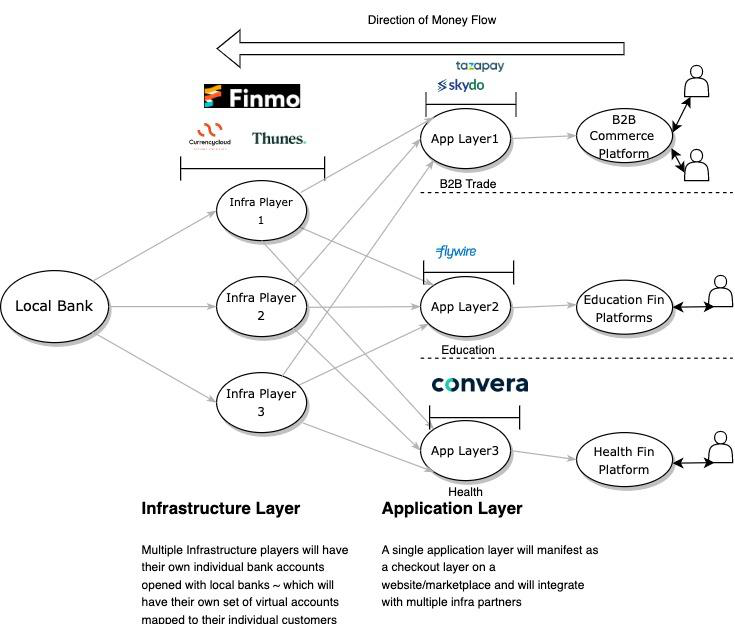
For the purpose of understanding the landscape better, we have divided it into Infrastructure and Application layers

Infrastructure layers help integrate with local banking rails in both/either sender and receiver geographies. They, in turn, integrate with fintechs (Wallet providers for cross-country money transfers, International Money remitters etc.). They solve for:

  • Virtual account creation (which in turn helps them access local payment methods & helps with multi-currency accounts creation)
  • FX rates by buying and converting currency in bulk
  • Reconciliation – This may not be a service offered by all infra players. This depends on the value prop being offered to their customers.
  • Take on average 50 bips on GTV

Application layers own the customer, they may manifest as a checkout page on marketplaces:

  • They acquire and manage customers
  • Solve for customer support and are usually the closest to customers ~ allowing them to build out other higher margin services.
  • The take rates here vary depending on the core use case ~ players can make up to 80 bips as checkout solutions, an additional 20 bips as treasury solutions, and potentially upwards of 1% per month as working capital interest on a monthly basis


Bifurcations between Infra and application are not cut and dry, and often there exist fintech players who are infra providers in one geography, and application layers in other geographies. For eg., they may have local bank accounts (i.e. are directly connected to banking rails) in geographies to solve for collections in that geography but need to work with other infra players (who are integrated with the local banking rails in other geographies) to solve for payouts in those geographies.

In India, payment volumes less than $10k fall within the purview of OPGSP and most players solving for payouts/collections within India are operating within the constraints of this license, for volumes in excess of $10k companies are relying on SWIFT-based bank transfers

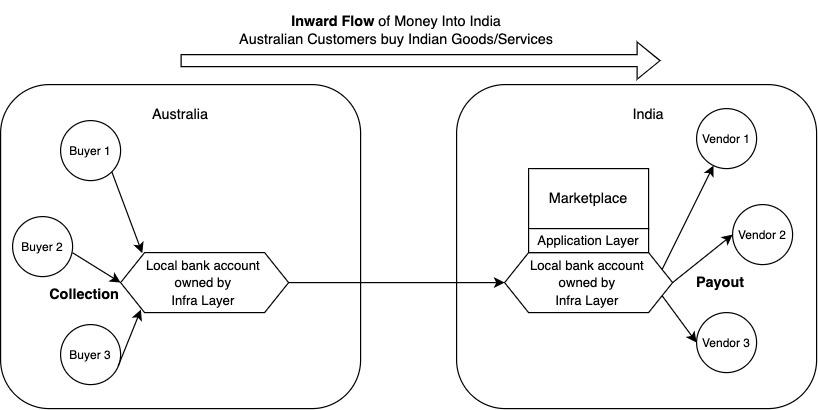
In addition to understanding the value chain, it is pertinent to understand payment flows in a little more detail. Given below is a sample of Inward flow of money from Australia to India ~

Why we choose to make bets in both Infra and Application layers ~

Understanding the market dynamics of payment infra players ~

Infra players will want to have access to as many local bank accounts as possible, and by extension, have access to relevant licenses which allow them the most degrees of freedom, i.e. the ability to send and receive money from multiple geographies. For example, UK’s E-money license (auth. EMI license), Australia’s international remitter license, Singapore’s major payment Institution license, Hong Kong’s Customs and Excise Dept., etc.

There seem to be inherent network effects here, i.e. if I add more geographies solving for both inward and outward payment flow, this will improve the experience of my end customer, i.e., the end customers who will want to send and receive money from as many countries as possible.

Additionally, forex rates are also solved through economies of scale ~ further incentivising market concentration towards only a few infra players.

Having said that, we don’t feel this will be a winner takes all market ~ because each local bank will integrate with multiple infra providers, and we feel that beyond a point forex rates will not be further optimizable, hence commoditizing the FX rates as a differentiator.

So it is our estimate that there can comfortably be more than 3-4 players dominating the global cross-border payment infra market.

With more than USD 130 Trillion flowing through the market, we feel capturing 10 Bn in GTV will ensure a large outcome for us as investors, which we can do by focusing on any one of the several geographic corridors. Additionally, we have seen some infra players start entering the application layer as well.

Understanding the dynamics of Application Layers ~

Infrastructure provides the rails to all kinds of application layers. We can further segment application layers into the following subthemes ~

  • Customer segments ~ B2B, B2C, C2C
  • Flow of money ~ payouts vs collections
  • Use cases ~ B2B trade, health, education, payroll, etc.

Application layers that offer the best customer service/support, and keep expanding their product offerings without compromising on quality will be poised to win. Each use case gives an opportunity to go deeper into specific use cases, for example, education ~ which will allow them to double down on use case specific products like education loans.

We do not think this will be a winner takes all market because there doesn’t seem to be a case for network effects, i.e. the addition of new customers (think marketplaces) will not add additional value to the n+1th customer added on the platform in terms of rates/convenience/etc. Additionally, integration with rails will also not be a differentiator since rails will try and partner with all application layers and we expect this to converge at scale.

We will go after the use cases with the largest TAMs.

Summarizing~

If you are building something in either infra layers or application layers with large vertical TAMs, we would be happy to speak to you!

The Modern Data Stack

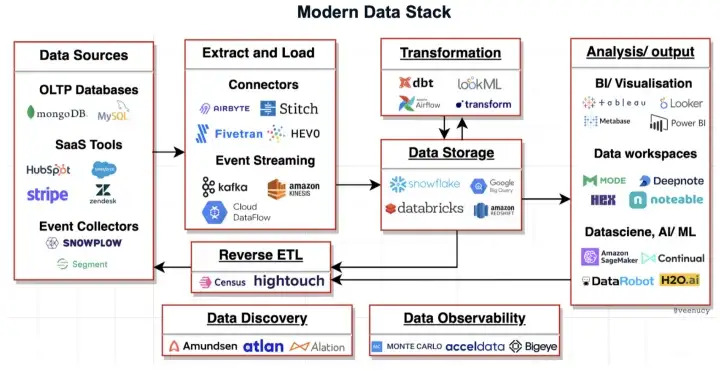
Data Sources

Companies generate a lot of data from different sources.

  • OLTP Databases– OLTP (Online transactional processing) systems handle large volumes of transactional data. It consists of user information and operational data generated by users such as e-commerce purchases and online banking. A standard database management system (DBMS) is an OLTP system. Mysql, mongoDB and Postgres are some well-known databases.
  • SaaS tools– Companies use many SaaS tools to run their business such as CRM tools to store sales, marketing and customer success data (Salesforce, Hubspot), payment/billing softwares (Stripe).
  • Event Collectors– Nowadays every possible touch point with the users is recorded as an event, which is used for analysis. It includes recording every click on websites and apps. Segment and Snowplow are popular choices for collecting events.

Extract and Load

All data from different data sources is extracted and loaded to a centralized data warehouse/ data lake. Earlier, the sequence used to be ETL- data is first extracted then transformed and then loaded into the data warehouse. Now, it has evolved to ELT- data is extracted and loaded into the datahouse and later transformed at the warehouse itself.

Data Storage

Ingestion tools stored the data at a cloud data warehouse or data lake. Data warehouse stores structured data (tables) that can be directly queried for analytics. The popular cloud data warehouses are Snowflake, Google Bigquery and Amazon Redshift.

Data Transformation

After storing the data, it is transformed directly in the warehouse into a structure ready for analysis, which is used by the data science and business team to run different analytics and ML models. Dbt, Airflow and LookML are the most popular transformation tools.

Analysis/ Output

The transformed data can used for different purposes-

  • BI/ Visualisation– These tools enable business users to derive insights. They provide a dashboard view with graphs/ pie charts which facilitates business visibility. Tableau, Looker, Power BI are some popular BI tools.
  • Data Workspaces– These tools make it easier for different users to query, visualize and collaborate on data and create dashboards. Some of the emerging data workspaces tools are hex, deepnote, mode, noteable.
  • Data Science, AI/ ML– Data scientists can run ML models on data with help of these tools. Some of the popular tools are Sagemaker, Continual.
  • Reverse ETL– It syncs back the aggregated data to SaaS tools like customer support, sales and marketing to provide full consumer visibility to business users at their primary software. Census and Hightouch are the popular reverse ETL tools.

Data Monitoring and Governance –

We also need to maintain operational data hygiene. There are three major data ops categories of softwares, which help in reducing the risk, operational complexity and cost of the cloud data-

  • Data Observability– Testing and monitoring pipelines are developed to detect and resolve errors or issues. Monte Carlo, Acceldata and Great Expectations are the popular choices.
  • Data Discovery– Data cataloguing, documentation and discovery so that people can discover the right tables for their use. Atlan, Amundsen, and Alation are the popular tools here.
  • Data Security– Access control and data security to safeguard the company’s data. Control which employee has access to which data. Cyral, Immuta are the emerging tools in this category.
  • Introduction of Data lakehouse by databricks and Unistore by Snowflake- Databricks has introduced the data lakehouse. A data lakehouse combines the flexibility, cost efficiency of a data lake with the data management capabilities of a data warehouse. It is an open data management architecture to enable analytics, BI and ML on all data types.
https://www.databricks.com/glossary/data-lakehouse
https://www.snowflake.com/en/data-cloud/platform/
  • Data Marketplace — Snowflake has become a behemoth and is now adopting a platform approach enabling products to develop on top of it. Idea is companies can use the native application framework to build native Snowflake apps that can be distributed through Snowflake Marketplace. Snowflake customers can discover, evaluate and run the apps in their accounts, removing the need to move data, thereby improving privacy and security. It is enabling customers to bring apps to data rather than moving data to different apps. It eliminates the delay and cost of traditional ETL with direct access to ready-to-query data and pre-built SaaS connectors.
https://www.snowflake.com/snowflake-marketplace/
  • MDSaaS– Modern Data Stack as a service. Data Stack is complex and evaluating tools and setting up the entire stack can be a challenging time taking process. There are low/no-code platforms that provide all the tools needed to go from data sources to interactive dashboards. Some of the emerging startups here are Selfr.io, Octolis.

Dynamic NFT Enablers

The last few months have seen a rapid rise in all things metaverse and blockchain gaming across the globe. It may be tempting to brush this aside as a fad, but the adoption numbers tell an interesting story – the number of Daily Unique Wallets interacting with Gaming Smart Contracts has grown from 28k in 2020 to 1.3 Mn in 2021.

According to reports, even monetization trends have been strong ~ Blockchain Gaming Quarterly Revenue for Q3 FY22 alone was $ 2.32 Bn vs $ 320 Mn in the whole year of 2020 – which is an 8x growth. At the heart of it, metaverses are interactive ecosystems which use game-level graphics (can also use AR/VR elements) and game engine interactions to solve for user engagement through the game. These ecosystems use a blockchain ledger to build out X2E economies (X – can be “Play”, “Learn”, “Contribute”, etc.) – where a supply of tokens (which run the economy) is released into the ecosystem as more and more users come in. P2E economies have become the most prominent paradigm in blockchain gaming – usual suspects include games like Axie.

Dynamic NFTs (NFTs whose metadata can be updated) form a core piece of the Web3 metaverse and gaming economies. To understand the complexity of such ecosystems – imagine a Pokemon game (read: an Axie-like game) where you start off with 3 pokemon -> A, B, C. Assuming there are approximately 200 players who will want to start with A, 300 with B and 400 with C – we effectively have 900 NFTs (each NFT will have a unique address and unique metadata values at a particular “state” – the metadata here can be experience points or XP/levels, movesets, graphics, etc.). The updated rules can be coded into the smart contract, i.e. if my Pokemon crosses 100 XP (note: here the parameter XP is predefined in the NFT), it will evolve or if the NFT interacts with an external signal – like a sports news feed – it can trigger the update of the NFT, or if you enter a certain zone in the Metaverse, etc.

As the games scale up, i.e. go from sub 500 DAUs, to 10,000 DAUs, there are different elements of the backend which will need to be productized in order to enable deployment of dynamic NFTs at scale across different NFT use cases like upgrading, minting, renting, leasing, fractionalizing, etc.

We have seen challenges with the synchronization of on-chain and off-chain databases – Games/Metaverse often work with both on-chain and off-chain databases. On-chain databases will be used to store the addresses/ownership data. For example, if there’s a fighting game where one can pick up different weapons/items, if one picks up a knife NFT, the ownership vector will now point to that person. Similarly, for the off-chain data, a character’s graphics will get stored on a centralized/off-chain database. As games/metaverses scale, there is a potential to provide a platform for the synchronization, batching of blockchain update requests and updating of various data points in the ecosystem – which games currently build in-house using ineffective alternatives like cron jobs. Companies like Chainlink have been working on this problem.

Currently, no dashboards exist to see the status of active NFTs, and no good tools exist to edit smart contract updating rules. At any given point in time, game developers do not have visibility of the game rules and conditions in one place – for example, if one has 400 unique pokemon – each corresponds to a unique smart contract which determines the rules of NFT updates. With newer games and mechanisms – the NFT ecosystem becomes more complex, for example, of the 400 NFTs, you have 200 NFTs which need to further interact with external stimuli to trigger a smart contract auto-updating/metadata updating. The vision can be to build a no-code dashboard to drag and drop game functionality/game economy functionality – where one can drag a box which changes the game economy rules (eg. changing the prize for a pokemon battle from 1 point to 2 points, etc.)

We have also come across challenges with serum-based NFT updating mechanisms (however, they don’t allow for the preservation of the previously held NFTs). We believe that the TAM will become large enough in the coming few years as Web3 metaverse and gaming companies might share $0.5-$1 per user (approximately $15-20 ARPU), making this an interesting but nascent space to look at.

The NFT ecosystem is rapidly evolving with many exciting new opportunities and challenges – we feel we have just scratched the surface, and there is a lot more yet to come.

A Guide to Improve and Maximise Developer Productivity: Metrics, Tools, and more


Developers in India are paid INR 410 per hour, on average. It can even touch INR 2000 per hour on the higher side. Despite that, the median code time per developer was found as 52 minutes per day, or four hours and 21 minutes of code time per week

Thus, there is a need for organisations to invest in platforms that help boost developer productivity

Developers have become the biggest ask for tech companies at this point in time. You may be seeing a lot of job openings now, but developers have had the privilege of constant job openings, with or without pandemic woes. The global application development software market is anticipated to reach $733.5 Bn by 2028, expanding at a CAGR of 24.3% from 2021 to 2028, as per Grand View Research, Inc. But while there seem to be so many opportunities for developers, their time presently is not being optimised well. If you want to know how to maximise your developer’s productivity, read ahead!

India’s app developer base is one of the highest in the world with 1.6 Mn jobs in the sector. The resultant websites and apps coming from the sector generated a revenue of $581.9 Bn in 2020.

Inefficient Utilisation Of Developers

The job of a software developer requires them to interact with multiple tools on a regular basis. But the time cost of context switching between tools, collaboration, documentation, version control, and duct taping the issues is quite high. This ends up eating into the employee’s development time.

According to Software’s Code Time Report, the median code time per developer globally was found as 52 minutes per day, or four hours and 21 minutes of code time per week. It was also found that developers spend an additional 41 minutes per day on other types of work such as reading code, reviewing pull requests, and browsing documentation. Thus, there’s a major developer experience gap.

Most companies are ineffectively deploying their developers, throwing various distractions their way. This is supplemented by further disruptions and meetings, as well as system inefficiencies, such as slow reviews, slow builds and bad tools. In order to ensure optimal utilisation of developers, strong dev tools are required. This can bridge the developer experience gap and improve a developer’s experience across the entire workflow.

Importance Of Dev Tools

Dev tools are a range of products focused on developers to help them build, deploy and collaborate on a daily basis. Global companies such as Github, Slack, JIRA, Browserstack, Snowflake, Postman and Datadog have created tools that are used by almost all developers. The dev tools market has made massive strides in the last few years. There are more than 73 Mn developers on Github, with over 16 Mn developers added in 2021 alone.

Snowflake reported stronger than expected Q4 2021 results, with revenue rising by about 117% to $107 Mn. There has been a steady shift from a ‘Build and Buy’ to a ‘Buy and Build’ decision-making mentality. Organisations have become more cognizant of these tools and the value they bring to the table. They are more than willing to invest in platforms that help boost developer productivity. This begs the question, what really caused this perception change?

Impact Of The Pandemic

This slow but steady shift got catapulted by the pandemic. The dev tools market has experienced tailwinds from this increased digital adoption. The pandemic forced teams to work remotely, which deepened the already existing problem of collaboration and communication. Many SaaS tools are being built for the future of work, to make this transition easier. These tools act as a supplement to the present working conditions, thus enhancing productivity.

To get a better understanding of why there’s a need to invest heavily in developers, we need to recognise that while developers have become a staple for tech companies, they are an expensive resource at the same time. On average, developers in India get paid INR 5.2 Lakh per year. This excludes bonuses, profit sharing and commission which are all big components for developers. Calculated on an hourly basis, it comes to INR 410, and even touches INR 2,000 on the higher side. This alone underpins the importance of optimising the developers’ time and helping them.

Thus, there’s a need to back developers and engineers with the right tools. At the same time, there’s a need to have visibility into DevOps. This, when backed by solid numeric data, can give a clear picture of the inefficiencies arising and help in optimising for these specific issues. At the end of the day, high-performing engineering teams are essential for the success of companies as they can release products to market faster.

There is a need for tools that can empower them to manage their daily tasks — context switching, collaboration, etc. in an efficient way. The developer productivity tools market is fast emerging to solve this problem. This would be key to look out for as we go deeper into cross-vertical functions and remote working.

Multi-chain, Cross-chain Interoperability and Composability Explained

Interoperability implies the seamless transfer of assets (fungible or non-fungible) and messages, while composability essentially implies shared infrastructure/effective cloning of dApps.

The Web3 ecosystem has taken off over the last two years. What started off as a whitepaper by the pseudonymous Satoshi Nakamoto back in 2008 has evolved from the first L1 – BTC (a prototype of sorts), to the arrival of the now dominant ETH (Ethereum), which drew the imagination of developers from across the globe with its smart contract functionality.

Now with other L1s like Solana and Avalanche, L2s like Arbitrum and Optimism, and even multi-chain ecosystems like Polkadot, the Web3 space has become massive.

The top 15 blockchains store  $10 billion  in value each, with ETH and BTC together contributing almost $2 trillion.

But these ecosystems are growing in silos –

Ethereum, the largest ecosystem, has the best developer pools. Most programmers are comfortable with ETH UX/UI, languages, and smart contracts but with the current PoW (Proof of Work: requires miners to solve a cryptographic equation by trial and error) mechanism, the chain is suffering from poor scalability due to gas fees.

This is despite having the best security. It is said that ETH 2 with PoS (Proof of Stake: requires miners to stake all or a portion of their coins in order to validate transactions) will be much faster and cheaper.

Solana, which is currently the most prominent Proof of History based (sequence of computations that can provide a way to cryptographically verify the passage of time between two events), non-sharded chain, has high transactions per second (TPS). However, developers are still getting used to Rust, and with the core use cases being built around gaming, it’s becoming another siloed ecosystem

Terra, which aims to become “DeFi Central”, and seems to be doubling down on DeFi use cases with its array of stablecoins and innovative DeFi protocols, is also becoming another fascinating silo.

blockchain

What encompasses interoperability and composability

Interoperability implies the seamless transfer of assets (fungible or non-fungible) and messages, while composability essentially implies shared infrastructure/effective cloning of dApps, meaning one should be able to deploy any dApp on any chain with minimum friction and time.

Each ecosystem has its core strength, core use cases, core set of developer pools and liquidity pools. Just like economies benefit from trade – blockchains benefit from trading functionality, assets, liquidity pools, etc.

The vision is to enable developers to deploy dApps from any chain, onto any other chain in an almost no code format at scale.

This entails the seamless sharing of ecosystem strengths through smart contract calls or even on tools abstracted one layer above the smart contracts themselves.

For example –

  • Computation (think logic and calculations, like those required in gaming) on SOL/AVAX smart contracts (depending on the kind of use cases)
  • Transactions (meaning buying or selling, but not settlement) happening on SOL
  • Finally, settlement occurring on ETH (eg. when someone pays using VISA or Mastercard – that is not a settlement. Settlement comes weeks after that.)

However, interoperability and composability today are broken. The future is not cross-chain vs multi-chain, but cross-chain AND multi-chain, we will need both –

The mode of connecting ecosystems today is cross-chain bridges. This is where we enter murky waters – i.e. the cross-chain vs multi-chain debate, which is at the heart of it all.

With bridge security mechanisms becoming a core piece of debate (bridge hacks leading to stolen tokens – like the Wormhole hack), a large chunk of the population believes cross-chain is not the future. Ethereum founder Vitalik has explained (here) why it is always possible to override consensus on bridges, making them a losing proposition.

This leads us to multichain ecosystems, with the core idea being shared security. For example,  the Polkadot ecosystem is an “internet of blockchains” with shared security, shared virtual machines (think computations, logic) with the concept of creating new chains called parachains.

So not only can the chains communicate with each other seamlessly and transfer assets, the security risk is much lower.

However, even with two  “Internet of Blockchain” ecosystems coming up with their individual shared securities,  they will still need to communicate with each other! Hence, bridges cannot be taken out of the picture altogether unless there is a completely new mechanism to substitute them.

Overall, we want to make bets on infrastructure plays, which will enable a multichain interoperable, composable future. This can include Tooling/Infra or Ether plays on Polkadot (think governance, no code plays, etc.).

This also brings in Protocol based interoperability standards (think cross-chain smart contract enablers, messaging layers, function call layers, interoperability standards, etc.), also containing DAO tooling which allows for multi-chain functioning, etc.

Alt Protein: The Next Big Thing

The post-COVID era has changed the way people think of health, nutrition and the environment. With this, a small but promising community of startups have begun India’s chapter of the Alt Protein landscape in the last few years. Over 3Bn USD has been poured into the Alt Protein category in 2020, around the globe. In India, we are at a nascent stage, perhaps right before it reaches the inflexion point. 

How large is the market?

In India, this nascent but promising market of plant-based meat is estimated to be around 200-500Mn USD by 2022 (GFI). The plant-based dairy industry is expected to reach 68Mn USD by 2024 (GFI). However, if adoption ramps up, it has the potential to reach $4Bn in the next 5-7 years. Adoption rates will become clear once commercial production starts for many of the players in the Indian market, who are currently market-testing their products or are in the R&D stage. An observable trend is an increase in the consumption of meat as a by-product of nations transitioning from developing to developed countries. Naturally, as disposable incomes increase, more people are likely to spend on meat consumption which is otherwise seen as a luxury. 

Why is plant-based food important for India?

Contrary to popular belief, we are not a vegetarian nation. Over 70% of consumers in India identify as non-vegetarians, but unlike the West, our frequency of consumption of meat-based products is relatively low. At present, Indian diets are predominantly cereal-based, and 60% of protein is derived from cereals that have poor digestibility and quality. 80% of India is protein deficient.

India is also facing a double burden of malnutrition and an increasing share of global Greenhouse gas (GHG) emissions (6.55%), making it the third-largest contributor to anthropogenic GHG emissions, a lot of which comes from the animal slaughter industry. Analyses of the environmental impact of plant-based meat showed that plant-based meat production uses 72-99% less water and 47-99% less land. Furthermore, it causes 51-91% less water pollution and emits 30-90% less greenhouse gas emissions. 

Process of developing Plant Based food

Recognising that any plant-based food company is a food science tech player first, and then a consumer brand is important. Being a brand is a long-term possibility but should not be the focus in the initial days when consumer adoption is unclear. There is a technical process involved in developing plant-based protein, and getting it to its final form.

Why is Plant-based food expensive?

Protein isolates are available to all players in the market. The basic material, in this case, protein isolate, is available at cheap prices to all, but it’s the additional flavouring, additives and preservatives which go into the final product that makes plant-based food expensive. These additional products are called ingredients and having control over the ingredient formulation is a strong way to have price parity in the long run. For a few players, high prices are also due to the cost of extrusion machines in the supply chain.

The price per kg comparison of the majority of the products across plant-based meat, dairy, and seafood are nearly 2-3x more expensive than their conventional counterparts. There is a significant scope for this to come down in the next 5 years as infrastructure improves.

Challenges and opportunities in this market

Lack of awareness: While Indians are massive consumers of raw plant products like lentils and pulses, processed product awareness and acceptance is prominent among urban consumers only. It is slowly picking up in smaller cities with the support of government campaigns.

Infrastructure challenges: India’s cold chain storage and transportation capacity is still ill-equipped to handle its fresh produce volumes, despite recent government efforts, making intra-state transportation challenging and costly.

Constrained R&D Ecosystem: India’s overall R&D spending as a percentage of GDP is lowest even among BRICS nations. Government institutions are restrained by funding challenges.

Low meat eating: Even people who eat meat in India are primarily vegetarians, who consume meat once or twice a week, whereas in the West, meat eaters consume meat three times a day.

Price elasticity is very high: When it comes to chicken consumption, the prices of Plant-based meat are 2-3x compared to the incumbents

Availability of Talent: Another more fundamental issue with this space is the lack of quality senior-level talent in the industry. The IT sector boom was facilitated by a lot of Indian overseas talent returning, if this happens for this sector as well, we could see faster growth. 

Despite its challenges, the market continues to grow and provides a lucrative opportunity for many players to build for this. In the next 6-12 months, a lot more activity especially on the commercialisation of these products will take place, adding another layer of insights about this space. 

Kae Capital is looking forward to connecting with more startups that are building for this category.