Product-Market Fit in India: Signs You’ve Found It

Product-market fit is the most talked-about, least understood milestone in a startup’s journey.

Founders claim they have it when they see their first spike in signups. Investors doubt it until they see retention curves flatten. And everyone agrees it’s critical, but few can articulate exactly what it looks and feels like.

Here’s the truth: In 2026, retention is the ultimate validator of product-market fit. In a product with PMF, the retention curve flattens out at 20%, 30%, or 50%, meaning you have a “stable base” of users who find recurring value, month after month.

This guide will help you understand what PMF actually means in the Indian context, how to measure it, and what to do once you’ve found it.

What PMF Actually Means (Beyond Vanity Metrics)

Product-market fit means being in a good market with a product that can satisfy that market.

More specifically, it’s when:

  • Customers actively seek out your product (pull, not push)
  • They keep using it without constant nudging (retention)
  • They tell others about it organically (word-of-mouth)
  • They’d be very disappointed if it disappeared tomorrow

PMF is not:

  • 10,000 signups from a viral campaign that churns within a month
  • High engagement that doesn’t translate to paying customers
  • Great press coverage that doesn’t drive sustainable growth
  • One customer segment loving you while others churn

In India’s diverse market, PMF often looks different across customer segments, geographies, and use cases. You might have PMF with SMBs in Bangalore but not with enterprises in Mumbai. You might have it for one use case but not adjacent ones. This nuance matters.

Quantitative Signals: The Metrics That Matter

1. The 40% Benchmark

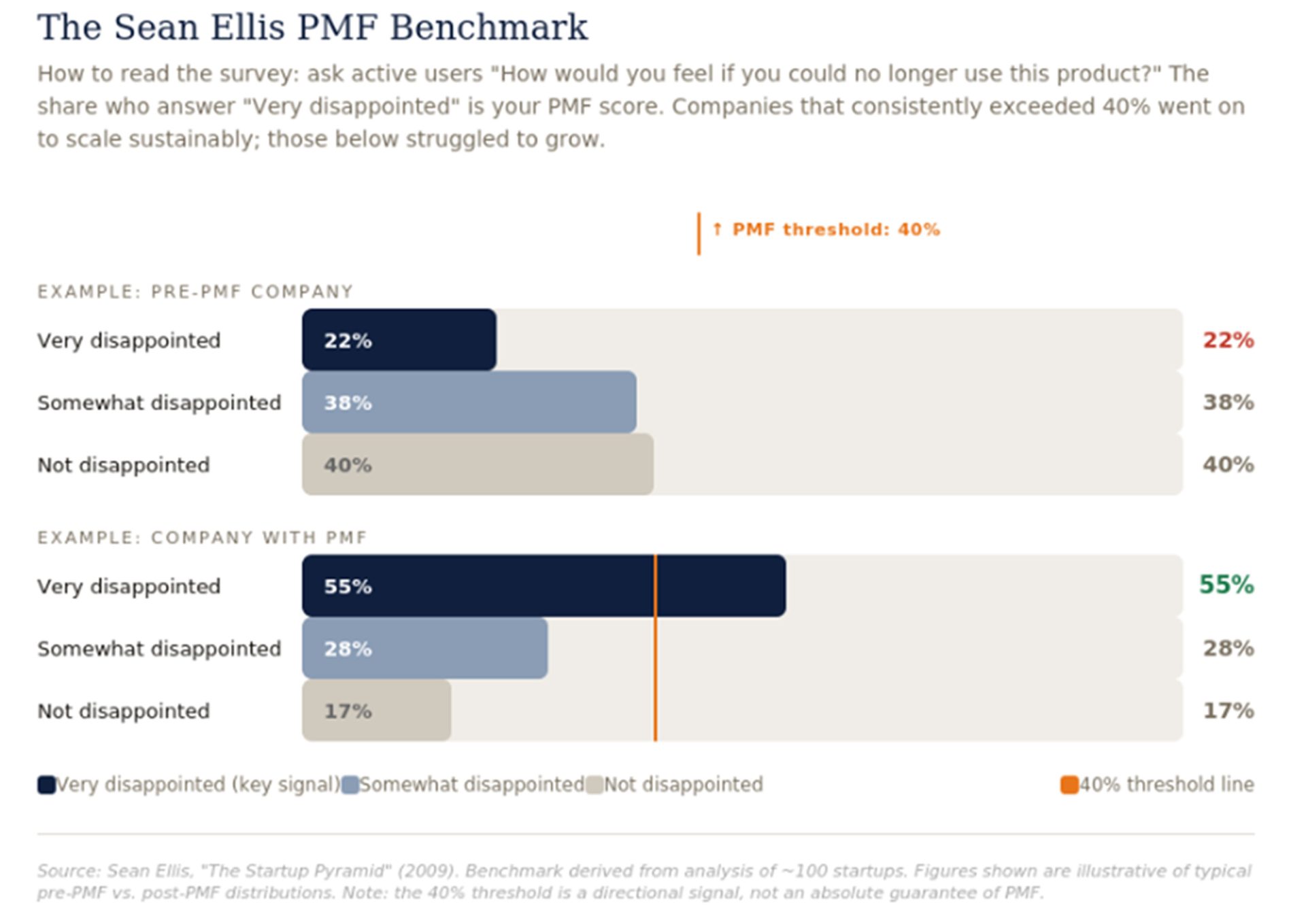
The most cited PMF test comes from Sean Ellis: Survey your active users and ask, “How would you feel if you could no longer use this product?”

If 40% or more answer “very disappointed,” you’ve likely found product-market fit. Below 40%, you’re still searching.

We’ve used this test with portfolio companies, and it’s remarkably predictive. Companies above 40% go on to scale sustainably. Those below struggle to retain customers despite aggressive growth tactics.

2. Retention Curves That Flatten

Watch your cohort retention curves closely. In the early days, you’ll see retention curves that slope down to zero, meaning every cohort eventually churns completely.

Product-market fit happens when retention curves flatten. Instead of trending to zero, they stabilize at 20-50%. This “stable base” of users signals you’re delivering recurring value.
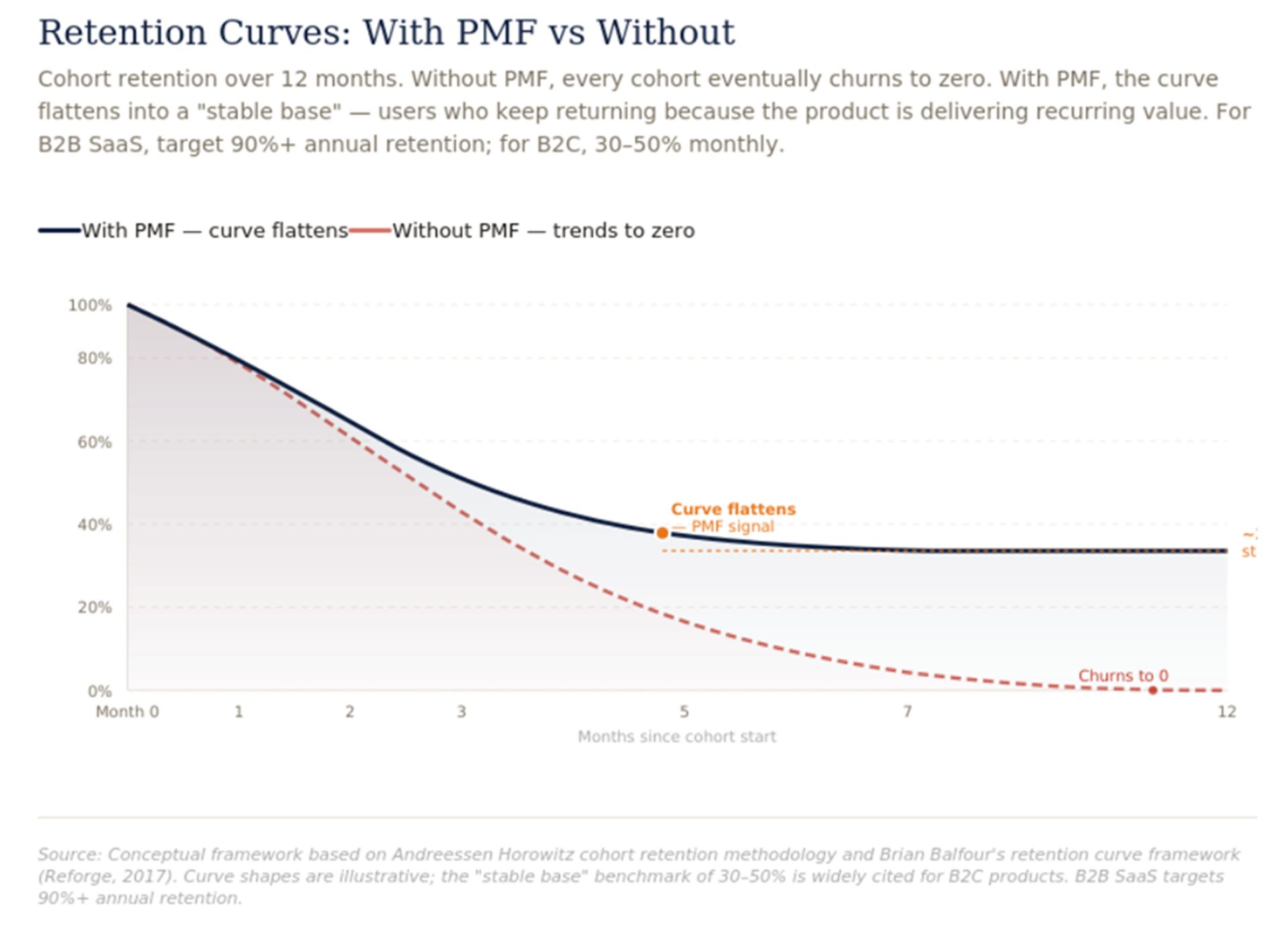
For B2B SaaS in India, look for 90%+ annual retention. For B2C products, aim for 30-40% monthly retention or higher, depending on your category.

3. Organic Growth Surpassing Paid

When product-market fit kicks in, your customer acquisition mix shifts. Organic channels; word-of-mouth, referrals, direct traffic, content, start contributing more than paid acquisition.

If you’re still dependent on paid ads for 80%+ of growth, you haven’t found PMF yet. The product isn’t good enough to sell itself.

4. Customer Retention Rate (CRR) Trending Up

Track the percentage of customers continuing to use your product over time. CRR should improve as you:

  • Better understand your ICP (Ideal Customer Profile)
  • Improve onboarding and activation
  • Build features that solve core pain points

Rising CRR is one of the clearest signals of PMF. Flat or declining CRR means you’re acquiring the wrong customers or solving the wrong problems.

5. NPS (Net Promoter Score) Above 50

While NPS isn’t perfect, it’s a useful proxy for word-of-mouth potential. In India, we’ve seen successful startups achieve NPS scores of 50-70 once they hit PMF.
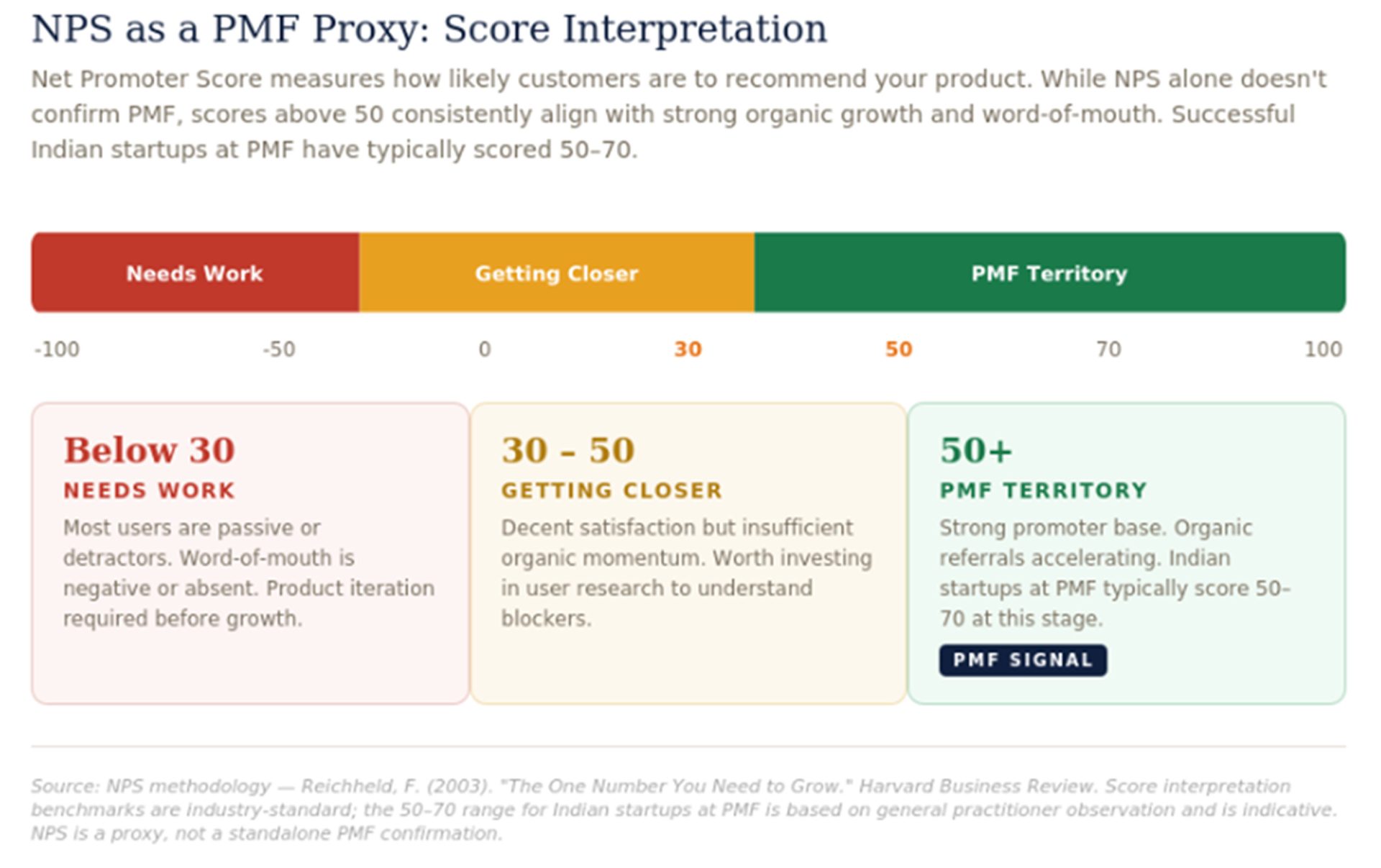
Below 30, you have work to do. Between 30-50, you’re getting closer. Above 50, customers are actively promoting you.

Qualitative Signals: What Customers Say and Do

Numbers tell you that you have PMF. Qualitative signals tell you why.

1. Customers Use Their Own Language

When customers describe your product in their own words, not your marketing copy, you know it’s resonating. Listen to sales calls and customer interviews. If they’re repeating your value prop verbatim, they don’t truly get it. If they’re explaining it in simpler, more personal terms, you’re onto something.

2. They Keep Coming Back Without Prompting

PMF feels like pull, not push. You’re not constantly sending emails to drive engagement. Customers log in daily (or weekly) without reminders because they need your product to do their jobs or live their lives.
3. Word-of-Mouth Is Happening Organically

You overhear customers recommending you in communities. You get inbound inquiries from people who heard about you from existing users. Your customer referral rate is above 20-30%.

Razorpay, one of India’s fintech success stories, knew they had PMF when merchants started moving their entire transaction volume to Razorpay and adopting additional products without the sales team pushing them. That’s the gold standard.

4. Customers Resist Alternatives

When competitors approach your customers or free alternatives exist, your customers stay. They’re not just using your product, they’re committed to it. Switching costs may be low, but they don’t switch.

India-Specific PMF Considerations

India’s market presents unique challenges and opportunities for identifying PMF:

1. Market Diversity

India isn’t one market, it’s 20+ markets. PMF in Delhi might not translate to Bangalore or tier-2 cities. Language, income levels, internet penetration, and cultural preferences vary dramatically.

When evaluating PMF, segment by:

  • Geography (metro vs tier-2/3)
  • Language preference
  • Income bracket / customer segment
  • Industry vertical (for B2B)

You may have PMF in one segment and no PMF in another. Be precise about where you’ve found it.

2. Pricing Sensitivity

India’s price sensitivity can mask or reveal PMF. A product with great engagement but low willingness to pay might not have true PMF, users like it, but not enough to spend money.

Conversely, if customers pay despite a subpar experience because no good alternatives exist, you have a market need but not yet PMF. Sustainable PMF requires both usage AND monetization.

3. Mobile-First Behavior

In India, most digital experiences happen on mobile, often on lower-end devices with spotty connectivity. If your product doesn’t work seamlessly on mobile or requires high bandwidth, you’ll struggle to achieve PMF outside of tier-1 cities.

4. Trust and Brand Matter More

Indian customers often need more social proof before adopting new products. Word-of-mouth, testimonials, and brand recognition accelerate PMF. That’s why many Indian startups invest heavily in marketing even pre-PMF, it builds the trust required for adoption.

What Founders Get Wrong About PMF

1. Confusing Growth with PMF

A viral moment or successful marketing campaign can create a spike in signups that looks like PMF. But if those users don’t stick around, it’s just noise. PMF is about retention, not acquisition.

2. Declaring PMF Too Early

Founders often declare PMF after their first few happy customers. But 10 happy customers isn’t PMF, it’s customer validation. PMF requires repeatability and scale. Can you acquire 100, 1000, 10,000 customers with the same value proposition?

3. Assuming PMF Is Permanent

Markets shift. Competitors emerge. Customer needs evolve. PMF is not a one-time achievement, it’s an ongoing state that requires constant attention. You can lose PMF if you stop listening to customers or get complacent.

4. Optimizing Too Early

Some founders start optimizing funnels and growth loops before they have PMF. This is premature. First, find the core value. Then, optimize delivery of that value. Polishing a product no one truly needs is wasted effort.

When to Pivot vs Persevere

If you’ve been iterating for 12-18 months and still don’t see PMF signals, it’s time to ask hard questions:

Pivot when:

  • Retention curves aren’t flattening despite multiple iterations
  • Customers keep churning for the same core reasons
  • You’re unable to articulate a clear, differentiated value prop
  • Market feedback tells you there’s no urgent pain point

Persevere when:

  • You see pockets of strong retention in specific segments (double down there)
  • Qualitative feedback is positive, but product execution is lacking
  • The market is real, but you haven’t found the right positioning yet
  • A few customers are deeply engaged and expanding usage

The data will tell you, but only if you’re honest about interpreting it.

Scaling Playbook Once You Have PMF

Congratulations! You’ve found PMF. Now what?

1. Document What’s Working

Before you scale, codify exactly why customers choose you, how they use you, and which segments convert and retain best. This becomes your growth playbook.

2. Invest in Distribution

With PMF, distribution is the unlock. Double down on channels that work. Hire sales and marketing talent. Build partnerships. Product-market fit gives you permission to pour fuel on the fire.

3. Expand Within Your ICP

Scale within your Ideal Customer Profile before expanding to adjacent segments. Go deeper in what’s working before going wider.

4. Build the Team for Scale

Your scrappy, generalist team got you to PMF. Now you need specialists; sales leaders, demand gen experts, customer success managers, to scale efficiently.

5. Raise Capital with Confidence

Investors write checks for PMF. If you can demonstrate strong retention, organic growth, and clear unit economics, fundraising becomes significantly easier. Now is the time to raise for growth.

The Bottom Line

Product-market fit isn’t a moment, it’s a state. And in India’s complex, diverse market, it rarely looks the same for any two companies.

Stop chasing vanity metrics. Focus on retention curves, customer language, and organic growth. If 40% of your active users would be “very disappointed” without your product, and your retention curves are flattening, you’re there.

Once you have it, move fast. PMF opens a window of opportunity to scale before competitors catch up or market dynamics shift.

But until you have it, resist the urge to scale. Fix the product. Talk to customers. Iterate ruthlessly. Everything else is a distraction.

If I Were Building a Suncare Brand in India

In India, sun exposure is not a lifestyle choice. It is a structural reality.

Large parts of the country sit at a UV index between 7 and 11 for most of the year, firmly in the high to extreme range. Unlike colder or temperate geographies where sunscreen is a summer habit, India experiences sustained UV exposure year round. Add atmospheric haze from pollution and the problem becomes more complex rather than less severe. UVB rays scatter and lose some intensity, but UVA rays penetrate straight through, reaching deeper layers of the skin.

This distinction matters. UVA damage is not immediately visible. It does not always cause redness or burning, but it is responsible for collagen breakdown, pigmentation, premature aging, and deep DNA damage. Multiple studies suggest this damage can begin within 10 to 15 minutes of unprotected exposure. Not hours. Minutes.

Despite this, sunscreen is still treated as an optional cosmetic product rather than what it truly is: the most important intervention for long term skin health in India.


Understanding the problem properly: UVA, UVB, SPF, and PA

Most conversations around sunscreen start and end with SPF numbers. That is part of the problem.

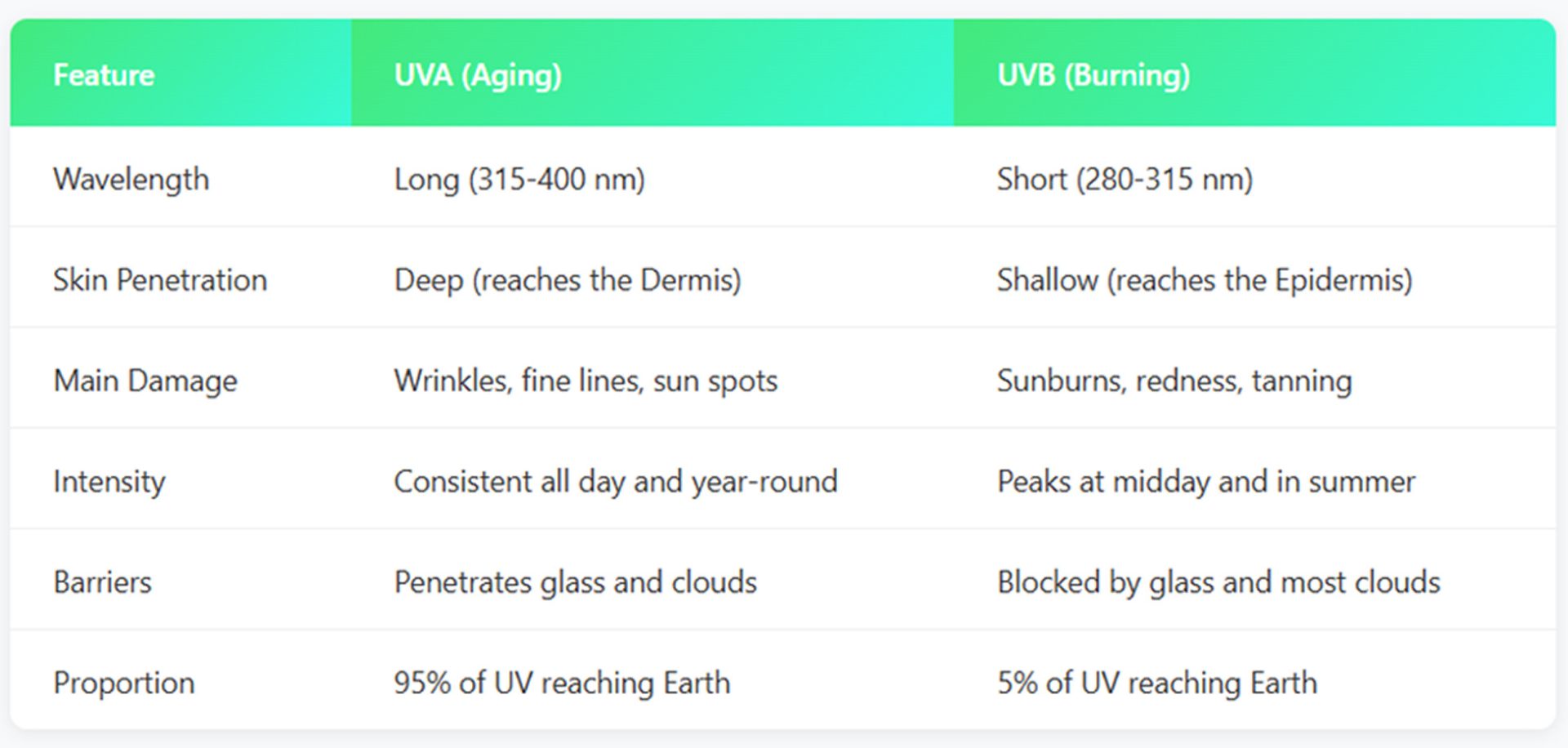
SPF, or Sun Protection Factor, measures protection against UVB rays only. UVB accounts for roughly 5 percent of the ultraviolet radiation that reaches the earth. The remaining 95 percent is UVA, which penetrates deeper into the skin and causes cumulative damage over time.

UVA and UVB behave very differently. UVB peaks around midday, is largely blocked by glass, and causes visible sunburn. UVA is present throughout the day, passes through windows and clouds, and quietly accelerates aging and pigmentation.

This is why SPF alone is an incomplete metric. A sunscreen can have SPF 50 and still offer weak UVA protection if it is poorly formulated.

That does not mean SPF is irrelevant. It needs context.

SPF 50 and above makes sense for people who commute, walk outdoors, or spend long hours outside. SPF 30 and above is acceptable for mostly indoor days. In both cases, the PA rating is critical. PA measures UVA protection. Ideally, consumers should look for PA+++ or PA++++ and broad spectrum coverage should be a baseline expectation, not a bonus.

The melanin myth

There is a persistent belief that Indian skin does not need sunscreen because it is naturally rich in melanin. While melanin does provide some protection, it is roughly equivalent to SPF 13 to 15 at best. That level of protection is inadequate against UVB and offers very limited defense against UVA.

Melanin may delay visible damage, but it does not prevent it. Indian skin still ages, pigments, and accumulates DNA damage, often in ways that are harder to reverse later.


Why Sunscreen matters more than Retinol

Modern skincare culture is dominated by actives. Retinol, acids, peptides, and serums are positioned as transformative, while sunscreen is treated as a necessary but boring step.


From a biological standpoint, this framing is backward.

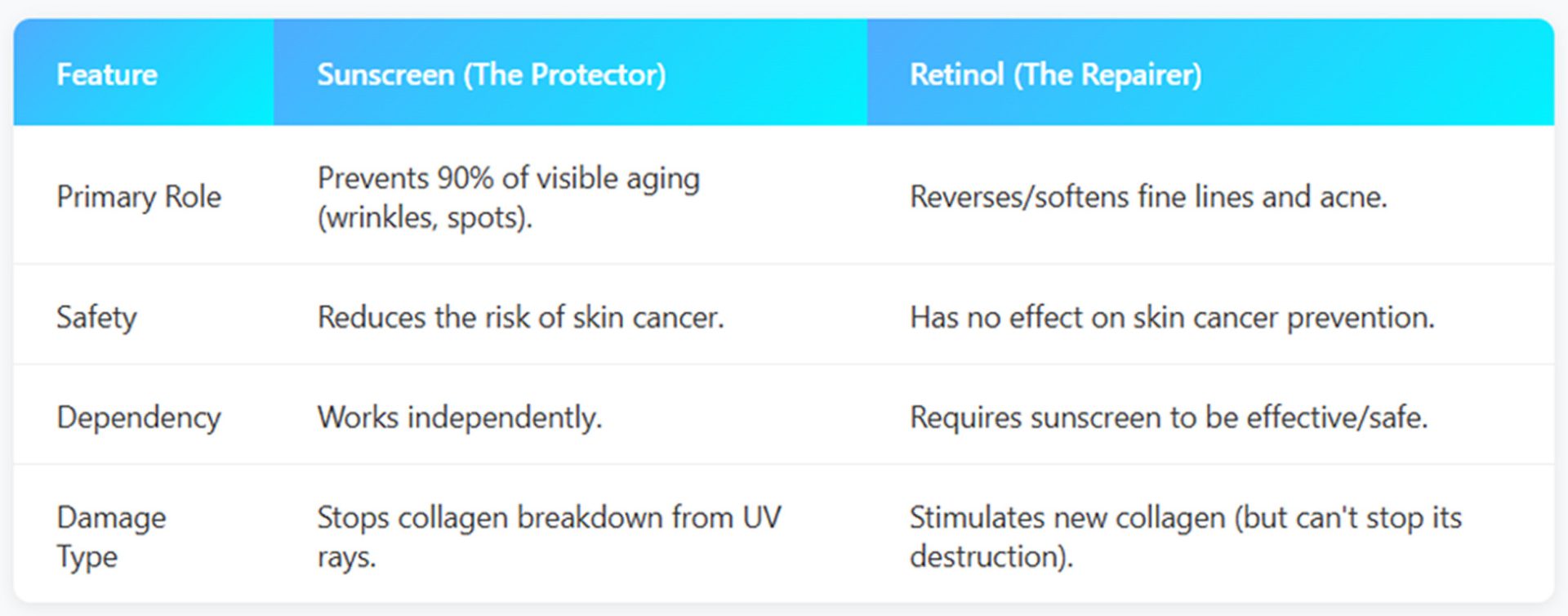
Retinol helps repair some damage after it has occurred. Sunscreen prevents the damage from happening in the first place. Sunscreen reduces collagen breakdown caused by UV exposure. Retinol stimulates collagen production but cannot stop its destruction. Sunscreen lowers the risk of skin cancer. Retinol does not. Retinol also requires consistent sun protection to be used safely and effectively.

If skincare were architecture, retinol would be renovation. Sunscreen would be the foundation. Without it, everything else eventually collapses.


What has changed: Modern sunscreen technology

One reason sunscreen has historically felt unpleasant is that older UV filters were limited. Heavy textures, white cast, greasiness, and instability were common. That constraint no longer exists, at least outside the United States.

Over the last decade, sunscreen technology has advanced significantly, particularly in Europe and parts of Asia.

New generation filters now address gaps that older formulations could not.


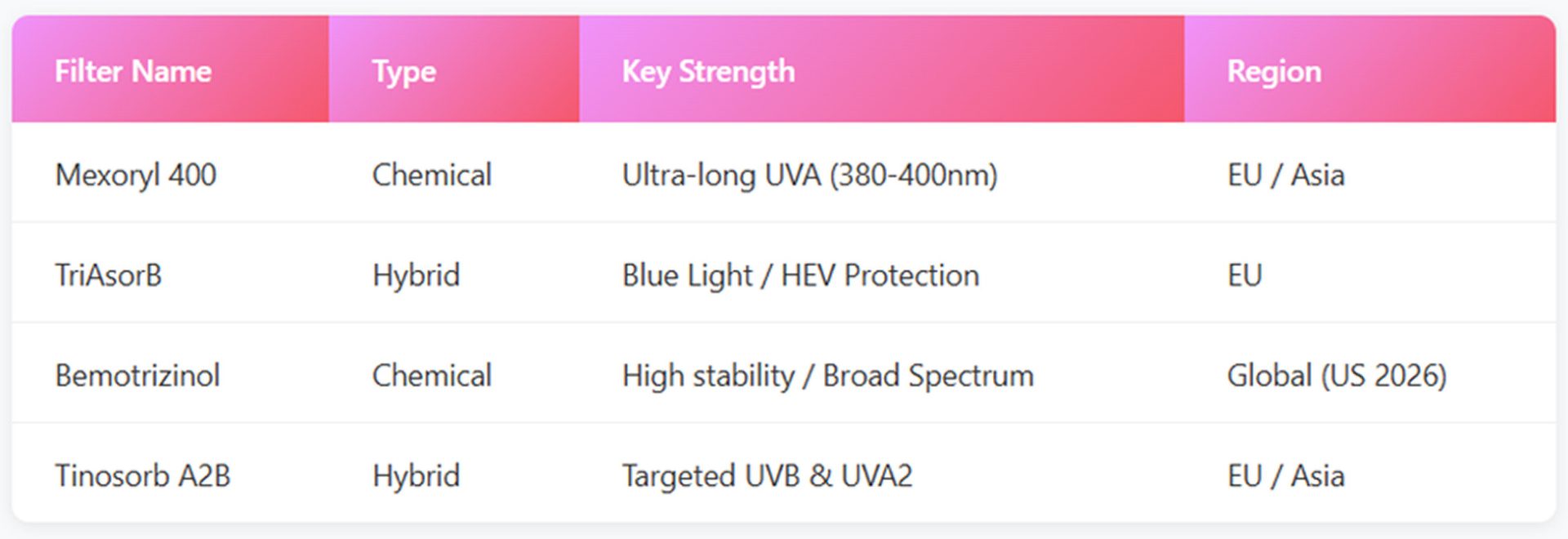
Mexoryl 400 covers the ultra long UVA range between 380 and 400 nm, a band closely associated with deep cellular damage and persistent pigmentation. Most traditional sunscreens lose effectiveness around 370 nm.

TriAsorB extends protection into high energy visible blue light, which has been linked to melasma and hyperpigmentation, especially in melanin rich skin.

Bemotrizinol, also known as Tinosorb S, offers exceptional photostability. It does not break down easily in sunlight and helps stabilize other filters. Its expected approval in the US around 2026 represents a long overdue regulatory shift.

Filters such as Uvinul A Plus, Tinosorb M, and Uvinul T 150 have become the global gold standard because they are stable, effective, and less likely to penetrate deeply into the skin.

The irony is that Indian consumers, who arguably need advanced sun protection the most, often either lack access to these technologies or pay a premium for imported products.


Regulation in India is finally catching up

Recent changes by BIS are meaningful because they align sunscreen testing with Indian realities.

In vivo SPF testing is now mandatory. Brands can no longer rely on calculated or purely laboratory based estimates. SPF must be proven on human skin under real conditions using ISO 24444 protocols in Indian labs.

In addition, ITA classification requires testing across a diverse range of Indian skin tones, particularly to substantiate claims like no white cast.


This raises the cost and complexity of building sunscreen, but it also raises trust. The category needed this reset.


What is the gap?

Sunscreen is not a cosmetic add on. It is the most essential part of any skincare routine.

And yet, it is the most skipped.

People will invest time and money into five step serum routines, layering actives carefully and tracking ingredients, only to miss sunscreen entirely. In doing so, they undo most of the benefits they are trying to create. Without sun protection, actives become damage control at best and counterproductive at worst.

Despite this, there are very few brands that have taken on the responsibility of educating consumers properly on sunscreen or innovating meaningfully on how sunscreen fits into daily life.

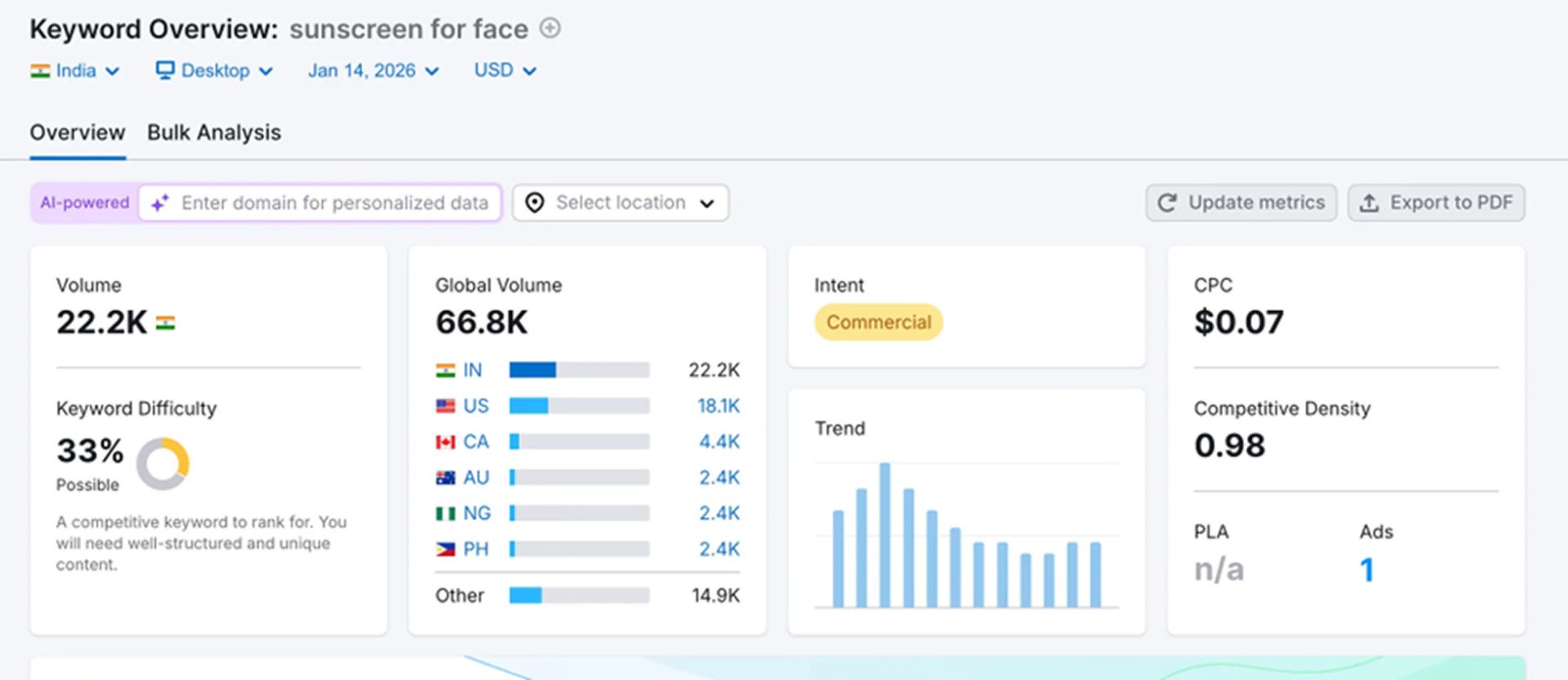
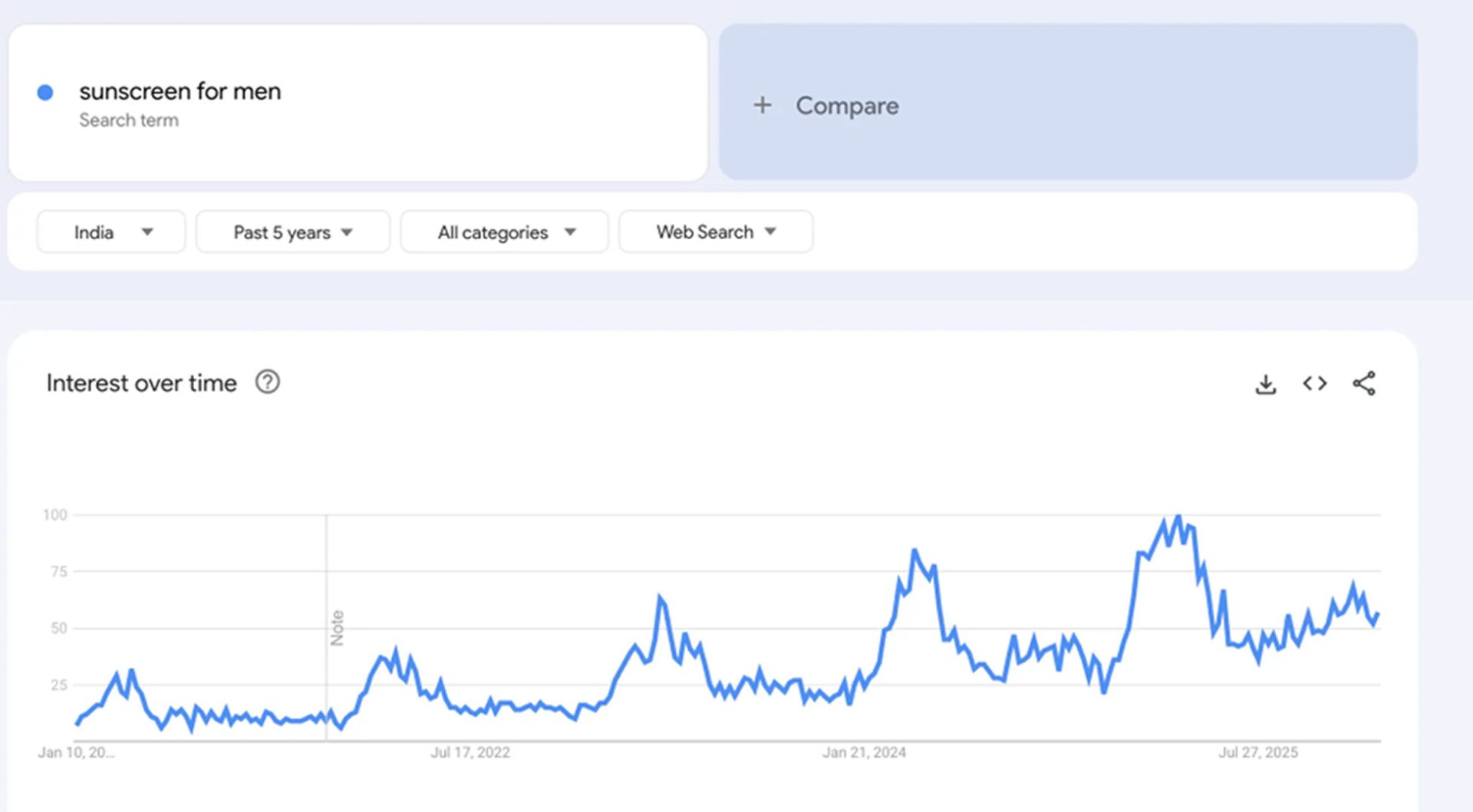
Things are changing rapidly. Search behavior shows that people are no longer looking for a generic sunscreen.


Google trends for sunscreen searches:


They are searching for sunscreens tailored to specific needs such as face use, acne prone skin, men’s formulations, lightweight textures, and no white cast. Consumer intent is fragmenting into use cases, but the category has not evolved at the same pace.

Globally, Korean and Japanese brands have done an excellent job on formulation and texture. However, they are often expensive, imported, and not designed for Indian heat, humidity, or reapplication habits. The sunscreens that truly work and are trusted tend to cost a premium that makes daily, liberal usage difficult.


Indian consumers also expect a lot from their sunscreen. They want it to not pill, to offer strong PA protection, to leave no white cast, to feel lightweight rather than silicone heavy, and to work across different moments of the day. Very few products manage to deliver all of this well.

This is the core gap.

Sun protection is a necessity, not a luxury. Yet the products that do the job properly are often priced, positioned, or designed like indulgences.


The opportunity is not to compete to be someone’s moisturiser, serum, or face wash. It is to become their suncare provider, across formats, use cases, age groups, and skin types.


What consumers are telling us

Consumer behavior around sunscreen has changed significantly.

  • First, sunscreen is no longer seen as a luxury. It is increasingly viewed as a basic necessity, particularly among urban consumers.
  • Second, sunscreen has taken on a subtle form of signaling. People who reapply sunscreen in public are often perceived as informed, disciplined, and intentional about their health.
  • Third, consumers are educated about actives, but many have not internalized one critical truth: actives do not work without sunscreen. This creates a meaningful opportunity for education led brands.
  • Fourth, reapplication is fundamentally broken. Creams feel heavy. They disrupt makeup. Sticks often feel unhygienic. Sprays feel unreliable. Even when intent exists, habit fails.
  • Finally, sensory experience matters. Heavy or greasy sunscreens create friction. If a product feels like it is sitting on the skin, people simply stop using it. Consistency is everything in sun protection.

How I’d Build a Suncare Brand in India

There is a clear gap in the market for a brand focused purely on sun care. Today, sunscreen is usually just one SKU in an army of serums, face washes, moisturisers, masks, and other verticals.

There are three structural reasons why existing beauty brands will find it hard to fully ride this sunscreen wave.

First, marketing and new product development budgets are spread across all SKUs, not just suncare. Even if a brand launches five different sunscreen variants, the real work lies in educating consumers on choosing the right one. That education requires sustained investment and often gets lost within a broader beauty positioning.

Second, supply chain and SKU management dilute focus. Managing face care, body care, and hair care together makes it difficult to aggressively scale the distribution of a single product line. Sunscreen needs depth across formats and use cases, not just presence.

Third, positioning and trust are hard to realign. Mission led brands like Supergoop! resonate because every single SKU aligns with the same promise of protection. For a beauty brand that has built equity in fast growing categories like serums, pivoting entirely to suncare may not make strategic sense.

This creates room for a brand whose entire identity is built around sun protection.

I believe that five years from now, the suncare section on Nykaa will be significantly larger than it is today and will host large brands doing over 100 crore in annual revenue, dedicated entirely to sun protection.


Product Roadmap

The strategy is to build across real use cases rather than chasing individual ingredients.

The initial lineup includes a basic necessity sunscreen with no white cast, latest generation chemical filters, high absorption, and SPF 50. Pricing is expected at 550 for 100 ml and 380 for 50 ml.

A scalp sunscreen follows, positioned around scalp health and protection. This is an acquisition led product with very little competition in the Indian market.

Reapplication is addressed through a stick format designed specifically for Indian skin tones and climates, priced between 300 and 400.

A body spray sunscreen is also planned, with a whipped formulation explored if regulatory approvals allow.

Subsequent launches include a body oil with SPF, SPF products with skinification benefits, and a liquid chapstick with SPF and plumping agents.

The extended roadmap covers sports specific sweat and water resistant sunscreens, makeup compatible SPF powders and primers, a teen focused sunscreen range, mineral sunscreens for pregnancy and heavy outdoor use, products for bearded men to protect the skin beneath, and SPF infused sun mists designed for travel and leisure.

Once a portfolio of 20 to 25 suncare SKUs is established, the focus shifts heavily toward distribution and marketing. New product development continues, but with a clear goal of staying ahead on filters, textures, and formats so the brand remains the most loved and most used suncare name in India.


Geographic Expansion

The first phase of expansion focuses on the Middle East, including UAE, Saudi Arabia, Jordan, Kuwait, and Qatar. This is followed by Southeast Asia, Europe, and eventually the United States.


Global Benchmarks

Globally, the playbook is already visible.


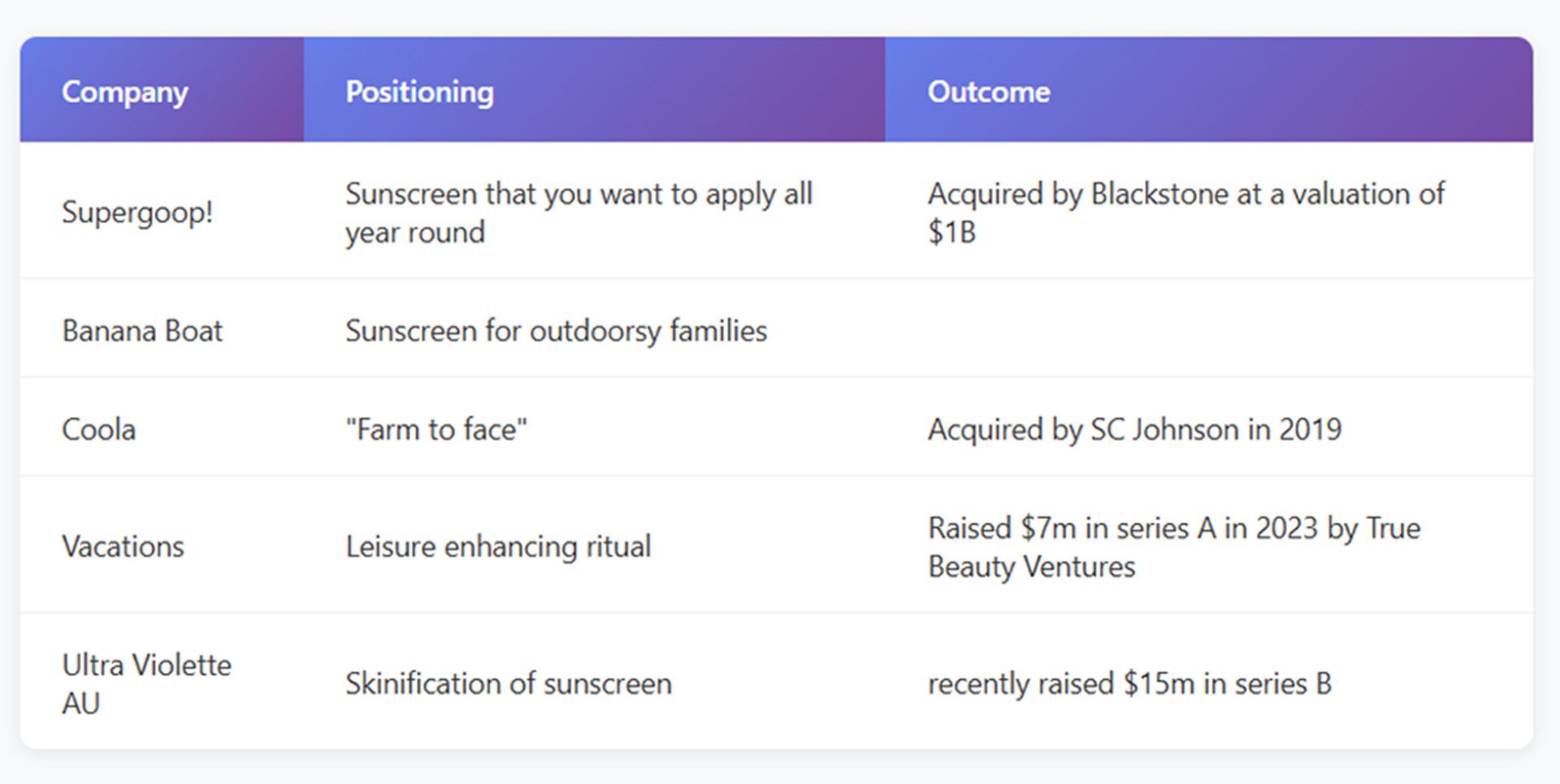
Supergoop built a brand around making sunscreen desirable and habitual and was acquired at a billion dollar valuation. Banana Boat owns the outdoor and family segment. Coola positioned itself around farm to face formulations and was acquired by SC Johnson. Vacation reframed sunscreen as a leisure ritual and raised institutional capital. Ultra Violette focused on skinification and built strong momentum in Australia.

The pattern is clear. The brands that win do not treat sunscreen as an accessory. They treat it as the category.


The Takeaway

Sun protection in India is not about vanity or trends. It is about acknowledging environmental reality and responding with products that are effective, comfortable, and easy to use.

Sunscreen is not an add on to skincare. It is the infrastructure that makes skincare work.

The brands that understand this early may look unexciting at first. In hindsight, they will look inevitable.

Budget 2026–27 and the New Math for Indian Startups

India’s Union Budget 2026-27, presented on February 1st, includes several allocations and policy changes relevant to startups and early-stage companies.

We cover the main provisions and their practical implications.

Deep Tech Funding

The budget proposes a Deep Tech Fund of Funds and allocates Rs 20,000 crore for private sector R&D. The fund targets sectors including semiconductors, AI, space tech, and biotech. The government is also setting up 10,000 PM Research Fellowships and a new AI Centre of Excellence.

Deep tech companies typically require longer development cycles than software startups, often 10-15 years to commercialization. The challenge has been that most venture funds operate on 7-10 year cycles, creating a mismatch. When a semiconductor startup needs 5-7 years just to reach tape-out and another 3-4 years for market validation, traditional fund timelines don’t accommodate this.

India currently has limited dedicated deep tech capital. Most early-stage funds focus on SaaS, consumer internet, or fintech where capital efficiency is higher and exits are faster. The Deep Tech Fund of Funds creates a pool specifically for capital-intensive, research-heavy ventures. The structure matters: as a fund of funds, it can back multiple specialist funds, each focused on different deep tech verticals with appropriate expertise.

The 10,000 PM Research Fellowships address a related constraint. Deep tech requires PhDs and researchers who can bridge academic research and commercial application. India produces research talent, but retention has been weak. Fellowships tied to commercial R&D create pathways for researchers to work on applied problems while staying in India.

SME Growth Fund

The budget allocates Rs 10,000 crore for an SME Growth Fund providing equity and quasi-equity funding. The fund targets companies with export potential and technical capabilities. An additional Rs 2,000 crore tops up the Self-Reliant India Fund.

This is equity funding, not debt. The distinction matters because most MSME financing in India comes through debt instruments like MUDRA loans, term loans from banks, or trade credit. Debt works for established businesses with predictable cash flows, but creates pressure for companies trying to scale rapidly or invest in R&D. Interest payments and principal repayment timelines force short-term thinking.

Equity capital allows companies to invest in capacity expansion, talent acquisition, and product development without immediate repayment pressure. The focus on export-oriented businesses is deliberate. Indian MSMEs often serve domestic markets where competition is fragmented and margins are thin. Export markets require quality certifications, consistent production capabilities, and working capital to manage longer payment cycles, all of which equity can fund.

The Rs 2,000 crore top-up to the Self-Reliant India Fund extends an existing program focused on manufacturing and import substitution. That fund has backed companies in electronics, pharmaceuticals, and engineering. The top-up suggests continuation rather than a new direction.

TReDS Mandate for CPSEs

All Central Public Sector Enterprises must now use the Trade Receivables Discounting System (TReDS) for MSME purchases. The budget includes credit guarantees for invoice discounting.

Payment delays of 60-90 days are common when small suppliers work with large enterprises. The MSME Development Act mandates 45-day payment terms, but compliance is weak. Large enterprises optimize their own working capital by delaying payments to suppliers. For a small manufacturer, this creates a cycle: you deliver goods worth Rs 50 lakhs, wait 90 days for payment, but need to pay raw material suppliers in 30 days and salaries monthly. The gap gets filled by working capital loans at 12-14% interest, which eats into margins.

TReDS is a digital platform where MSMEs can upload invoices and sell them to financiers at a discount. If you have a Rs 50 lakh invoice due in 90 days, you can sell it for Rs 48 lakhs and get cash in 2-3 days. The 4% discount is cheaper than working capital loans, and you get predictable cash flow. The system has existed since 2014 but adoption has been voluntary and limited.

The mandate changes this. When CPSEs must use TReDS, it creates volume on the platform, which brings in more financiers, which improves pricing for MSMEs. The credit guarantees reduce risk for financiers, making them more willing to discount invoices from smaller or newer suppliers.

Manufacturing Incentives

The budget includes Rs 10,000 crore for the Biopharma SHAKTI program, continuation of India Semiconductor Mission 2.0, and expanded electronics manufacturing incentives. Capital goods schemes also receive additional allocations.

These programs create demand for hardware, materials, and manufacturing startups. The Biopharma SHAKTI program focuses on biopharmaceuticals, fermentation-based manufacturing, and medical devices. India imports significant amounts of APIs (active pharmaceutical ingredients) and medical devices. The program backs companies developing domestic production capabilities, creating both a market opportunity and policy support for startups in this space.

India Semiconductor Mission 2.0 continues funding for fab facilities, ATMP (assembly, testing, marking, packaging) units, and the design ecosystem. The first phase approved projects worth over $15 billion. Semiconductor manufacturing requires multi-year setup periods and large capital outlays. Government support through subsidies (covering up to 50% of project costs) and infrastructure makes these projects viable. For semiconductor design startups, more local fabs mean shorter iteration cycles and better IP protection.

Electronics manufacturing incentives under PLI (Production Linked Incentive) schemes cover mobile phones, IT hardware, telecom equipment, and components. These create supply chain opportunities. If large manufacturers are setting up assembly facilities, they need component suppliers, testing services, automation solutions, and logistics providers. Hardware startups can slot into these supply chains.

Data Center Tax Holiday

Global cloud companies operating data centers in India receive a tax holiday until 2047. This applies to new facilities and aims to attract hyperscale infrastructure investment.

Data centers have high capital requirements and long payback periods. A hyperscale facility requires $500 million to $1 billion in upfront investment for land, construction, cooling systems, power infrastructure, and IT equipment. Operating expenses include power (often 60-70% of opex), bandwidth, and maintenance. With these economics, corporate tax at 25-30% materially affects IRR calculations.

The tax holiday until 2047 provides certainty for investment decisions being made today. Data center projects have 20-25 year lifecycles. Knowing the tax treatment for the full period reduces regulatory risk and makes India competitive with locations like Singapore that offer similar incentives.

For startups, more data centers in India means several things. First, lower latency for Indian users, which matters for real-time applications, gaming, video streaming, and financial services. Second, data residency compliance becomes easier. RBI, IRDAI, and other regulators increasingly require certain data to be stored locally. Third, as hyperscalers build capacity, they compete on pricing. AWS, Azure, and Google Cloud all price based on regional costs. More infrastructure in India can drive down cloud costs for startups operating here.

What’s Not Addressed

The startup recognition period remains at 10 years. Deep tech companies often need 15+ years to reach scale, particularly in semiconductors, biotech, and space. Startup India benefits include tax exemptions under Section 80-IAC (three years of tax holiday in the first ten years), exemption from angel tax, and easier compliance norms. These expire after 10 years of incorporation.

For a semiconductor company incorporated in 2026, they might reach first revenue in 2031-32, achieve scale by 2036-38, but lose startup benefits in 2036. This misalignment means the tax benefits come during low-revenue years when they matter less, and expire just as the company scales. Industry groups have requested extending this to 15 years for capital-intensive sectors. The budget doesn’t address this.

The Deep Tech Fund of Funds, while useful, represents a fraction of the capital these sectors require. India’s semiconductor industry alone needs estimated investments of $30-40 billion over the next decade. Biotech, space, and advanced materials each require billions. A fund of funds structure works by backing specialist managers who then invest in companies, which adds layers and time. Direct government investment or sovereign wealth fund participation might be needed at larger scale.

Another gap is acquisition regulation. When Indian deep tech companies mature, many get acquired by global players before reaching public market scale. This provides exits for investors but doesn’t build large Indian companies. Countries like the US, China, and members of the EU have varying degrees of scrutiny on tech acquisitions for national security reasons. India’s framework here remains underdeveloped.

Implementation Timeline

Budget allocations require administrative setup. Fund managers need to be appointed, selection criteria established, and application processes created. Based on previous programs, expect 6-12 months before capital starts flowing.

For TReDS, the mandate is clearer. CPSEs must comply, so registration and onboarding should accelerate. Companies selling to government enterprises should register now.

What This Means for Different Types of Startups

Deep tech companies in semiconductors, AI, biotech, and space should track the Deep Tech Fund of Funds setup. This includes understanding selection criteria and preparing applications.

Manufacturing and export-oriented SMEs should evaluate fit for the SME Growth Fund. The focus is on companies with demonstrated technical capability and export potential.

B2B companies with government enterprise customers should register on TReDS. The mandate creates a structural change in payment terms.

SaaS and cloud-native startups benefit indirectly from data center incentives through improved infrastructure and potential cost reductions.

Budget Context

The budget allocates capital toward manufacturing, infrastructure, and deep tech rather than consumption or digital services. This reflects broader policy priorities around self-reliance in critical technologies and manufacturing competitiveness.

Several factors drive this shift. First, India’s trade deficit in electronics, semiconductors, and advanced equipment remains high. Reducing import dependence in strategic sectors has been a policy goal since the US-China decoupling demonstrated supply chain vulnerabilities. Second, employment creation in manufacturing provides jobs for a wider skill range than services. Third, geopolitical realignments (US-China tensions, Europe’s push for strategic autonomy) create opportunities for India to position as an alternative manufacturing base.

The budget also responds to gaps identified over the past 5-7 years. Despite significant startup activity since 2015, most value creation has been in consumer internet and SaaS. These sectors don’t require significant physical infrastructure, don’t create manufacturing jobs at scale, and face limits on how much value can be captured domestically when much of the technology stack is imported. The pivot to deep tech and manufacturing addresses these limitations.

For founders, this means opportunities are in hardware, manufacturing, enterprise software serving these sectors, and fundamental technology development. Consumer internet and pure-play digital services receive less direct support. The budget assumes these sectors have achieved sufficient scale and no longer need targeted intervention. Whether that’s accurate is debatable, but it reflects current policy thinking.

Unit Economics for Indian Startups: When to Prioritize Profitability vs Growth

The Indian startup ecosystem has undergone a dramatic shift. In 2026, profitability and unit economics are no longer optimization goals, they’re the price of entry for capital. Over one-third of Indian startups chose profitability and runway extension over fundraising in 2025, signaling a fundamental behavioral change in how founders build companies.

But here’s the challenge: knowing when to prioritize profitability versus growth isn’t always clear-cut. Push too hard on growth, and you might burn through cash before finding sustainable economics. Focus too early on profitability, and you could miss a critical window to capture market share.

This guide will help you navigate that decision with clarity.

Understanding Unit Economics: The Fundamentals

Before deciding between profitability and growth, you need to understand what unit economics India actually means for your business.

Customer Acquisition Cost (CAC): The total cost to acquire one paying customer, including marketing spend, sales team costs, and tools. In India, CAC can vary dramatically by channel—digital ads in metro cities cost significantly more than community-led acquisition in tier-2 towns.

Lifetime Value (LTV): The total revenue you expect from a customer over their relationship with your company. In India’s price-sensitive market, LTV calculations need to account for higher churn rates and lower ARPU (Average Revenue Per User) compared to Western markets.

Contribution Margin: Revenue per customer minus variable costs. This tells you if each sale actually makes you money before accounting for fixed costs.

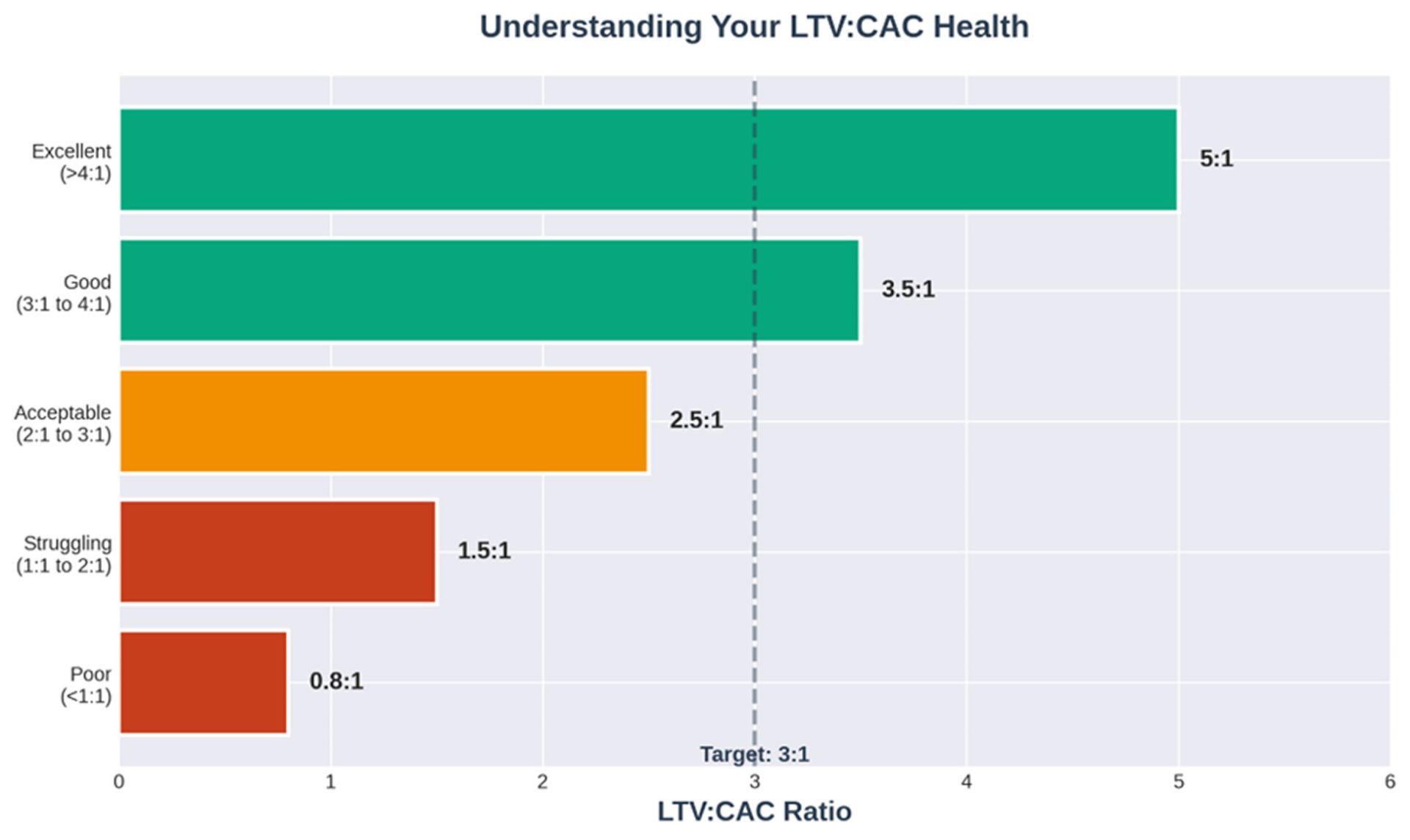
The golden ratio that investors typically look for is an LTV:CAC ratio of 3:1; meaning you make 3x what you spent to acquire a customer. In our experience working with Indian startups, achieving this ratio often takes longer than founders expect, especially in B2C businesses targeting mass-market customers.

The 2026 Reality: Profitability Is No Longer Optional

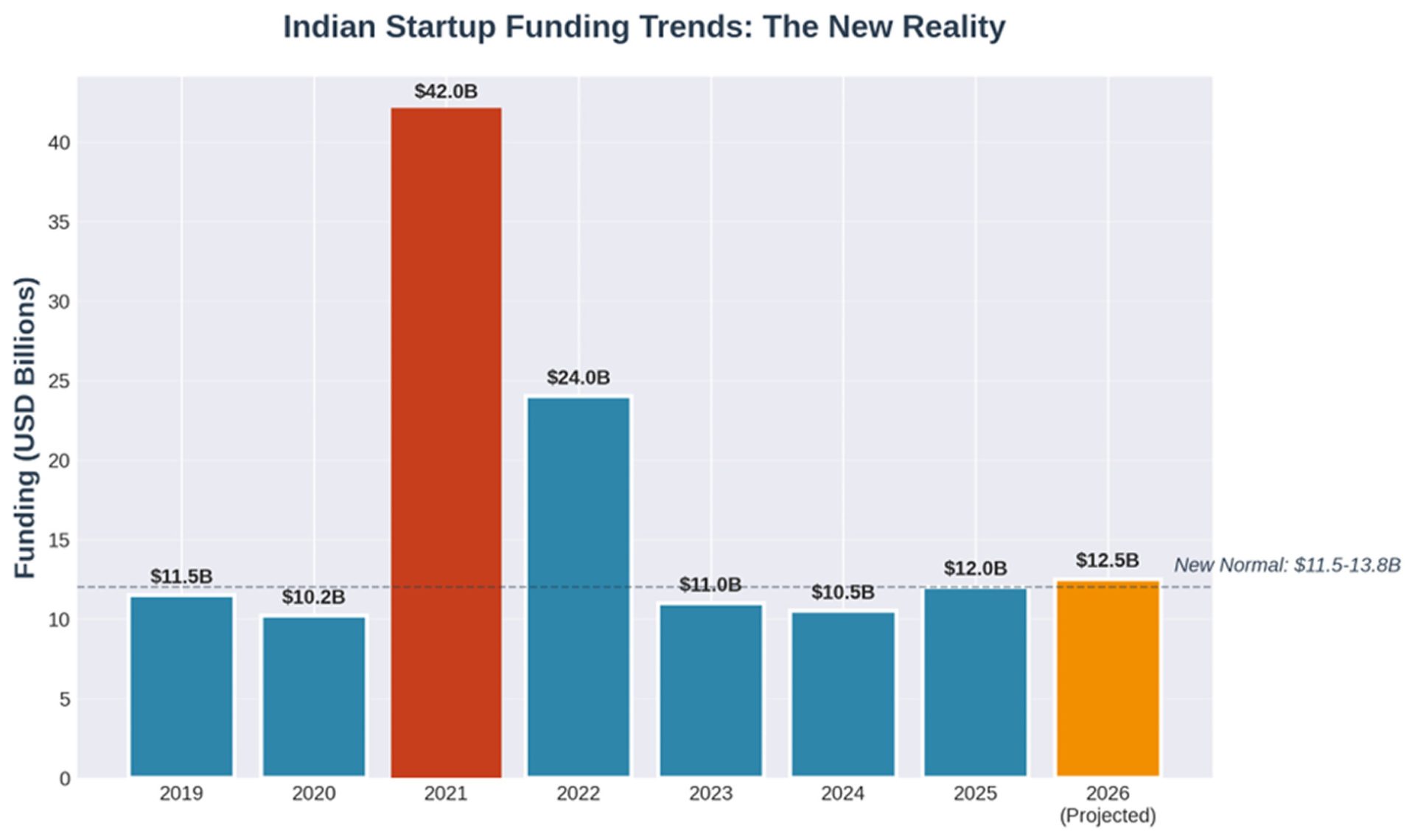
The funding environment has fundamentally changed. Startup funding in India for 2026 is projected to remain at $11.5-13.8 billion, closer to 2019-20 levels than the 2021 peak. What does this mean for you?

Investors are now emphasizing governance, unit economics, and a real path to profitability over “growth at any cost.” Founders who can demonstrate capital efficiency and disciplined CAC/LTV ratios are finding it easier to raise capital.

This doesn’t mean growth is dead. It means undisciplined growth is dead.

When to Prioritize Profitability: The Framework

You should prioritize profitability when:

  1. Your market is mature and competitive
    If you’re entering a crowded space where customer switching costs are low, sustainable unit economics matter more than land-grab tactics. We’ve seen startups in fintech and edtech learn this the hard way, burning capital to acquire customers who churn quickly destroys value.
  2. Your CAC payback period exceeds 18 months
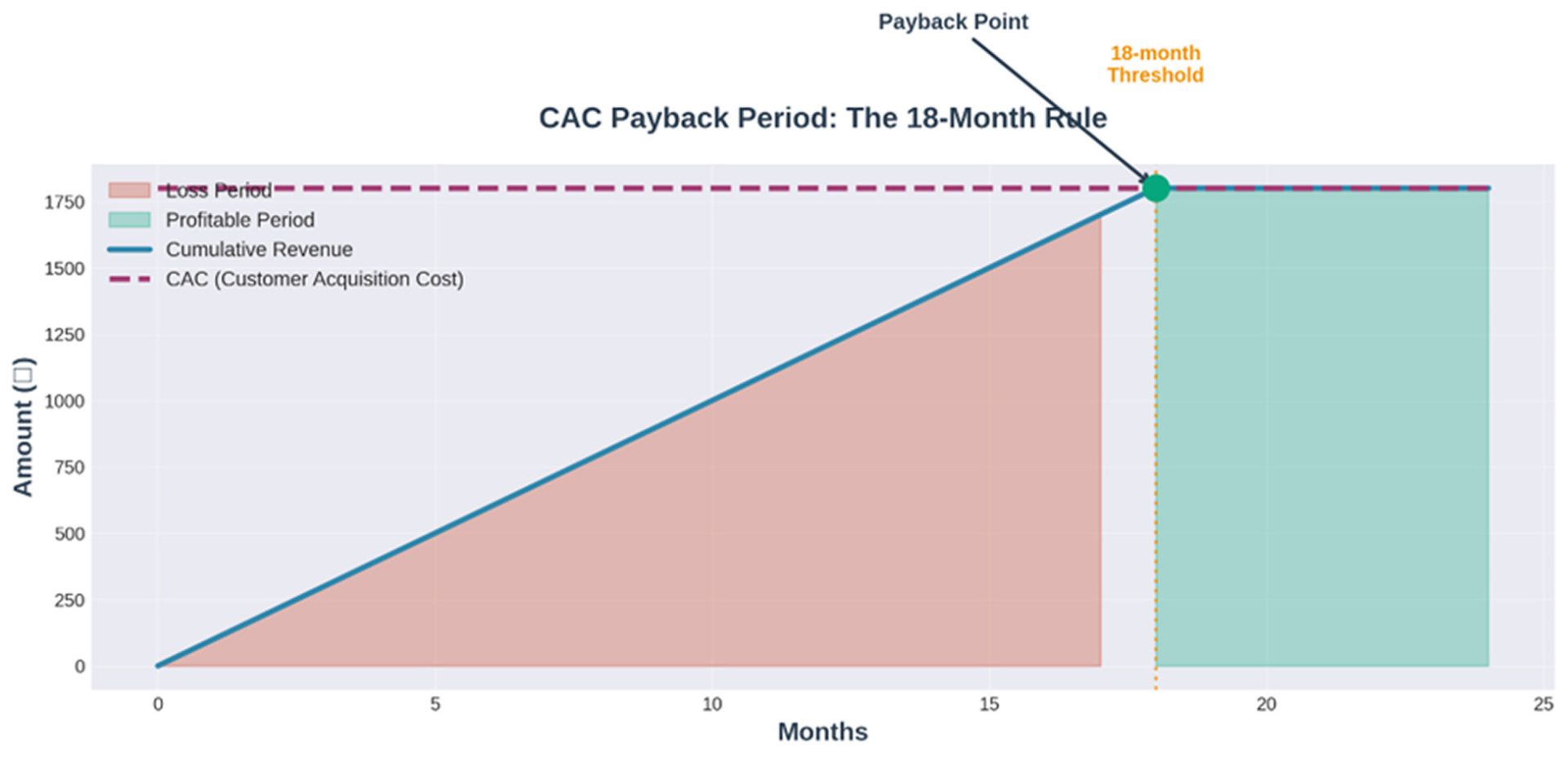
    If it takes more than 18 months to recover your customer acquisition cost, you’re essentially funding your customers’ use of your product. In India’s current funding climate, that’s a dangerous position. Focus on improving conversion rates and reducing acquisition costs before scaling.

  1. You’re in a B2B SaaS business
    B2B businesses in India typically benefit more from sustainable growth. The sales cycles are already long, and customers expect established, reliable vendors. Demonstrating profitability builds trust and makes renewals easier.
  2. Your market size is uncertain
    If you’re still validating whether a large enough market exists, profitable growth lets you extend runway and gather more data without constantly fundraising. This is particularly relevant for startups targeting tier-2 and tier-3 cities where market behavior is less understood.

When Blitzscaling Makes Sense in India

You should prioritize growth over profitability when:

  1. Winner-takes-most market dynamics exist
    In categories with strong network effects (marketplaces, social platforms, certain fintech categories), early market share compounds into defensibility. If being #1 vs #3 means 10x the enterprise value, aggressive growth makes sense, provided you can demonstrate improving unit economics over time.
  2. You have true product-market fit with proven retention
    If your organic retention is above 80% monthly (for consumer) or above 90% annually (for B2B), and customers are actively referring others, you’ve earned the right to pour fuel on the fire. The key phrase is “earned the right”, don’t confuse early enthusiasm with true PMF.
  3. A funded competitor is growing aggressively
    Sometimes the market forces your hand. If a well-funded competitor is capturing share and building switching costs, you may need to match their aggression. However, we’ve seen this rationale abused to justify undisciplined spending. Ask yourself: are you responding to a real competitive threat or using competition as an excuse to avoid hard unit economics work?
  4. You’re in a “Bharat-first” or underserved category
    For founders building for India’s mass market; regional content, credit for underbanked, agritech, the playbook is different. CAC, LTV, and payback periods look very different in these models, and that difference can be a competitive advantage. Early investment in customer education and ecosystem building can create long-term moats.

The Hybrid Approach: Profitable Growth

The best Indian startups in 2026 aren’t choosing between profitability and growth, they’re achieving both. Here’s how:

Segment your customer base: Identify which customer segments have the best unit economics and focus acquisition efforts there. Use learnings from profitable segments to improve economics in others.

Optimize by channel: Not all acquisition channels are created equal. We’ve seen startups cut CAC by 60% by shifting from paid digital ads to community-led growth or strategic partnerships. Test ruthlessly and double down on what works.

Improve retention before acquisition: A 5% improvement in retention can increase profits by 25-95%. In India’s price-sensitive market, retention is often the unlock for sustainable growth. Focus on activation, engagement, and value delivery.

Build in revenue milestones: Set clear revenue milestones ($100K ARR, $1M ARR) where you pause to evaluate and improve unit economics before scaling further. This disciplined approach prevents you from scaling broken economics.

Metrics to Track Monthly

Create a simple dashboard and review these metrics monthly:

  • CAC by channel: Where are you acquiring customers most efficiently?
  • LTV:CAC ratio: Are you maintaining at least 3:1?
  • CAC payback period: How many months to recover acquisition cost?
  • Gross margin: Are you making money on each transaction?
  • Net revenue retention: Are existing customers expanding their spend?
  • Burn multiple: How much are you burning for each dollar of new ARR?

The Bottom Line

In 2026’s funding environment, Indian startups must demonstrate both growth and a path to profitability. The days of “we’ll figure out monetization later” are over.

Start with honest unit economics. If your LTV:CAC ratio isn’t trending toward 3:1, or if your payback period exceeds 18 months, growth will only accelerate your path to failure. Fix the fundamentals first.

But if you have genuine product-market fit, strong retention, and improving economics, don’t be overly conservative. Strategic growth investment, when backed by data, can compound into category leadership.

The question isn’t profitability OR growth. It’s profitability AND growth, in the right sequence, with the right discipline.