How to Raise Your Seed Round in India

The Seed Fundraising Playbook for Indian Startups: A Founder’s Guide to Getting Your First Institutional Cheque

If you’re reading this, you’ve probably hit that inflection point. You’ve built something people want, you’re out of runway in 3-4 months, and you need capital to take this from a side project to a real company.

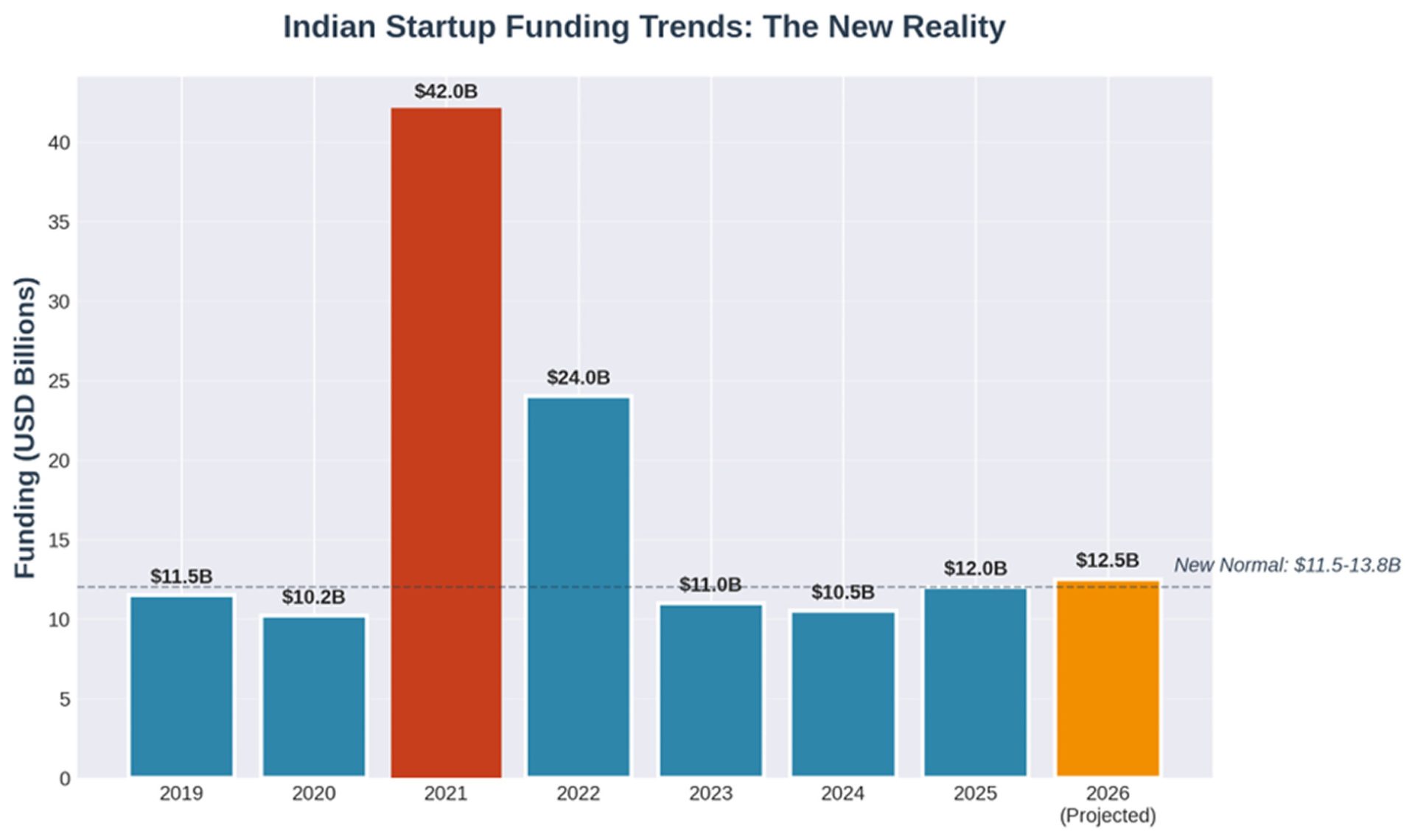
Seed fundraising in India isn’t what it used to be. In 2024, seed funding dropped 25%, and investors are being more selective than ever. But here’s the thing: strong startups are still raising money. The bar is just higher.

This isn’t a guide about “crushing your pitch” or “hacking the VC game.” It’s about understanding exactly what investors are looking for, when you should raise, how much to ask for, and how to actually get the money in your bank account.

Let’s get into it.

Part 1: Should You Even Be Raising Money Right Now?

Before you waste 6 months pitching investors, ask yourself these three questions:

1. Do you have something investors can evaluate?

You don’t need revenue, but you need something. A working product, early users, evidence that people want what you’re building. If you’re still figuring out what to build, you’re not ready.

Investors at seed stage are betting on potential, but they need proof of concept. That could be:

    • 500 people on a waitlist who actually engage with your updates
    • 50 paying beta customers
    • Strong month-over-month growth in a key metric (signups, engagement, GMV)
    • A product that solves a real problem you’ve personally experienced

2. Can you articulate why now is the right time for this company?

Markets change. Technology unlocks new possibilities. Regulations shift. What’s changed in the last 12-24 months that makes your startup possible or necessary now?

If your answer is “nothing,” that’s a problem. Investors want to back companies riding waves, not fighting tides.

3. Are you prepared to give up 15-25% of your company?

Startups typically reserve 10-20% of equity for seed rounds. If you’re not comfortable with dilution at this stage, you’re not ready to raise institutional capital. Bootstrap longer or find angels who’ll write smaller cheques.

Part 2: How Much Should You Raise?

Here’s the honest answer: enough to hit your next major milestone with 18-24 months of runway.

The Indian seed funding landscape in 2024:

Between January and June 2025, Indian startups raised $6.65 billion across 769 equity funding rounds. Startups founded by operators with prior execution experience raised an average of $1.56 million between 2022-2024.

Most seed rounds in India fall between $300K and $2M. Here’s how to think about sizing:

  • $300K-$600K: Finishing your product and getting to initial traction. This works if you’re capital-efficient, have a co-founder splitting equity, and can operate lean for 12-15 months.
  • $600K-$1.2M: Building a small team (3-5 people), scaling from 10 customers to 100, proving product-market fit. This is the “standard” seed round for most B2B SaaS and tech-enabled services.
  • $1.2M-$2M+: Larger rounds for companies with more expensive customer acquisition, longer sales cycles, or hardware/deep tech requirements. Technology-led startups accounted for most capital raised in early 2025.

How to calculate your number:

  1. List every expense for the next 18 months (salaries, marketing, infrastructure, legal, buffer)
  2. Add 25% contingency (things always cost more)
  3. That’s your number

Don’t inflate it to “grow faster.” Don’t deflate it to “look capital-efficient.” Be honest about what you need.

Part 3: When to Raise
(Timing Matters More Than You Think)

The wrong time to raise:

  • When you’re 2 months away from running out of money (desperation shows)
  • Right after launching with zero data

The right time to raise:

  • When you have 6-9 months of runway left
  • When a key metric is consistently growing month-over-month
  • When you’ve just landed a significant customer or partnership
  • When you can show clear progress since your last update

Pro tip: Start conversations with investors 3-4 months before you actually need the money. If they say “come back when you have more traction,” you have time to build it. If they’re interested now, you can close quickly.

Part 4: The Actual Process
(From First Email to Bank Transfer)

Month 1-2: Preparation

Build your target list (50-75 investors)

Not every VC is right for you. Research firms that:

  • Invest at seed stage (check their portfolio)
  • Back companies in your sector or adjacent spaces
  • Have written cheque sizes that match what you’re raising
  • Are actively deploying (check recent announcements)

Create a simple spreadsheet: Firm name, Partner name, Email, Warm intro path, Status.

Get your materials ready:

  • Pitch deck (10-12 slides): Problem, solution, why now, traction, business model, market size, team, ask. Keep it visual, not text-heavy.
  • Financial model: 3-year projection showing revenue, costs, burn rate, key assumptions. Nothing fancy, just a Google Sheet that shows you understand your unit economics.
  • One-pager: Deck compressed into a single page. Some investors prefer this for initial review.

Month 2-3: Outreach & Meetings

The warm intro is everything.

Cold emails and mass LinkedIn messages rarely yield results, but warm introductions through mutual connections are far more effective.

Your best paths:

  • Other founders in the VC’s portfolio
  • Angels who’ve backed you
  • Advisors with credibility in the ecosystem
  • Accelerator/incubator networks

Don’t spray and pray. Reach out to 10-15 investors per week with thoughtful, personalized intros.

Initial meetings are about fit, not pitch perfection.

First meetings rarely end with term sheets. Investors want to:

  • Understand what you’re building
  • Assess if you’re coachable and self-aware
  • Determine if this fits their thesis
  • See if they like working with you

Be conversational. Tell your story. Ask about their portfolio and what they look for. This is a two-way street.

Month 3-4: Due Diligence & Closing

Once you have 2-3 investors showing serious interest, things move fast.

What investors will dig into:

  • Product demo and technical architecture
  • Early customer conversations
  • Founder background checks
  • Financial model assumptions
  • Cap table and any existing agreements

Term sheet negotiations:

The two numbers that matter most:

  • Valuation: Early-stage startups in India typically see $2M-$8M post-money valuations at seed, depending on traction and sector.
  • Pro-rata rights: Investors want the option to invest in your next round. This is standard, don’t fight it.

Everything else (board seats, liquidation preferences, drag-along rights) is usually standard at seed. Don’t over-negotiate.

Closing takes 3-6 weeks after term sheet.

Legal documentation, fund transfer logistics, regulatory filings. Factor this into your cash flow planning.

Part 5: Structures & Instruments
(SAFEs, Convertibles, Equity)

In seed funding, SAFEs have become common instruments, comprising 64% of seed deals from Q3 2023 to Q3 2024.

Here’s what each means:

1. SAFE (Simple Agreement for Future Equity)

  • Not equity now, converts to equity in your next priced round
  • No interest rates or maturity dates, unlike convertible notes
  • Includes a valuation cap (protects the investor if your valuation jumps)
  • Fastest to close, least paperwork

Best for: First-time founders, quick closures, when you’re not sure of valuation yet.

2. Convertible Note

  • Debt that converts to equity later
  • Includes interest rate and maturity date
  • If no conversion event happens, you technically owe the money back

Best for: Situations where SAFE isn’t suitable, or when investor prefers debt structure.

3. Priced Equity Round

  • You set a valuation now, issue shares immediately
  • More expensive (legal fees), takes longer
  • Cleaner cap table, everyone knows their ownership

Best for: When you have strong leverage, clear valuation, and want certainty.

Most Indian seed rounds in 2024-25 are closing on SAFEs or convertibles. Save the priced round for when you have serious traction.

Part 6: Common Mistakes That Kill Seed Rounds

  1. Raising on a dream, not a plan
    “We’ll figure out monetization later” doesn’t fly anymore. You need a credible path to revenue, even if it’s 12-18 months out.
  2. Being vague about competition
    “We have no competitors” = “I haven’t done my homework.” Every startup has competitors, even if they’re incumbents or alternative solutions. Show you understand the landscape.
  3. Optimizing for valuation over partnership
    A $6M valuation from an investor who ghosts you after signing is worse than a $4M valuation from someone who opens doors and helps you hire. Pick your partners carefully.
  4. Talking to one investor at a time
    Fundraising is a pipeline game. You need multiple conversations happening simultaneously to create momentum and optionality.
  5. Not asking for help
    The founders who raise fastest are those who actively ask for intros, feedback, and support. Your network is your biggest asset. Use it.

Part 7: After You Get the Money

The cheque hits your account. Now what?

First 30 days:

  • Send investor update #1 (what you’re focused on, key hires, early wins)
  • Set up monthly reporting cadence
  • Make your first key hires
  • Ship the features that’ll move your core metric

First 90 days:

  • Hit the milestones you promised in your deck
  • Build relationships with your investors (monthly calls, ask for intros)
  • Start thinking about your next round (18 months flies by)

Seed funding isn’t the finish line. It’s the starting gun.

Seed Fundraising Checklist

Pre-Fundraise (4-6 weeks before)

  • Build investor target list (20-30 names)
  • Create pitch deck (10-12 slides)
  • Build financial model (3-year projections)
  • Prepare one-pager summary
  • Set up data room (product, metrics, legal docs)
  • Map warm intro paths for top 10 investors
  • Practice pitch with other founders

Active Fundraise (8-12 weeks)

  • Send 10-15 warm intros per week
  • Take all first meetings (even if investor seems like a stretch)
  • Follow up within 24 hours after each meeting
  • Track all conversations in spreadsheet (stage, next steps, timeline)
  • Share updates every 2 weeks with interested investors
  • Run diligence process with 2-3 serious investors simultaneously
  • Negotiate term sheets (valuation, pro-rata, board seat)
  • Close legal paperwork (3-6 weeks)

Post-Funding (First 90 days)

  • Send first investor update within 2 weeks
  • Make first key hires
  • Execute on deck promises (product launches, customer targets)
  • Set up monthly investor reporting
  • Start planning 18-month milestones for Series A

Closing Thoughts

Raising a seed round in 2025 is harder than it was in 2021, but it’s far from impossible. The companies getting funded are those with real traction, clear thinking, and founders who understand their business cold.

Focus on building something people want. Raise money to accelerate that, not to figure it out.

And remember: every successful company you admire went through this exact same process. The difference isn’t luck. It’s preparation, persistence, and clarity of thought.

Now go raise that round.

Why We Think Bodycare Is the Next Big Wave in Beauty

The first wave of D2C brands in beauty and personal care (BPC) won on distribution. They understood Instagram early, built micro communities, and reached consumers who were shopping online for the first time. That channel edge was enough then.

But the consumer has matured. Today, a great product is just table stakes. What truly matters is the story behind the brand. It can’t be an afterthought, it needs to be built into the brand from day one.

You can see this clearly in how the US market evolved around 2015. My favourite example is Sol de Janeiro. The brand is built around a single idea, Brazilian confidence, and every product reinforces that story. When someone picks up the Bum Bum Cream, they are subconsciously buying into that narrative of body positivity and joy.

The larger the truth your brand stands for, the larger the market you can chase. As disposable incomes in India rise, consumers will slowly move beyond buying for function and start buying for identity. Global incumbents already understand this. The only real defence Indian brands have is pricing. Local manufacturing and avoiding import duties allow us to meet aspiration without overpricing.

The Bum Bum Cream costs ₹2,460 for 75ml. That tells you everything about the opportunity. If we continue to think function-first, we’ll miss the chance to build truly outstanding, emotionally resonant brands.

Why We’re Not Worried About the Flood of Insta Brands

The backend of consumer goods is completely commoditised, whether you’re producing in China or India. Anyone with some hustle can find a factory and start selling a product through aggressive Instagram ads.

That can get you your first purchases. It won’t get you repeats.

A few of these businesses might reach ₹20–40 lakh a month in revenue with single-digit or low double-digit EBITDA. But they’ll hit a ceiling because repeat purchases and loyalty require two things: real product differentiation and meaningful brand building.

The Niche We’ve Identified

Bodycare is shaping up to be the next wave for challenger brands.

Take a look at Nykaa’s category pages:

In all of these, legacy brands dominate. Challenger brands have barely touched them. Even in categories like deodorants and body mists, where newer brands have managed some penetration, the products haven’t really evolved. The same sticky, heavy formulations persist, which simply don’t work in India’s humid climate.

Each of these categories is ripe for disruption.

The Opportunity Across the Routine

Pre-shower: Think Sunday oils that act as a barrier against hard water damage.

In-shower: Gentle scrubs that exfoliate without harming the skin barrier. Body washes and shower oils that leave you feeling hydrated rather than tight and dry.

Post-shower: Lightweight body mists that double as moisturisers. Creams that absorb fast without heaviness. Sunscreen sprays that are convenient and actually usable daily.

Most Indians don’t need thick body butters for most of the year. What they do need are modern, climate-suited alternatives that feel indulgent yet practical.

Products like Supergoop’s SPF body oil and Forest Essentials’ shower oil are great references, but both are priced at ₹1,500 and above, leaving the mass-premium segment wide open.

Strategy

  • Start with bodycare.
  • Expand into fragrances.
  • Then move into haircare.

Around this, create focused ranges for pregnancy (stretch marks, scrubs, haircare) and menopause (bodycare + fragrance). Dove has already begun these wellness-oriented ranges in the US. India, with its declining age of menopause and growing awareness of women’s health, will be an important market for this next wave of products.

If we build with care, intention, and real consumer empathy, we’ll win.

Why Bodycare Has the Potential to Be Bigger

Bodycare is one of the few beauty categories that cuts across genders. Most Indian households share bathrooms, and therefore, products.

Men may not moisturise or use sunscreen, but they bathe. That makes bath and body products the easiest way to bring them into a self-care brand. Our customer visits have shown that men are just as engaged in bath care as women. This behaviour doesn’t always carry over to face or hair, where their concerns are different (think hair fall or balding).

That’s why our bath range avoids overtly feminine colours and naming. The idea is to make it universal.

How the Global Bodycare Landscape Is Evolving

Globally, bodycare is being redefined by brands that are turning everyday routines into intentional rituals. Indie players are moving the category beyond simple hygiene or moisturisation into experiences built around wellness, confidence and mood.

  • Hanni recently raised $2M as it built a bodycare line centred on “ritual over routine,” now retailing at Sephora.
  • Salt & Stone is redefining deodorants as a lifestyle product rooted in clean, high-performance ingredients.
  • OLLY has expanded from supplements into mood-boosting bodycare that links scent and skincare to emotional wellbeing.
  • And Dove has launched a women’s wellness range addressing menopause care, an early signal that large incumbents are starting to serve more nuanced life stages.

Across these examples, one pattern stands out: bodycare is evolving from a functional category into an emotional one. It’s about how people feel in their bodies, not just how they look. India is entering that same phase, only this time, we have the advantage of scale, climate-specific needs, and a young consumer base ready to adopt brands that speak to them more personally.

What’s Happening in the Market

India’s household BPC spending is at a turning point as disposable income rises. The country sits in a sweet spot for consumption growth.

One interesting data point: female labour force participation (FLFPR) jumped from 23.3% in 2017–18 to 41.7% in 2023–24. The share of “own-account workers or employers” rose sharply, especially in rural areas, from 19% to 31.2%. Experts see this as a shift toward independent work and entrepreneurship.

Add to that a historic decline in birth rates and smaller families. People have more discretionary income and are choosing to make their everyday purchases feel more elevated.

A growing female workforce also bodes well for BPC as women continue to drive innovation and early adoption in the category.

Unilever is already gearing up to go after body wash in India as premium consumers shift from soaps to washes. Their recent acquisition of Minimalist signals the same intent at the premium face care level. Personal care contributed nearly ₹9,000 crore to Unilever’s topline last year. The signal is clear: bodycare and adjacent wellness categories are becoming key growth engines.

The Moment Ahead

India’s beauty market has matured past the “Instagram-first” phase. The next decade belongs to brands that can build emotional resonance and product excellence in equal measure.

Bodycare sits right at that intersection. It’s functional, high-frequency, gender-inclusive, and underdeveloped. The opportunity is sitting there. The only question is who will build for it with enough conviction and care.

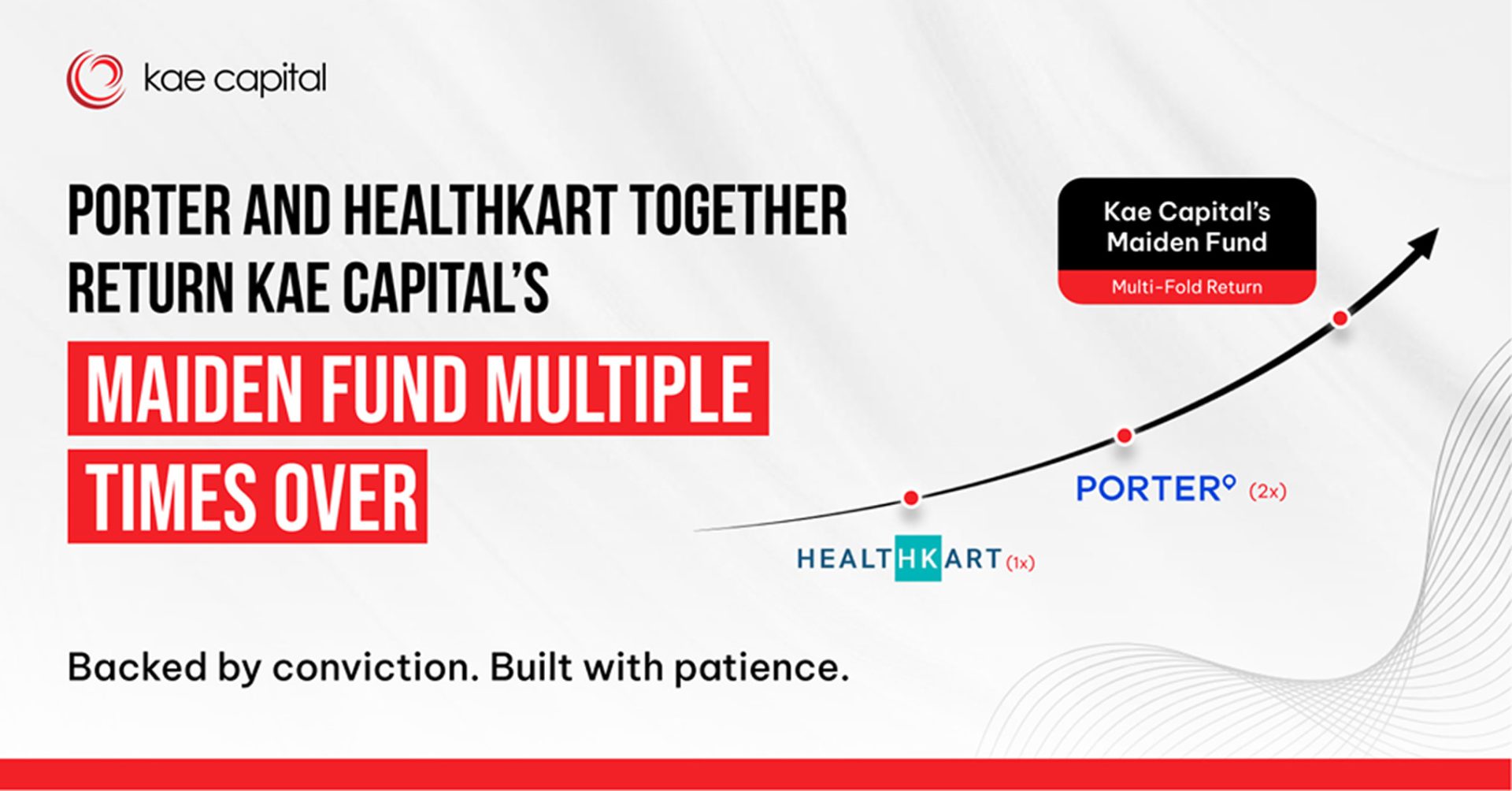
Porter and HealthKart Together Return Kae Capital’s Maiden Fund Multiple Times Over

Fund-returners Porter (~2x) and HealthKart (1x) anchor one of the strongest seed track records in the country

When we started Kae Capital in 2012, institutional seed investing in India barely existed. The startup ecosystem was young, and the idea of writing structured pre-seed and seed cheques felt unconventional. But we believed India’s most iconic companies would be built from bold, untested ideas; ideas that simply needed conviction, capital, and care early on.

That conviction has compounded.

Today, we’re proud to share a milestone that underscores that belief: Porter and HealthKart, two of Kae Capital’s earliest investments, have together returned our maiden Fund I multiple times over.

Following a series of recent secondary transactions, Porter has already returned more than 2x the fund, while HealthKart has returned the fund on its own, with meaningful upside still ahead. These are not just standout portfolio outcomes, they represent proof that India’s early-stage venture model can deliver real distributions and enduring impact.

A Landmark Fund Performance

Launched in 2012, Fund I backed 32 companies across India and the US. Many of these grew into category-defining leaders that reshaped their sectors and validated India’s potential to produce global-scale companies from the earliest stages.

Kae Capital’s Fund I India vehicle fully exited with a DPI of 3.6x as of September 2023, while the overseas vehicle is on track to deliver over 5x DPI. Together, they mark one of the strongest maiden fund performances by a homegrown venture capital firm, not only in India but benchmarked against global peers.

The portfolio features enduring leaders such as 1MG, now the country’s largest online pharmacy under the Tata umbrella, and Certa, a fast-scaling global compliance and risk platform. Other notable outcomes include Fynd (formerly Shopsense, acquired by Reliance), Dailyround, Airwoot, and Eventifier, each contributing to the fund’s stellar performance and ecosystem impact.

In total, Fund I catalyzed over $900 million in follow-on capital, created more than 56,000 jobs, and enabled over $2.7 billion in enterprise value across its portfolio.

When we raised Fund I, seed investing in India was almost unheard of. Our goal was simple, back extraordinary founders at their earliest stages and stand with them across cycles. To now deliver a top decile DPI number on that very first fund is deeply gratifying. It is a milestone shared with our founders, LPs, and the ecosystem that believed in us before it was fashionable to do so,” said Sasha Mirchandani, Founding Partner, Kae Capital.

Building a Model for Early-Stage Venture

Fund I’s legacy is not just measured in multiples. It established a new way of approaching early-stage venture; one rooted in conviction, discipline, and deep partnership with founders.

This foundation shaped every fund that followed. With Fund II, Kae backed companies that have gone on to define their categories: Zetwerk, now one of India’s most successful manufacturing platforms and a soon-to-be public market entity; Nazara, India’s first listed gaming unicorn; and Snapmint, a pioneering BNPL and embedded finance platform enabling consumer credit inclusion at scale.

Fund III, launched in 2022, is already showing strong momentum with fast-scaling brands like Traya, Foxtale, and RecommerceX, reflecting Kae’s continued commitment to backing durable, high-scale businesses driven by innovation and execution.

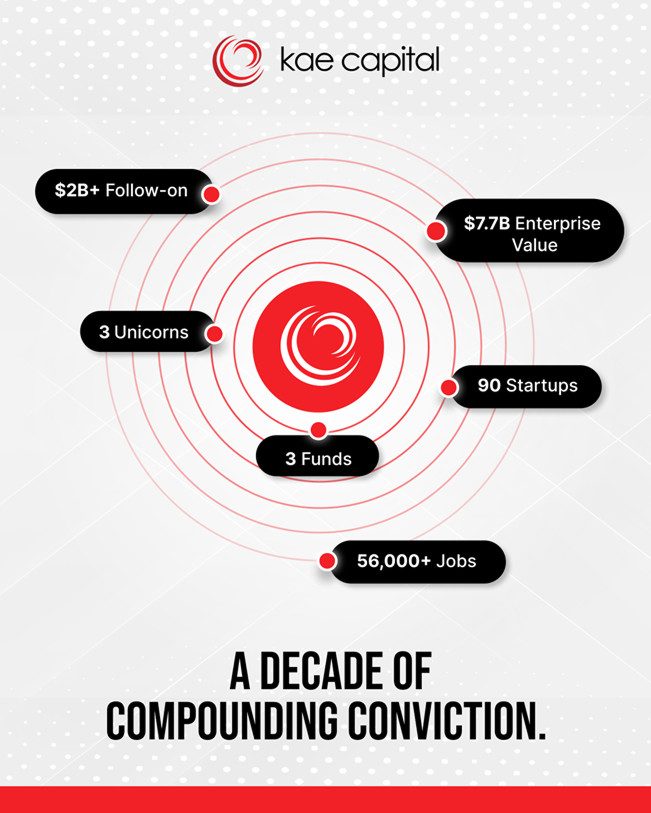
Across its three funds, Kae Capital has backed three unicorns, generated $7.7 billion in enterprise value, attracted over $2 billion in follow-on capital, seeded five companies with $100 million-plus in revenue, and contributed to tens of thousands of new jobs in the Indian economy.

“Fund I’s DPI is not just a number; it’s a symbol of what’s possible when early conviction meets enduring partnership,” said Gaurav Chaturvedi, Partner, Kae Capital. “We are proud to have played a role in shaping some of India’s most exciting companies and even prouder of the trust placed in us by our founders and LPs. This is only the beginning.”

What Fund I Taught Us

Every fund leaves behind a set of lessons. Fund I gave us principles that continue to define how we think, invest, and partner with founders today.

  • Patience compounds
    Enduring companies take time. The ability to stay invested, mentally and financially, through the quiet years often determines the eventual outcome.
  • Resilience over momentum
    Markets shift. Business models evolve. The founders who last are those who adapt fast but stay anchored to first principles.
  • Founder first, always
    When things break, markets and models matter less than trust. Honest, early conversations often save more companies than strategies ever do.
  • Teams are the true moat
    Strong, complementary teams outperform solo brilliance. Founders who can disagree well tend to outlast the rest.

These lessons became the DNA of Kae’s platform. They informed the construction of Fund II and Fund III, which are today backing some of India’s most transformative companies.

All Weather Partner

Kae’s performance is inseparable from its philosophy. The firm has consistently partnered with founders through pivots, crises, and inflection points.

Amrit Acharya, Co-Founder of Zetwerk, recalls:From our first round to navigating COVID and scaling into a large company, Kae has been thoughtful, proactive, and solution-driven. They’ve consistently added value.

Pranav Goel, Co-Founder of Porter, adds:Having Kae Capital since the very start has been a sheer delight. Their unwavering support, especially during tough times, helped us cut through the clutter and focus on building.

Such endorsements reflect a core truth: Kae’s success is built on trust. The firm remains one of the few VCs in India to track founder NPS, which stands at 88%.

Looking Ahead

As India enters its next wave of innovation, Kae is deepening its focus on sectors that will define the country’s next decade; AI, intelligent automation, manufacturing resilience, and deeptech. These are the technologies that will drive self-reliance, productivity, and global competitiveness.

Kae’s mission remains unchanged: to back visionary founders from the first cheque through scale, helping them build enduring, globally competitive companies.

Fund I is a strong reminder for us that conviction, patience, and partnership are the most valuable currencies in venture capital, and that, sometimes, belief compounds faster than capital.

Beyond Capital with Kae: Building with Context, Clarity & Care

In the early stages of building a company, founders are expected to wear many hats. From refining product and chasing growth to building teams and raising capital, every decision carries weight. At Kae Capital, we believe our job as early-stage investors is not just to fund ambition, but to stay deeply engaged through the messy, meaningful middle.

Venture capital is often described as patient capital. But in reality, what founders need most isn’t just patience; it’s conviction, context, and the kind of support that turns early promise into enduring progress.

For us, portfolio support isn’t a checklist. It’s a philosophy rooted in the idea that building a company is deeply human work, and that growth depends as much on context as it does on capital. Every founder’s journey is different. Some need help structuring their first board meeting. Others are navigating multi-city expansion, early hiring, or new regulatory frameworks. At Kae, we plug in where it matters most.

Building the Foundation for Scale

The venture world often celebrates outcomes – funding rounds, product launches, and exits. At Kae, we value those milestones, but we’re equally focused on what precedes them: the foundational work that compounds quietly over time. The clarity in a founder’s decision-making, the resilience of a team during tough cycles, and the trust built through strong internal systems.

Portfolio Company Logos

Over the past few quarters, we’ve had the pleasure of working closely with companies like Eternz, GobbleCube, Knot, QuickAds, RecommerceX and Supernova, not just as investors, but as strategic partners. Our involvement has spanned everything from hiring and policy formulation to compliance, internal culture building, and founder coaching. These aren’t one-off interventions; they’re part of a deeper commitment to building strong, durable companies.

Culture, Context, and Continuity

Startups don’t just scale products; they scale people, processes, and decision-making. That transition is messy, often non-linear, and almost always under-discussed. One of the most valuable things we bring to the table is context, from having worked with early-stage companies across market cycles, sectors, and scale curves.

We understand what good looks like, but more importantly, we understand what good for you looks like. That means helping a two-person founding team draft their first ESOP plan. It also means helping a Series A company craft scalable onboarding and engagement practices that align with their values.

The Relationship Is the Strategy

Ultimately, the measure of our involvement isn’t in the number of roles filled or policies framed, it’s in the confidence of a founder who knows they’re not building alone. It’s in the belief that while the journey may be unpredictable, the partnership is steadfast. That’s what lets founders reach out when they hit a wall. It’s what allows for honest conversations, quick interventions, and long-term alignment.

Kae team image

And when people are supported with the right mix of context, clarity, and care, they build extraordinary things. Capital alone doesn’t build companies, people do.

Insights from Kae Catalyst: Consumer Edition

India’s consumer landscape is in the midst of one of its most dynamic shifts. Rising digital adoption, evolving consumer aspirations, and the emergence of new-age distribution models are redefining how brands are built and how consumers engage with them. For founders and operators, this creates both unprecedented opportunities and complex challenges; how do you build a brand that lasts in an age of fleeting attention spans? How do marketplaces adapt when 10-minute delivery is no longer a differentiator but an expectation?

These were the questions at the heart of the recently concluded Kae Catalyst: Consumer Edition, where we brought together 70+ founders, investors, and operators who are building at the intersection of consumer and technology. The evening, co-hosted with our partners at Google Cloud, featured two insightful panel discussions that explored the future of consumer brands and marketplaces.

Panel 1: Built to Last – Building Brands that Endure

Moderated by Sunitha from Kae Capital, the first panel dove deep into what it really takes to build consumer brands in India. Featuring Kae’s portfolio founders – Romita (Foxtale) and Saloni (Traya), along with Rishabh (Sharrp Ventures), the discussion offered candid insights from founders in the trenches and a founder turned investor with a sharp eye for brand-building signals.

The 0–1 and 0–3 Cr Journey

Romita and Saloni spoke about the early days when everything revolved around product-market fit. Distribution, brand-building, and team culture are critical, but the founders emphasized the importance of single-minded focus, solving one problem for one set of customers with ruthless clarity. For consumer brands, it isn’t enough to have a differentiated product; the messaging, delivery, and customer experience must align seamlessly.

What stood out is how the bar for PMF has shifted. A few years ago, getting to ₹1 crore in monthly revenue was seen as a clear marker of PMF. Today, that milestone looks closer to ₹3 crore, proof that expectations are rising, competition is sharper, and brands need to go deeper to truly win.

At the ₹0–3 crore per month scale, the conversation shifts to building teams and processes. Founders reflected on how delegation becomes critical, and building internal conviction around customer-first thinking ensures organizations don’t lose touch with their early DNA.

What Investors Look For

Rishabh highlighted the early signs he looks for in consumer founders: clarity of thought, the ability to attract talent, and a nuanced understanding of distribution. Interestingly, he differentiated between evaluating early-stage versus scaled-up founders. For early founders, adaptability and sharp focus are key, while for scaled players, it’s about proving whether they can sustain momentum and evolve across channels without losing discipline.

Scale and the Distribution Puzzle

As Foxtale and Traya scaled, their approach to distribution evolved. From early dependence on D2C to balancing marketplaces, offline GT (general trade), and quick commerce, the consensus was that there is no single playbook. Founders must stay pragmatic and adapt to where the consumer is, whether that’s a digital shelf, a kirana store, or a quick-commerce app.

On the investor side, Rishabh noted that while there may not be a bias for offline or online, understanding unit economics within each channel is non-negotiable. Growth for growth’s sake is meaningless if contribution margins do not compound positively.

Brand vs. Performance Marketing

A recurring theme was the tension between brand building and performance marketing. Founders acknowledged the pressure to deliver immediate results in investor boardrooms. Yet, they agreed that brand equity is a long game, and the right time to invest is once the product has clear early traction.

As one way to think about it: performance marketing is like rocket fuel, it can give you an immediate lift and accelerate growth quickly. Brand building, on the other hand, is like gravity, it may not be flashy day-to-day, but it keeps the business grounded, creates resilience, and ensures your growth is sustainable. Wait too long to invest in a brand, and your product risks being seen as a commodity; invest too early, and cash burns without leverage.

Gen Z, the Attention Economy, and Contrarian Views

In today’s attention-scarce world, Gen Z consumer behavior is rewriting the playbook. Romita spoke about how authenticity and community matter far more than polished advertising. Saloni stressed inculcating consumer-backward thinking into every team member — building for long-term trust rather than chasing short-term metrics.

When asked for contrarian views, the panelists offered thought-provoking takes: that the D2C boom is not “easy capital + Instagram ads = success” anymore; that offline still holds immense power despite the digital hype; and that consumer brands should not shy away from “boringcategories if they solve a real need.

If they were to start today, each founder’s mental model was clear: identify underserved categories, build with authenticity, and never underestimate the power of distribution agility.

Panel 2: Beyond the Cart – Future of Consumer Marketplaces

The second panel, moderated by Harshad from Google Cloud, zoomed out from brands to the platforms that power consumer experiences. Featuring Kae’s portfolio founders – Manas (GobbleCube) & Anil (Snapmint), along with Raghav (Promaft), the discussion explored the fast-changing marketplace landscape.

What’s Broken in Current Models?

The panel kicked off with a critical question: what’s fundamentally broken about consumer marketplaces? Trust, discovery, and transaction friction emerged as recurring themes. Startups are experimenting with embedded finance, AI-driven discovery, and personalization to close these gaps, but as Manas pointed out, execution at scale remains the real test.

Beyond Buzzwords: Tech That’s Moving the Needle

AI, social commerce, and live streaming are buzzwords often thrown around. But what’s working in practice? Anil emphasized embedded credit solutions as a real unlock for consumer adoption, especially in a price-sensitive market like India. Manas added that agentic AI tools are helping brands grow smarter across e-commerce and quick commerce, not just spend more ad dollars. Raghav provided the investor lens: technologies that improve retention, lower acquisition costs, and reduce friction are the ones that will endure.

Competing in a Quick-Commerce World

The rise of 10-minute deliveries has completely reset consumer expectations. The panel acknowledged the operational and capital intensity behind these models but agreed that speed alone cannot be the differentiator. Marketplaces that combine speed with trust, affordability, and discovery are more likely to build defensibility.

The Next 2–3 Years of Consumer Marketplaces

Looking ahead, the panelists painted a picture of ecosystem-driven marketplaces, platforms that don’t just facilitate transactions but enable community, discovery, and financing. Differentiation will come from specialization and vertical depth, not just horizontal scale. Winners will likely be those who balance supply-demand liquidity with innovative consumer experiences.

Supply vs. Demand: Solving the Chicken-and-Egg Problem

When asked how to prioritize between supply and demand, founders reflected on their own journeys. The consensus: it depends on the category. In some cases, curating high-quality supply attracts demand; in others, creating a demand pool forces suppliers to show up. The key is sequencing thoughtfully and staying flexible, especially in the fragile early days.

Takeaways: A Consumer Landscape in Flux

Both panels underscored one thing: India’s consumer-tech story is only just beginning, but the bar for building enduring companies is rising sharply.

  • For founders building DTC brands, the advice was clear: build authentic products, obsess over distribution, and know when to shift gears between performance and brand.
  • For marketplaces founders, the challenge lies in moving beyond transactions to creating sticky, trust-led ecosystems.
  • For investors, the signals to watch for are founder clarity, adaptability, and thoughtful scaling choices that don’t sacrifice long-term unit economics.

At Kae Catalyst, our goal has always been to create a space where such candid, experience-led conversations can happen. As India’s consumer ecosystem matures, we remain committed to backing founders who are not just chasing the next trend but are building with resilience, authenticity, and ambition.

Looking Ahead

At Kae Capital, we believe India’s consumer ecosystem is only at the beginning of its growth curve. This Consumer Edition was a reflection of our commitment to fostering these conversations and supporting the founders who will lead this transformation. A big thank you to our panelists, attendees, and our partners at Google Cloud for making the evening a success.

The journey of building consumer companies is never easy, but as the discussions revealed, it is in the complexity that the most exciting opportunities lie.

The Indian SMB Story

The SMB (small and medium business) story is not a new one in India. Contributing to over 30% of the Indian GDP, the MSME sector is the bedrock of aspirational India. Incumbents like Tally, IndiaMART, and Zoho solved for various key organisation activities (like accounting/bookkeeping, vendor/buyer discovery and CRM respectively), paving the way for a wave of mobile-first technology tools.

We saw the first wave between 2014-18 which saw the emergence of mobile accounting/bookkeeping solutions like Khatabook, OkCredit, storefront solutions like Dukaan and miscellaneous business op solutions (which include ERPs/CRMs). The same period saw the emergence of B2B marketplaces like Udaan which solved for procurement and eventually the emergence of managed service marketplaces like Zetwerk and OfBusiness. The emergence of commerce necessitated the emergence of financing solutions (anchor-led and non-anchor-led) such as Mintifi, Rupifi, etc.

The perennial question remains, where do sustainable profit pools lie? Please note the key term sustainable profit pools – which implies profit pools backed by non-commoditized offerings and protected margin profiles. Is it in financial services? Is it in software + financial services? Is it in commerce (which includes credit by extension)? Where is the gap in the market? What use cases are yet to be solved? With models like Zetwerk and Mintifi turning operationally profitable, we are seeing signs that rapid scale and profitability can be achieved in tandem by tapping into SMB spending.

After having spoken to a few hundred founders solving for the Indian SMB space, we wanted to get a pulse from the SMBs themselves. We spoke to SMBs with the aim of understanding their day-to-day activities, motivations, which services they consider critical and which ones they don’t. We brainstormed with them to understand what they would build in-house and what they would prefer to outsource, what is critical and what isn’t.


Understanding the general workflows in manufacturing and services –

A sample manufacturing workflow (and key bottlenecks/ key points of disruption which can be solved using technology have been mentioned in brackets) can be as follows:


Procuring Financing at various stages is also critical to the entire workflow.

Services workflows are more varied – they differ significantly from logistics service providers to restaurants/hospitality service providers to construction services. However, the core workflows can be abstracted out as follows  – discovery (finding customers), financing, procurement and project management.

Beyond the above-mentioned key activities, there are several compliance-related pain points/activities which are industry-specific. For example, pollution control is critical for textile printing businesses.

“Pollution is a big headache – factories are across the state. Water pollution is an issue for textiles across the board. Water needs to be treated well, current solutions are not satisfactory.”
–  Small business (Textile printing)

“Our main problem is dealing with so many policies, every state has a different required label with different MRPs, different warnings to be put- logistically it’s a lot of extra effort for the company”
– Large business (Alcohol) 


Software solutions
 seem to be attracting attention as well, however, we are uncertain of the underlying profit pools.

“ If a software comes up that allows us to manage our projects more efficiently, we’d be willing to pay for it. Labour shouldn’t be occupied in things like accounting.”
–  Residential Business construction, small business (Construction)

Automation solutions are in demand for large SMBs (think INR 100 Cr+)

“Limitation of lower levels of automation is that the Indian scale of industrial manufacturing of companies like ours is 5x lower than abroad.”
– Large company (Industrials)


Sharing a market map which highlights all the core use cases and some of the models solving for the same –


Our attempts to neatly map unsolved use cases onto parts of the workflow yielded interesting insights:

SMBs can be broken down by size and sector. In our study, we broke down our sample by size of business (< INR 5 Cr, 5- 20 Cr, 20 Cr – 100 Cr, 100 Cr+) and by sectors of businesses [manufacturing – which includes electricals, industrials, chemicals, construction, etc.; services – logistics, hospitality, etc.]

However, the goals of the promoter are what stood out as a key insight. Most businesses’ intent to adopt technology (and pay for solutions) seems to be a function of their desire to grow. For example, we spoke to a business which was < INR 5 Cr and grew to over INR 20 Cr year-on-year. The promoters were excited about growing the business to an INR 100 Cr+ size and were thinking actively about their expansion strategy. They were open to adopting technology-enabled solutions which would not be efficiently solvable in-house, i.e. their existing supplier/vendor base was not enough or they did not have the necessary personnel/know-how to pull it off.

While they have a sense of where they want to reach from a scale standpoint, there are several unanswered questions on how to get there. Often, promoters do not have a clear idea of the challenges they will face going forward as they scale their business and seem to be broadly open to new technology solutions and financing options.

Larger businesses (INR 150 Cr+) with growth-centric founders tend to be more keen on building everything in-house (including technology).

“We tried using Salesforce, but it was not specific to our sector and the licensing fees were very high. Now we have created an in-house integrated ERP (CRM +ERP) which we’re building for commercial sale and use as well.”
– Mid-sized company (Industrials)


Discussions with promoters on technology adoption irrespective of size boil down to a build v/s buy debate.

Small businesses (<5Cr) have the highest friction to technology adoption and don’t tend to do so unless there is a compliance need OR their anchor customers/vendors make them adopt the tech. Small businesses (<5Cr) which are more than a generation old tend to remain in status quo with little incentive for the promoter to adopt tech solutions or want to grow.


ImportanceINR 1 – 35 Cr INR 35 – 100 CrINR 100 Cr +
Procurement/InputsLow-MidMidMid
Project/Workflow ManagementLowMidMid
Automation SolutionsLowMidHigh
ERP/CRM SaaS SolutionsLow-MidMidMid – High

(would prefer company company-specific solution)

Payment Recon/B2B Payments and collection (Fintech SaaSMid/HighMid/HighMid
Financing + Fintech SaaSMidMidMid
ComplianceHighHighHigh
OthersIndustry dependentIndustry dependentIndustry dependent


Despite the challenges, we feel the Indian SMB story is a promising one

If you feel you are building in the space, please do reach out to us!

Customer Feedback Loops

During the early days of company building, getting continuous feedback from the customers about the product and iterating on the received feedback is critical. This is what defines the product and business roadmap and pushes a start-up to that elusive ‘product market fit’. In this piece, we will talk about how to create effective customer feedback loops for the product teams.

Feedback from the customers is not even half as useful if the learnings and actionables don’t percolate to the product team. Additionally, it is also important to loop back to customers on their feedback/ issues after working on it. A ‘closed-loop process’ would be something like below and if done well, would turn into a virtuous cycle or a flywheel propelling the product forward.


Collecting the feedback

Any customer feedback loop has to start first with a tight feedback collection process. Most of the time customers give feedback to frontline teams like Customer success or customer support. In the early days of the company, there might not be specific teams for customer success/support and this might have been done by the sales/product teams directly. In both cases, collecting user feedback is a critical part of the frontline teams. Most of the time, user feedback can be bucketed into three channels:

a) Inbound feature request: This channel is the most obvious one and most companies should have a mechanism/structure around it in place from the early d Customer feedback can be a feature request, bug or something else. The channels for this feedback can be multiple, like Customer communication platforms (eg. intercom), email, helpdesk tickets, phone calls etc.

b) Proactive outreach: This is a mechanism that we strongly suggest founders to put in place from the early days. Best frontline teams do not wait for customers to give feedback but proactively reach out to them. The most efficient way to go about it is to do proactive outreach on the basis of product/feature usage. There are product analytics and customer health tools like Mixpanel, Gainsight, Totango  which can be helpful for this. Our portfolio company Hiver, for example, keeps track of product usage through Gainsight PX and reaches out to customers where the product usage dips or is not in line with their benchmarks. The channel for communication here is usually Phone/Email Outreach.

c) Churned customers: Product feedback from a churned customer (or a customer who has stopped using the product) is a very important piece of information. Product teams in some of the more successful companies give a lot of weightage to the feedback from churned customers as it helps them shape the product roadmap and stop future customer churn.


Funnelling the feedback to product teams

The second and arguably more important step after the collection of feedback is to funnel it to the product team. This is a critical step as this is where the interfacing of the front line and product team happens along with the sharing of feedback. Value derivation of the customer feedback (as issue resolution or feature roadmap for the product) correlates directly with how seamless/organised the feedback funnelling to product teams is. At the core of funnelling to product teams is:

a) Sharing the feedback with theproduct team: Most of the time, frontline teams like support and CS get a lot of actionable feedback which requires some action from product/development teams. A good practice is to use internal collaboration tools where feedback can be put in front of the product teams directly. Our portfolio companies for example use specific channels on tools like Slack (customer feedback/ feature request) for this. This is the fastest and most efficient way to get the attention of relevant folks and loop them in on the actionable.

b) Involving product teams with customers: In quite a few cases, Support/CS teams need help from product teams to deeply understand a customer feedback/request. It is best to involve the product team directly to speak with the customers in such cases. Product teams proactively engaging with the customers helps in a more aligned product roadmap and also helps in resolving customer issues and queries faster. We have seen that the best companies have both processes and culture to actively get the product teams in the Our portfolio company Hiver, for example, has quantitative targets for the frontline teams to arrange customer calls with product teams. Another portfolio company, TranZact, for example, has similar targets for everyone in the company to ensure that they speak with at least one customer directly every month.

c) Organizing and actioning on the feedback: This is a part which, if not organized well, can break things the most. Goes without saying that unless the teams organize the feedback well and take action on them, it will not result in effective growth. It is important for the frontline teams, product teams and the leadership to have a clear process on how to organize and action the collated feedback. Best practices that we have seen include using tools which ensure that the feedback is recorded well. It is also important to have a clear process on how to segregate the feedback, rank it for importance and make sure that it is on record for action. We have seen Trello boards used quite well for something like this.


Looping back to customers

It wouldn’t be a feedback loop if you don’t go back to the source, the customers. What needs to happen is that you tell the customers about taking their feedback to the product team and keep them updated on how it is being worked upon.

This, while intuitively not the most important thing for a lot of back-end teams, is arguably the one that kicks the virtuous cycle in motion. It ensures that the customers are happy and tuned in to give more feedback, which shapes the organization’s product roadmap and growth path. Key things to keep in mind here are:

a) Frontline teams to be kept in the loop on actionable: The CS teams need clarity and have to be on the same page about what is being done about the customer request/feedback. This ensures that while they are empowered to close the loop with the customer, they don’t end up overcommitting/setting up unreasonable expectations with the customers. It is a good idea to keep the CS teams looped in the relevant Trello boards/Jira tickets (both are good products) so that they are on top of any updates on the product side.

b) Closing the loop back with the customers: CS teams should be closing the loop with the customers proactively and keep them posted on how the company is actingon their feedback.

In the cases, where the requested feature is put in the roadmap, to close the loop with customers, we have seen companies also giving the customer a peep at the internal product roadmaps. This helps reassure the customers and promotes transparency.

After the issue with the customer feedback is closed, it is even more important to close the loop. Best companies do it very proactively. In case a customer is fine even without using the feature that they had asked for, it is good to just inform them ‘Hey we worked on what you asked for and this feature is out, please go and check it out’. Customer education initiatives like webinars on new features or in-product nudges/guides are also very helpful for closing the loop properly.

A tight and continuous customer feedback loop is the foundation for the ‘Zero to One’ journey of a company. If a product is not getting feedback or not acting on the customer feedback, it is always going to be stagnant. A well laid-out customer feedback loop ensures that the organization collects proper feedback and that the product team doesn’t miss out on the feedback and actions on it. It also ensures that the customers feel that they are being heard.

Minimum Viable Product (MVP)

A Minimum Viable Product (MVP) is one with just enough basic features to be shared with early adopters for their feedback. In the early days of a startup, getting proper guidance is essential in order to get the product right. With an MVP, you can ship a product with your core ideas, in order to refine it further based on early adopters’ feedback. It is much more cost-effective than building out the entire product and then making tweaks, and helps validate your ideas regarding your product. In this blog, we will discuss the strategy of launching an initial version of the product and getting customer feedback. Often, founders are conceiving and perfecting the product internally without testing what customers want. This blog will help you break that cycle and get customer feedback at the earliest.

We will break this phase into four steps:

  1. Validate
  2. Build
  3. Launch
  4. Measure


Step 1: Validate

It is important to first talk to potential customers even before building any version of your product. This initial set of customers you speak with can come from your own personal and professional network. The goal is to not spend months or years doing research but to identify a common pain point soon.

Speak to 20-30 customers and ask them questions like:

“What are the problems you are facing?”,
“How are you addressing them?”,
“Why is this solution still not working for you?”

Try to connect the dots on common problems that you are hearing. The key is to only listen and understand the problems that customers are facing without talking to them about your potential solution. Try to build a deep understanding of the problems your user is facing. We are only attacking the problem in this step.

Typical Team Composition: Given this is still early in the journey, your team should ideally comprise only the founders. You should drive all these conversations since that sets the foundation for the next step, building your product.


Step 2: Build

After you have spoken to initial customers and identified a common pain point, it is time to get to the drawing board. The goal here is to get the first version of the product out of the door to test out the initial hypothesis. While as a founder, you are always striving for excellence and want to over-architect the product, you will need to stay disciplined here. The aim is to not create the perfect product, but the minimum viable product to validate your hypothesis. 

This is just the first version of the product and it is bound to undergo several changes subsequently. Also, we are not suggesting that you ship any product, but ship a product from which you can learn. Formulate your hypothesis from Step 1 and build a product in the shortest time from which you can learn the maximum. Do not try to build to solve all the problems that you heard from your users but the top ones that matter to the user. Solve the most pressing issues where you can make a difference.

Typical Team Composition: Your team has now grown beyond the founders. Ideally, you should have hired a couple of developers (Full stack engineers preferably to help build the first version of the product quickly).  


Step 3: Launch

Now that you have built the first version of the product, you need to cross the hurdle of launching and getting it live in front of potential customers. Refer to our blogs on ICP for more details on whom to target first. (Part 1) (Part 2)

This is the phase where you learn how the customer is interacting with the product:

“Do they see value in it?”,
“Are they happy with the design?”,
“Are they responding in the way we intended?”

This will help you derive valuable feedback. Your main takeaway here should be to get the product out of the door.

Typical Team Composition: At this stage, you may want to add a sales/ customer outreach representative. If it’s B2B sales, you are likely driving most of it and a mid-junior level resource is probably supporting you. For B2C sales, you need to spend inordinate amounts of your time on performance marketing. Again, you could use a consultant or an in-house resource to support you.


Step 4: Measure

Once you have launched the product and seen customers using the product, you should now speak to the users and unearth what truly matters to them. You will be surprised by the feedback you get from the customers. Features you thought would delay the product launch may not even matter to the user. On the other hand, features you had planned to delay rolling out may be what they are seeking right away. Do not skip this step, since it helps in aligning the team internally on what to prioritise.

Collect all feedback by asking the same questions. You need to be extremely methodical in your user interviews. Ask open-ended questions so that you get more answers from the user. Ensure the questions you ask will help you in building the next version of the product. We will dive deeper into this topic in a separate piece.

Typical Team Composition: You are now expanding your team by adding people on the engineering side and sales/marketing functions. Do not hire ahead of the curve till you hit PMF since you are still in discovery mode.  


Conclusion 

Your chosen methodology may require tweaks or multiple consultations with your early adopters, however, this framework will help you set a foundation for getting the most answers accurately. Conducting this activity early on ensures that once your product is out for public consumption, it fulfils the needs of a majority of your customers and reduces the scope for major red flags coming up, which is always a great sign in the early days.

Additionally, be prepared to pivot, if you receive sufficient feedback to do so. It is a very normal part of this process and is much better to sooner than later.

In case you are a tech-driven business and are building something that excites you, feel free to reach out to our Investment Team here.

Understanding Ideal Customer Profile (ICP) Part 2: Refining the ICP

In the first part of this two-part series, we defined the ‘Ideal Customer Profile’ (ICP) and how you can go about defining it. In case you missed that, you can check it out here. In the second part, we shall look at refining your ICP to be able to use it for optimising your target audience.

After you have iterated and zeroed in on an initial ICP, it is time to work on other key aspects of the go-to-market (GTM) strategy. We suggest doing the following:

1) Positioning statement: A good way to start on the GTM is to come up with a clear and concise positioning statement. This positioning statement should be able to articulate your value proposition for an ideal customer. A typical format for this would be like below 

 For (Target Customer) that (Needs/Cares about), (Company/Product/Service) is a (Category/Solution) that (Benefit). Unlike competitors,(Company/Product/Service) is (Unique Differentiator) 

           Examples of positioning statements:

    • Avis: For business people who rent cars, Avis is the company that will provide the best service because the employees own the company.
    • Amazon: For consumers who want to purchase a wide range of products online with quick delivery, Amazon provides a one-stop online shopping site. Amazon sets itself apart from other online retailers with its customer obsession, passion for innovation, and commitment to operational excellence.


Another very good way to think about this is to have an analogy positioning. This is when you tether your values with another successful/iconic brand and make the value proposition very easy to understand.

 For eg. Superhuman: Tesla for e-mails

2) Building user/buyer personas and creating personalized messaging:While B2C messaging is often personalised, It is very easy to forget sometimes that even B2B customers are humans, and the messaging needs to connect with them on a personal level to make a buying decision. This is where building personas (user/buyer) becomes important. What you want to be able to do is identify more things about your customers beyond the segmentation of ICP. You are looking for subtle but important things like ‘What key value are they really looking for?’, ‘What emotional trigger really makes them take a decision?’, ‘Do they have any cognitive biases?’, etc.

Identifying and enhancing your customer’s human behavioral traits and fleshing them out as personas such as a ‘Sales Stuart’ who is looking for the best price or ‘Developer Dave’ hunting for optimum productivity can help you sharpen the messaging and channels strategy. Continue iterating on these personas as and when you collect more information and data.
 

Validating and reiterating the ICP
 
As the business progresses and you add customers, you should continue periodically validating and reiterating the ICP. This can be done by:

  1. Looking through your customer segment mix
  2. Looking through metrics/indicators/evidence of value derivation by different segments
  3. Reiterating the ICP

 
A few ways to measure the value derivation would be:

  1. Usage/Engagement metrics:How are different segments using/adopting the product
  2. Customer retention/churn data:Segment-wise customer churn or retention data. This directly translates to the Lifetime value of the customer
  3. Customer Satisfaction (CSAT)/Net Promoter Score (NPS) data:Segmented NPS/CSAT data gives a lot of insights into the ICP segments.
  4. Sales data: Insights on segment-wise Sales cycles and conversions also give indications on the ICP.


Another way of visualizing this would be to break up personas through usage patterns – engagement and retention metrics:

SegmentsEngagement/Usage Metrics Retention MetricsCSAT/NPSSales Cycles/Conversion
Segment 1    
Segment  2    


The ideal customer group should be doing much better compared to other segments and should have average metrics on most of the above KPIs. If that is not the case, it is time to reiterate the ICP.


Aligning Efforts towards ICP

Once you have clarity on the ICP, it is important that you make maximum efforts towards that segment. The following questions help in that direction:

  1. What percentage of your customer base (by numbers and revenue) is your ICP?
  2. What are some things that you have done/ are going to do to strengthen the value proposition towards your ICP?
  3. How are you planning to align your Sales and Marketing efforts towards the core customer group? 


Firing your customer

Firing your customer is perhaps as important as, if not more important than defining your core customer. The following questions will help you understand how focused your organization is. It is important that you let go of the customers who are far away from your ICP segment.

  1. Which customers have you fired in the last months and why?
  2. Which customers (Non-ICP) are you firing in the next 6 months?


Conclusion

Thus, clearly defining your ICP and being regular with this exercise can do wonders for the efficiency of your business by helping you reach the right consumers with the right messaging. The important point to note here is that this exercise is not a one-time effort and does require constant updating to maximise your business’ output.

Understanding Ideal Customer Profile (ICP) Part 1: Defining the ICP

This article talks about the importance of defining an Ideal customer profile in the initial days (when you have none or very few customers) and provides a framework for doing so.

Founders are often tempted to capture as much value (or revenue) as possible from different types of customers. To do this, they often wastefully spend their energies and resources on capturing multiple types/avatars of customers and therefore lose sight of the company’s core value proposition and focus. As a founder, you must identify and focus your energies on the customers who are going to be most successful for you- the ‘Ideal Customers’

First of all, it is important to expand on the term ‘Ideal Customer Profile (ICP)’. An ICP is not the customer that gives the most revenue, it is also not only the customer with the easiest sale potential. An ideal customer is one who is deriving the maximum value from your offering and whom you can serve best (compared to alternatives). This translates to:

  1. Easier Sale and lower cost of acquisition
  2. Better retention and higher Lifetime Value
  3. Customer Advocacy and referrals


You should also not confuse ICP with customer/buyer personas (‘marketing Michelle’ or ‘HR Harvey’). A buyer/user persona comes after you have defined a broader ICP and is used to create messaging that helps you connect best with different personas in that ICP group. An ICP defines Who to sell to, while a persona defines How to convey the value proposition of your offering to this customer.

Your ICP is a clear, common, objective definition of who the ideal buyers and users of your product are. A well-defined ICP lays the groundwork for your positioning, messaging, pricing, GTM, and even product roadmap. Once you have clarity and validation of your ICP, everything else ties into it. An important point to note is that the ICP definition is not stationary, it keeps on evolving along with the organization. As you keep on acquiring and learning about more and more customers, the ICP definition will keep changing and becoming sharper.


Defining the ICP

A good way to define your ICP in the very early days is to look at the broad market that you are trying to solve for and look for a common subset where you believe you are best positioned to serve that customer group. Look at the overall landscape of customers and competitors. You are looking for a large opportunity which primarily can be because of:

  1. A gap in the market– There is a gap in the market and a large customer segment is underserved.
  2. Better product/experience– There is an opportunity to serve the customers in a much better way compared to the current alternatives. A low NPS/Retention for the current alternatives points in this direction.
  3. Opening of the market– There is a latent need in the market or the customer behaviour is changing rapidly for a new offering to come in and disrupt.


You should then speak with your best customers (or do surveys with prospects if the product/service is yet to be launched) and list down their attributes.


For B2C Businesses

For a consumer-focused(B2C) business, the following attributes are a good start

    1. Demography
      • Age group
      •  Gender
      •  Religion, Race and Ethnicity
      •  Occupation
      •  Income
      •  Relationship/Family status
      •  Geography


  1. Psychographic and behavioural traits
    • Values
    •  Interests
    •  Hobbies
    •  Aspirations and Fears
    •  Social media behaviour
    •  Buying behaviour


A few iterations using customer surveys/research will lead you to your ICP.


For B2B Businesses

For B2B businesses, the following attributes are a good start

    1. Target Company
      • Industry
      • Customer base/Business model- For example ‘B2B company serving SMBs and mid-market customers’
      • Size- Very Small/Small Medium/Mid Market/Enterprise Businesses
      • Geography
      • Maturity/other differentiators- For example, ‘fast-growing startups’ or ‘more than 20 people development team’


  1. Target customer profile
    • Profile- Ex Sales Development Representative/VP Marketing/Engineering Manager
    • Key goals of the customer
    • What is the core problem?


Put your target group into different segments and think through your value proposition from the perspective of the following parameters. The attractiveness of your solution (compared to the alternatives) for a segment will drive you towards your ICP:

  1. Problem intensity– The problem you are solving can be severe and (or) frequent. Pain point intensity usually is different in different kinds of companies. It relates strongly to the industry, size, and maturity of the company.
  2. Awareness and urgency– How aware is the customer of the pain point? Is it a need (urgent) or good to have?
  3. Ability to pay– Does this customer segment have the ability to pay the right value for your solution? This usually relates to the size and industry of the company.
  4. Ability to sell and serve efficiently– How efficiently can you acquire customers of one segment? How equipped are you to serve them? Geography and size of the company are the most important variables for this parameter.
  5. Competition/Advantage over the competition– Are there any other solutions for this customer segment? Is your solution much better than the current competition? Is there a gap/underserved market segment that you can go for? Usually, this parameter relates strongly to size and geography. It is probably the most critical parameter which gives direction to a possible whitespace or possibility of disrupting incumbents.


A few iterations using customer surveys/research will lead you to your ICP. Articulate it very clearly. Try to be as specific as possible and use more nouns/verbs than adjectives.

Example: Hull.io ICP definition- “Post Series-A (scaling) SaaS startups with more than $5 million in annual revenue, who use Salesforce & Redshift.”

After nailing the ICP statement, to plan and sharpen your go-to-market (GTM) strategy, we suggest that you put together the following as well:

  1. Success metric for the customer– What is the metric that the customer is likely to look at to validate that your solution is proving to be successful? (eg. it can be the lowering of churn or increasing of NPS)
  2.  Success metric for you– What is the metric that you would track to validate that your customer is deriving value from your solution? (eg. it can be the number of emails sent or tickets closed)
  3. Value Metric– What is the metric/unit that the customer is likely to measure that correlates with the perceived value? (eg. it can be the number of users or GBs of data storage)
  4.  Time to value– How much time does it take for the customer to start realising the value of your solution?


This way, you can approach the problem of defining your ICP, depending on the kind of customer profile and end goals you are targeting.

In part 2, we will talk about steps taken, post defining your ICP.