Audio OTTs’ Day in the sun – Our investment in Eight Network

Audio may be the first entertainment format in human history. Radio broadcasts have entertained audiences at scale for over a century. The advent of the internet helped digital audio platforms to flourish; changing the way people consumed audio content. With Apple launching iTunes in 2001, the popularity of digital music exploded. Since then, new audio formats such as podcasts, audiobooks, storytelling, non-fiction, short-form content etc. have evolved. We are super excited about the opportunity and invested in Eight Network early last year.


The opportunity

While video formats are dominant, audio has tremendous growth potential as it has independent use cases. With the high penetration of smartphones and headphones, there’s a substantial opportunity in the background entertainment space. This helped non-music audio content (growing at a CAGR of 33%) to claim a sizable share in the media & entertainment space, complementing the on-the-go lifestyle of young consumers.

There is a large audience for audio formats in the world. Spotify has over 550 Mn monthly active users (average) in Q3 of 2023; a 26% growth YoY. It is estimated that 170 Mn+ users are listening to audio on a monthly basis in India. While most of them consume music content, the share of non-music content has been going up rapidly. As per the Redseer report, the share of non-music has gone up from 3% in 2019 to 5% in 2023.


Major Indian players

On the music front, the largest players in India have been Gaana, Saavn and Spotify. Some of these have explored podcasts in some shape or form. However, the core offering for these platforms still remains music.

The second wave of companies in the OTT space include PocketFM, KukuFM, Headfone and Eight Network. They vary from each other in the genre and target audience. Pocket FM’s core product offering has been long-format audiobooks and stories. Kuku has focused on the Bharat audience, offering non-fiction content that includes motivation & education in many vernacular languages. 


Eight Network

The latest of these, Eight Network, has focused more on the immersive content around audio shows, live and podcasts.  While short-form content seems to have worked for video, long-form episodic content has worked well for audio platforms to improve retention and engagement.

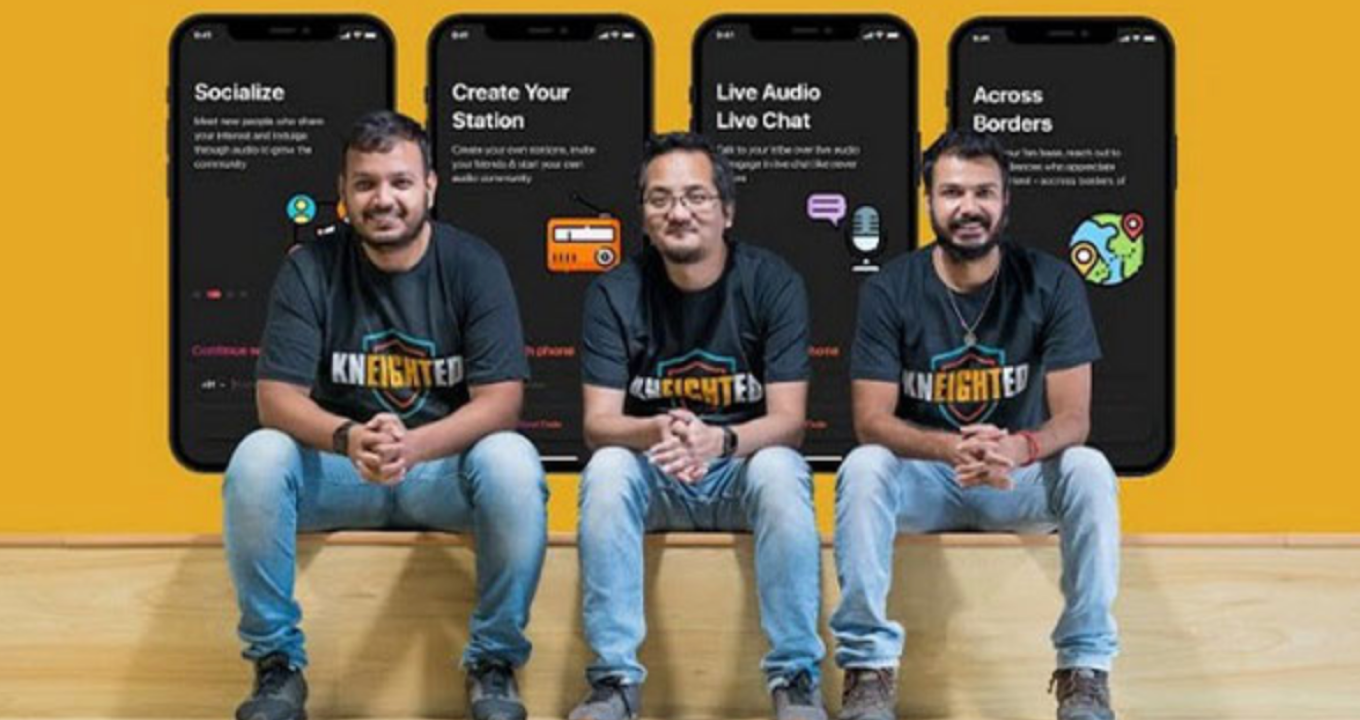
Eight, targeting the young urban demographic, has experienced remarkable customer love, largely because this group has been significantly underserved. Though relatively earlier in the journey than its peers, Eight is currently the highest-rated audio app in India, highlighting its success in meeting the quality its segment desires. The founders Mohit Paliwal, Mohit Goswami and Yugal Tamang are all second-time entrepreneurs and are passionate about the space. They spent some time on Social Radio before they found their PMF in immersive audio shows.


Urbanizing youth segment

Eight focuses on urbanized young consumers. Millions of young content consumers are either semi or completely urbanised and are exposed to high-quality video content on OTTs like Netflix, Prime and Hotstar,  e.g. consumers of Paatal Lok, Sacred Games etc. They have a high expectation of the quality of content. This is a broader trend and not limited to affluent youth.

This user also has periods when he/she can’t look at the screen – such as while commuting, performing certain household or work chores etc. So audio serves as the best means to keep company.


Right to win

Eight is the first and only Audio OTT platform to serve this base of users by offering immersive content in the tone best suited for young audiences. Most of their content is in Hinglish, which sounds very similar to how young Indians converse.

Eight has curated 100s of hours of such premium immersive content. They have a strong tech and community enabled playbook in place and are on the path to host the largest inventory of high-quality audio for young urban consumers. This scalable content strategy offers natural moats for the business at scale. 90% of the audience on Eight is between the 18-34 age bracket and is from the top 15 cities, signifying strong PMF for this segment.


Role of technology and community

Digital platforms have leveraged tech well by supporting creators with tools that help them make high-quality content easier. They have also built creator communities and enabled collaboration between them. AI is being rapidly adopted to make the content creation process faster and easier.

The Eight team recently unveiled the beta version of their creator web tool, Eight Studio, specifically designed to empower podcasters and audio creators. This platform enables creators to collaborate, craft, and directly publish their shows on the Eight App. A standout feature of Eight Studio is its integration of Generative AI technology, which aids creators in developing content ideas, making it an ideal tool for refining concepts at their inception.

What sets Eight as a platform apart is its strong emphasis on community engagement. Already, Live Community at Eight has facilitated the creation of breakthrough content IPs for the company. By launching Eight Studio, the team aims to democratize content creation, offering aspiring creators a platform to expand their reach and cultivate their own audience. 


International play

TikTok, in short-form video, has been super successful in the US. Almost all the above audio non-music OTT platforms have gone international (primarily US). They have both repurposed the content as well as created new content tailored for the US audience. 


Monetization

The digital audio streaming market is estimated at $40 Bn in 2023 by Redseer. Deloitte puts this a bit lower at $30 Bn in 2024. While this is ~25% of the video streaming opportunity, the market is pretty big to create multiple winners – more so if there are global plays.

  • Advertising: According to Statista, the Digital Audio Advertising market is projected to reach $11.13 Bn in 2024. While this seems to be a large opportunity, given the struggles of Indian content platforms to monetize effectively, the new-age audio OTTs have largely stayed away from this – both in India and overseas
  • Subscription – Indian audio OTTs have preferred to go with the freemium model with some content behind a paywall. To keep the retention high even among the unpaid subs, some of them have released new episodes over a period of time


The Indian players seem to have scaled well. Pocket FM has seen multiple content assets such as ‘Insta Millionaire’ and ‘Saving Nora’ that have yielded revenues of $12-15 Mn each. Kuku has over 3 million active paying subscribers.


The explosion of content formats and genres in India and globally has made this an exciting space. Given the revenue scale that some of the players have reached within a span of 5-6 years, large outcomes are possible. It is one of the few spaces where content – from India to the world – is likely to see success.

Planning your startup journey

What do cricket and marathons have in common? The sportsmen need to pace themselves and develop strategies for smaller periods of time to be able to win eventually. For example: In cricket, if it is a one-day game, the batsmen plan in 5 over stretches – say 20 runs without losing a wicket or playing out a bowler, etc. In case a few early wickets fall, they rework the plan accordingly. Now, will this be the same game plan for test cricket and 20-20? No, the plans change according to the game that they are playing. Maybe a session-by-session plan for a test match and a 2-3 over plan for 20-20. But they all plan for interim goals. Short-term planning is easier, more concrete and helps keep things simple instead of a grand strategy for achieving the final objective.


Breaking the journey into smaller slots with near-term goals

Break up your start-up journey into interim stations. Set up near-term targets along the way and align the team towards them. Fundraises offer a natural breakpoint to plan for. Fundraises should always give you a runway of a minimum of 18 months. It gives you a clear 12 months to execute without worrying about the next round. Let’s use these as stages (stations) in this article.


What do short-term goals look like?

Each stage should have de-risked or proven something towards building a large sustainable business. To reiterate – this derisking is not just the scale of the business – but multi-directional in nature, enabling the business to become large and sustainable. It could be the proven value proposition for each stakeholder, bench strength of the second-tier team, identified channel to scale, unit economics, margin expansion etc. Let’s break this down and look at a framework:

Note: It is difficult to have a common plan across different business models – such as marketplaces, brands, SaaS, consumer products, and social networks. So we have kept this a bit broad.


StageWhat to achieve with the runway from the funding round
StartPre-Product Market fit (Pre-PMF), large Total Addressable Market (TAM), strong founders, small team.
SeedPM fit achieved, monetization experiments (in some business models), small stable team. Very low spend on marketing; Do not scale before PM fit is reached (maybe use the superhuman survey to evaluate this)
Series ADeepening value proposition for customers. Clear monetization with positive gross margins. Scalable Go-to-market (GTM) strategy identified. Directionally, Customer Acquisition Cost (CAC) is trending in the right direction. Cohorts are looking encouraging. Potential moats identified. Gaps in CXO are mostly filled. Systems designed and are being set up to ensure high customer satisfaction. Scaling 4X – 10X
Series BFalling CAC. Stronger customer satisfaction leading to improved retention, cohorts indicate CAC to Customer Lifetime Value (CLTV) about to be achieved. Moats are beginning to appear – Switching costs becoming higher for customers and entry is not so easy for newer companies. Full panel CXO; Tier II teams being built. Margins expand for marketplaces or D2C (Direct to consumer) brands. Positive Contribution Margin 1 (CM1). Growing at 3-4X YoY
Series CContinue scaling fast. Contribution Margin 2 (CM2, post marketing) positive and trending towards profitability. Full teams. TAM expansion projects. Strong moats, growing at 2.5- 3X YoY
Series DMoney for growth only. Profitable, growing at 2X YoY. TAM expanded
Series ENew lines to unlock value found. Growth slows


The above is just a framework and WILL change based on business models. For example: if you are in commerce – monetization is visible on day one. If you are a content platform, the preference will be on PMF, which is showcased in engagement and retention. Founders should be thoughtful about how they plan the interim goals and what they are derisking at every stage.


As an example of one such journey – here is a startup that I invested in the content space and how they went about it:


Pre-Seed:

Before the seed round, the company had strong engagement with its core audience [Time spent per day per Daily Active User (DAU)] which showcased a good value proposition. But they had lower than expected long-term customer retention (D30 – % of users who used the app on the 30th day after opening the app for the first time ever). The low retention indicated that the offering was nice to have for some time, but the value proposition couldn’t be sustained over a long period of time. As the customer churn is high, this creates a leaky bucket problem, which is not sustainable.


Seed Stage:

  • The goal for the seed round is to achieve PMF (Product Market Fit). They first identified the audience segment that resonates with their offering (Ideal Customer Profile or ICP, you can read our pieces on this: Part 1 and Part 2). Once they identified the ICP, they worked on the product and content strategy around this segment to ensure that the value proposition stays strong over a longer period of time (Product Market Fit).
  • They hired a small core team for roles in product and technology and to manage the creator community. They had focused on product improvements such as better onboarding experience, notifications to entice the listener back etc. They also understood that their ICP prefers a particular category of content and that episodic content worked better in longer-term retention.
  • Over the next 12 months, they spent less than $150K on marketing. They spent time on getting the right set of content onto the platform so that the ICP could have depth in this category.
  • Marketing spends were minimal to keep a minimum threshold of daily traffic on the platform – while they worked on the experiments towards PM fit. Over the next 12 months, the total spend was less than $150K while the long-term retention improved by more than 60%. They didn’t try monetization in the seed stage as the offering was not meaningful yet.


Summary: Identify your ICP and get to PM fit. Don’t try to scale too much (large team hiring, high spending on marketing) before achieving PM fit. We’ve written about the path to PM fit through the use of a Minimum Viable Product here.


Series A:

The company raised the next round about 18 months later. The goal for this stage was multifold.

  • Strengthen the team: The company added to the content, tech, and product teams to make them stronger.
  • Deepen the value proposition and improve retention: The company started expanding into a new genre of content for its ICPs that is closer to the first genre. They started creating audio shows (in a scalable way leveraging creators) to improve content quality and make it more predictable. Retention improved by about another 50% during this round.
  • Identify scalable GTM channel: They identified Google and Facebook as scalable ways to acquire customers, in addition to the organic (SEO, sharing) methods.
  • Try monetization models: Some monetization experiments were performed with premium content.
  • Start building moats: They have been able to successfully leverage technology to bring together teams of creators who are in different parts of the country with varying skills to be able to create high-quality content in a decentralised manner. This network of content creators and leveraging tech to rapidly create more content has helped them create diversified content (multiple genres + depth in each genre) at a low cost. This is a big moat for any content company.


Series B:

The company raised Series B funding 16 months later

  • Lowering the CAC (customer acquisition cost): The company continued to work on its CAC by leveraging the organic channels. With more Word-of-mouth (WOM) marketing, the CAC reduced over a period of time by 30%.
  • Stronger moats leading to higher switching costs: The company was able to scale the content quickly using its managed decentralized model of content creation by leveraging technology. The product also started offering multiple genres and a personalized content recommendation engine which helped in improving customer experience.
  • Tier II teams were built across all key functions.
  • Monetisation continues with CAC to CLTV improving.


The company is currently at this stage. Here is how I see the next few rounds panning out


Series C:

With this capital, the company can focus on the following:

  • Teams  – Full CXO teams are built
  • CAC < CLTV proved with this capital
  • The contribution margin post marketing becomes positive and will start covering some of the fixed costs.
  • TAM expansion experiments into newer markets
  • Stronger moats
  • Growth continues at 3-4x YoY


Series D:

  • Capital raised for growth only.
  • To become profitable before the next round
  • Still growing at 2.5x-3x YoY
  • TAM expanded with a new source of revenue clearly established


Series E:

  • New lines to unlock value found
  • Growth slows a bit to 2x per year


I hope this article helps you provide a framework towards planning your own journey. For more information, you can reach out to me here: krishna@kae-capital.com