
The Transformative Power of GenAI in Media & Entertainment

In the second part of this series, we delve into the unique blend of opportunities and challenges that the rise of GenAI in media & entertainment has brought about, along with evolving consumer preferences.


Current Landscape

The decline in traditional media globally contrasts sharply with the digital transformation successes seen in India. Digital platforms like Disney+ Hotstar’s utilization of cricket broadcasting rights to amass a large subscriber base exemplifies the potential for innovative monetization strategies despite the high costs associated with content and rights acquisition. In 2022, their strategy led to a 30% increase in subscribers during the IPL season alone, demonstrating the power of targeted content delivery.

The industry’s pivot towards premium content across sectors, despite existing monetization challenges, is also notable. While homegrown vernacular social media platforms have struggled to find monetisation models, the road for more niche communities and content is just being paved.

The audio segment, along with the comic book and gaming industry, points towards a thriving ecosystem ripe for innovation, with new-age platforms like Pratilipi, Dashtoons and Mugafi paving the way for new intellectual property (IP) development.


The GenAI Disruption

GenAI is setting the stage for a revolution in content creation and distribution. The technology’s capacity to generate personalized, engaging content at scale offers unprecedented opportunities for M&E companies. This cutting-edge technology is already reshaping how content is produced, from pre-production and development to distribution and marketing.

Tools like Midjourney and Stable Diffusion are paving the way for new forms of art. Audio platforms like PocketFM are using GenAI to scale up hits. Sora, Descript and RunwayML are expanding from generative video editing to creation. In India, startups like Rephrase.ai and HippoVideo in India are harnessing GenAI to create hyper-personalized video content, indicating the technology’s transformative potential across text, image, video and audio.

Tyler Perry has already halted his $800m Hollywood studio expansion plans in the face of this seismic shift to new models of production.


Predictions and Future Trends

These are my bets for some of the next-generation startup models we’ll see emerge in this sector:

1) Everyone is now a creator:

Given the rise of LLMs, everyone is now a creator. Supply is no longer the constraint across formats- moderating quality, generating demand and rethinking search are the real moats to building at scale. We will see the rise of entirely new AI-first platforms focused on highly personalized content and digital goods, with Gumroad leading the way.

2) Rethinking search and monetisation:

Regardless of the format you choose- audio, video, comic books, or animation- if you’re building a content marketplace in 2024, the game-changers will unlock or create a new category of consumer behavior when it comes to discovery or monetization. Wobot Intelligence, an Indian startup, is pioneering AI-driven solutions that transform content marketplaces.

3) Hacking for hits:

If you’re building a content platform, you will still have to show your path to either generating a ‘hit’ or building on existing IP. Every generational media business- whether it’s Disney, Netflix or T-series- is built on one IP that ‘works’ to begin with, and you can only hack or buy distribution up to a certain point. You have to hack both supply and demand until you get that elusive ‘hit’

4) Gaming gets more immersive:

Gaming will be reimagined and will become the largest category in this sector. We will see entirely new fantasy sports, virtual worlds, and never-ending games as GenAI changes the way we build games and makes them increasingly immersive. Real-time AI integration, as seen with Epic Games’ Unreal Engine, allows creators to build dynamic, responsive worlds, pushing the boundaries of user interaction.Kae is investing in a company which helps users create 3D assets from text using Gen AI, which could have interesting applications in gaming. A16z has already set up a new arm that focuses on investing in the disruption of gaming.

5) Social media gets less social:

The next generation of social media networks will go deeply vertical and niche, focusing on AI friendships like or being highly private. There is no middle ground. The rise of platforms that pioneer personal AI interactions like Replika, Anima, and CharacterAI are already showing that we’re finding solace in AI.


Conclusion

While the rise of GenAI does pose several challenges when applied in this industry such as lack of originality, deep fakes, intense competition for creators and IP minefields, the evolving landscape of India’s M&E sector offers a golden opportunity for founders to innovate and thrive.

Embracing GenAI, understanding nuanced consumer behaviors, and pioneering new models in content creation and distribution will be key to navigating this sector successfully.

If you’re building in this brave new world, do reach out (natasha@kae-capital.com). I’d love to brainstorm with you on staying close to the user and going deep on understanding their pain points, building for retention and quality, and hacking growth.
Audio OTTs’ Day in the sun – Our investment in Eight Network

Audio may be the first entertainment format in human history. Radio broadcasts have entertained audiences at scale for over a century. The advent of the internet helped digital audio platforms to flourish; changing the way people consumed audio content. With Apple launching iTunes in 2001, the popularity of digital music exploded. Since then, new audio formats such as podcasts, audiobooks, storytelling, non-fiction, short-form content etc. have evolved. We are super excited about the opportunity and invested in Eight Network early last year.


The opportunity

While video formats are dominant, audio has tremendous growth potential as it has independent use cases. With the high penetration of smartphones and headphones, there’s a substantial opportunity in the background entertainment space. This helped non-music audio content (growing at a CAGR of 33%) to claim a sizable share in the media & entertainment space, complementing the on-the-go lifestyle of young consumers.

There is a large audience for audio formats in the world. Spotify has over 550 Mn monthly active users (average) in Q3 of 2023; a 26% growth YoY. It is estimated that 170 Mn+ users are listening to audio on a monthly basis in India. While most of them consume music content, the share of non-music content has been going up rapidly. As per the Redseer report, the share of non-music has gone up from 3% in 2019 to 5% in 2023.


Major Indian players

On the music front, the largest players in India have been Gaana, Saavn and Spotify. Some of these have explored podcasts in some shape or form. However, the core offering for these platforms still remains music.

The second wave of companies in the OTT space include PocketFM, KukuFM, Headfone and Eight Network. They vary from each other in the genre and target audience. Pocket FM’s core product offering has been long-format audiobooks and stories. Kuku has focused on the Bharat audience, offering non-fiction content that includes motivation & education in many vernacular languages. 


Eight Network

The latest of these, Eight Network, has focused more on the immersive content around audio shows, live and podcasts.  While short-form content seems to have worked for video, long-form episodic content has worked well for audio platforms to improve retention and engagement.

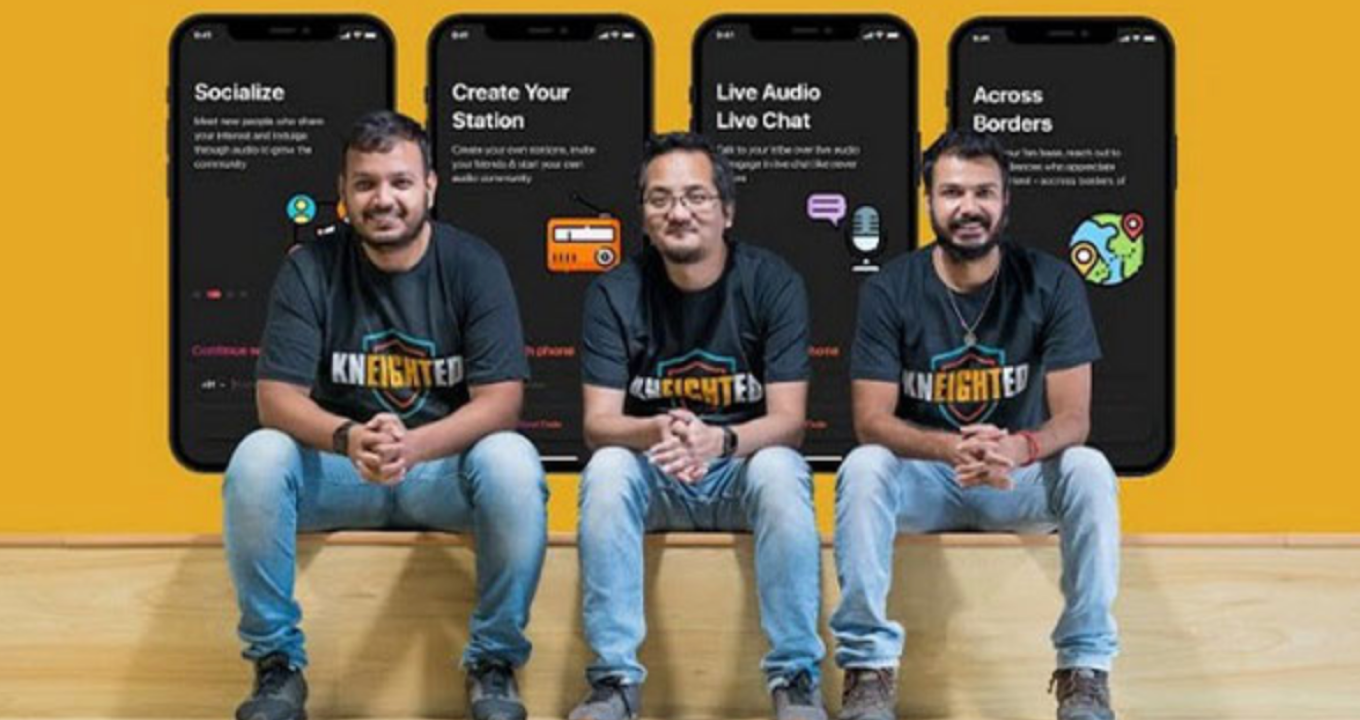
Eight, targeting the young urban demographic, has experienced remarkable customer love, largely because this group has been significantly underserved. Though relatively earlier in the journey than its peers, Eight is currently the highest-rated audio app in India, highlighting its success in meeting the quality its segment desires. The founders Mohit Paliwal, Mohit Goswami and Yugal Tamang are all second-time entrepreneurs and are passionate about the space. They spent some time on Social Radio before they found their PMF in immersive audio shows.


Urbanizing youth segment

Eight focuses on urbanized young consumers. Millions of young content consumers are either semi or completely urbanised and are exposed to high-quality video content on OTTs like Netflix, Prime and Hotstar,  e.g. consumers of Paatal Lok, Sacred Games etc. They have a high expectation of the quality of content. This is a broader trend and not limited to affluent youth.

This user also has periods when he/she can’t look at the screen – such as while commuting, performing certain household or work chores etc. So audio serves as the best means to keep company.


Right to win

Eight is the first and only Audio OTT platform to serve this base of users by offering immersive content in the tone best suited for young audiences. Most of their content is in Hinglish, which sounds very similar to how young Indians converse.

Eight has curated 100s of hours of such premium immersive content. They have a strong tech and community enabled playbook in place and are on the path to host the largest inventory of high-quality audio for young urban consumers. This scalable content strategy offers natural moats for the business at scale. 90% of the audience on Eight is between the 18-34 age bracket and is from the top 15 cities, signifying strong PMF for this segment.


Role of technology and community

Digital platforms have leveraged tech well by supporting creators with tools that help them make high-quality content easier. They have also built creator communities and enabled collaboration between them. AI is being rapidly adopted to make the content creation process faster and easier.

The Eight team recently unveiled the beta version of their creator web tool, Eight Studio, specifically designed to empower podcasters and audio creators. This platform enables creators to collaborate, craft, and directly publish their shows on the Eight App. A standout feature of Eight Studio is its integration of Generative AI technology, which aids creators in developing content ideas, making it an ideal tool for refining concepts at their inception.

What sets Eight as a platform apart is its strong emphasis on community engagement. Already, Live Community at Eight has facilitated the creation of breakthrough content IPs for the company. By launching Eight Studio, the team aims to democratize content creation, offering aspiring creators a platform to expand their reach and cultivate their own audience. 


International play

TikTok, in short-form video, has been super successful in the US. Almost all the above audio non-music OTT platforms have gone international (primarily US). They have both repurposed the content as well as created new content tailored for the US audience. 


Monetization

The digital audio streaming market is estimated at $40 Bn in 2023 by Redseer. Deloitte puts this a bit lower at $30 Bn in 2024. While this is ~25% of the video streaming opportunity, the market is pretty big to create multiple winners – more so if there are global plays.

  • Advertising: According to Statista, the Digital Audio Advertising market is projected to reach $11.13 Bn in 2024. While this seems to be a large opportunity, given the struggles of Indian content platforms to monetize effectively, the new-age audio OTTs have largely stayed away from this – both in India and overseas
  • Subscription – Indian audio OTTs have preferred to go with the freemium model with some content behind a paywall. To keep the retention high even among the unpaid subs, some of them have released new episodes over a period of time


The Indian players seem to have scaled well. Pocket FM has seen multiple content assets such as ‘Insta Millionaire’ and ‘Saving Nora’ that have yielded revenues of $12-15 Mn each. Kuku has over 3 million active paying subscribers.


The explosion of content formats and genres in India and globally has made this an exciting space. Given the revenue scale that some of the players have reached within a span of 5-6 years, large outcomes are possible. It is one of the few spaces where content – from India to the world – is likely to see success.