Snapmint Raises $125M Series B: Pioneering the Future of Credit in India

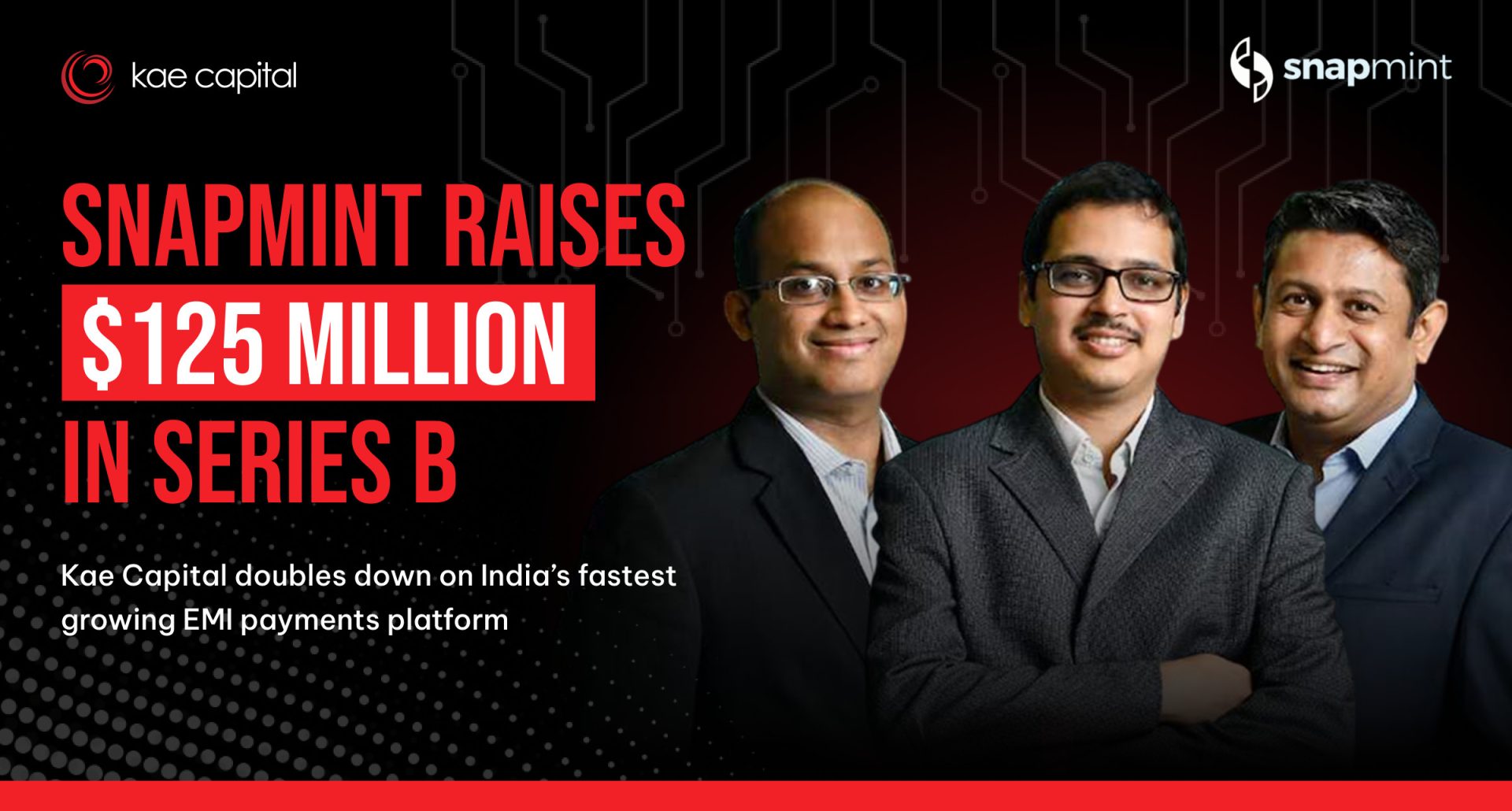
We’re thrilled to announce our continued support for Snapmint as they close a landmark $125 million Series B funding round led by General Atlantic, with participation from Prudent Investment Managers, Elev8 Venture Partners, and several existing angel investors.

What makes this fundraise particularly noteworthy is not just its size, but the context in which it was raised. Unlike many fintech companies still chasing scale at the expense of profitability, Snapmint has achieved that rare combination of hypergrowth and healthy unit economics, a feat that caught the attention of one of the world’s leading growth investors.

The Snapmint Story: Democratizing Credit Through Innovation

Founded in 2017 by three IIT Bombay alumni; Nalin Agrawal, Anil Gelra, and Abhineet Sawa, Snapmint set out to solve a fundamental problem in India’s consumer finance landscape. With credit card penetration remaining stubbornly low and traditional lending failing to serve the mass affluent segment, millions of Indians were locked out of flexible payment options that could help them afford more.

Snapmint was founded to bring honest and transparent EMI offerings to mass affluent consumers of India without the need of a credit card. The company’s breakthrough came in 2020 when they pioneered EMI-on-UPI, recognizing that India’s digital payments revolution through UPI presented a once-in-a-generation opportunity to leapfrog credit cards entirely.

The thesis was simple yet powerful: if UPI could democratize payments, why couldn’t it democratize credit? By building seamless installment payment capabilities directly into the UPI infrastructure that millions of Indians were already using, Snapmint created a frictionless credit experience that required no new cards, no complex applications, and no hidden charges.

The Growth Journey

Snapmint’s growth trajectory has been nothing short of remarkable. The platform currently serves 7 million monthly active users across 23,000 pincodes in India and funds over 1.5 million purchases per month. These aren’t just vanity metrics, they represent real people gaining access to credit in Tier 2 and Tier 3 cities where traditional financial services have historically struggled to reach.

But what truly sets Snapmint apart is their path to profitability. For the fiscal year ending March 2025, the company reported an 80% year-on-year increase in revenue to Rs 158.5 crore and turned profitable with a net profit of Rs 15 crore. In an ecosystem where profitability often feels like a distant dream, Snapmint has demonstrated that responsible lending and strong unit economics can coexist with rapid growth.

Looking ahead, co-founder Agrawal says the company expects to double its revenue in FY26, underscoring the company’s focus on sustainable, profitable growth even as it continues to scale aggressively. In the two years leading up to this funding, the company has grown from 1 million purchase financing transactions a year to over 5 million annual transactions, a 5x increase that speaks to the massive market pull for their product.

The Market Opportunity: Riding India’s Digital Credit Wave

Snapmint operates at the intersection of two mega-trends reshaping India’s economy: the explosion of digital payments and the democratization of credit access. The BNPL market in India is expected to grow by 13.4% annually to reach $21.95 billion in 2025, with projections suggesting it could reach approximately $35.07 billion by 2030.

This isn’t just about market size, it’s about the fundamental transformation of how India accesses credit. Snapmint offers installment-based credit solutions that allow shoppers to buy products such as mobiles, electronics, and home essentials on easy payment terms. Beyond conventional categories like electronics and travel, Snapmint shoppers also use its EMI-on-UPI offering for fashion, furnishing and other lifestyle purchases.

The company’s digital platform, Nimbus, has become a powerful enabler for partner brands. Snapmint has enabled brands to increase their sales by 10 to 20% with their offering, creating a win-win ecosystem where merchants benefit from higher conversions while consumers gain access to affordability.

What excites us most is the whitespace that remains. With over 5 million active monthly users today, Snapmint is just scratching the surface of a market where hundreds of millions of Indians lack access to formal credit. The company’s vision to bring EMI payment solutions to more than 100 million consumers in the next few years isn’t just ambitious, it’s achievable.

Kae Capital’s Perspective: Why We Remain Convicted

At Kae Capital, we’ve been proud backers of Snapmint’s journey, and our continued participation in this round reflects our deep conviction in the team and their mission. Several factors reinforce our belief that Snapmint is building something truly transformational:

Product-Market Fit at Scale: The company’s ability to finance 1.5 million purchases monthly while maintaining healthy credit metrics demonstrates they’ve cracked the code on responsible lending at scale. This isn’t easy, it requires sophisticated underwriting, robust risk management, and deep understanding of consumer behavior.

Pioneer Advantage: As pioneers of EMI on UPI since 2020, Snapmint has built significant technological and operational moats. Their early-mover advantage in this space has translated into valuable partnerships, proprietary data, and brand recognition that will be hard for competitors to replicate.

Founder Quality: Nalin, Anil, and Abhineet have demonstrated the rare ability to balance growth with discipline. Their engineering background from IIT Bombay shows in the product’s technical sophistication, while their business acumen is evident in the path to profitability they’ve charted.

Timing: India’s UPI revolution has created the perfect infrastructure for Snapmint’s vision. As co-founder Nalin Agrawal notes, “We believe India will leapfrog credit cards and go straight to EMI on UPI”. We couldn’t agree more, and Snapmint is perfectly positioned to lead this transition.

Deployment of Fresh Capital: Building for the Next Phase

The new funding will be deployed strategically across three key areas. First, the company plans to significantly expand its merchant network, deepening integrations with both large e-commerce platforms and emerging D2C brands. The startup will use the new capital to expand its merchant network, integrate with more shopping portals, and grow its balance sheet for increased lending capacity.

Second, Snapmint will invest heavily in enhancing its technology stack, particularly around credit underwriting, fraud prevention, and personalization. As the company scales to serve 100 million+ users, maintaining low default rates while improving approval rates will be critical.

Third, roughly 50% of the funds will capitalize the company’s in-house NBFC, providing the balance sheet strength to support increased lending capacity. This vertical integration gives Snapmint greater control over the entire customer experience while improving unit economics.

Looking Ahead: The Road to 100 Million Users

India stands at an inflection point in its financial inclusion journey. While traditional banks and credit cards have struggled to penetrate beyond tier-1 cities, the combination of smartphone adoption, UPI infrastructure, and innovative fintech companies like Snapmint are rewriting the rules.

Snapmint’s mission extends beyond just providing credit; it’s about enabling aspiration, removing barriers to purchase, and giving millions of Indians the financial flexibility that was previously out of reach. Every EMI processed represents a student buying a laptop for education, a young professional purchasing their first smartphone, or a family upgrading their home appliances.

As Snapmint embarks on this next chapter backed by world-class investors, we’re excited to continue our partnership with a team that’s not just building a successful business, but genuinely expanding financial access for underserved segments. The journey from 7 million to 100 million users will be challenging, but if the past few years have taught us anything, it’s that Snapmint has both the vision and execution capability to get there.

The future of credit in India won’t look like credit cards or traditional loans, it will look like Snapmint’s seamless, UPI-integrated, merchant-embedded EMI solution. And we’re proud to be backing the team that’s making this future a reality.

The Hard Problems Economy: Mapping India’s Deeptech Frontier

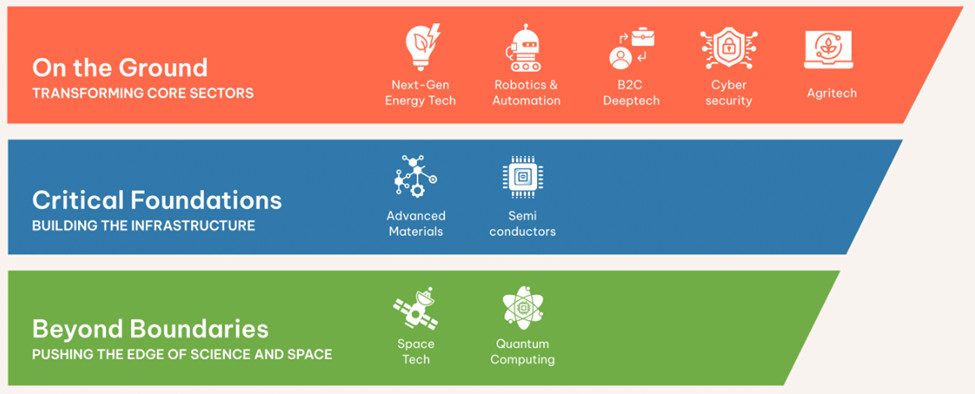
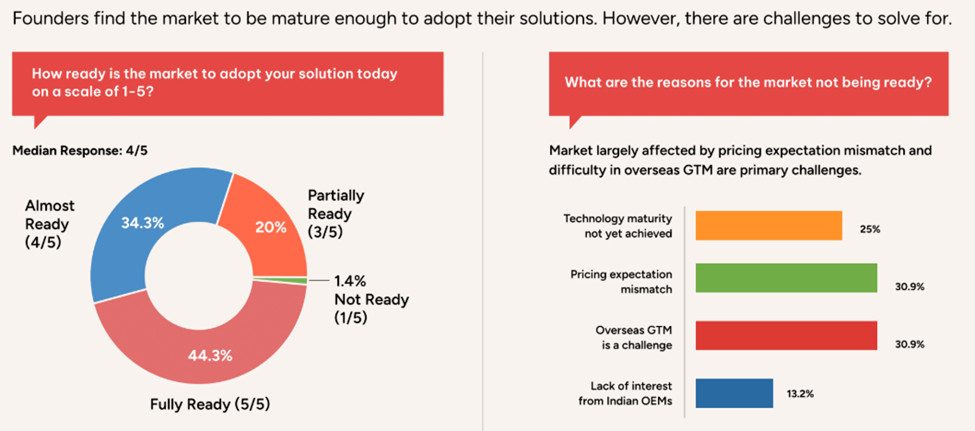
Deep technologies – spanning robotics, semiconductors, quantum computing, agritech, advanced materials, and cybersecurity are no longer confined to labs and research journals. They are fast becoming the backbone of global competitiveness, national security, and industrial transformation. Recognizing this, Kae Capital, in partnership with TDK Ventures, has released the Deeptech Report 2025, a comprehensive study of India’s evolving ecosystem, opportunities, and challenges.

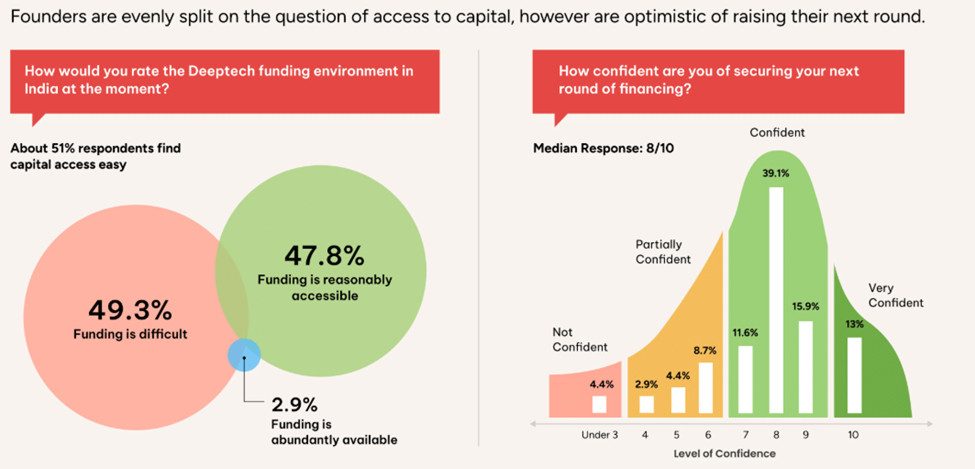
The report paints a picture of an ecosystem at an inflection point: optimistic founders, emerging policy tailwinds, and global demand-side pull are converging to create fertile ground for India to become a deeptech powerhouse. Yet, the journey is fraught with challenges across capital, talent, infrastructure, and global market access.

View Report

This blog distills the report into its major themes, sectoral highlights, and key takeaways.

Why Deeptech, Why Now?

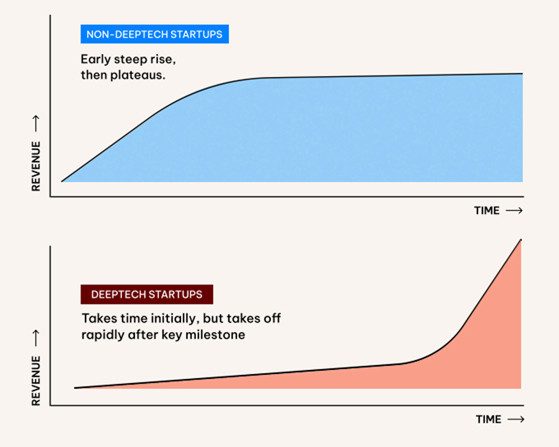
Deeptech ventures are different from the typical consumer internet or SaaS startup. They require years of R&D, patient capital, and deep scientific expertise before hitting product-market fit.

But once the breakthroughs arrive, the impact is transformational; disrupting industries, creating new markets, and driving exponential value creation.

The report highlights three forces that are aligning to give India an edge:

  1. Geopolitics and supply chains – Critical technologies like semiconductors, defense systems, and energy infrastructure are no longer just economic assets but strategic levers of national power.
  2. Policy momentum – Programs such as the National Quantum Mission, Green Hydrogen Mission, and PLI schemes are accelerating local ecosystems.
  3. A maturing entrepreneurial ecosystem – A new generation of founders, inspired by past successes, is now daring to tackle science-heavy problems.

Sectoral Insights: Where the Opportunities Lie

1. Next-Gen Energy Tech

India’s energy landscape is being reimagined around the government’s 500 GW non-fossil target by 2030. While large-scale generation projects dominate headlines, startups are driving innovation in distributed solar, EV charging, green hydrogen, and energy storage.

Companies like Arkahub, Exponent Energy, Smart Joules, and Newtrace are leading this transformation. Arkahub, for instance, is building the digital backbone for India’s clean energy transition, creating a unified data and intelligence layer for renewable asset management, storage optimization, and grid integration. By turning real-time energy data into actionable insights, it’s helping utilities and enterprises unlock efficiency and transparency across the value chain.

Megatrends shaping the sector include:

  • Distributed infrastructure (microgrids, smart meters, EV charging).
  • Domestic manufacturing of solar modules and advanced batteries.
  • AI- and IoT-enabled optimization of grids and industrial energy use.
  • Novel chemistries in storage and battery recycling.

The long-term play is clear: startups that enable affordable, resilient, and sustainable energy infrastructure will be critical to India’s industrial growth.

2. Robotics and Automation

Labor shortages, rising wages, and supply chain complexity are fueling automation. From warehouse robotics to agricultural drones, startups are addressing bottlenecks across manufacturing, logistics, and farming.

The report notes India’s unique position: a large domestic market with rising demand, coupled with engineering talent capable of building globally competitive robotics solutions.

This rare combination is powering the rise of ventures like Cartesian Robotics, which is developing modular robotic systems that bring precision automation to industrial settings. With a focus on flexible design and intelligent software, Cartesian is helping Indian manufacturers adopt automation faster and at a fraction of global costs, an important step toward globally competitive productivity.

If scaled effectively, robotics could redefine productivity across agriculture, defense, and industry.

3. Agritech

Agriculture, which sustains nearly half of India’s workforce, faces structural issues: low mechanization (<50% vs 90% in developed economies), limited credit access, and labor shortages. But these gaps are opportunities for Deeptech-led transformation.

Startups are innovating in:

  • Agri-drones for spraying and monitoring.
  • Sensor-driven irrigation and disease detection.
  • Farm robotics for mechanization.
  • AI-powered analytics for better yields and market access.

With policy reforms, investor confidence, and digitization, India could emerge as a global agritech leader over the next decade.

4. Cybersecurity

India’s digital economy, with nearly a billion users, is a prime target for cyberattacks. Yet, 74% of SMEs suffered cyberattacks last year, and 60% never fully recovered. The gaps are stark: fragmented tools, a massive talent shortfall, and limited global certifications for Indian vendors.

Key themes for the future:

  • AI-native cybersecurity platforms that unify multiple tools.
  • Affordable, SaaS-based security for SMEs.
  • Compliance-by-design solutions that embed DPDP, GDPR, and SOC2 standards.
  • Post-quantum cryptography and AI-vs-AI defense systems.

Among emerging players, BPR Hub is carving a niche by bringing automation and intelligence to the compliance stack. Its AI-driven platform helps companies stay audit-ready across global standards like SOC2, ISO, and DPDP, significantly reducing the time and cost associated with enterprise-grade security. As cybersecurity grows more complex, this compliance-first approach could become a critical enabler of trust for digital India.

If executed well, India could evolve from being a consumer of global tools to becoming a builder of AI-first, world-class cyber platforms.

5. Advanced Materials

India’s advanced materials sector is demand-rich but supply-fragile. Despite being a $5B+ market in 2021, it remains fragmented and import-dependent. Yet, with the right push, the sector could underpin multiple industries; renewables, EVs, aerospace, healthcare, and construction.

One of the companies redefining this space is RecommerceX, which is pioneering circular manufacturing by recovering and re-engineering materials from industrial and consumer waste. Its platform blends chemical innovation and automation to convert end-of-life products into high-quality raw materials for electronics, automotive, and packaging industries, advancing both sustainability and self-reliance.

Growth drivers include:

  • PLI incentives for EVs, solar, and semiconductors.
  • AI-driven discovery of novel materials.
  • A national push for rare earth and critical mineral security.
  • Applications in bioplastics, nanotech-enabled healthcare, and defense.

The takeaway: India must invest in labs, testing facilities, and pilot plants to translate strong academic research into commercial breakthroughs.

6. Semiconductors

India’s semiconductor market is projected to double from $54B in 2025 to $108B by 2030. However, challenges remain, import dependence, manufacturing talent shortages, and tough global competition.

Encouraging signs include:

  • Government’s $10B+ incentives for semiconductor fabs and design.
  • Rising investor confidence in fabless design startups.
  • Potential to build a RISC-V ecosystem akin to China’s.
  • Edge-AI chips and microcontrollers as natural starting points.

Semiconductors are the bedrock of national competitiveness. India’s long-term bet will be building a robust design-to-manufacturing ecosystem.

7. SpaceTech

India’s space economy, projected to exceed $40B by 2040, is opening up to private players. More than 140 startups, from Skyroot’s launch vehicles to Pixxel’s earth observation satellites, are redefining the sector.

Policy enablers like IN-SPACe and relaxed FDI norms are fueling momentum. With ISRO’s support and cost-efficient launch capabilities, India could capture a significant share of the global space market.

8. Quantum Computing

Quantum technologies are still nascent, but India is investing early. The National Quantum Mission is driving collaboration across startups, academia, and global partners. The market is projected to grow at a 27% CAGR through 2032.

Use cases are shifting from research to industry pilots in cybersecurity, finance, defense, and optimization. The big opportunity lies in building both hardware components (lasers, photonic links, cryo-CMOS) and software stacks, areas where India traditionally has an edge.

What’s Holding India Back?

Across these sectors, common challenges emerge:

  • Talent shortages in areas like quantum, advanced materials, and cybersecurity.
  • Capital intensity, especially for hardtech infrastructure like fabs, nanolabs, and pilot plants.
  • Slow adoption by risk-averse industries and governments.
  • Import dependence on critical minerals, components, and certifications.

These barriers make Deeptech a long game, but they also create white spaces for committed entrepreneurs and investors.

Conclusion

The Deeptech Report 2025 is both a map and a call-to-action. It highlights where India is strong – talent, software, frugal innovation, and where it lags – hardware, certification, capital depth. But above all, it underscores a simple truth: the future of national competitiveness will be written in deeptech.

For founders, it is an invitation to tackle the hardest problems. For investors, a chance to back defensible IP and transformative companies. For policymakers, a reminder that resilience and sovereignty are forged not just in boardrooms, but in labs and fabs.

Deeptech is hard. It takes time, talent, and tenacity. But when it works, it transforms industries, economies, and nations.

The India Deeptech Report 2025 is our effort to capture this moment of awakening, spotlighting the entrepreneurs, investors, and policymakers who are building India’s future at the frontiers of science and technology.

Beyond Capital with Kae: Building with Context, Clarity & Care

In the early stages of building a company, founders are expected to wear many hats. From refining product and chasing growth to building teams and raising capital, every decision carries weight. At Kae Capital, we believe our job as early-stage investors is not just to fund ambition, but to stay deeply engaged through the messy, meaningful middle.

Venture capital is often described as patient capital. But in reality, what founders need most isn’t just patience; it’s conviction, context, and the kind of support that turns early promise into enduring progress.

For us, portfolio support isn’t a checklist. It’s a philosophy rooted in the idea that building a company is deeply human work, and that growth depends as much on context as it does on capital. Every founder’s journey is different. Some need help structuring their first board meeting. Others are navigating multi-city expansion, early hiring, or new regulatory frameworks. At Kae, we plug in where it matters most.

Building the Foundation for Scale

The venture world often celebrates outcomes – funding rounds, product launches, and exits. At Kae, we value those milestones, but we’re equally focused on what precedes them: the foundational work that compounds quietly over time. The clarity in a founder’s decision-making, the resilience of a team during tough cycles, and the trust built through strong internal systems.

Portfolio Company Logos

Over the past few quarters, we’ve had the pleasure of working closely with companies like Eternz, GobbleCube, Knot, QuickAds, RecommerceX and Supernova, not just as investors, but as strategic partners. Our involvement has spanned everything from hiring and policy formulation to compliance, internal culture building, and founder coaching. These aren’t one-off interventions; they’re part of a deeper commitment to building strong, durable companies.

Culture, Context, and Continuity

Startups don’t just scale products; they scale people, processes, and decision-making. That transition is messy, often non-linear, and almost always under-discussed. One of the most valuable things we bring to the table is context, from having worked with early-stage companies across market cycles, sectors, and scale curves.

We understand what good looks like, but more importantly, we understand what good for you looks like. That means helping a two-person founding team draft their first ESOP plan. It also means helping a Series A company craft scalable onboarding and engagement practices that align with their values.

The Relationship Is the Strategy

Ultimately, the measure of our involvement isn’t in the number of roles filled or policies framed, it’s in the confidence of a founder who knows they’re not building alone. It’s in the belief that while the journey may be unpredictable, the partnership is steadfast. That’s what lets founders reach out when they hit a wall. It’s what allows for honest conversations, quick interventions, and long-term alignment.

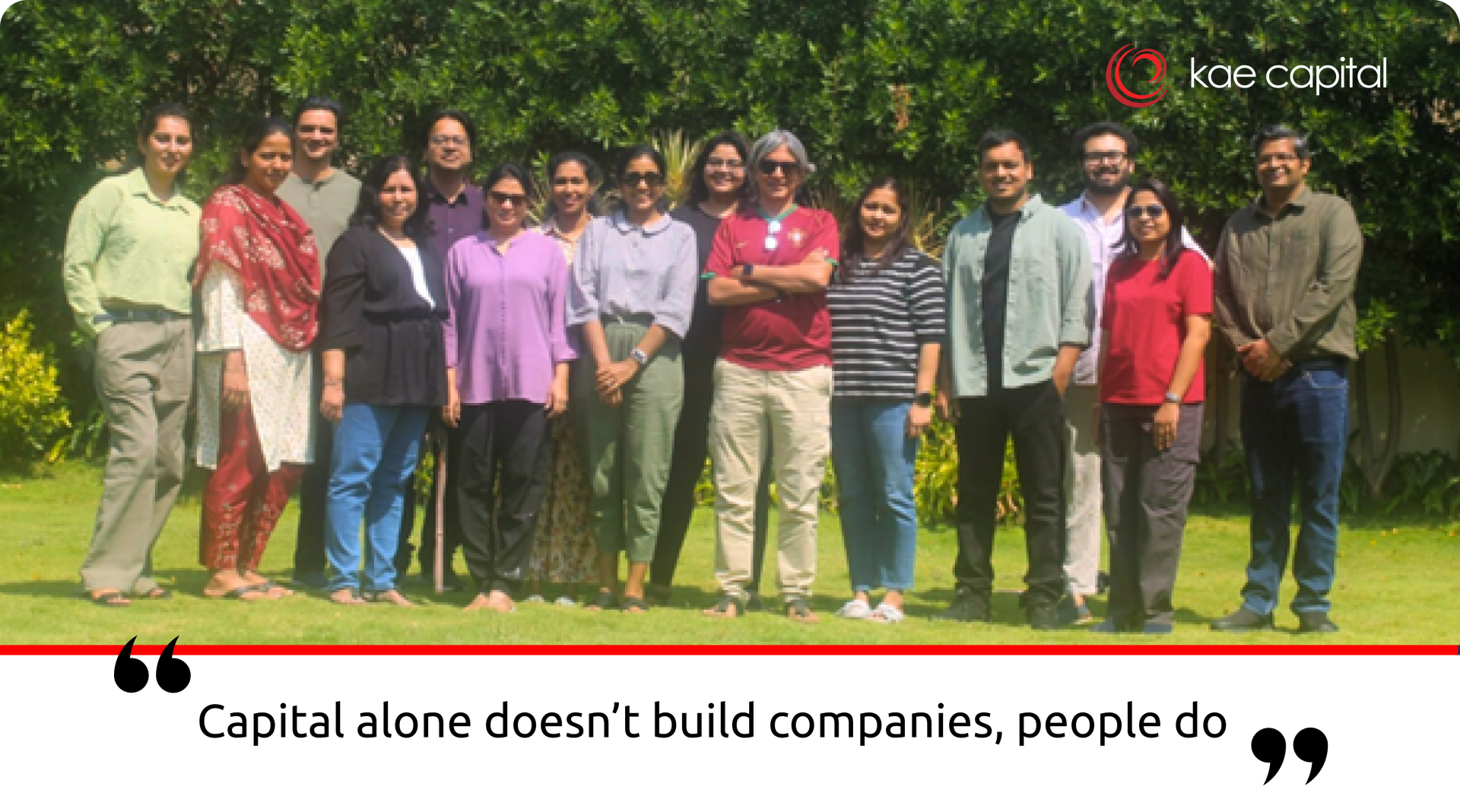
Kae team image

And when people are supported with the right mix of context, clarity, and care, they build extraordinary things. Capital alone doesn’t build companies, people do.

Insights from Kae Catalyst: Consumer Edition

India’s consumer landscape is in the midst of one of its most dynamic shifts. Rising digital adoption, evolving consumer aspirations, and the emergence of new-age distribution models are redefining how brands are built and how consumers engage with them. For founders and operators, this creates both unprecedented opportunities and complex challenges; how do you build a brand that lasts in an age of fleeting attention spans? How do marketplaces adapt when 10-minute delivery is no longer a differentiator but an expectation?

These were the questions at the heart of the recently concluded Kae Catalyst: Consumer Edition, where we brought together 70+ founders, investors, and operators who are building at the intersection of consumer and technology. The evening, co-hosted with our partners at Google Cloud, featured two insightful panel discussions that explored the future of consumer brands and marketplaces.

Panel 1: Built to Last – Building Brands that Endure

Moderated by Sunitha from Kae Capital, the first panel dove deep into what it really takes to build consumer brands in India. Featuring Kae’s portfolio founders – Romita (Foxtale) and Saloni (Traya), along with Rishabh (Sharrp Ventures), the discussion offered candid insights from founders in the trenches and a founder turned investor with a sharp eye for brand-building signals.

The 0–1 and 0–3 Cr Journey

Romita and Saloni spoke about the early days when everything revolved around product-market fit. Distribution, brand-building, and team culture are critical, but the founders emphasized the importance of single-minded focus, solving one problem for one set of customers with ruthless clarity. For consumer brands, it isn’t enough to have a differentiated product; the messaging, delivery, and customer experience must align seamlessly.

What stood out is how the bar for PMF has shifted. A few years ago, getting to ₹1 crore in monthly revenue was seen as a clear marker of PMF. Today, that milestone looks closer to ₹3 crore, proof that expectations are rising, competition is sharper, and brands need to go deeper to truly win.

At the ₹0–3 crore per month scale, the conversation shifts to building teams and processes. Founders reflected on how delegation becomes critical, and building internal conviction around customer-first thinking ensures organizations don’t lose touch with their early DNA.

What Investors Look For

Rishabh highlighted the early signs he looks for in consumer founders: clarity of thought, the ability to attract talent, and a nuanced understanding of distribution. Interestingly, he differentiated between evaluating early-stage versus scaled-up founders. For early founders, adaptability and sharp focus are key, while for scaled players, it’s about proving whether they can sustain momentum and evolve across channels without losing discipline.

Scale and the Distribution Puzzle

As Foxtale and Traya scaled, their approach to distribution evolved. From early dependence on D2C to balancing marketplaces, offline GT (general trade), and quick commerce, the consensus was that there is no single playbook. Founders must stay pragmatic and adapt to where the consumer is, whether that’s a digital shelf, a kirana store, or a quick-commerce app.

On the investor side, Rishabh noted that while there may not be a bias for offline or online, understanding unit economics within each channel is non-negotiable. Growth for growth’s sake is meaningless if contribution margins do not compound positively.

Brand vs. Performance Marketing

A recurring theme was the tension between brand building and performance marketing. Founders acknowledged the pressure to deliver immediate results in investor boardrooms. Yet, they agreed that brand equity is a long game, and the right time to invest is once the product has clear early traction.

As one way to think about it: performance marketing is like rocket fuel, it can give you an immediate lift and accelerate growth quickly. Brand building, on the other hand, is like gravity, it may not be flashy day-to-day, but it keeps the business grounded, creates resilience, and ensures your growth is sustainable. Wait too long to invest in a brand, and your product risks being seen as a commodity; invest too early, and cash burns without leverage.

Gen Z, the Attention Economy, and Contrarian Views

In today’s attention-scarce world, Gen Z consumer behavior is rewriting the playbook. Romita spoke about how authenticity and community matter far more than polished advertising. Saloni stressed inculcating consumer-backward thinking into every team member — building for long-term trust rather than chasing short-term metrics.

When asked for contrarian views, the panelists offered thought-provoking takes: that the D2C boom is not “easy capital + Instagram ads = success” anymore; that offline still holds immense power despite the digital hype; and that consumer brands should not shy away from “boringcategories if they solve a real need.

If they were to start today, each founder’s mental model was clear: identify underserved categories, build with authenticity, and never underestimate the power of distribution agility.

Panel 2: Beyond the Cart – Future of Consumer Marketplaces

The second panel, moderated by Harshad from Google Cloud, zoomed out from brands to the platforms that power consumer experiences. Featuring Kae’s portfolio founders – Manas (GobbleCube) & Anil (Snapmint), along with Raghav (Promaft), the discussion explored the fast-changing marketplace landscape.

What’s Broken in Current Models?

The panel kicked off with a critical question: what’s fundamentally broken about consumer marketplaces? Trust, discovery, and transaction friction emerged as recurring themes. Startups are experimenting with embedded finance, AI-driven discovery, and personalization to close these gaps, but as Manas pointed out, execution at scale remains the real test.

Beyond Buzzwords: Tech That’s Moving the Needle

AI, social commerce, and live streaming are buzzwords often thrown around. But what’s working in practice? Anil emphasized embedded credit solutions as a real unlock for consumer adoption, especially in a price-sensitive market like India. Manas added that agentic AI tools are helping brands grow smarter across e-commerce and quick commerce, not just spend more ad dollars. Raghav provided the investor lens: technologies that improve retention, lower acquisition costs, and reduce friction are the ones that will endure.

Competing in a Quick-Commerce World

The rise of 10-minute deliveries has completely reset consumer expectations. The panel acknowledged the operational and capital intensity behind these models but agreed that speed alone cannot be the differentiator. Marketplaces that combine speed with trust, affordability, and discovery are more likely to build defensibility.

The Next 2–3 Years of Consumer Marketplaces

Looking ahead, the panelists painted a picture of ecosystem-driven marketplaces, platforms that don’t just facilitate transactions but enable community, discovery, and financing. Differentiation will come from specialization and vertical depth, not just horizontal scale. Winners will likely be those who balance supply-demand liquidity with innovative consumer experiences.

Supply vs. Demand: Solving the Chicken-and-Egg Problem

When asked how to prioritize between supply and demand, founders reflected on their own journeys. The consensus: it depends on the category. In some cases, curating high-quality supply attracts demand; in others, creating a demand pool forces suppliers to show up. The key is sequencing thoughtfully and staying flexible, especially in the fragile early days.

Takeaways: A Consumer Landscape in Flux

Both panels underscored one thing: India’s consumer-tech story is only just beginning, but the bar for building enduring companies is rising sharply.

  • For founders building DTC brands, the advice was clear: build authentic products, obsess over distribution, and know when to shift gears between performance and brand.
  • For marketplaces founders, the challenge lies in moving beyond transactions to creating sticky, trust-led ecosystems.
  • For investors, the signals to watch for are founder clarity, adaptability, and thoughtful scaling choices that don’t sacrifice long-term unit economics.

At Kae Catalyst, our goal has always been to create a space where such candid, experience-led conversations can happen. As India’s consumer ecosystem matures, we remain committed to backing founders who are not just chasing the next trend but are building with resilience, authenticity, and ambition.

Looking Ahead

At Kae Capital, we believe India’s consumer ecosystem is only at the beginning of its growth curve. This Consumer Edition was a reflection of our commitment to fostering these conversations and supporting the founders who will lead this transformation. A big thank you to our panelists, attendees, and our partners at Google Cloud for making the evening a success.

The journey of building consumer companies is never easy, but as the discussions revealed, it is in the complexity that the most exciting opportunities lie.

Beyond the Horizon: How India’s Spacetech is Transforming and Why VCs Should Pay Attention

Overview

Spacetech plays an integral part in our everyday lives, enabling functions such as weather forecasting, air traffic control, global communications and broadcasting. These operations, along with many others, would be unthinkable today without satellite technology.

The space economy encompasses all public and private participants engaged in the development, provision, and utilization of space-related products and services. This includes research and development, manufacturing, and the operation of space infrastructure—such as ground stations, launch vehicles, and satellites—as well as space-enabled applications like navigation systems, satellite phones, and meteorological services. This sector also encompasses the scientific insights gained through these activities.

Market and Tailwinds

Currently, the Indian space economy is valued at ~$8 Bn with only a 2% share in the global space economy, despite being among the top 5 space-faring nations. India’s space economy has the potential to reach $44 Bn by 2033, capturing ~8% of the global market.

India’s space budget has more than doubled over the past decade. Department of Space, which leads both civil and military missions and oversees the Indian Space Research Organisation (ISRO) along with other space-related activities, has been allocated nearly INR 13,043 Cr (~$1.6 Bn) by the Government of India

On July 23, 2024, Finance Minister Nirmala Sitharaman announced the establishment of an INR 1,000 Cr (~USD 119 Mn) venture capital fund expected to accelerate the growth of space economy fivefold over the next decade. This fund aims to support approximately 40 startups with investments ranging from INR 10 crore to INR 60 crore, depending on the startups’ development stages.

The Indian space industry has experienced a revival over the past two decades: Indian space activities are no longer exclusively government-controlled. The Indian Space Policy 2023 seeks to create a collaborative relationship between the public and private sectors, fostering global partnerships and cross-border collaboration. ISRO will now concentrate on research and development, moving away from manufacturing operational space systems

In February of this year, the Indian government permitted 100% automatic foreign direct investment (FDI) in satellite component manufacturing and user ground segments, up to 74% in satellite manufacturing and operations, and up to 49% in rockets and spaceports. The removal of the angel tax is also seen as a move to reduce barriers to new investments. Additionally, on July 11, 2023, the Union government exempted startups providing satellite launch services from GST.

India’s Spactech Landscape (Source)

Use-cases in the downstream segment of Space Value Chain

Funding

Majority of Indian Spacetech Startup funding went into upstream startups

From 2016 to 2023, Indian spacetech startups attracted over $285 million, predominantly in the upstream sector


Source: Inc42


Downstream, Startups Make Up only 17% of Active Funded Startups

The downstream segment currently represents only 17% of active, funded startups, even though projections suggest that downstream services could make up two-thirds of the Indian space market by 2030. While India’s launch manufacturing and services sector has a strong foundation, the focus now needs to shift toward other upstream services, such as in-orbit and end-of-life services, as well as expanding downstream capabilities.


Source: Inc42

India’s Spacetech Landscape

Challenges

  • Capital Constraints: Space startups are all deep tech, requiring significant investment without the prospect of immediate returns. These ventures involve long-term, high-risk investments with extended gestation periods, necessitating patient capital. One major challenge is the scarcity of seed-stage funding. Currently, no space startup in India has reached INR 100 crore (~USD 12 million) in revenue, which limits venture capital and private equity’s willingness to take on financial risks. This situation could improve if the government stepped in as a catalytic first-loss risk bearer, fostering trust within the ecosystem.
  • Long path to growth and scalability: Dhruva Space, established in 2012, stands as one of the country’s earliest space-tech start-ups, yet it completed its Series A funding round only 12 years later, in April of this year. Among the roughly 200 space-tech start-ups in India today, only two—Ananth Technologies and MTAR Technologies—are publicly listed, and the sector has yet to see its first unicorn.
  • High Costs and Infrastructure Limitations: Space systems are inherently complex and demand specialized testing facilities and infrastructure, which are currently in limited supply. Prolonged testing cycles impose heavy demands on time and financial resources, necessitating advanced expertise.
  • Challenges in Justifying Return on Investment (ROI): Justifying returns on investment is a universal challenge across sectors, but it is particularly pronounced in the space industry due to the high costs associated with launching and maintaining assets in space.
  • Concentration in Certain Segments of the Value Chain: The launch manufacturing and services sector is adequately populated, signalling the need to shift focus toward downstream services and other upstream services like in-orbit operations and end-of-life services.
  • Escalating Cloud Analytics Costs: The cost of running analytics on the cloud is high and expected to increase. This presents an opportunity for companies specializing in data aggregation and fusion from various sources to provide actionable insights to end-users.
  • Limited Access to Aerospace Testing Facilities: With the rise of private space companies in India, demand for aerospace testing facilities has grown. However, these facilities are currently limited to ISRO’s government infrastructure, creating a bottleneck for private enterprises.
  • Talent Shortage in Specialized Skills: Founders and their teams must be well-equipped to navigate the challenging technical and regulatory landscapes

Growth Drivers

  • Expanding Commercialization and Private Participation: The focus is shifting toward commercialization, with private companies leveraging space data and ISRO’s commercial arm, New Space India Limited (NSIL), enabling private sector involvement.
  • Cost efficiency as a Competitive Advantage: India’s space missions, led by ISRO, have earned a global reputation for their remarkably low costs—often less than the budget of a major film. A prime example is the Mars Orbiter Mission (Mangalyaan), which cost about $74 million, far lower than Hollywood’s Gravity ($100 million) or Interstellar ($165 million). A major factor behind this cost efficiency is India’s focus on indigenous production and local sourcing. This approach reduces costs significantly while fostering a robust ecosystem of space-tech suppliers and manufacturers in India.
  • Growing demand for Downstream applications: There are vast opportunities in downstream applications such as Earth observation, satellite communication, and positioning services. These sectors are expected to grow rapidly as demand for data-driven insights increases
  • A Collaborative Innovation Ecosystem: Partnerships among startups, academic institutions, and government bodies have been crucial in cultivating India’s space tech ecosystem. Organizations like the Department of Space and IN-SPACe have provided essential support, including access to talent, testing facilities, and a supportive policy framework.
  • Guidance from experienced experts: Many former ISRO scientists are now available to lend their expertise to startups, providing invaluable insights and guidance.
  • Advances in Space Technology and Miniaturization: Innovations are making satellites smaller, more affordable, and more accessible. ISRO has demonstrated its capabilities with landmark missions like the Mars Orbiter Mission (Mangalyaan) and Chandrayaan.

Future state of space sector

  1. Earth-Focused Sector: This segment revolves around space-driven applications and services that directly benefit activities on Earth, such as communication networks, Earth observation, and navigation systems.
  2. Near-Earth Space Sector: Positioned between Earth-centered applications and space-based ventures, this economy includes space tourism, in-orbit maintenance, space-towing, satellite servicing, and advanced satellite constellations designed for Earth-based benefits.
  3. Deep Space Sector: Encompassing ventures beyond Earth’s immediate surroundings, this sector includes activities like asteroid mining, interplanetary transport, space habitats, and ambitious exploration missions to celestial bodies, including the Moon and Mars.

Conclusion

Now is the ideal time for early-stage venture capitalists to invest in India’s spacetech sector. The industry is at a turning point, with factors like reduced entry barriers, increased foreign investment, government incentives, and a strategic policy framework fostering growth. Government support through GST exemptions and the removal of the angel tax further eases new investments. Collaboration between ex-ISRO scientists and startups is accelerating innovation and technical expertise. While patient capital remains a challenge, the potential rewards are significant. For VCs with a long-term outlook, India’s spacetech sector offers a unique opportunity to lead in a high-growth, high-impact field.

If you’re building in this space, reach out to me (nisha@kae-capital.com)

Breaking Monopolies in Gaming: The Age of AI (Part 2 )

How AI is Democratizing and Revolutionizing Gaming


A New Frontier for Gaming

In Part 1, we saw how the current gaming industry is dominated by a few key players. However, advancements in AI—specifically Generative AI, Agentic AI, and the metaverse—are disrupting traditional structures and creating unprecedented opportunities for smaller studios, indie developers, and new entrants to break into this tightly controlled space.

1. Generative AI: Scaling Worlds, Assets, and Storylines

Generative AI is reshaping content creation by automating the design of worlds, assets, and storylines, allowing developers to craft dynamic, responsive game environments without requiring massive teams.

Examples:

  • InWorld AI: This startup is developing AI-driven characters and environments that adapt to player choices, making storylines more immersive and unique.
  • Scenario.gg: Specializing in automated asset creation, Scenario.gg reduces the time and cost of producing rich visual environments, enabling small studios to compete with larger counterparts.

Market Impact: Generative AI is democratizing game development by lowering barriers to entry, making it possible for smaller studios to produce expansive, visually compelling worlds.


2. Agentic AI: Building Intelligent, Autonomous NPCs

Agentic AI goes beyond simple NPC behavior, enabling characters that react in nuanced ways to player actions, adding layers of depth and unpredictability to gameplay.

Examples:

  • SEED (Electronic Arts): EA’s SEED division is developing agentic AI to create NPCs with context-sensitive behaviors, providing a new level of immersion in their games.
  • Fable Studio: Known for its work in VR, Fable Studio uses agentic AI to create evolving NPCs that grow and change based on player interactions, offering richer, unscripted experiences.

Market Impact: By shifting engagement from scripted events to adaptive, interactive worlds, agentic AI enables high replayability and player retention, opening the door for indie developers to create highly engaging, long-lasting games.


3. The Metaverse: Moving from Social Engagement to Fully Immersive Worlds

The metaverse concept envisions persistent virtual worlds where players can interact, transact, and experience activities that mirror real-world dynamics. AI plays a critical role here, enabling dynamic responses, economy management, and more.

Examples:

  • The Sandbox: By merging blockchain with virtual worlds, The Sandbox allows players to own, trade, and monetize assets, creating an economically viable gaming model.
  • Somnium Space: This platform uses AI to adjust virtual environments in real time, enhancing immersion by adapting to player actions.

Market Impact: The metaverse not only redefines social interactions within games but also creates new economic models where players can become stakeholders in virtual assets, making gaming a lifestyle and an economy.


The India Angle: Opportunities for Global Impact

AI-driven gaming holds unique promise for India, particularly in segments like real-time localization, vernacular AI for regional languages, and culturally nuanced storytelling. By capitalizing on India’s engineering talent and mobile-first audience, developers have a chance to create products that scale globally.

What’s Worked:

  • AI-Driven Real Money Games: Platforms like MPL have integrated dynamic game mechanics that adapt to player behavior, maintaining engagement and monetization.
  • Fantasy Sports with AI: Dream11’s algorithm-driven fantasy leagues have successfully tapped into India’s sports fervor, using AI to drive match recommendations and player interactions.

Challenges:

  • Limited Resources for Indie Developers: Although AI offers democratization, smaller Indian studios often lack access to the latest AI tools due to cost and computational limitations.
  • Fragmented Ecosystem: The Indian gaming market remains fragmented, with few resources and platforms to support cross-border distribution.


The Future of Gaming—Breaking the Monopoly

With AI-driven innovation, generative content, adaptive NPCs, and the metaverse, the gaming landscape is opening up in ways we haven’t seen before. These technologies allow new entrants to challenge established giants by offering more dynamic, personalized, and immersive experiences. As AI reduces the barriers to creating high-quality games, the potential for disruption is vast, not only for Indian companies looking to expand globally but for the entire gaming ecosystem.

This is an inflection point. As AI levels the playing field, the future of gaming will be written by those who innovate boldly—transforming not just how we play, but who gets to play in the industry’s sandbox.

If you’re building in this space, let’s connect. Reach out to me at: natasha@kae-capital.com

Breaking Monopolies in Gaming: The Age of AI (Part 1)

The Current State of Gaming—Monopolies, Money, and the Power Players

On the surface, the gaming industry appears vibrant and expansive, filled with innovative genres, a vast array of studios, and millions of dedicated players across the globe. But, dig a little deeper, and you find that a few industry giants control an overwhelming share of the revenue, IP, and even the technological platforms that underpin the majority of games. This has created a centralized, almost monopolistic ecosystem where a few players control not only the money but also the future of gaming innovation. In this blog, we’ll explore how these companies maintain their dominance and what that means for innovation and disruption in the industry.

Who Actually Makes Money in Gaming?

The global gaming industry, valued at around $200 billion in 2023 with projections to reach $268 billion by 2025, is far from egalitarian. Only a handful of companies control the lion’s share of profits and have the clout to shape the industry’s trajectory.

1. Game Studios and Publishers: The Titans of Content

The content in gaming is largely governed by major studios and publishers, often with proprietary franchises that guarantee recurring revenues. Here’s a closer look at these titans:

  • Activision Blizzard: Known for powerhouse franchises like Call of Duty and World of Warcraft, Activision Blizzard (market cap: ~$62 billion) continues to drive revenue through a mix of in-game purchases, seasonal updates, and annual franchise refreshes. In FY2023, they reported over $8 billion in revenue, fueled by battle passes, microtransactions, and live-service models.
  • Tencent: With control or stakes in over 600 gaming companies, Tencent is the world’s largest gaming company by revenue (over $32 billion in 2022). Their investment portfolio includes full ownership of Riot Games (League of Legends) and significant stakes in Epic Games (Fortnite). Tencent’s ecosystem spans publishing, game development, and distribution, giving it an unparalleled reach, especially in Asia.
  • Electronic Arts (EA): With iconic franchises like FIFA and The Sims, EA (market cap: ~$34 billion) is another powerhouse that relies on recurring revenue through annual releases and microtransactions. EA generated around $7.3 billion in FY2022, driven primarily by in-game purchases in its sports games, where ongoing updates add continuous value for players.

2. Development Tools and Platforms: The Silent Powerhouses

Beyond studios, companies like Unity and Epic Games control the technology that powers the majority of games. Their influence is pervasive, as developers worldwide rely on these platforms.

  • Unity: Powering over 50% of mobile games, Unity has become the go-to development engine for indie developers and smaller studios. They reported $1.4 billion in revenue in 2022, drawing income from licensing fees and in-game ad placements. Unity’s accessibility and robust ecosystem have made it indispensable, but it has also centralized control of mobile game development.
  • Unreal Engine (Epic Games): Known for its fidelity and powerful toolset, Unreal Engine is favored by AAA studios. Epic Games, valued at $31.5 billion, not only generates revenue through licensing but also directly from its Epic Games Store. By offering competitive revenue splits, Epic has positioned itself as a challenger to distribution giants like Steam

3. Distribution Platforms: Controlling Access and Profits

Once developed, games must reach players, and distribution platforms play a critical gatekeeping role.

  • Steam (Valve): Dominating the PC game distribution market with over 75% market share, Steam charges developers around 30% of their revenue. Valve earns an estimated $3 billion annually from Steam, benefiting from its monopoly-like hold on the PC ecosystem.
  • Console Platforms (PlayStation, Xbox): Sony and Microsoft benefit not only from console sales but also from every digital purchase on their stores. PlayStation generated $17.4 billion in revenue in 2022 from game sales, in-game purchases, and PlayStation Plus subscriptions. This vertical integration makes them essential players in the digital gaming economy.

Engagement Dynamics: Few Games Capture Lasting Attention

While thousands of new games are released each year, only a select few manage to sustain engagement and drive long-term revenue. Fortnite, League of Legends, and Call of Duty exemplify games that dominate through frequent content updates, seasonal passes, and subscription models. These games set the standard for engagement and retention, shaping player expectations and creating models that smaller games struggle to replicate.

India’s Perspective: What’s Worked and What Hasn’t

India’s gaming sector, estimated at $3 billion with a user base exceeding 500 million gamers, has emerged as a unique market. Real-money gaming (RMG) and fantasy sports have taken off, driven by cricket and sports fandom. Companies like Dream11, Nazara Technologies, and MPL have found success by catering to local preferences, mobile-first access, and leveraging affordable smartphones.

Success Stories:

  • Dream11: India’s first gaming unicorn, Dream11 has thrived by capitalizing on cricket fandom. By creating a scalable, monetizable fantasy sports platform, they’ve established a loyal user base and continue to lead the fantasy sports market.
  • Nazara Technologies: With a diversified portfolio, Nazara has grown through strategic acquisitions and focus areas like gamified learning and esports. Their approach combines brand-building with category leadership in high-growth verticals.

Challenges and Failures:

  • High CAC in Real-Money Gaming: With multiple RMG apps vying for user attention, customer acquisition costs (CAC) have surged, impacting profitability.
  • Regulatory Ambiguity: The lack of consistent regulation for real-money gaming and fantasy sports has created a challenging environment, with companies often facing legal hurdles.

A Market Dominated by Few, Controlled by Many

The gaming market remains tightly controlled by a few players who wield control over content, technology, and distribution. For India, the path forward will require navigating regulatory challenges, diversifying beyond RMG, and capitalizing on unique cultural touchpoints to create global appeal. In Part 2, we’ll explore the transformative potential of AI in breaking these monopolies and democratizing game creation. In case you’re building in this space, connect with me here: natasha@kae-capital.com

The Transformative Power of GenAI in Media & Entertainment

In the second part of this series, we delve into the unique blend of opportunities and challenges that the rise of GenAI in media & entertainment has brought about, along with evolving consumer preferences.


Current Landscape

The decline in traditional media globally contrasts sharply with the digital transformation successes seen in India. Digital platforms like Disney+ Hotstar’s utilization of cricket broadcasting rights to amass a large subscriber base exemplifies the potential for innovative monetization strategies despite the high costs associated with content and rights acquisition. In 2022, their strategy led to a 30% increase in subscribers during the IPL season alone, demonstrating the power of targeted content delivery.

The industry’s pivot towards premium content across sectors, despite existing monetization challenges, is also notable. While homegrown vernacular social media platforms have struggled to find monetisation models, the road for more niche communities and content is just being paved.

The audio segment, along with the comic book and gaming industry, points towards a thriving ecosystem ripe for innovation, with new-age platforms like Pratilipi, Dashtoons and Mugafi paving the way for new intellectual property (IP) development.


The GenAI Disruption

GenAI is setting the stage for a revolution in content creation and distribution. The technology’s capacity to generate personalized, engaging content at scale offers unprecedented opportunities for M&E companies. This cutting-edge technology is already reshaping how content is produced, from pre-production and development to distribution and marketing.

Tools like Midjourney and Stable Diffusion are paving the way for new forms of art. Audio platforms like PocketFM are using GenAI to scale up hits. Sora, Descript and RunwayML are expanding from generative video editing to creation. In India, startups like Rephrase.ai and HippoVideo in India are harnessing GenAI to create hyper-personalized video content, indicating the technology’s transformative potential across text, image, video and audio.

Tyler Perry has already halted his $800m Hollywood studio expansion plans in the face of this seismic shift to new models of production.


Predictions and Future Trends

These are my bets for some of the next-generation startup models we’ll see emerge in this sector:

1) Everyone is now a creator:

Given the rise of LLMs, everyone is now a creator. Supply is no longer the constraint across formats- moderating quality, generating demand and rethinking search are the real moats to building at scale. We will see the rise of entirely new AI-first platforms focused on highly personalized content and digital goods, with Gumroad leading the way.

2) Rethinking search and monetisation:

Regardless of the format you choose- audio, video, comic books, or animation- if you’re building a content marketplace in 2024, the game-changers will unlock or create a new category of consumer behavior when it comes to discovery or monetization. Wobot Intelligence, an Indian startup, is pioneering AI-driven solutions that transform content marketplaces.

3) Hacking for hits:

If you’re building a content platform, you will still have to show your path to either generating a ‘hit’ or building on existing IP. Every generational media business- whether it’s Disney, Netflix or T-series- is built on one IP that ‘works’ to begin with, and you can only hack or buy distribution up to a certain point. You have to hack both supply and demand until you get that elusive ‘hit’

4) Gaming gets more immersive:

Gaming will be reimagined and will become the largest category in this sector. We will see entirely new fantasy sports, virtual worlds, and never-ending games as GenAI changes the way we build games and makes them increasingly immersive. Real-time AI integration, as seen with Epic Games’ Unreal Engine, allows creators to build dynamic, responsive worlds, pushing the boundaries of user interaction.Kae is investing in a company which helps users create 3D assets from text using Gen AI, which could have interesting applications in gaming. A16z has already set up a new arm that focuses on investing in the disruption of gaming.

5) Social media gets less social:

The next generation of social media networks will go deeply vertical and niche, focusing on AI friendships like or being highly private. There is no middle ground. The rise of platforms that pioneer personal AI interactions like Replika, Anima, and CharacterAI are already showing that we’re finding solace in AI.


Conclusion

While the rise of GenAI does pose several challenges when applied in this industry such as lack of originality, deep fakes, intense competition for creators and IP minefields, the evolving landscape of India’s M&E sector offers a golden opportunity for founders to innovate and thrive.

Embracing GenAI, understanding nuanced consumer behaviors, and pioneering new models in content creation and distribution will be key to navigating this sector successfully.

If you’re building in this brave new world, do reach out (natasha@kae-capital.com). I’d love to brainstorm with you on staying close to the user and going deep on understanding their pain points, building for retention and quality, and hacking growth.

Audio OTTs’ Day in the sun – Our investment in Eight Network

Audio may be the first entertainment format in human history. Radio broadcasts have entertained audiences at scale for over a century. The advent of the internet helped digital audio platforms to flourish; changing the way people consumed audio content. With Apple launching iTunes in 2001, the popularity of digital music exploded. Since then, new audio formats such as podcasts, audiobooks, storytelling, non-fiction, short-form content etc. have evolved. We are super excited about the opportunity and invested in Eight Network early last year.


The opportunity

While video formats are dominant, audio has tremendous growth potential as it has independent use cases. With the high penetration of smartphones and headphones, there’s a substantial opportunity in the background entertainment space. This helped non-music audio content (growing at a CAGR of 33%) to claim a sizable share in the media & entertainment space, complementing the on-the-go lifestyle of young consumers.

There is a large audience for audio formats in the world. Spotify has over 550 Mn monthly active users (average) in Q3 of 2023; a 26% growth YoY. It is estimated that 170 Mn+ users are listening to audio on a monthly basis in India. While most of them consume music content, the share of non-music content has been going up rapidly. As per the Redseer report, the share of non-music has gone up from 3% in 2019 to 5% in 2023.


Major Indian players

On the music front, the largest players in India have been Gaana, Saavn and Spotify. Some of these have explored podcasts in some shape or form. However, the core offering for these platforms still remains music.

The second wave of companies in the OTT space include PocketFM, KukuFM, Headfone and Eight Network. They vary from each other in the genre and target audience. Pocket FM’s core product offering has been long-format audiobooks and stories. Kuku has focused on the Bharat audience, offering non-fiction content that includes motivation & education in many vernacular languages. 


Eight Network

The latest of these, Eight Network, has focused more on the immersive content around audio shows, live and podcasts.  While short-form content seems to have worked for video, long-form episodic content has worked well for audio platforms to improve retention and engagement.

Eight, targeting the young urban demographic, has experienced remarkable customer love, largely because this group has been significantly underserved. Though relatively earlier in the journey than its peers, Eight is currently the highest-rated audio app in India, highlighting its success in meeting the quality its segment desires. The founders Mohit Paliwal, Mohit Goswami and Yugal Tamang are all second-time entrepreneurs and are passionate about the space. They spent some time on Social Radio before they found their PMF in immersive audio shows.


Urbanizing youth segment

Eight focuses on urbanized young consumers. Millions of young content consumers are either semi or completely urbanised and are exposed to high-quality video content on OTTs like Netflix, Prime and Hotstar,  e.g. consumers of Paatal Lok, Sacred Games etc. They have a high expectation of the quality of content. This is a broader trend and not limited to affluent youth.

This user also has periods when he/she can’t look at the screen – such as while commuting, performing certain household or work chores etc. So audio serves as the best means to keep company.


Right to win

Eight is the first and only Audio OTT platform to serve this base of users by offering immersive content in the tone best suited for young audiences. Most of their content is in Hinglish, which sounds very similar to how young Indians converse.

Eight has curated 100s of hours of such premium immersive content. They have a strong tech and community enabled playbook in place and are on the path to host the largest inventory of high-quality audio for young urban consumers. This scalable content strategy offers natural moats for the business at scale. 90% of the audience on Eight is between the 18-34 age bracket and is from the top 15 cities, signifying strong PMF for this segment.


Role of technology and community

Digital platforms have leveraged tech well by supporting creators with tools that help them make high-quality content easier. They have also built creator communities and enabled collaboration between them. AI is being rapidly adopted to make the content creation process faster and easier.

The Eight team recently unveiled the beta version of their creator web tool, Eight Studio, specifically designed to empower podcasters and audio creators. This platform enables creators to collaborate, craft, and directly publish their shows on the Eight App. A standout feature of Eight Studio is its integration of Generative AI technology, which aids creators in developing content ideas, making it an ideal tool for refining concepts at their inception.

What sets Eight as a platform apart is its strong emphasis on community engagement. Already, Live Community at Eight has facilitated the creation of breakthrough content IPs for the company. By launching Eight Studio, the team aims to democratize content creation, offering aspiring creators a platform to expand their reach and cultivate their own audience. 


International play

TikTok, in short-form video, has been super successful in the US. Almost all the above audio non-music OTT platforms have gone international (primarily US). They have both repurposed the content as well as created new content tailored for the US audience. 


Monetization

The digital audio streaming market is estimated at $40 Bn in 2023 by Redseer. Deloitte puts this a bit lower at $30 Bn in 2024. While this is ~25% of the video streaming opportunity, the market is pretty big to create multiple winners – more so if there are global plays.

  • Advertising: According to Statista, the Digital Audio Advertising market is projected to reach $11.13 Bn in 2024. While this seems to be a large opportunity, given the struggles of Indian content platforms to monetize effectively, the new-age audio OTTs have largely stayed away from this – both in India and overseas
  • Subscription – Indian audio OTTs have preferred to go with the freemium model with some content behind a paywall. To keep the retention high even among the unpaid subs, some of them have released new episodes over a period of time


The Indian players seem to have scaled well. Pocket FM has seen multiple content assets such as ‘Insta Millionaire’ and ‘Saving Nora’ that have yielded revenues of $12-15 Mn each. Kuku has over 3 million active paying subscribers.


The explosion of content formats and genres in India and globally has made this an exciting space. Given the revenue scale that some of the players have reached within a span of 5-6 years, large outcomes are possible. It is one of the few spaces where content – from India to the world – is likely to see success.

Investment in GobbleCube

Why GobbleCube?

In the evolving retail e-commerce sector, the global market, valued at $5.3 trillion in 2022, is expected to see significant expansion, with a CAGR of 11.2% through 2030. This growth is driven mainly by the increased use of smartphones and the convenience of shopping from home. Factors such as a wide range of choices, lower prices than in-store, and increased internet usage are enhancing consumer demand globally. The Asia Pacific region contributed a 42% revenue share in 2022. It’s more than just numbers, it’s about our evolving lifestyles and how tech is reshaping our shopping carts.

With the advent of AI, online shopping is anticipated to see an uptick. Innovations such as AI shopping assistants, chatbots, personalized experiences, and tailored recommendations are set to redefine customer service. Additionally, features like real-time interactions and virtual product trials aim to significantly enhance customer engagement and boost conversion rates.

E-commerce penetration is growing rapidly, becoming a key focus for major brands, outpacing traditional retail with a CAGR twice as fast. This growth in e-commerce has led brands to diversify across multiple platforms, adding complexity to their operations. They face challenges in managing revenue and consolidating data across platforms like Amazon, Walmart, Flipkart and various quick commerce sites. The traditional methods of spreadsheets and manual data analysis are proving inadequate for scaling in this fast-evolving landscape.


At Kae, we recognize the genuine need for solutions in complex workflows, seeing great potential in AI for simplification. The GobbleCube team is aptly poised to address this substantial challenge. GobbleCube is the go-to platform for consumer packaged goods (CPG) brands looking for seamless revenue management. Offering real-time analytics, it is essential for enhancing brand visibility, availability, and market presence, factors directly influencing sales.

GobbleCube automates data and decision-making processes across the entire e-commerce value chain to boost share of voice (SOV), minimize out-of-stock (OOS), and prevent revenue leakages, leveraging AI and automation to present brands with actionable insights. This enables brands to focus on executing actions that drive growth and profitability, while it abstracts the entire end-to-end process.

GobbleCube team has a strong founder market fit, with co-founders originally part of Blinkit’s leadership, instrumental in developing India’s major quick-commerce platform. At Blinkit, Manas built out Data as a Practice, Sri led Category and Merchandising and Nitesh was heading Consumer Engineering. During those 7+years, they collaborated with 500+ brands and gained a first-hand understanding of the everyday challenges faced by brands as they expand their presence on online platforms.


We had been in touch with the co-founders for several months even before this round. They have a deep understanding of the business and customer empathy- essential for product development. GobbleCube aligns with our investment thesis in vertical SaaS companies that address specific industry challenges and automate existing manual processes. It assimilates, models, triangulates, and analyzes vast amounts of data to quickly surface those crucial high-priority issues using contextual intelligence. This enables sales teams to get into action immediately by asking the right questions to the right stakeholders. Already implemented by various mid to large global brands, GobbleCube is demonstrating its market relevance and potential.

We at Kae are very excited to partner with them in this journey. This presents a large opportunity, and we believe they are the best team to build this business.