In 2018, Kae Capital wrote its first check into Nua, when the company was still a small, focused business built around a simple idea. At the time, sanitary pads in India came in exactly one size, no matter who was buying them. Ravi Ramachandran had built Nua around a fix for that: pads in three different sizes, delivered through a subscription, based on what a woman’s body actually needed.
Eight years on, Nua just closed a $50 million Series C led by Peak XV Partners and Filter Capital, and Kae took a partial exit as part of the round, realizing an 18x MOIC on our Fund II position.
Why we said yes early
For decades, femcare in India had not really changed. A handful of large, incumbent brands controlled the shelf, and very little of that time had gone into rethinking the product itself. A category that has gone that long without real innovation is usually one where a founder with a genuinely different, innovation first mindset can move quickly and take share from brands that have stopped bothering to improve. At the same time, more Indian consumers were moving online and were willing to try brands that did not live on a supermarket shelf, and a digital first company like Nua stood to benefit more than most from that shift.
What mattered most to us, though, was Ravi himself. He came in with a completely consumer first mindset, and a genuinely empathetic understanding of why a product like Nua needed to exist and how he intended to solve for it. A stale category, a real shift in consumer behavior already underway, and a founder who understood the problem from the customer’s side: that combination is usually what convinces us to write an early check.
From a subscription box to a real brand
By 2019, Nua had built a community of around 100,000 women, half of them in tier 2 and tier 3 cities, and raised a $4 million Series A led by Lightbox, with Kae participating alongside. That round told us something important: the demand was not just in the big metros where most D2C brands find their first customers. Women across the country wanted a better, more dignified option, and were willing to pay for it.
The next couple of years accelerated things further than any of us expected. Through the pandemic, as more shopping moved online and conversations about health became less hushed, Nua’s subscriber base grew nearly 90x. By mid 2021, the company had built a community of over 400,000 members and closed a $7.1 million round that brought in Lightbox again, and the Banga family office.
Profitable, and still growing
What stood out to us over the following years was not just growth, it was discipline. Nua crossed Rs 500 crore in annualized revenue while turning profitable, a combination that is genuinely rare in Indian D2C. This journey wasn’t without its fair share of hurdles. Full credit to Ravi, Abhishek and the team for ensuring that growth didn’t come at the cost of profitability and consumer centricity wasn’t lost in the midst. Nua used that base to fund real R&D and to expand carefully into maternity care, skincare, and intimate care, alongside its original period care line.
The brand Nua has become
Today Nua serves more than 3 million women and girls every month, across its own site, Amazon, Flipkart, and Zepto, and has built out digital products like a Period Tracker app and a community platform called SecretKeeper. Revenue has grown roughly fivefold in the last two years, and Peak XV has called it the fastest growing brand in its category and the second largest player online. None of that happens by accident. It happens because a founding team stayed close to a genuinely difficult, genuinely important problem for the better part of a decade, through several rounds, several strategy shifts, and a pandemic in the middle of it all.
A partial exit is a good moment to look back as much as forward. The Nua we backed in 2018 was a small business with a good idea and a lot left to prove. The Nua of 2026 is a category defining brand that three million women trust every month. We are glad to have backed that journey from the start. We are even more excited for the next chapter in this journey !
Congratulations to Ravi, Abhishek, and the entire Nua team. This one is a privilege to be part of.
Every few years, a consumer category in India crosses a threshold where the demographics, the money, and the policy all point in the same direction at once. Kids products, spanning apparel, toys, and baby care, are at that point right now. The market is large, growing across every sub-segment, and still structurally underserved in the exact price bands where most Indian families actually shop. This piece lays out why, using the data, and where the real openings are for anyone thinking about building here.
The scale of the opportunity
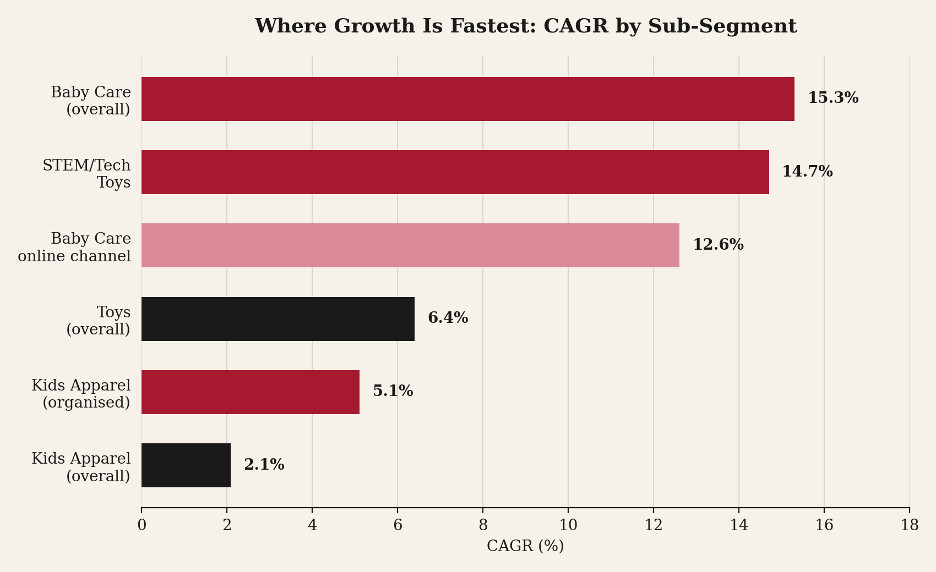
Start with the size of the prize. Kids apparel alone is a USD 22.57 billion market in 2025, on track for USD 27.17 billion by 2034. The organised, branded slice of that is smaller in absolute terms but growing far faster, from USD 10.60 billion in 2024 to a projected USD 16.60 billion by 2033 at a 5.11% CAGR, more than double the pace of the overall category. North India leads with a 28% share, propelled by urbanisation and the spread of organised retail.
Baby care is the standout. At USD 8.42 billion in 2025, it is set to more than quadruple to USD 34.96 billion by 2035, growing at 15.30% a year. Baby toiletries hold 40% of that market today, while baby food is the fastest-growing slice within it. Supermarkets and hypermarkets still move the most volume at 36.4% share, but online is growing fastest at 12.6% CAGR, a sign of where future share will come from.
Toys are the smallest of the three categories at USD 2.77 billion in 2025, but within toys, the tech and STEM sub-segment is the one to watch: USD 1.6 billion in 2024, expanding at 14.7% CAGR through 2030. Add it up and India’s kids products market spans a combined addressable opportunity north of USD 33 billion in 2025, expanding on every front, with baby care premiumisation and STEM toys moving fastest.
Why now, specifically
Market size alone doesn’t make timing right. What makes 2026 a genuinely good moment to build in this space is a stack of structural tailwinds arriving together.
India’s fertility rate sits at 2.12, close to replacement level, which means the child population stays large and stable for at least the next decade. Layered on top of that is a rapidly expanding middle class, projected to grow from 432 million people in 2019 to 715 million by 2031. That is the single biggest driver of spending on branded, rather than unbranded, kids products.
Working women are changing the demand curve too. Women’s enrolment in STEM programmes rose from 38.4% in 2014-15 to 42.6% in 2021-22, a proxy for the broader rise in female workforce participation, which in turn drives demand for time-saving, premium products that a two-income household is more willing to pay for.
Distribution has caught up as well. India now has 270 million online shoppers, enough to overtake the United States as the world’s second-largest e-retail market by shopper count. And the growth isn’t confined to metros: rural internet users climbed from 358 million to 398 million by March 2024, opening markets that branded kids products have historically struggled to reach.
How Indian parents actually shop
The demographic and distribution story only matters if it changes buying behaviour, and it clearly has. Brand consciousness is rising even in Tier II and Tier III cities, with parents becoming noticeably more aspirational about what they buy for their children. But that aspiration has a price ceiling on decision-making: below roughly Rs 1,500, design is the primary purchase driver, and it is only above that threshold that brand identity and values start to decide the sale. That single data point is arguably the most important one in this entire market, because it defines exactly where a challenger brand needs to compete on design first and brand story second.
Safety has become its own purchase filter. Parents are increasingly choosing dermatologically tested, toxin-free, organic products, reflecting a broader anxiety about what touches their children’s skin or goes into their bodies. Quick commerce is reshaping how baby essentials get bought, with curated assortments and fast delivery now acting as real differentiators rather than nice-to-haves. Demand is also sharply seasonal: sales of kids products nearly double during festive periods and the back-to-school window, which has direct implications for inventory and marketing planning. Licensed IP, think Disney, Marvel, Chhota Bheem, Motu Patlu, continues to command premium pricing and drive impulse purchases in a category that is otherwise fairly considered.
Policy has quietly rewritten the rules
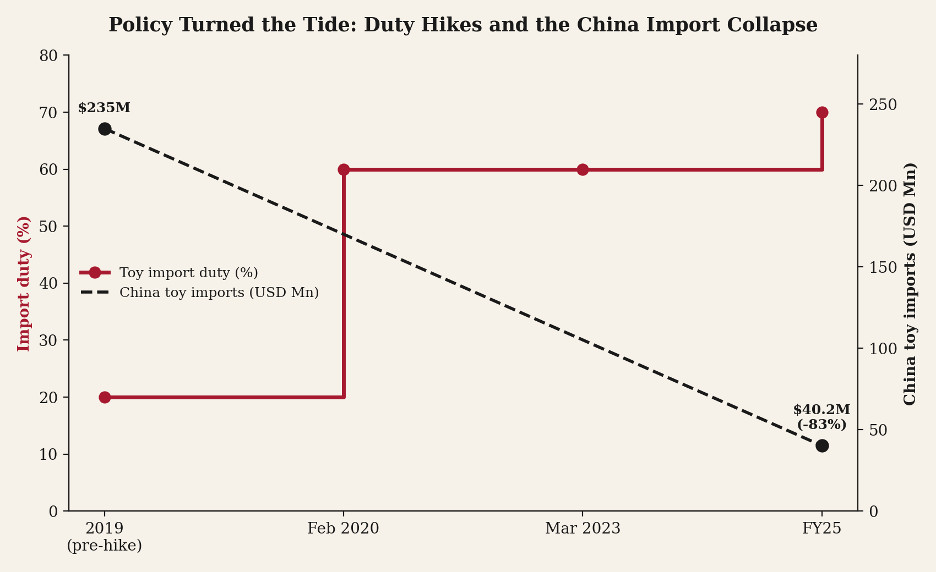
Government policy over the last five years has done more to reshape this category than most people realise. Toy import duty was raised from 20% to 60% in February 2020, then again to 70% in March 2023, and the effect on trade flows has been dramatic: Indian toy imports from China collapsed from USD 235 million in FY20 to just USD 40.2 million in FY25, an 83% decline. Over the same stretch, India has been building an export business, with toy exports growing 239% over a decade, from USD 96 million in FY15 to USD 326 million in FY23.
Since 2025, every toy sold in India, whether made locally or imported, must carry BIS certification and an ISI mark. That single rule raises the quality floor across the industry and structurally favours brands with the compliance discipline to meet it, at the expense of the low-cost, low-trust imports that used to flood the market. The government has backed this shift with real capital too: a proposed INR 3,489 crore PLI scheme for domestic toy manufacturing, a ‘Toy Hub of the World’ scheme announced in the FY25 Budget for cluster development and skilling, and 19 toy manufacturing clusters now operating across Karnataka, Uttar Pradesh, Maharashtra, and the NCR with shared testing labs and tooling support. Taken together, this is a structurally better environment for a domestic kids brand to launch in than it was five years ago.
What the market leader’s stumble teaches us
FirstCry remains the category’s dominant player, with Rs 8,548 crore in FY26 revenue and more than 1,136 stores, making it India’s largest baby and kids omnichannel platform. Its India multi-channel business, Rs 1,490 crore and 69% of revenue, turned both profit and free cash flow positive in FY25, and home brands now contribute more than 55% of that segment’s GMV, giving it a real structural margin advantage. GlobalBees, its brand aggregator arm holding D2C labels like Frootle, Wellspire, and The Clownfish, added Rs 460 crore with 28% growth in core categories.
But growth and the stock have both slowed, and the reasons are instructive for anyone entering the space. Diapers, roughly 15% of FirstCry’s GMV, are exactly the kind of high-frequency replenishment category that Blinkit, Zepto, and Instamart are now capturing through quick commerce. Amazon and Flipkart’s cross-category scale lets them compress fulfilment costs below what a specialist retailer can match. GlobalBees has been a drag operationally, with a 2025 insolvency petition and leadership churn. And compliance is no longer a paperwork exercise: BIS seized Rs 1.4 crore of non-certified product from a Bengaluru warehouse in May 2025. The lesson is that even the category leader is vulnerable at the replenishment end and in aggregator sprawl, which is precisely where a focused, compliant, design-led challenger can take share.
Who else is already building here
The competitive set is more crowded than it looks at first glance, but crowded in ways that reveal the gaps rather than close them. R for Rabbit has built a near-breakeven business on strollers and car seats, Rs 251 crore in FY25 revenue, growing 47.6% year on year, and recently raised a USD 27 million Series B. Mamaearth and Himalaya BabyCare own the toxin-free and ayurvedic baby care narrative. On the international side, Smiggle is trending hard as a back-to-school brand for 2026, Hamleys under Reliance Brands has made India its largest market at USD 44 million in 2024, and LEGO still dominates STEM toys through wholesale distribution.
The startup layer is where the real signal is. Kidbea has hit Rs 100 crore ARR in sustainable bamboo kidswear and closed a Series A in 2026. Includ crossed Rs 72 crore in revenue in under two years as a kidswear marketplace. PlayShifu has built a Rs 99.8 crore AR and STEM toy business on USD 35.8 million raised, proof that an Indian-built, culturally relevant toy brand can compete directly with LEGO and Mattel. Loopie, founded in 2025, is a design-led India-first stroller and car seat brand still early in its rise. Slurrp Farm has built a Zepto-partnered millet snacks business on USD 18.3 million raised. Each of these is a proof point that a specific, well-defined niche in this market can scale fast, even against much larger global incumbents.
Where the actual whitespace is
Four gaps stand out clearly once you line the data up.
The Rs 500 to 1,500 kidswear band sits above the unorganised mass market and below the saturated premium, western-style brands, and it is currently underserved despite the early traction Includ and Kidbea have both shown. Indian STEM and educational toys are dominated by LEGO, Mattel, and Hasbro, yet almost no domestic player has combined STEM education with Indian cultural content, even as Flipkart saw 150% year-on-year growth in STEM toy sales as far back as 2021. Functional, stylish school bags remain an open category: no Indian brand has paired genuine functional design with strong aesthetics in the highest-volume bag sub-category, and style-led girls’ school bags are a small but sharply growing niche within it. And organic, natural baby care is being pulled by eco-conscious parenting demand, but the space is fragmented, with no single dominant Indian-origin brand having claimed it yet.
The verdict
Put the pieces together and two theses stand out as the highest conviction bets. Affordable-premium kidswear in the Rs 500 to 1,500 band and India-built baby gear both combine a validated pricing gap, early profitable comparables in Includ, Kidbea, and R for Rabbit, and policy tailwinds that are unlikely to reverse. The fertility base is stable, the middle class is expanding, e-commerce and quick commerce have solved distribution, and the government has made it structurally harder for cheap imports to compete on price alone. For anyone weighing whether to build a kids products company in India, the data says this is less a question of if, and more a question of which specific gap to fill first.
On open-source mythology, immortal characters, and why this might be the best time in history to build worlds from India
In August 2024, a Chinese game studio called Game Science did something that nobody, not even the most optimistic gaming analysts, expected. Their debut title, Black Myth: Wukong, sold 10 million copies in three days.
Not a sequel. Not a franchise extension. A brand new IP, built by a relatively unknown team, rooted entirely in the 16th-century Chinese novel Journey to the West. By the end of its first month, it had moved over 20 million units, making it one of the fastest-selling games in history.
Because what Wukong really proved wasn’t that a Chinese studio could hang with the best in the world. It proved that a story rooted deeply in one culture’s mythology could travel globally without diluting itself. The Monkey King didn’t need to be Westernised to sell in America. He just needed to be brilliantly rendered.
I’ve been thinking about that a lot lately. Because the question it raises for India is obvious and uncomfortable: we have, conservatively, the richest mythology on the planet. We have one of the world’s largest gaming audiences. We have a film industry that moves hundreds of millions of people every year. And yet, where is our Wukong?
This piece is my attempt at an answer. Or at least, a map of where the answer might be hiding.
The unfair advantage nobody talks about
Here’s a thought experiment. Imagine you’ve built a character that people love. Not a product, not a service, a character. A person (or god, or demon, or talking mongoose) that lives in people’s heads.
Now imagine you own the rights to that character.
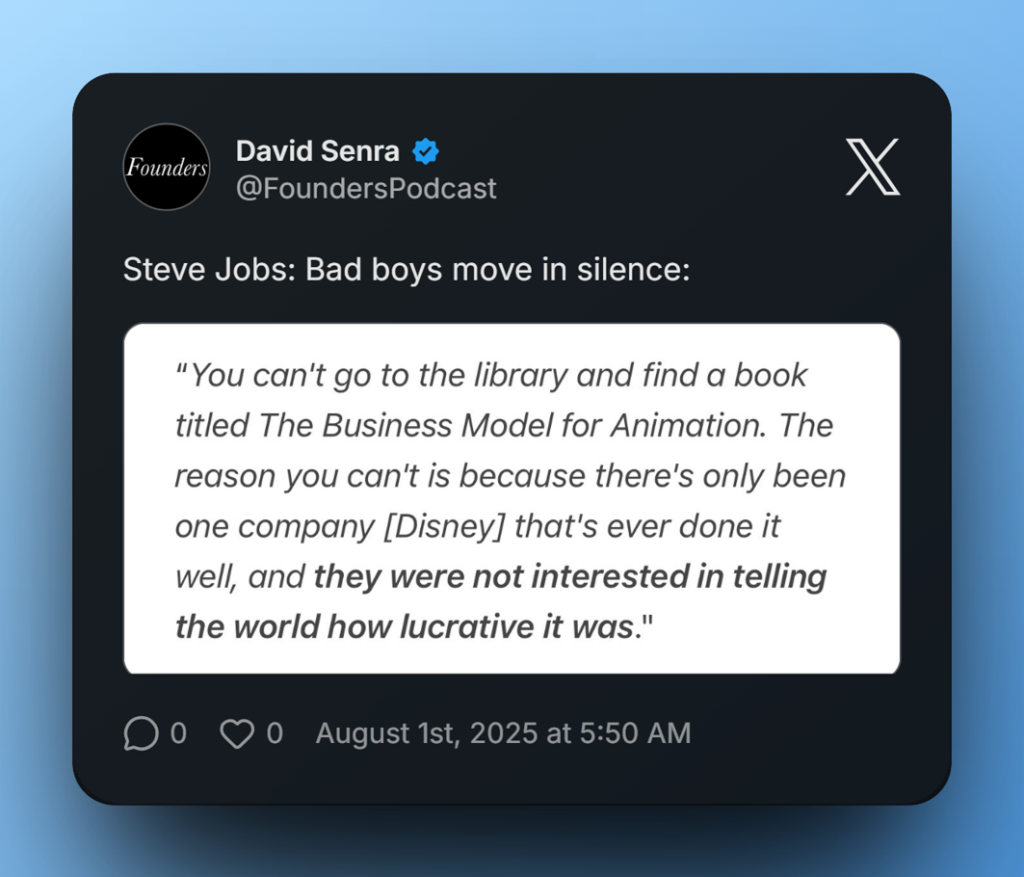
You can put them in a film. A game. A TV show. A theme park ride. A clothing line. A Seiko watch (more on that in a minute). You can license that character to anyone who wants to borrow the emotional connection your audience has already built with them, and charge for the privilege. This can go on for decades. Centuries, even.
That is what IP, intellectual property, does. It creates a legal monopoly over a story. And when the story is good enough, that monopoly compounds in ways that almost nothing else in business can match.
The Harry Potter universe was valued at $25 billion in 2023. But here’s the thing. J.K. Rowling finished writing the books in 2007. The films wrapped in 2011. And yet the universe keeps generating value: Hogwarts Legacy sold 24 million copies in its first year. The Cursed Child has sold over fourteen million theatre tickets across nine years. A new HBO series is in production. The flywheel doesn’t stop because the story doesn’t die. It just finds new hosts.
Pokemon is three decades old. Mario is pushing 45. The fact that Pokemon Legends: Z-A sold 5.8 million copies in its first week, for what is roughly the 25th core game in the series, tells you everything about what happens when a character achieves immortality.
This is the business case for narrative IP. Not content. Not “entertainment.” Worlds. Worlds that can live across media, across decades, across borders. And the most interesting thing about this moment in India is that we’re finally starting to build them.
A quick detour through Seoul, Tokyo, and Shanghai
Before we get to India, it’s worth understanding how other countries pulled this off. Not because they hand us a playbook, every country’s path is different, but because the pattern is instructive.
Start with South Korea. In 1997, the Asian financial crisis gutted the Korean economy. The won collapsed. The IMF stepped in with a $57 billion bailout. It was, by every measure, a national humiliation.
What happened next was counterintuitive. As part of its recovery, Korea bet heavily on cultural exports. The government lifted long-standing censorship over the entertainment industry, and the Ministry of Culture began coordinating with broadcasters, music labels, and film studios to push Korean content overseas. Satellite television was expanding across East and Southeast Asia at the same time, and K-dramas flooded into that vacuum.
The rest is history. K-pop, K-dramas, Korean cinema, Korean beauty, Korean food, the entire Hallyu (Korean Wave) can be traced, in part, to a financial crisis that forced the government to think about culture as an export engine rather than a domestic luxury.
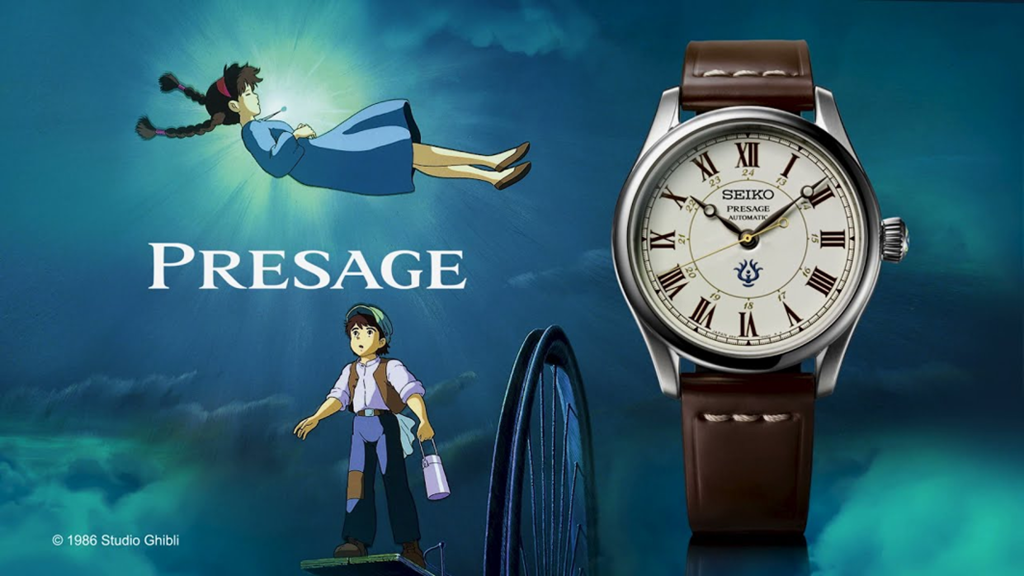
Japan followed a different but parallel track. METI (the Ministry of Economy, Trade and Industry) led the “Cool Japan” initiative, supporting the overseas distribution of anime, manga, games, and film. Japan’s content exports hit ¥4.7 trillion by 2023. That figure includes everything from One Piece to Final Fantasy to Studio Ghibli. Speaking of Ghibli, they collaborate with Seiko almost every two years to release limited-edition watches under the Presage collection. Those watches are impossibly hard to get. I know because they’re a dream of mine. But what they really represent is two beloved, proudly Japanese institutions finding each other, and the world lining up to buy the result.
And then there’s China. Both Ne Zha (2019) and Ne Zha 2 (2025) broke records. Ne Zha 2 became the highest-grossing animated film of all time, the first to cross $2 billion at the global box office. Wukong did the same for gaming.
In all three cases, the sequence was similar. The government creates the conditions. Industry builds the stories. The stories reshape how the world perceives the country. Ask the average 25-year-old in Berlin or São Paulo what they know about South Korea and you won’t hear about the IMF bailout. You’ll hear about Squid Games.
Which brings us home.
India has been here before
The funny thing is, India isn’t starting from zero. We’re starting from a position most countries would envy, we just haven’t fully recognised it yet.
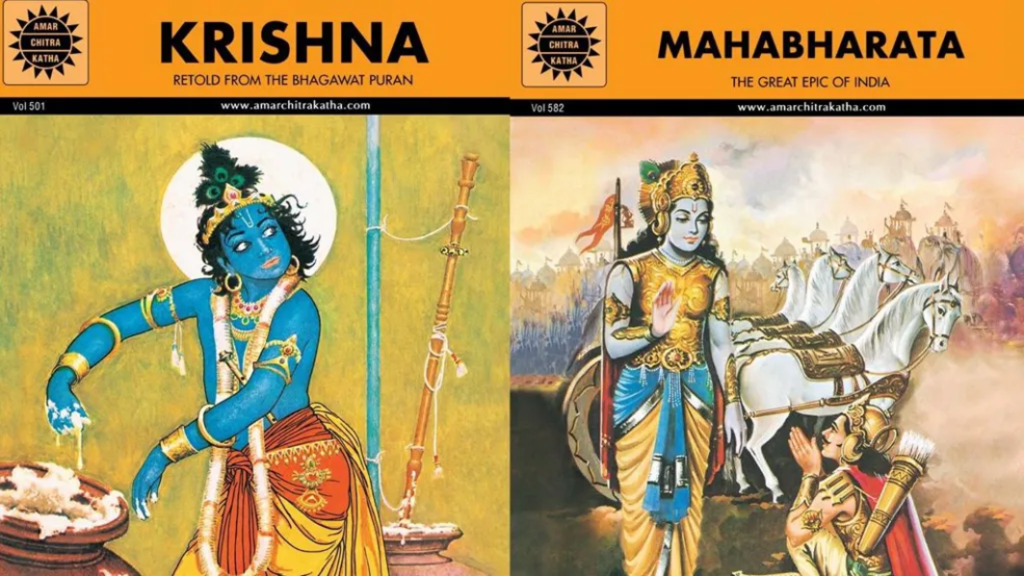
Go back to 1967. A man named Anant Pai is sitting in the audience of a quiz show and watches Indian children correctly answer questions about Greek mythology while fumbling on questions about the Ramayana and Mahabharata. He’s so bothered by this that he creates Amar Chitra Katha, a comic book series that would eventually span over 600 titles in 20 languages, sell over 5 million copies annually, and become the way an entire generation of Indians first encountered their own mythological heritage visually.
(Credits: BBC)
That was world-building. It happened in India. In 1967.
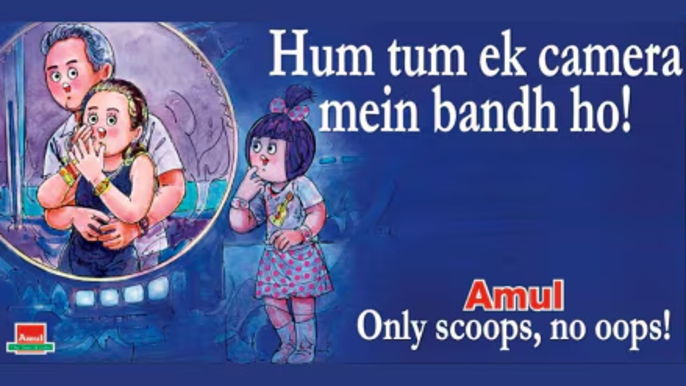
Tinkle and Suppandi built fandoms that persisted across generations. Chhota Bheem, love it or hate it, has aired for over a decade and reached audiences in nearly 190 countries. The Amul girl has been doing topical commentary since 1966, which is basically the world’s longest-running meme. These are Indian IPs with real staying power.
(Amul’s comic on the Coldplay concert controversy)
And yet, for decades, India’s relationship with the global narrative economy was defined by something else entirely: service work.
DNEG, formerly Double Negative, has won 8 Academy Awards for Best Visual Effects. Their work spans Inception, Interstellar, Blade Runner 2049, Tenet, Dune. After a $200 million investment from Abu Dhabi in 2024, DNEG was valued at over $2 billion. Indian talent powered some of the most iconic visual moments in cinema history.
But here’s the catch. DNEG doesn’t own the IP. Neither do the hundreds of Indian studios doing asset development, QA, and post-production for Hollywood and global gaming studios. Even today, an estimated 85-90% of India’s animation and VFX revenue comes from services, with only 10-15% tied to owned IP.
We’ve been building other people’s worlds. The shift that’s happening now, slowly, unevenly, but unmistakably, is that Indians are starting to build their own.
The open-source advantage
Here’s where things get interesting.
Indian mythology is, in effect, open-source. The Ramayana, the Mahabharata, the Puranas, the Jataka tales, no single entity owns them. Anyone can use them. Anyone can reinterpret them.
That’s not a weakness. It’s possibly our greatest asset.
Think about what Rick Riordan did with Greek mythology. Percy Jackson & the Olympians is built on stories that are thousands of years old and belong to no one. Riordan just added a layer, modern kids, a summer camp, a fresh voice, and the result was over 180 million books sold, film adaptations, and a Disney+ series that clocked over 110 million hours streamed in its first season.
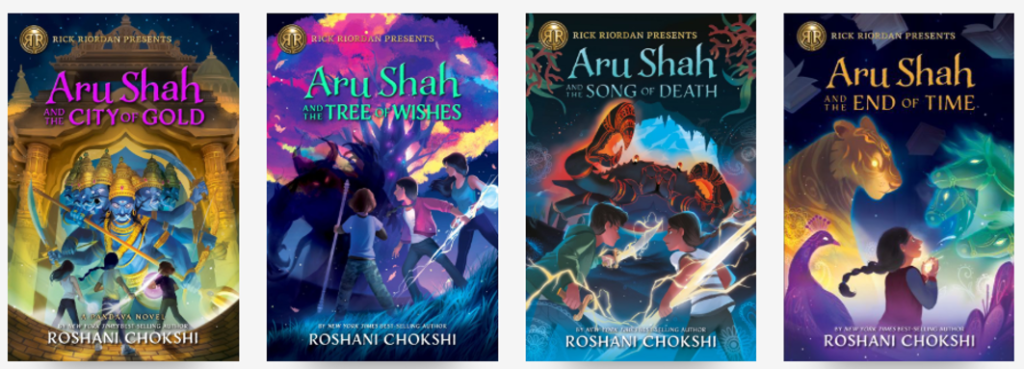
He’s since expanded to Hindu mythology through Roshani Chokshi’s Aru Shah series under his imprint. Let that sink in for a moment. An American publisher is building commercially successful universes on top of Indian mythology, because the source material is that rich.
(The adventures of Aru Shah under Rick Riordan’s imprint)
Enola Holmes did something similar with Sherlock, a public domain character reimagined through a new lens. Hades, the video game, took Greek myths and reinterpreted them with contemporary sensibilities to massive critical and commercial success.
The lesson is simple: reverence doesn’t require repetition. Reinvention is not disrespect, it’s how stories stay alive.
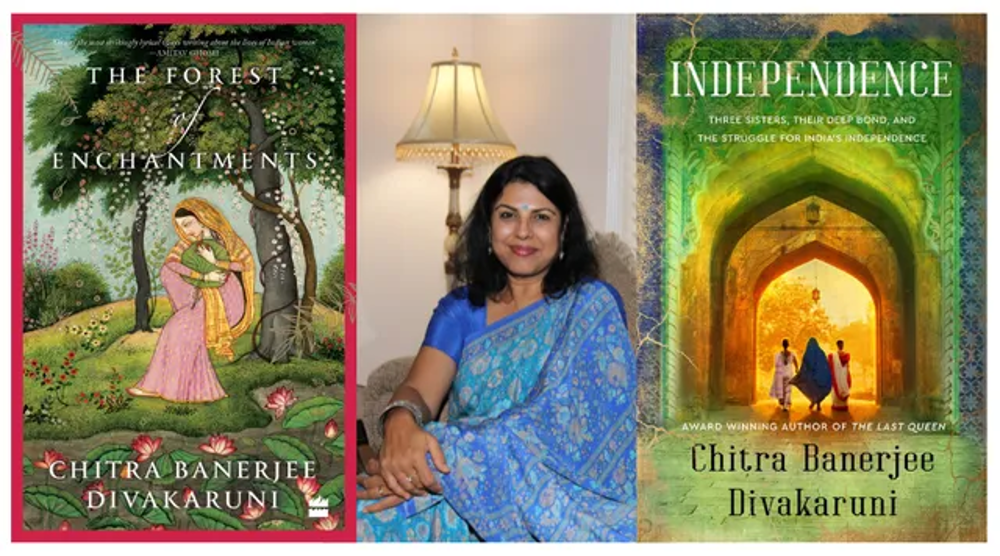
And this is exactly what’s starting to happen in India. Chitra Banerjee Divakaruni’s The Palace of Illusions retold the Mahabharata through Draupadi’s eyes. The Forest of Enchantments reframed the Ramayana through Sita’s inner life. These weren’t gimmicks, they were perspective shifts that unlocked entirely new audiences.
(It would be impossible to mention this point and not give a shout-out to Chitra Banerjee Divakaruni’s incredible books)
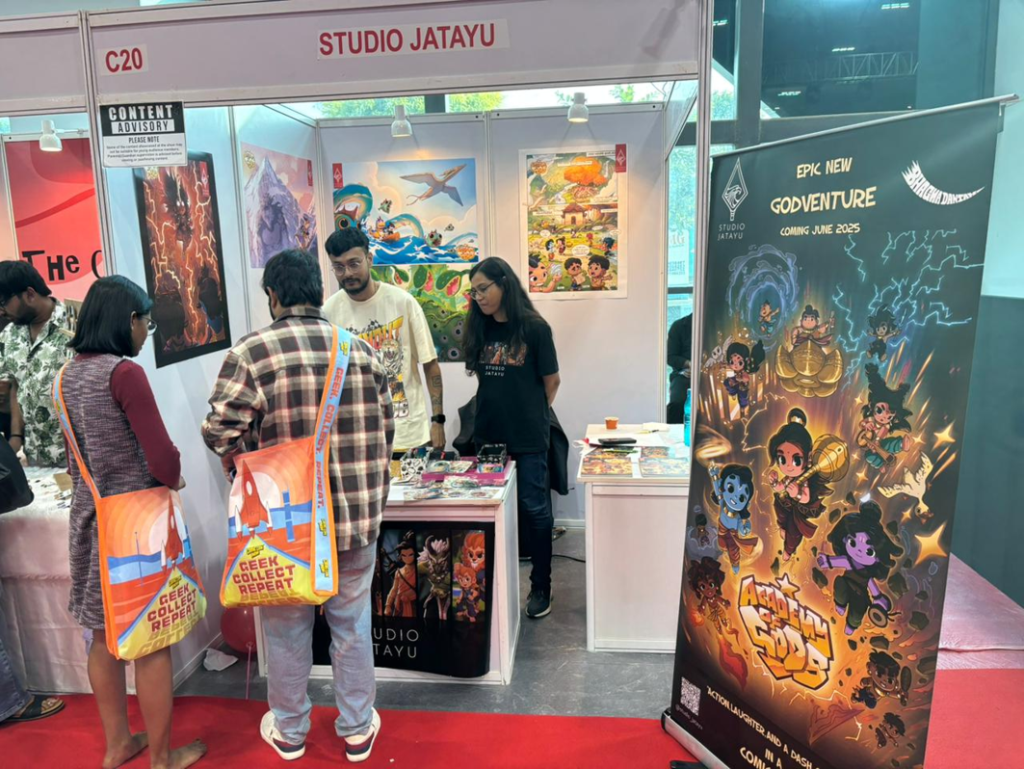
At Bengaluru Comic Con 2025, I stumbled across a booth for Studio Jatayu. Their concept? Hindu gods attending school together. It sounds absurd until you remember that Percy Jackson is literally “Greek gods, but their kids go to summer camp.” The format isn’t new. The mythology is.
The Lokah universe crossed INR 300 crore at the global box office, becoming the highest-grossing Malayalam film ever. Mahavatar Narsimha, built around one of the lesser-known avatars of Vishnu, also crossed INR 300 crore, and announced an entire cinematic universe from day one.
We’re no longer asking “can Indian mythology travel?” Kantara answered that question. A film steeped in Tulu folk traditions, Bhoota Kola rituals, and a hyper-local identity that made zero concessions to mainstream palatability, it crossed INR 400 crore globally. Not because it was “accessible.” Because it was specific. Specificity, it turns out, is what travels.
The better question now is: how far can this go, and what forms can it take? Because once an IP proves it can move audiences, it starts attracting something else entirely: brand capital. The same flywheel that turns Pokemon into a lunchbox empire or Marvel into a sneaker collaboration pipeline is available to any Indian IP that earns enough cultural gravity. We’re not there yet. But the trajectory is right.
Vibe is the moat
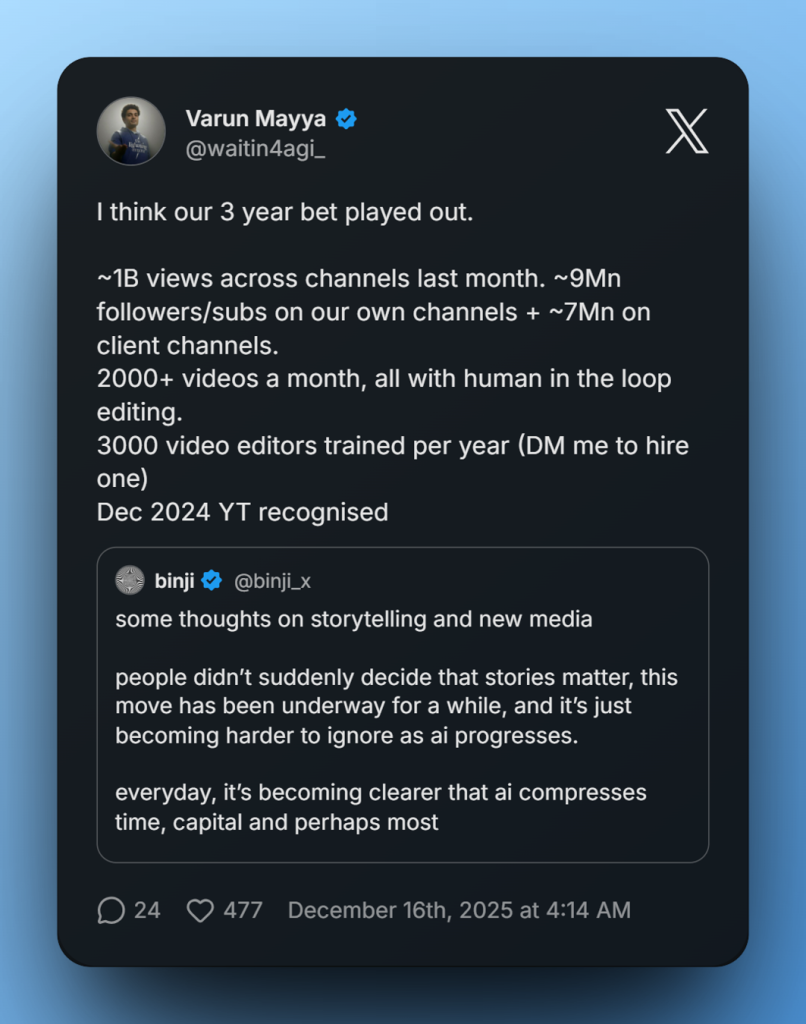
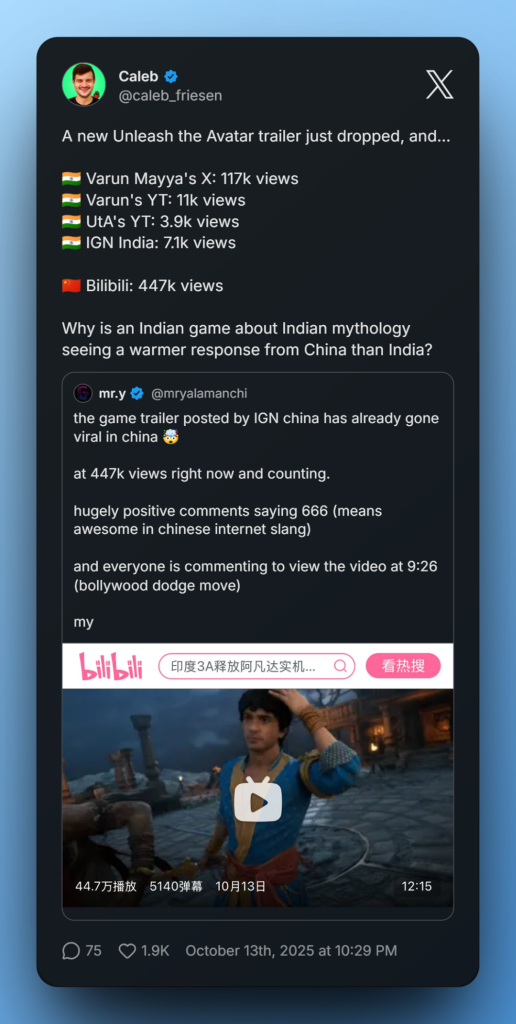
While working on this piece, I had a conversation with Varun Mayya, the person behind Aeos Labs, whose game Unleash the Avatar pulled something off that still blows my mind.
Their trailer didn’t just do well in India. It went big in China. On IGN China, it pulled tens of thousands of comments. On Bilibili, China’s answer to YouTube, and the platform where Wukong built its initial fanbase, engagement was within striking distance of GTA VI trailers. For a debut title from an Indian studio, rooted in Indian mythology, that is almost absurd.
Varun’s take on why it worked reframed how I think about this whole space. He talked about how game economics are changing: asset scanning, AI-assisted workflows, and better tools mean small teams can build large worlds at a fraction of what it cost even five years ago. Aeos Labs scanned the entire town of Chanderi to build hyper-real environments. The budget ceiling that once kept Indian studios out of AAA territory is dropping fast.
But the insight that stayed with me wasn’t about technology. It was about taste.
“Story is often the smallest risk,” Varun said. “International markets are saturated with narratives. What differentiates is vibe.”
And then he dropped a line I haven’t been able to stop thinking about:
“There are fewer than 20 people who have actually studied why Dangal worked so well in China.”
That sent me down a rabbit hole.
Dangal grossed over $200 million in China alone, more than it made in India. Aamir Khan became so beloved that Chinese fans gave him the nickname “Mi Shu” (Uncle Aamir). But the why goes deeper than star power. Khan’s films acted as a kind of mirror for a Chinese audience grappling with the pressures of the Gaokao education system, rapid modernisation, shifting gender roles, and patriarchal traditions. The emotional grammar of Bollywood, the big feelings, the dramatic stakes, the hero who fights the system, resonated on a frequency that Hollywood couldn’t reach.
Varun’s claim, and I think he’s right, is that Bollywood’s over-the-top emotional language is uniquely suited to games. It’s expressive, dramatic, stylised. The hero saves the day. In fact, Bollywood-style character mods already appear in games like Wukong and Sekiro: Shadows Die Twice. India doesn’t have an equivalent of Chinese wuxia, but Bollywood itself fills that gap.
There’s a larger point here. India’s competitive advantage in the global IP race won’t be technical sophistication (we’ll get there, but we’re not there yet). It’ll be emotional sophistication. We’re a country that produces stories drenched in feeling, melodrama, sacrifice, duty, love, betrayal, and it turns out the world has an appetite for exactly that, if the execution is right.
The cringe tax (and how to avoid paying it)
That last bit, “if the execution is right”, is the whole ballgame.
Because here’s the uncomfortable truth: Indian IP has a credibility problem. Not because the stories are bad. Because too many attempts at bringing them to screen have been.
The contrast between Baahubali and Brahmastra makes this painfully clear. Baahubali worked because its world, tone, and writing were internally consistent and confident. It didn’t apologise for being Indian. It didn’t try to be a Marvel film. It was its own thing, done with conviction.
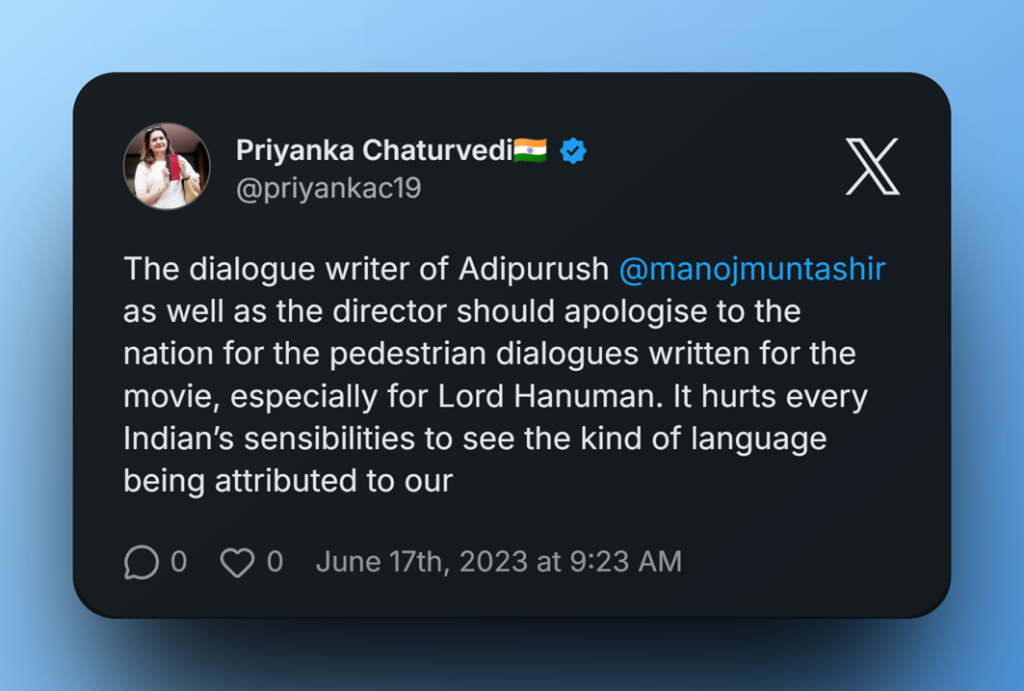
Brahmastra, despite enormous scale and ambition, stumbled on script and dialogue. Adipurush was worse. The budgets were there. The intent was there. What was missing was craft.
Half-hearted attempts don’t just fail locally, they actively damage the credibility of Indian IP globally. If you’re a distributor in Southeast Asia or a platform buyer in North America, every bad Indian fantasy film makes you less likely to bet on the next one. Cringe is a tax no IP can afford to pay.
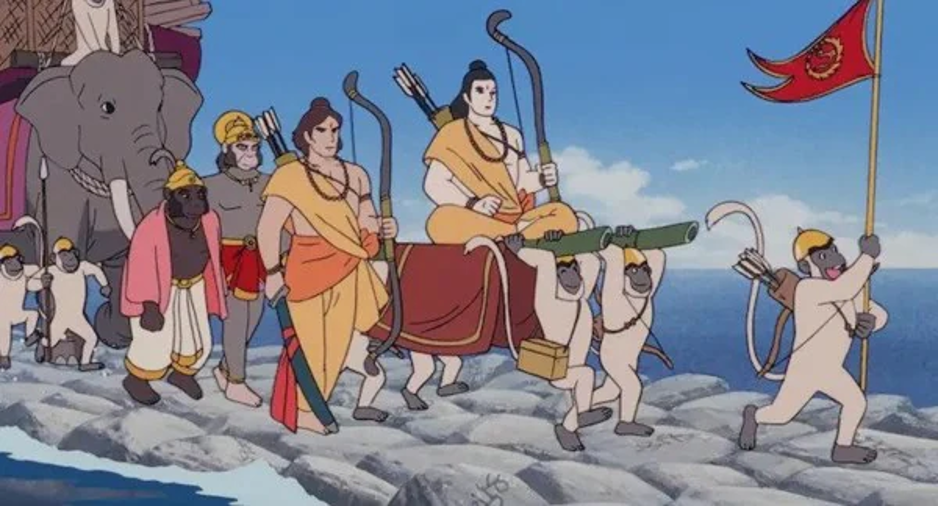
There’s also a sensitivity dimension that anyone working with Indian mythology needs to understand. In the early 1990s, a Japanese artist created an animated adaptation of the Ramayana. The backlash was severe enough to shut down similar cross-cultural projects for years. That film has since been reconsidered and even adored, but at the time, the hostile reception was real.
(A film I hold dear in my heart, the Japanese animated adaptation of the Ramayana has a fascinating history, from eventually overcoming its hostile reception to achieving widespread adoration decades later.)
Cultural sensitivity in India has eased over time, but it hasn’t disappeared. Supernatural faced heat for its portrayal of Hindu gods. Episodes of Record of Ragnarok were banned. The lesson isn’t that these stories shouldn’t be told. It’s that they must be told with care. Intent alone doesn’t cut it. Execution matters. Respect matters. And “respect” doesn’t mean timidity, it means knowing the source material well enough to reinvent it without cheapening it.
The worlds being built right now and the blueprint (if there is one)
Let me show you what “right” looks like in practice, because it’s already happening.
Gaming is the sharpest edge. India is seeing a wave of games that want to compete globally, not just culturally but technically. Nodding Head Games’ Raji: An Ancient Epic got critical success and international recognition, and they’ve since announced Raji: Kaliyuga. Tara Gaming is developing Age of Bharat with Amish Tripathi and Amitabh Bachchan. Ayelet Studio is building Son of Thanjai, set in 11th-century South India. These projects aren’t equals to God of War yet. But the fact that they now have the potential to compete is itself a massive shift.
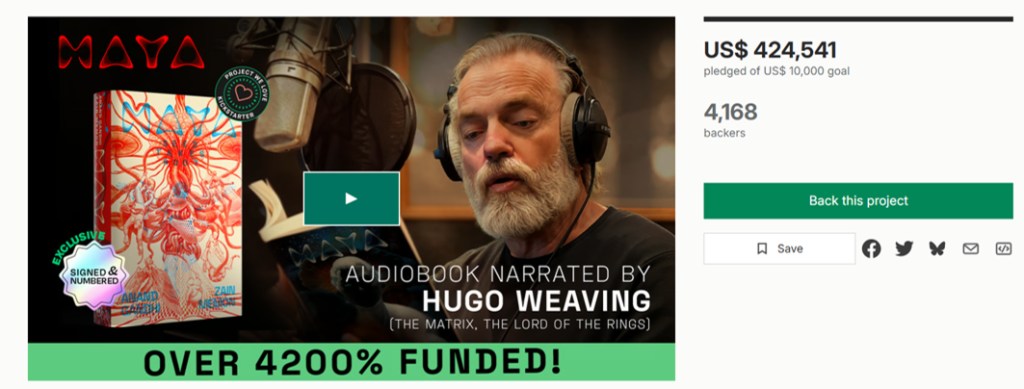
Transmedia-first universes are emerging too. One project I love is Maya Universe, created by Zain Memon (who made the breakout board game Shasn) and filmmaker Anand Gandhi. Maya is a neo-mythological world planned from day one across books, board games, potential video games, and future screen adaptations. Unlike many Indian projects that rely on domestic financing, Maya raised over $420,000 on Kickstarter, most of it from backers in the United States. That’s the universe coming first, and the formats following. World-building as infrastructure, not content. That instinct is what separates one-off successes from durable IP.
Story factories are becoming IP factories. A conversation with Ranjeet from Pratilipi crystallised this for me. He talked about how IP creation that once took 10-15 years can now happen in weeks. A single story can begin as text on Pratilipi, test its resonance, and rapidly evolve into audio, video, or screen adaptations. Shaitan Se Samjhauta, which started as a story on their platform, crossed 50 million views on YouTube as a TV series. That pipeline, text to audio to video to franchise, is the kind of plumbing that builds durable IP at scale.
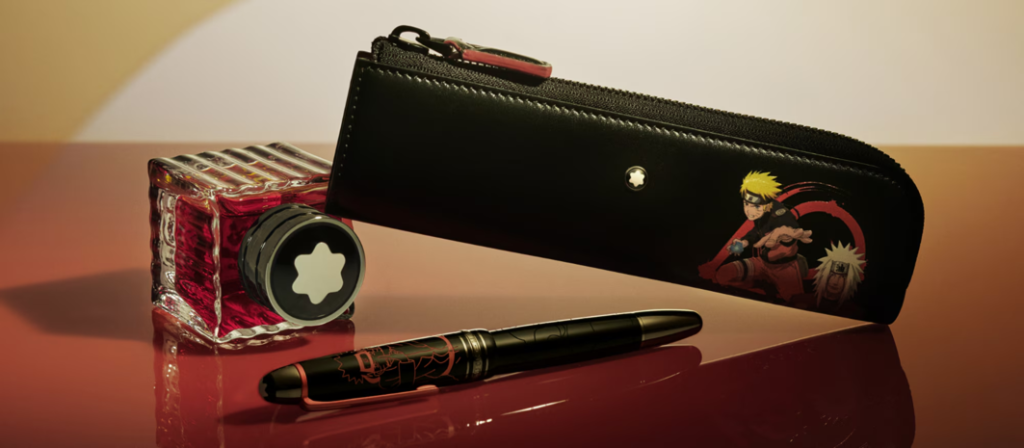
Merchandising is wide open. As someone who collects LEGO sets, I can tell you: the appeal isn’t the bricks. It’s the nostalgia and emotional connection to IPs like Indiana Jones or Hocus Pocus. Adults aren’t buying toys, they’re buying memory. Indian IPs have barely scratched this surface. BWO and its subsidiary A47, which produces everything from official ISRO merchandise to cultural collectibles, shows what’s possible. If Montblanc can collaborate with Naruto, cross-cultural IP partnerships aren’t experimental anymore, they’re proven.
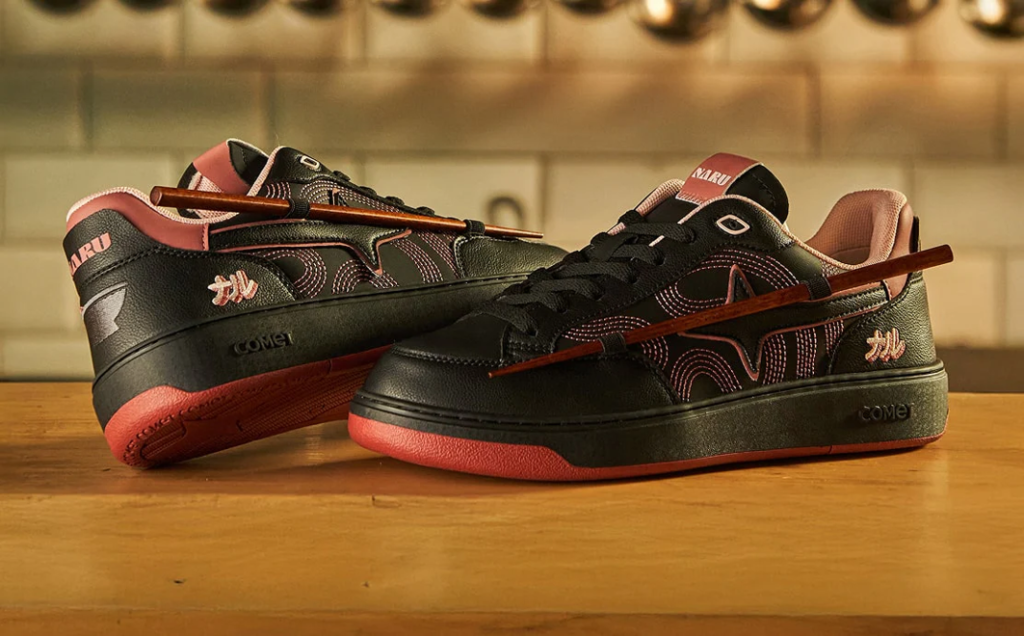
And then there are the collabs happening right here. Comet, an Indian sneaker brand, collaborated with Naru, a ramen fine-dining restaurant in Bangalore. The sneaker sold out almost instantly. Twenty years ago, a sneaker brand teaming up with a ramen restaurant would have sounded like a fever dream. Today, it’s what happens when two brands figure out they share a cultural vocabulary, and their audiences do too.
(I’ve been to Naru twice, by the way. It’s actually pretty good. You should give it a shot.)
For all the momentum in mythology-based IP, there are entire genres of Indian storytelling that remain almost completely unexplored.
Consider India’s relationship with cricket. Japan turned volleyball into Haikyuu!! and football into Blue Lock, animated series with massive global followings. India has the world’s most emotionally invested cricket audience and… nothing comparable. Where is the larger-than-life animated cricket universe?
Indian science fiction barely exists as a commercial genre, despite the source material being extraordinary. China’s Three-Body Problem drew on Chinese philosophy and history while engaging with modern physics, and became a global phenomenon. Indian philosophy and cosmology, the concept of cyclical time in the Vedas, the multiverse in Jain cosmology, the mathematical traditions of ancient India, could be the backbone of an equally compelling sci-fi universe.
Horror and folklore? India has millennia of material, churails, pishachas, vetala tales, and a massive domestic appetite for the genre. The enduring success of CID, including its resurgence on streaming platforms, proves that appetite for Indian crime and thriller narratives is durable.
What’s stopping a locally rooted Indiana Jones-style adventure about lost Harappan cities or forgotten manuscripts from Nalanda? What’s stopping a Byomkesh Bakshi 2.0 from emerging as a modern franchise?
I don’t think there’s a prescriptive playbook here. But there are a few observations that feel hard to argue with.
The first is that the next Disney won’t look like a movie studio. It might look like Pratilipi. It might look like Aeos Labs. It might be a platform that doesn’t create stories at all, but builds distribution and community infrastructure for the people who do. India has an abundance of storytellers. It also has an abundance of software engineers. What’s emerging now is the connective tissue between the two.
The second is that AI is lowering the barrier to experimentation in ways that matter. Not as a replacement for human creativity, god, no, but as a tool for prototyping, testing aesthetics, and reducing iteration cycles. We’re seeing AI-augmented Mahabharata series on JioHotstar, Instagram creators building speculative worlds using AI-generated visuals, and storytellers using AI to extend their reach without losing their voice. The cost of asking “what if?” has never been lower.
The third, and maybe the most important, is that what makes stories travel isn’t technology or budgets. It’s an emotion. The particular ache of wanting to make your family proud while also wanting to be free. The comedy of a joint family. The fury of injustice. India produces these feelings in industrial quantities. We also produce the people capable of turning them into films, games, comics, and platforms. What we lacked, for a long time, was the will to experiment. That’s the part that’s changing.
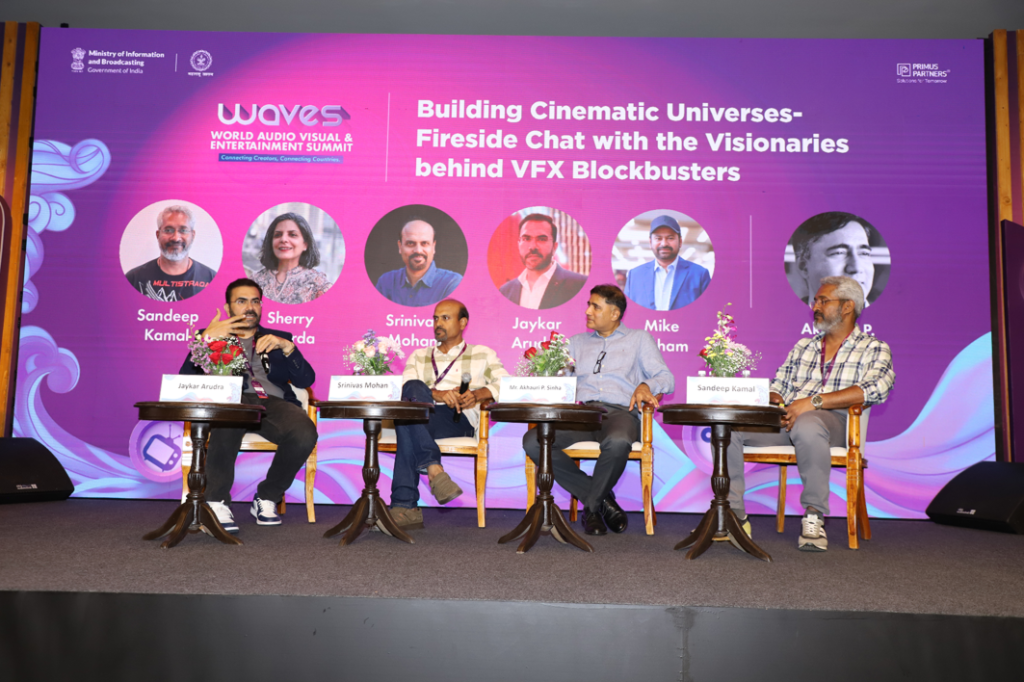
The government seems to recognise this too. The WAVES summit, the national AVGC-XR policy, state-level initiatives in Karnataka and Maharashtra, the new Indian Institute of Creative Technologies in Mumbai, the institutional scaffolding is being erected. Whether it’s enough, and whether it’s fast enough, remains to be seen. But the direction of travel is clear.
The economic fundamentals reinforce this case. India’s media and entertainment sector is projected to cross USD 100 billion by 2030, driven by digital consumption and creative-tech growth. The country enjoys a 40–60 percent cost advantage in animation and VFX services, supported by a large skilled workforce. Nearly 25 percent of viewership for Indian OTT content already comes from overseas audiences, underscoring that Indian stories are no longer consumed only at home.
Institutionally, this shift is becoming tangible. In 2024, the Indian Institute of Creative Technologies (IICT) was unveiled in Mumbai as the National Centre of Excellence for AVGC-XR, bringing academia, industry, and government onto a single platform. At the state level, momentum is accelerating. Karnataka implemented one of India’s first dedicated AVGC-XR policies (2024–2029), focused on skilling, incubation, and global competitiveness. Maharashtra followed with its AVGC-XR Policy 2025, backed by a INR 3,268 crore financial plan and a roadmap extending to 2050, aimed at investment attraction, job creation, and production-cluster development.
(Still from WAVES 2025 | 1-4 May 2025 | Jio World Centre, Mumbai)
Most of these bets won’t pay off. That’s fine. The point isn’t that every Indian IP will become the next Pokemon. The point is that for the first time, the conditions exist for it to happen: the tools, the talent, a massive domestic market, growing global appetite, and platforms that didn’t exist five years ago.
This is India’s narrative gold rush. And if you’re a creator, a builder, a founder, or just someone who grew up reading Amar Chitra Katha and always wished those worlds were bigger, the door hasn’t just opened. It’s been kicked off its hinges.
1K is a hyperlocal omnichannel grocery chain focused on fulfilling the aspirations of ‘Real Bharat’. The business was founded in 2018 by Kumar Sangeetesh, Sachin Sharma, and Abhishek Halder. The founders believe that Kirana entrepreneurs will play a pivotal role in building a sustainable channel to deliver wow micro-experiences to aspiring consumers of Bharat. The ultimate goal is to create a seamless flow of goods from brands to consumers and overcome the shortcomings of traditional distribution systems with the help of their in-house technology-enabled platforms and “smart” warehousing.
Vision and Mission
To revolutionise the grocery shopping experience for the non-urban population of Real Bharat.
Building “Bharat’s” first “omnichannel” distribution network that brings consumers’ aspirations closer to them.
Genesis
Two of the co-founders were working together at one of India’s largest logistics companies; they identified that one of the biggest struggles for brands was to reach and distribute their products in smaller towns of the country. Due to broken distribution networks, product availability has always been a massive issue in smaller towns/cities, despite rising customer demand.
Hence, they decided to solve this problem by making an efficient and cost-effective distribution model by aggregating the distribution rights of multiple brands.
Market Opportunity
Less than one lakh people inhabit 65% of towns in the country. There are about 7,000 towns with 5,000 to 100,000 residents. They are trying to serve a market worth a solid USD 150 billion. Their approach is distinctive in that it prioritizes grocery sale purchases, which account for 70% of consumer spending in such markets.
5-year Plan
Over the next five years, they want to increase their market share in these markets by 5%, making them one of the leading retailers in the country. It is crucial to keep in mind that more than 25,000 regional microentrepreneurs will support this as they develop the company and satisfy the customers’ needs in these areas.
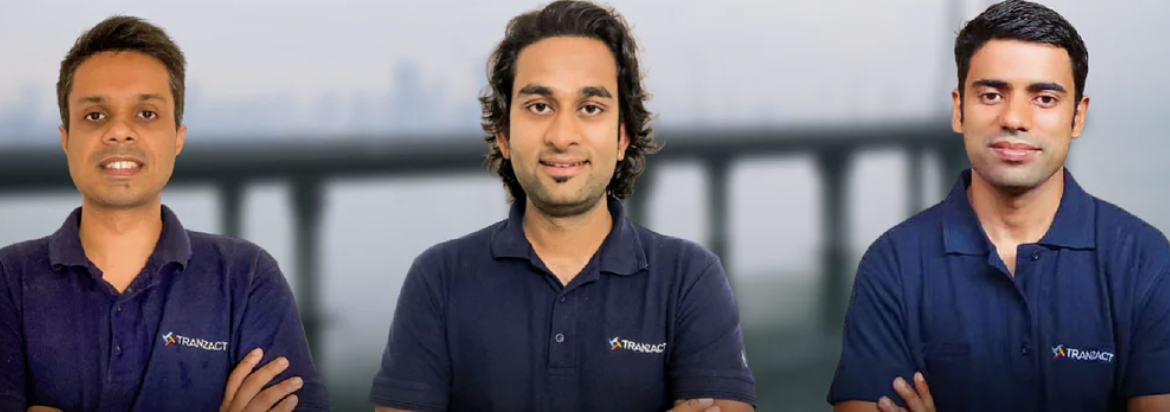
TranZact is a freemium digitisation software for 14MN+ SMEs Manufacturers & Traders, empowering them by digitising business workflow right from sales to dispatch.
With scalable distribution and engaging software, they are capturing real transaction data, which becomes the foundation to build a transaction-backed marketplace at scale.
Vision and Mission:
Empowering SMEs owners to grow their business through digitisation.
Building a digitisation platform for 14MN+ SMEs to convert their business data into actionable insights.
Genesis:
TranZact started with the idea of creating digital technologies for 14MN+ SMEs, which are still struggling with very old digital technologies. They felt that in today’s era of digitisation, even though the SME space is often ignored, it remains a very large sector, and if there is specific technology built for this space, the impact will be much larger and deeper.
Market Opportunity:
14MN+ Indian manufacturers and traders
5-year Plan:
Going to build a transaction-backed market network platform with over $500MN in revenue coming from multiple revenue streams like software and transactions.
HealthQuad and British International Investment (BII) join earlier investors W Health Ventures, Kae Capital, pi Ventures, and Google Assistant Investments.
Funds will enable access to clinically evidenced digital therapeutics (DTx) in the US, UK, India and other global markets.
Will enable further reach through multi-lingual support and access via alternative technologies.
Follows FDA Breakthrough Device Designation and clinical evidence of a Therapeutic Alliance.
Wysa, the leading AI digital platform for mental health, today announces it has secured $20M in financing. Wysa will use this capital to further expand into the US, UK, India and other global markets across enterprises, payors, and providers as well as improve wider usability through multi-lingual support and easier access via WhatsApp. The round is led by HealthQuad, who along with British International Investment (BII), the UK’s development finance institution, joins earlier investors W Health Ventures, Kae Capital, Google Assistant Investments, and pi Ventures amongst others.
Globally, there is a huge demand-supply gap in the mental health space. One in eight people in the world lives with a mental disorder, according to the World Health Organisation. With high treatment costs and limited access to qualified therapists, employers, healthcare providers and insurers are seeking ways to help people manage their mental health and well-being through clinically proven, cost-effective and scalable solutions.
Wysa uses AI (Artificial Intelligence) to triage users according to their personal needs, guiding them through appropriate, evidence-based CBT (Cognitive Behavioural Therapy) exercises within the app, towards other mental health services or crisis support. Wysa’s platform provides employers and health services insights into usage rates of Wysa and digital well-being tools while maintaining user privacy.
Wysa has achieved FDA Breakthrough Device Designation for its AI-based digital mental health conversational agent for adults with a diagnosis of chronic musculoskeletal pain and associated depression and anxiety. Additionally, clinical trials have validated Wysa’s efficacy and published peer-reviewed results show that therapeutic emotional bonds formed by Wysa are equivalent to human therapist relationships. The company has, to date, achieved a revenue-generating user base of over 4.5 million people across 65 countries. Clients include Accenture, Colgate-Palmolive, Aetna International, Swiss Re, the National Health Service (NHS) in the UK, and the Ministry of Health in Singapore.
Charles Antoine-Janssen, Chief Investment Officer, HealthQuad said: “We are thrilled to be part of the Wysa team. Wysa is developed in India and is marketed globally. The needs for Wysa are present all across, from high-income to low-income countries. Mental health triaging of patients using AI which is fast, effective and non-stigmatising for patients living in unaccepting societies answers a huge need in India, the rest of low-income Asia, Africa as well as the wealthiest countries of the world.”
“Wysa provides help across the care continuum – from the first point of access to digital therapeutics and companion alongside a clinician to ongoing monitoring & routine management thereby democratising access to mental health. FDA Breakthrough Device Designation status, user privacy further validated by Mozilla and real-time AI-CBT support makes Wysa one of the few clinically validated, privacy-focused and personalised solutions built for a global scale” added Ajay Mahipal, Director, HealthQuad.
Srini Nagarajan, Managing Director and Head of Asia at British International Investment added: “Good mental health is a crucial pillar for sound physical health which in turn promotes social and economic development. Through our investment in Wysa, BII is taking a holistic approach to supporting long-term productive economic prosperity by backing an innovative tech-enabled company that is increasing access to mental health services for low-income and rural individuals. We are excited to continue working with Wysa’s team to grow their offering and help improve health outcomes and quality of life for people.”
Ramakant Vempati, Co-founder, Wysa, said: “Wysa has not only been extremely successful as a consumer well-being platform but has also developed into a clinically validated, powerful tool to proactively manage mental health and well-being. Wysa meets people where they are, whether that means a little help with occasional workplace stress, right up to coping with debilitating pain, depression and anxiety. With this funding, we look forward to scaling up further and helping millions of more people.”
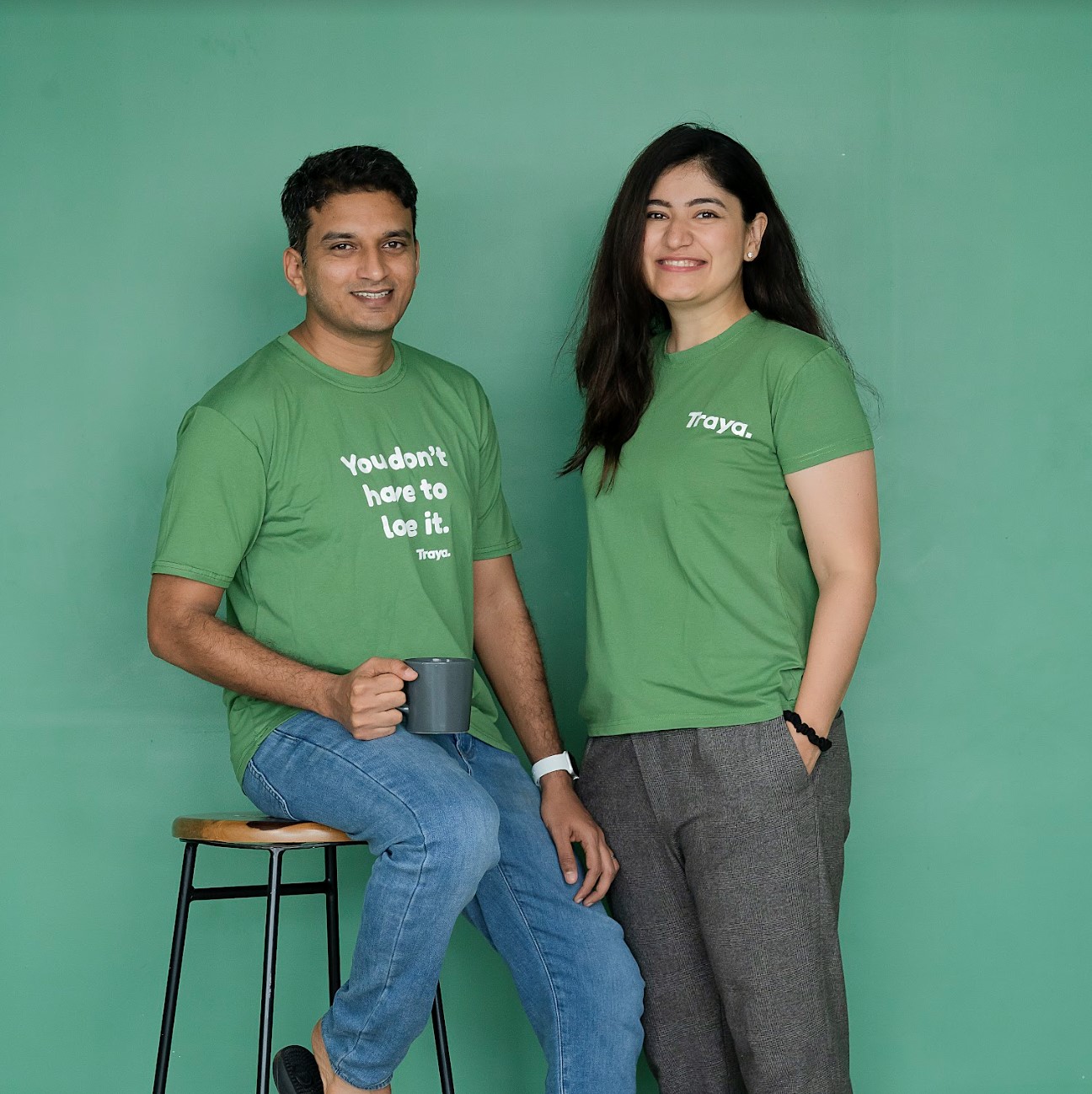
Brief about Traya
A one-product approach never works on hair loss or any other chronic condition. Traya combines the best of Ayurveda, Allopathy and Nutrition containing proven results to identify the type of hair loss, stage and the root cause behind it. Based on this, each person gets a doctor-prescribed treatment plan and a hair coach who guides the customer and tracks their progress.
Vision and Mission
Traya was started with just one goal in mind- to deliver visible hair growth results. We did everything from product and process to tech, keeping in mind the efficacy of the treatment. Back in 2019, Traya was sold to the first 55 customers through a basic landing page and they took the proprietary formulations (all-natural herbs + dermatologist prescribed + diet). They were closely observed for 4 months and a good 90% of them started seeing visible results. That is when we decided to launch a brand and seek investment. We knew we had hit a gold mine.
Genesis
Traya is an outcome of the cofounders’ personal journey as a couple. About 3 years ago, co-founder Altaf struggled with a number of health issues including uncontrollable thyroid levels accompanied by accelerated hair loss (he faces genetic male pattern hair loss) and weight gain, which was compounded by his hectic lifestyle. He went from doctor to doctor and couldn’t do much about his situation. We researched more and explored ayurveda and naturopathy diets. The three together changed our lives. Altaf’s hair regrew and his thyroid came under control. Even his endocrinologist was surprised. Even then the cofounders had no intention of starting a company. Almost a year later, by helping a lot of friends and family with chronic health issues including hair loss, they decided to take this space seriously. They realised that both of them were extremely passionate about solving chronic health issues that a millennial faces. On further research, hair loss was chosen as a disease line to begin. It was the most crowded but also the most corrupt. As they researched more on the diseases, its types, they realised nothing out in the market can ever work. The issue is considered cosmetic but it is internal. Thus, they took up the challenge to change the way the hair loss industry works.
Market Opportunity
The current hair fall market in India is broken. Many have a product-centric approach which is clearly not effective in delivering the results. Hair fall is a problem that needs to be addressed holistically and requires customization as per every individual’s root cause of hair fall. Out of the entire serviceable market, 125 million adults in India directly benefit from Traya’s offering and have the ability to afford it. The $12.5 Billion hair loss solutions market is up for grabs and Traya is aggressively growing to capture the entirety of the market while also changing the way a hair fall solution is approached and the results speak for themselves. In addition to the direct solutions to hair fall, Traya is also targeting the next line of products including anti-dandruff and cuticle damage.
5-year plan
We want to be synonymous with the terms hair fall and hair health and be known for our efficacy and honesty. On the product side, we are in research for no side effects and high-efficacy solutions for other hair concerns.
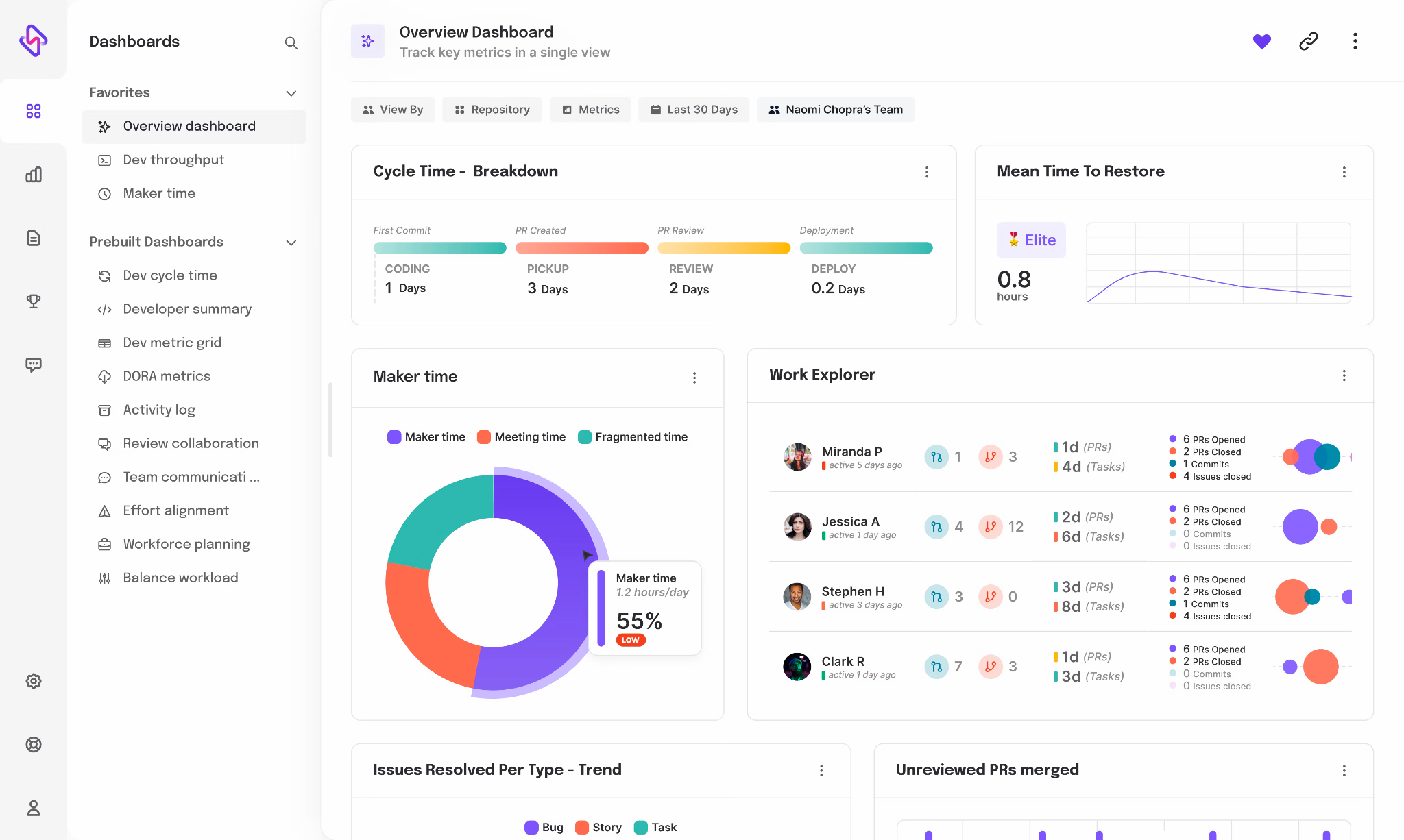
Brief about Hatica Hatica is a Software Engineering Analytics platform that helps managers and leaders build productive and happy engineering teams.
Vision and Mission The severe lack of visibility for Engineering managers in a world of distributed teams working across dozens of tools has made the job of engineering management harder than ever before. This naturally results in declining developer productivity and experience.
Hatica’s mission is to equip managers with a comprehensive Engineering management platform to provide them the much-needed visibility and insights into development work activity, processes, and quality to help them drive team productivity while ensuring well-being.
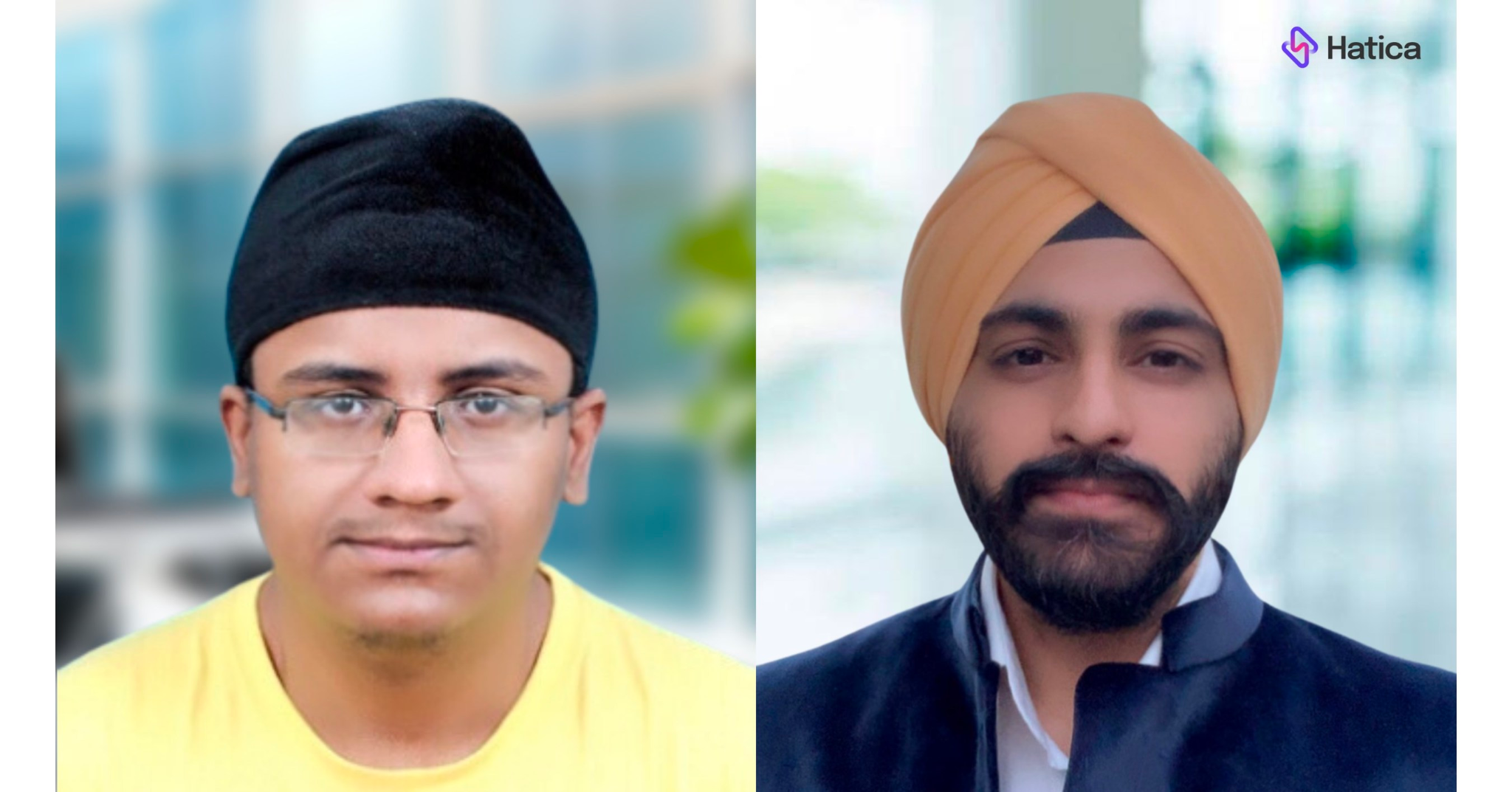
Genesis The idea came from the founders’ experience of having worked remotely even before the pandemic and having worked through developer productivity challenges before. Followed by countless zoom interviews with engineering leaders, managers, and developers across regions and industries, Naomi and Haritabh completed and launched the first version of Hatica in early to mid-2021.
Market Opportunity The trend of SaaS sprawl, combined with remote work becoming mainstream, has made engineering management even harder and the problem of developer productivity ubiquitous. This coupled with every organization requiring to be technology-first, driving demand for engineers, has provided us a tremendous pull from the customers with a sizable TAM.
5-year Plan Go from a sharp Engineering analytics tool to an Engineering Management Platform, empowering every engineering manager and leader out there to drive engineering excellence and wellbeing.
Brief about Foxtale
Foxtale is a community-first skincare brand. Foxtale is building a D2C Brand focused on creating scientifically backed skin care products for women. Foxtale aspires to give a product which is reasonably and affordably priced, while solving for efficacy of the product.
Vision and Mission
The vision is to create a range of products for Indian women of all skin types, belonging to places with diverse climatic conditions, and ensuring that it remains their partner at every stage of life. The mission is to create an INR 1000cr brand that solves skin problems in a scientific manner.
Genesis
After spending years in the Venture capital and finance spaces, I realised that there is a big gap in the skincare market in India. It is heavily dominated by traditional players such as Fair and Lovely, Ponds, etc. and the new-age players have been unable to grab a market share, due to a lack of consistent results. Another problem with skin care for women in India is the changing needs of women every week, based on their biological cycle, their area of residence and the climatic conditions of that specific time. Hence, there was a strong need to have products which can solve for the varying needs of women and at the same time, provide long-lasting results consistently.
Market Opportunity
The total market size of skincare products in India in 2020 – $2 Bn and is projected to reach ~ $3 Bn by 2025. In India, there is a need for players who can deliver consistent results at affordable prices.
5-year plan
The 5-year plan for the company is to expand distribution across India and to command a high repeat rate of 70%-80%. We are building a company that accelerates every year to a revenue of 1000cr in the next 5 years. The company prides itself in understanding women and while our core expertise is skincare, we hope to be every Indian woman’s companion through her self-care journey.
As part of our Kae Konnect Webinar Series, we hosted Nitish Mittersain, Founder & MD of Nazara, which today is one of the leading gaming companies in India with operations across 60 countries. During the one-hour fireside chat, we deep-dived into the future of gaming and how it will shape up in the next 10 years. Nitish also discussed potential opportunities that are waiting to be unlocked along with some of his key learnings during his journey with Nazara.
Following were some of the key highlights from the discussion:
Future of Nazara and Covid-19 Impact:
While some of the verticals were impacted negatively due to Covid-19 (eg. fantasy sports etc.), edutainment has done very well for Nazara. Kiddopia (an app focused on kids’ education and entertainment) grew its revenue by 5x during this period. Companies such as Sportskeeda pivoted to double down on e-sports and become the go-to destination for esports content with ~20 Mn users a month.
In the immediate future, Nazara plans to focus on three spaces – e-sports, early learning, and sports simulation – via its companies Nodwin Gaming, Kiddopia and NextWave (owns IPs such as WCC).
Trends in Gaming:
Nitish believes that the intersection of VR and gaming is very interesting – this space is nascent right now but he believes that we will move from 20-minute sessions to a world where it will be very difficult to get out of a VR session. Another key trend is that games will evolve into social platforms. We are already seeing certain trends such as songs being released and concerts being hosted within Fortnite. Gaming will move beyond just the gaming experience per se and deliver more value in terms of engagement and social experiences. A third big trend, Nitish predicts is the gamification of activities in our day-to-day lives. Companies such as Zwift allow users to cycle at home, compete with friends and enjoy a community of enthusiasts – therefore making the entire experience more gamified and engaging.
E-sports in India:
Mobile has been a great leveller for esports. Earlier e-sports was focused on PC and Indian gamers lacked exposure to certain gaming platforms. However today because of games such as PubG, gamers have more avenues to play competitive games and are now able to compete on a global scale. Therefore mobile is an accelerator for esports and strong growth is expected from India and other continents such as Africa. In the last year or so, we’ve seen 100s of live streamers acquire 1Mn subscribers on Youtube – another sign of the growing e-sports ecosystem.
Real Money Gaming in India:
Two success stories have played out in this space i.e. fantasy sports and rummy. Nitish believes there is still more headroom for growth. Companies with differentiated core products can continue to build in this market however founders need to be mindful of regulatory risk in this space.
Monetization of Indian Gamer:
The majority of gaming revenue in India is via real money gaming today (fantasy, card games such as poker rummy, etc.) while the balance revenue is from in-app purchases and advertisements. However, Nitish is seeing green shoots in the second category where Indian users are willing to pay for games. Nitish believes a growth of 10-20x can be expected over the next 2-3 years in in-app purchases.
Being mobile gamers first, most users in India are casual gamers. However, as these users move through their gamer lifecycle, they will eventually move from hyper-casual to casual to mid-core gaming. Indians today have access to some of the best gaming content across the globe, therefore as an Indian gaming studio, you need to build games that are at par with global competitors to pique an Indian user’s interest. Localized content and IP may help grab initial eyeballs however developers need to build strong game mechanics to ensure engagement, retention and monetization. We are starting to see successes such as Ludo King which has strong retention and virality – taking the game to over 50 Mn daily active users.
Metrics in Gaming:
Founders should avoid vanity metrics such as downloads (as users may install the game but delete the game eventually). Companies should focus on metrics such as retention and time spent, as that will determine ARPU from the user. The other key metric founders should focus on is virality. In markets such as India, the propensity for a user to pay is lower, whereas in markets such as the US, users have a higher propensity to pay (therefore the LTV/CAC ratio would be better). To help distribution, game studios should bake virality into their products when building games for India.
Advice to Founders:
“Float like a butterfly, sting like a bee” – Nitish quotes Muhammad Ali and advises founder to be light-weighted, stay asset-light, debt-free and build strong and clean corporate governance. Nitish has four independent directors and believes that they bring different perspectives and insights to the table and show founders their true picture. Bringing in an independent director early on in a company can add tremendous value to the team.
At Kae, we resonate with Nitish’s excitement in the gaming space and believe multiple massive opportunities are waiting to be unlocked.
If you are building something in gaming, we would love to hear from you. You can drop an email at sarthak@kae-capital.com to discuss your venture.