Investment in GobbleCube

Why GobbleCube?

In the evolving retail e-commerce sector, the global market, valued at $5.3 trillion in 2022, is expected to see significant expansion, with a CAGR of 11.2% through 2030. This growth is driven mainly by the increased use of smartphones and the convenience of shopping from home. Factors such as a wide range of choices, lower prices than in-store, and increased internet usage are enhancing consumer demand globally. The Asia Pacific region contributed a 42% revenue share in 2022. It’s more than just numbers, it’s about our evolving lifestyles and how tech is reshaping our shopping carts.

With the advent of AI, online shopping is anticipated to see an uptick. Innovations such as AI shopping assistants, chatbots, personalized experiences, and tailored recommendations are set to redefine customer service. Additionally, features like real-time interactions and virtual product trials aim to significantly enhance customer engagement and boost conversion rates.

E-commerce penetration is growing rapidly, becoming a key focus for major brands, outpacing traditional retail with a CAGR twice as fast. This growth in e-commerce has led brands to diversify across multiple platforms, adding complexity to their operations. They face challenges in managing revenue and consolidating data across platforms like Amazon, Walmart, Flipkart and various quick commerce sites. The traditional methods of spreadsheets and manual data analysis are proving inadequate for scaling in this fast-evolving landscape.


At Kae, we recognize the genuine need for solutions in complex workflows, seeing great potential in AI for simplification. The GobbleCube team is aptly poised to address this substantial challenge. GobbleCube is the go-to platform for consumer packaged goods (CPG) brands looking for seamless revenue management. Offering real-time analytics, it is essential for enhancing brand visibility, availability, and market presence, factors directly influencing sales.

GobbleCube automates data and decision-making processes across the entire e-commerce value chain to boost share of voice (SOV), minimize out-of-stock (OOS), and prevent revenue leakages, leveraging AI and automation to present brands with actionable insights. This enables brands to focus on executing actions that drive growth and profitability, while it abstracts the entire end-to-end process.

GobbleCube team has a strong founder market fit, with co-founders originally part of Blinkit’s leadership, instrumental in developing India’s major quick-commerce platform. At Blinkit, Manas built out Data as a Practice, Sri led Category and Merchandising and Nitesh was heading Consumer Engineering. During those 7+years, they collaborated with 500+ brands and gained a first-hand understanding of the everyday challenges faced by brands as they expand their presence on online platforms.


We had been in touch with the co-founders for several months even before this round. They have a deep understanding of the business and customer empathy- essential for product development. GobbleCube aligns with our investment thesis in vertical SaaS companies that address specific industry challenges and automate existing manual processes. It assimilates, models, triangulates, and analyzes vast amounts of data to quickly surface those crucial high-priority issues using contextual intelligence. This enables sales teams to get into action immediately by asking the right questions to the right stakeholders. Already implemented by various mid to large global brands, GobbleCube is demonstrating its market relevance and potential.

We at Kae are very excited to partner with them in this journey. This presents a large opportunity, and we believe they are the best team to build this business.


E-commerce enablers: Manufacturing and distribution

The Indian e-commerce landscape has witnessed multiple changes over the last decade. While back in the early 2010s, most Indian consumers were only getting acclimated to the idea of e-retail, today the skepticism has given way to widespread adoption. It was in 2020, when the pandemic marked a true inflection point for e-retail adoption, where we saw a surge in online usage. From online food delivery to quick commerce, a new form of commerce was set afoot, and today, we cannot imagine a world without being able to purchase anything digitally.

There are over 230M Indian online shoppers spread across diverse segments. A large part of Indian shoppers come from Tier 2+ cities and GenZ has become a key micro-segment. Multiple factors such as rising internet penetration due to access to cheap data, high smartphone penetration and increasing per capita GDP have all been drivers of this e-commerce surge.

While the story above looks good and e-commerce penetration in India has been on an uptick, it remains relatively low when compared to other countries. Online spending in India is 5-6% of total retail, while it’s 25% in USA and 35% in China. This shows the massive headroom for growth. To fuel this growth, a new age of startups has cropped up known as e-commerce enablers. They are a form of service providers that mitigate the inefficiencies in the current e-commerce landscape and improve the potential that can be achieved. India will need models that help businesses scale, and cater to the varying needs of its diverse shopper base – with different price sensitivities, language requirements, quality expectations and delivery timelines.

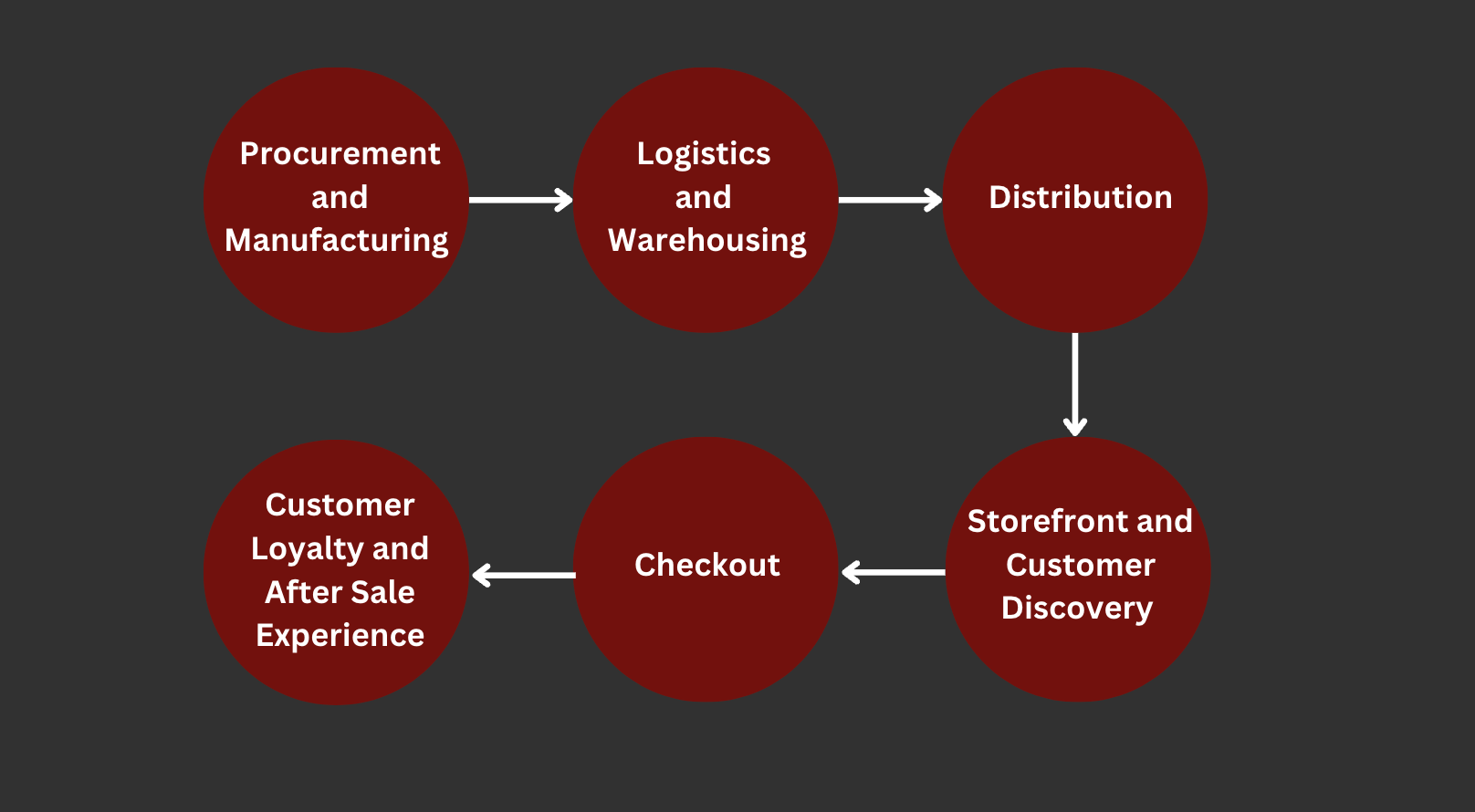
If we look at the entire value chain from the procurement of raw materials until the product reaches the consumer, multiple checkpoints and stakeholders are involved. Below is a brief visual of the value chain.

In this blog, we dive deeper into 2 parts of the value chain – manufacturing and distribution


Manufacturing

Manufacturing is the first step in the supply chain.

The need: Gone are the days when large segments of the population were making do with brands that were available at the nearest store. The segmentation was mostly done on price points and it was a distribution-led era. Today, Indian consumers comprise more granular segments, each with its own preferences. Over the last few years, there has been and will continue to be a proliferation of brands to cater to such segments that are primarily online first. These brands will be at a relatively smaller scale and will need more agile and responsive manufacturing facilities; that can offer good quality products at low (minimum order quantity) MOQs, at low cost and quick turnaround time (TAT). In addition, global commerce has become more decentralized and countries look at different hubs to source and manufacture critical components.

Where we are: While the Indian manufacturing industry has been growing quickly and is amidst rapid transformation, there are still multiple points of friction that persist. The manufacturing sector contributes ~5% to the GDP and India’s export contribution to global trade is only 1.6%. While the government has been pushing to revitalize the sector with initiatives for what is known as modern manufacturing, the infrastructure around it remains mired in the industrial age. However, with multiple tailwinds, India has an opportunity to emerge as a global manufacturing hub; not only are multiple Indian companies looking at manufacturing in their homeland but also international companies are shifting their manufacturing bases here. Electronics manufacturing could expand by 21% to touch $604B by 2032.

The gaps: Many manufacturers still rely on old technology and traditional production methods that lead to inefficient production processes. Most new-age D2C brands require agile manufacturing, with small batches to meet constantly changing consumer preferences and in order to keep up with a highly competitive landscape. Production methods are capex intensive, and to cover costs, manufacturers operate with high volumes, while brands have to struggle to deal with high inventory and long working capital cycles. Outdated machinery and high dependence on manual labour lead to delayed production timelines and inconsistent quality. Limited use of modern technology inhibits the manufacturers from adequate resource planning, monitoring machinery utilisation or inventory planning. This results in longer lead time and therefore lost sales / high inventory for their customers (brands). These are only a few of the multiple bottlenecks that prevent the manufacturing sector from operating productively.

Emerging whitespaces: Today, primary innovation has been on different modes of mechanization and automation. A convergence of digital, biological, and physical innovations, is transforming the entire value chain. It integrates digital technologies like IIoT, AI, cloud computing, advanced industrial robotics and 3D printing with various sectors, enhancing on-ground manufacturing, quality management, supply chain, maintenance, and customer service. These changes in the manufacturing sector have also been tagged under the next revolution of Industry 5.0.

We have identified various segments within the manufacturing value chain that have seen innovation over the last few years and will continue to do so:

  1. Capacity utilisation: Technologies that increase the efficiency of the factory operations and maximise resources at hand such as digital assembly mechanisation, AI-powered process controls, remote production optimisation, energy consumption prediction and collaborative robotics.
  2. Capacity maintenance: Real-time asset monitoring and predictive maintenance to ensure timely maintenance and repair for the long-term durability of factory equipment and machinery.
  3. Quality Management: IOT-led quality management to bring about standardisation within quicker timelines.
  4. Capacity modernisation: New form of manufacturing such as on-demand manufacturing, with lower MOQs and precision machinery to ensure capacity efficiency.
  5. Automated designing and product development: Predictive analytics for product demand, AI-enabled designing, cobot-led product development for sampling and resource planning
  6. Automated fulfilment support: Predictive planning for warehousing and logistics, delivery vendor network management.


We have had the opportunity to speak to different startups across this space such as startups building nano factories with production bots to industrial software providers using AI and IOT devices. We have understood that there is a large scope to optimize manufacturing functions, enabling the factories to build for India and the world. However, few challenges remain around being able to build large outcomes, as key stakeholders in the manufacturing industry are often reluctant to adopt new technologies. We are hopeful that the multiple tailwinds such as high computational connectivity, government-led initiatives, and the influx of AI-ML technologies make it the correct time to build and solve for the inefficiencies in the sector. While it may be a challenging sector to enter, identifying a relevant problem and building with a clear GTM will allow for a compelling new-age startup.


Distribution

The need: Over the past decade, e-commerce has grown from a niche market to a global powerhouse, reshaping traditional distribution strategies and blurring the lines between online and offline retail. As businesses learn to navigate this e-commerce revolution, they must adapt and embrace the changing dynamics of distribution. While multiple start-ups have been set up across various segments of the logistics industry from aggregator to last-mile delivery, in this blog, we focus on the transition between offline and online distribution.

Where are we: The India logistics and distribution market is huge and has undergone significant transformation over the years. Boom of e-commerce, government reforms, changing consumer preferences and evolving tech infrastructure have been propellers of this change. India’s logistics sector would expand at a CAGR of 10%+, from $200 billion in early 2020 to at least $320 billion in 2025. While till a few years back, most distribution channels were offline, it was during the pandemic the different channels of facilitating e-retail took shape. However, today, most businesses are recognizing that customers not only shop online but also want the experience of “touch and feel”. Many online first brands are exploring the offline route. The likes of BigBasket, Lenskart, Nykaa, and MamaEarth have redirected their efforts towards offline channels in a significant departure from their established digital dominance.

The gaps: Offline presence is not merely about brick-and-mortar stores, but also about personalised experiences to their customers. However, strategically establishing their offline presence either via owned stores or shop-in-shop experiences, online-first brands are trying to navigate this new territory. Offline distribution is expensive and brands struggle with successfully identifying the correct distributor, their sales channels, and retailer outlets. Large brands such HUL or P&G have the scale to work with individual distributors and can dictate their final outcome regarding which retailers they want to sell at. However, smaller brands with less than INR 100 crore in revenue have lesser negotiating power and the end-to-end operating costs to get distribution can be as high as 35-50% of their revenue. Getting efficacy from their sales force to get the retailers to stock products and manage the sales force churn are other major issues. Further, there is a demand generation problem, as fighting for visibility in a new environment where there are no targeted advertisements as in the digital world, becomes tough.

Retailers on the other hand have low bargaining power and are left at the hands of the distributors in deciding what products to keep in stores and the amount of inventory to stock. Additionally, the Indian retailer landscape has also evolved – from small brick-and-mortar stores to modern shopping malls, brands can choose multiple avenues to reach their customers. Innovative formats like hypermarkets, luxury boutiques, and shop-in-shop have also gained popularity, further enriching the offline shopping experience.

Emerging whitespaces: Here we have identified a few spaces we feel have the potential to solve for:

  1. Access to new brands for retailers: Allows brands to discover new retailers and even allows access to niche retailers in new geographies. These platforms which work with multiple brands can often club the distribution channels for different brands and help brands select the right retailers thereby reducing costs and achieving higher margins. However, churn of brands may be a potential challenge.
  2. Listing on demand platforms (ONDC): Brands can take advantage of listing through ONDC distributors, especially for products with high AOV and high frequency  .
  3. Additional services: Other services for brands such as payment reconciliation, surplus product disposal, store set-up for modern trade, and improvement of footfall conversion to name a few
  4. Hyperlocal delivery: As a form of replacement for local retailers. Many players have entered this space, especially focusing on grocery.


We have spoken to multiple startups in the aforementioned segments. There have been platforms that look at facilitating brands setting up shop-in-shop outlets and upselling their products, as well as startups that help create SKU bundles and sell the entire basket of products to retailers. While some might focus on a particular segment such as electronics or only T2+ cities, some are more widespread and look at an array of product types or geographies. While building out an early-stage startup in this space, it is key to not only help brands expand their offline presence, reduce inventory held and thereby bring down their distribution costs, but also help with additional services such as vendor management, GNR generation, payment reconciliation etc. Further, the team needs to have strong ops experience and a clear GTM strategy to be able to execute correctly.


Our view

We at Kae, are bullish about the e-commerce enabler system and feel there is vast potential that lies beneath it to tap. With the advent of online marketplaces, mobile shopping apps, and secure payment gateways, consumers have been provided with unprecedented access to a vast array of products and services from the comfort of their homes or on the go. The change has been nothing short of remarkable and has given a host of opportunities for other new-age exciting startups to be created.

We will follow this up with more blogs that trace the development of other enablers along the product value chain. If you’re building in this space, feel free to reach out to me at urvashi@kae-capital.com

The Modern Data Stack

Data Sources

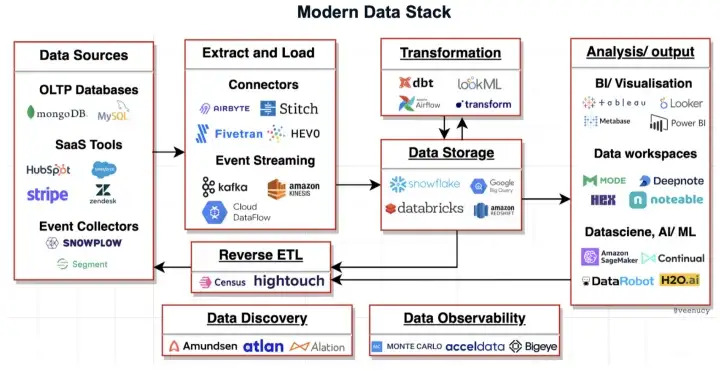
Companies generate a lot of data from different sources.

  • OLTP Databases– OLTP (Online transactional processing) systems handle large volumes of transactional data. It consists of user information and operational data generated by users such as e-commerce purchases and online banking. A standard database management system (DBMS) is an OLTP system. Mysql, mongoDB and Postgres are some well-known databases.
  • SaaS tools– Companies use many SaaS tools to run their business such as CRM tools to store sales, marketing and customer success data (Salesforce, Hubspot), payment/billing softwares (Stripe).
  • Event Collectors– Nowadays every possible touch point with the users is recorded as an event, which is used for analysis. It includes recording every click on websites and apps. Segment and Snowplow are popular choices for collecting events.

Extract and Load

All data from different data sources is extracted and loaded to a centralized data warehouse/ data lake. Earlier, the sequence used to be ETL- data is first extracted then transformed and then loaded into the data warehouse. Now, it has evolved to ELT- data is extracted and loaded into the datahouse and later transformed at the warehouse itself.

Data Storage

Ingestion tools stored the data at a cloud data warehouse or data lake. Data warehouse stores structured data (tables) that can be directly queried for analytics. The popular cloud data warehouses are Snowflake, Google Bigquery and Amazon Redshift.

Data Transformation

After storing the data, it is transformed directly in the warehouse into a structure ready for analysis, which is used by the data science and business team to run different analytics and ML models. Dbt, Airflow and LookML are the most popular transformation tools.

Analysis/ Output

The transformed data can used for different purposes-

  • BI/ Visualisation– These tools enable business users to derive insights. They provide a dashboard view with graphs/ pie charts which facilitates business visibility. Tableau, Looker, Power BI are some popular BI tools.
  • Data Workspaces– These tools make it easier for different users to query, visualize and collaborate on data and create dashboards. Some of the emerging data workspaces tools are hex, deepnote, mode, noteable.
  • Data Science, AI/ ML– Data scientists can run ML models on data with help of these tools. Some of the popular tools are Sagemaker, Continual.
  • Reverse ETL– It syncs back the aggregated data to SaaS tools like customer support, sales and marketing to provide full consumer visibility to business users at their primary software. Census and Hightouch are the popular reverse ETL tools.

Data Monitoring and Governance –

We also need to maintain operational data hygiene. There are three major data ops categories of softwares, which help in reducing the risk, operational complexity and cost of the cloud data-

  • Data Observability– Testing and monitoring pipelines are developed to detect and resolve errors or issues. Monte Carlo, Acceldata and Great Expectations are the popular choices.
  • Data Discovery– Data cataloguing, documentation and discovery so that people can discover the right tables for their use. Atlan, Amundsen, and Alation are the popular tools here.
  • Data Security– Access control and data security to safeguard the company’s data. Control which employee has access to which data. Cyral, Immuta are the emerging tools in this category.
  • Introduction of Data lakehouse by databricks and Unistore by Snowflake- Databricks has introduced the data lakehouse. A data lakehouse combines the flexibility, cost efficiency of a data lake with the data management capabilities of a data warehouse. It is an open data management architecture to enable analytics, BI and ML on all data types.
https://www.databricks.com/glossary/data-lakehouse
https://www.snowflake.com/en/data-cloud/platform/
  • Data Marketplace — Snowflake has become a behemoth and is now adopting a platform approach enabling products to develop on top of it. Idea is companies can use the native application framework to build native Snowflake apps that can be distributed through Snowflake Marketplace. Snowflake customers can discover, evaluate and run the apps in their accounts, removing the need to move data, thereby improving privacy and security. It is enabling customers to bring apps to data rather than moving data to different apps. It eliminates the delay and cost of traditional ETL with direct access to ready-to-query data and pre-built SaaS connectors.
https://www.snowflake.com/snowflake-marketplace/
  • MDSaaS– Modern Data Stack as a service. Data Stack is complex and evaluating tools and setting up the entire stack can be a challenging time taking process. There are low/no-code platforms that provide all the tools needed to go from data sources to interactive dashboards. Some of the emerging startups here are Selfr.io, Octolis.

Unravelling the Portfolio: TranZact

Brief about TranZact:

TranZact is a freemium digitisation software for 14MN+ SMEs Manufacturers & Traders, empowering them by digitising business workflow right from sales to dispatch.
With scalable distribution and engaging software, they are capturing real transaction data, which becomes the foundation to build a transaction-backed marketplace at scale.

Vision and Mission:

Empowering SMEs owners to grow their business through digitisation.
Building a digitisation platform for 14MN+ SMEs to convert their business data into actionable insights.

Genesis:

TranZact started with the idea of creating digital technologies for 14MN+ SMEs, which are still struggling with very old digital technologies. They felt that in today’s era of digitisation, even though the SME space is often ignored, it remains a very large sector, and if there is specific technology built for this space, the impact will be much larger and deeper.

Market Opportunity:

14MN+ Indian manufacturers and traders

5-year Plan:

Going to build a transaction-backed market network platform with over $500MN in revenue coming from multiple revenue streams like software and transactions.

Unravelling the Portfolio: Hatica

Brief about Hatica
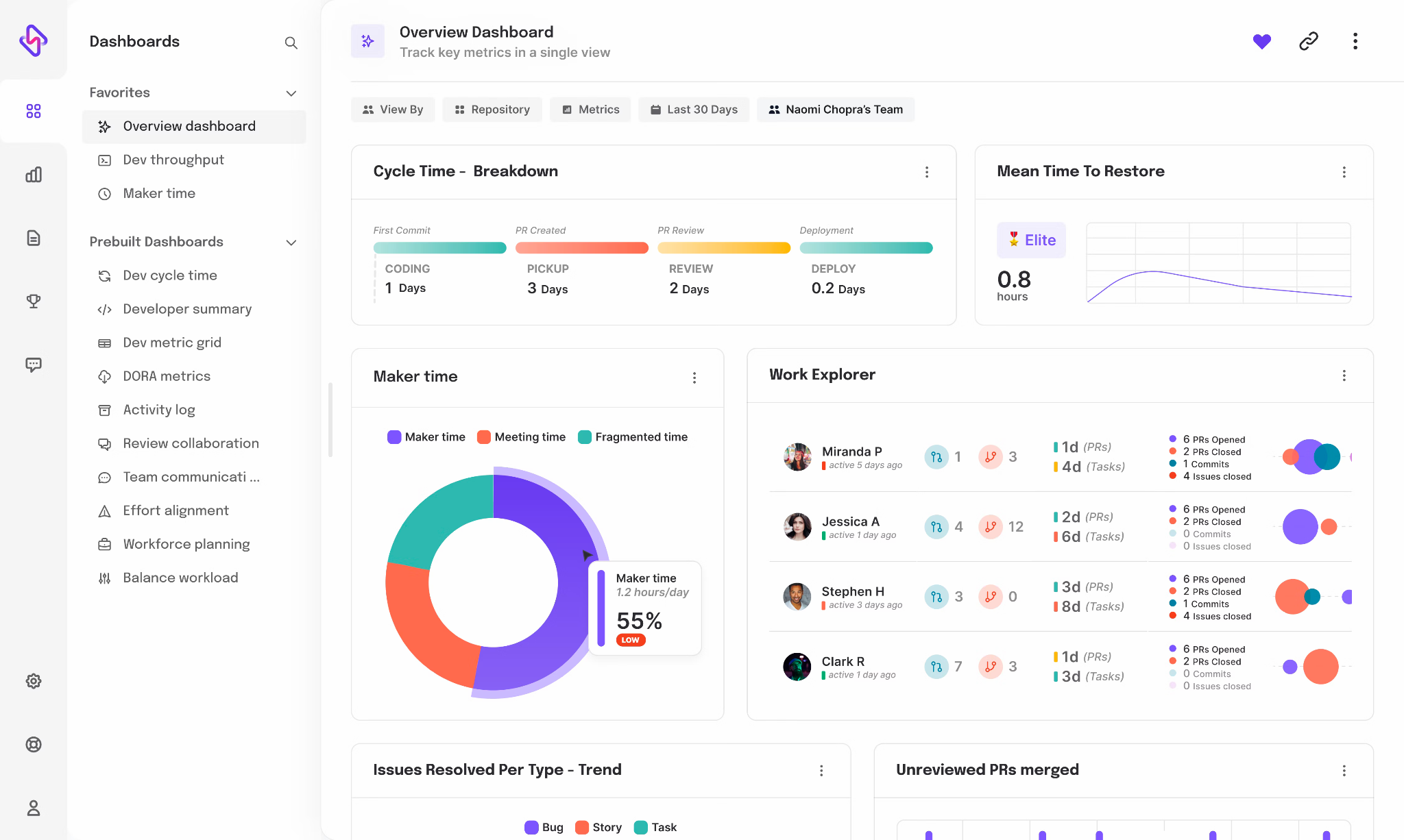
Hatica is a Software Engineering Analytics platform that helps managers and leaders build productive and happy engineering teams.

Vision and Mission
The severe lack of visibility for Engineering managers in a world of distributed teams working across dozens of tools has made the job of engineering management harder than ever before. This naturally results in declining developer productivity and experience.

Hatica’s mission is to equip managers with a comprehensive Engineering management platform to provide them the much-needed visibility and insights into development work activity, processes, and quality to help them drive team productivity while ensuring well-being.


Genesis
The idea came from the founders’ experience of having worked remotely even before the pandemic and having worked through developer productivity challenges before. Followed by countless zoom interviews with engineering leaders, managers, and developers across regions and industries, Naomi and Haritabh completed and launched the first version of Hatica in early to mid-2021.


Market Opportunity
The trend of SaaS sprawl, combined with remote work becoming mainstream, has made engineering management even harder and the problem of developer productivity ubiquitous. This coupled with every organization requiring to be technology-first, driving demand for engineers, has provided us a tremendous pull from the customers with a sizable TAM.

5-year Plan
Go from a sharp Engineering analytics tool to an Engineering Management Platform, empowering every engineering manager and leader out there to drive engineering excellence and wellbeing.

A Guide to Improve and Maximise Developer Productivity: Metrics, Tools, and more


Developers in India are paid INR 410 per hour, on average. It can even touch INR 2000 per hour on the higher side. Despite that, the median code time per developer was found as 52 minutes per day, or four hours and 21 minutes of code time per week

Thus, there is a need for organisations to invest in platforms that help boost developer productivity

Developers have become the biggest ask for tech companies at this point in time. You may be seeing a lot of job openings now, but developers have had the privilege of constant job openings, with or without pandemic woes. The global application development software market is anticipated to reach $733.5 Bn by 2028, expanding at a CAGR of 24.3% from 2021 to 2028, as per Grand View Research, Inc. But while there seem to be so many opportunities for developers, their time presently is not being optimised well. If you want to know how to maximise your developer’s productivity, read ahead!

India’s app developer base is one of the highest in the world with 1.6 Mn jobs in the sector. The resultant websites and apps coming from the sector generated a revenue of $581.9 Bn in 2020.

Inefficient Utilisation Of Developers

The job of a software developer requires them to interact with multiple tools on a regular basis. But the time cost of context switching between tools, collaboration, documentation, version control, and duct taping the issues is quite high. This ends up eating into the employee’s development time.

According to Software’s Code Time Report, the median code time per developer globally was found as 52 minutes per day, or four hours and 21 minutes of code time per week. It was also found that developers spend an additional 41 minutes per day on other types of work such as reading code, reviewing pull requests, and browsing documentation. Thus, there’s a major developer experience gap.

Most companies are ineffectively deploying their developers, throwing various distractions their way. This is supplemented by further disruptions and meetings, as well as system inefficiencies, such as slow reviews, slow builds and bad tools. In order to ensure optimal utilisation of developers, strong dev tools are required. This can bridge the developer experience gap and improve a developer’s experience across the entire workflow.

Importance Of Dev Tools

Dev tools are a range of products focused on developers to help them build, deploy and collaborate on a daily basis. Global companies such as Github, Slack, JIRA, Browserstack, Snowflake, Postman and Datadog have created tools that are used by almost all developers. The dev tools market has made massive strides in the last few years. There are more than 73 Mn developers on Github, with over 16 Mn developers added in 2021 alone.

Snowflake reported stronger than expected Q4 2021 results, with revenue rising by about 117% to $107 Mn. There has been a steady shift from a ‘Build and Buy’ to a ‘Buy and Build’ decision-making mentality. Organisations have become more cognizant of these tools and the value they bring to the table. They are more than willing to invest in platforms that help boost developer productivity. This begs the question, what really caused this perception change?

Impact Of The Pandemic

This slow but steady shift got catapulted by the pandemic. The dev tools market has experienced tailwinds from this increased digital adoption. The pandemic forced teams to work remotely, which deepened the already existing problem of collaboration and communication. Many SaaS tools are being built for the future of work, to make this transition easier. These tools act as a supplement to the present working conditions, thus enhancing productivity.

To get a better understanding of why there’s a need to invest heavily in developers, we need to recognise that while developers have become a staple for tech companies, they are an expensive resource at the same time. On average, developers in India get paid INR 5.2 Lakh per year. This excludes bonuses, profit sharing and commission which are all big components for developers. Calculated on an hourly basis, it comes to INR 410, and even touches INR 2,000 on the higher side. This alone underpins the importance of optimising the developers’ time and helping them.

Thus, there’s a need to back developers and engineers with the right tools. At the same time, there’s a need to have visibility into DevOps. This, when backed by solid numeric data, can give a clear picture of the inefficiencies arising and help in optimising for these specific issues. At the end of the day, high-performing engineering teams are essential for the success of companies as they can release products to market faster.

There is a need for tools that can empower them to manage their daily tasks — context switching, collaboration, etc. in an efficient way. The developer productivity tools market is fast emerging to solve this problem. This would be key to look out for as we go deeper into cross-vertical functions and remote working.

Embedded Ecosystems Built on Motherships Using API Networks/Gateways

Understanding History – Digitization Waves and How They Took Place

The Indian digitization story has been a unique one – the Jio rollout and low smartphone prices led to an unprecedented digital inflection point, which in turn led to rapid adoption in new technology paradigms like mobile first and on-demand (eg. Uber, Swiggy). Large consumer tech companies in Edtech like Byju’s, in E-commerce like Flipkart, heralded the first wave; the emergence of social commerce companies like Meesho and a new wave of SMB SaaS players like Khatabook, Dukaan heralded the second wave.

As a result, various technologies – which include new-age startups/platforms, legacy on-prem and cloud softwares have penetrated different markets creating distinct layers over the years.

If we look at the current landscape, very broadly – there would be three markets categorized by different levels of technology penetration –

  • New age consumer and business technology plays which have been created in the last 5-7 years – think Flipkart, Byju’s, Swiggy as consumer plays; Shopify as business plays
  • Legacy technology products being used primarily by businesses – think Tally, miscellaneous legacy AutoCAD technologies being used by architects
  • Semi-offline markets where smartphone and WhatsApp penetration is high – think Kirana stores and small retail businesses. These are semi-offline because they have reasonable WhatsApp and phone penetration and have recently seen Khatabook, Dukaan adoption.

Each market has seen the emergence of what we may think of as Motherships

Our objective is to identify these Motherships where embedded ecosystems can be built. The future of venture backable businesses will be embedded growth – built on the back of Motherships whose core functionality is limited to one or two use cases. The goal is to significantly expand their use cases and subsequently expand their TAM – by solving for the end-user through functionalities which are difficult to build and scale.

Creation of Embedded Ecosystems on Platforms Solving for Single/Limited Use Cases

We want to make platforms into Ecosystems which give users more reasons to use the platform and drive greater network effects. Potential motherships have 1 or a maximum of 2 use cases – for example, Tally’s main use case is data entry for accounts, Swiggy solves primarily for food delivery and restaurant discovery, or a Khatabook solves primarily for accounting/maintaining ledgers, but each of these platforms is used by a large chunk of the population.

To summarize – A few common traits of motherships

  • They are technologies (software/hardware) which have a reasonable presence/penetration in core industry categories
  • They have 1 or maybe 2 core use cases – and their bandwidth is restricted to these specific use cases
  • There is a potential for new functionality which is not their core competency

Motherships can be single platforms OR multiple distributed touchpoints:

  • Shopify – Single Platform
  • Credit Cards – Distributed across several users

Mapping out possible motherships (this list is not exhaustive, would love your thoughts on this, do write in – sarthak@kae@capital.com)

Building for the B2B2C/B2B2B Users, Where Platforms Face Significant Challenges in Developing New Capabilities/Functionalities

We will notice most platforms have a dominant position in their respective markets, so what is to stop them from developing the functionality in-house?

The counter to the above argument is to tap into those APIs/functionalities which need high bandwidth to develop and maintain. These will be easier to “outsource”/ “unbundle” – and solving for this seamlessly is needed to be done.

Additionally, new functionalities may add a structurally different revenue stream, significantly driving up TAM – Embedded marketplaces, Embedded NFT gateways are strong examples of such functionalities.

The possibility to charge per API call opens up potentially massive markets with highly scalable models.

The new functionalities can include (and are not limited to) –

  • Embedded product marketplaces for procurement – imagine excel sheets/Tally with an embedded marketplace, where building supply is a challenge
  • Embedded service marketplaces
  • NFT/Blockchain functionality which requires high processing power/costs
  • Deep learning which requires high processing power/time, very deep expertise
  • Cybersecurity
  • Reverse Fintech – Fintech players/Fin. Institutions being used to distribute other products/services

Embedded Marketplaces, Deep Learning, Blockchain – and then some more!

These are some of the plays which we are exploring, and we would love to hear from you if you are building something out in this space.

We are particularly interested in discovering –

  • Embedded Tools (for Eg. NFT API Tools, Cybersecurity API Tools, Deep Learning API Tools) being built on B2B Marketplaces

AND

  • Embedded B2B Marketplaces on commonly used SaaS/Software tools like Excel, Tally (including platforms like Khatabook maybe!)

Similarly, Embedded tools built on Consumer/Prosumer Platforms/Marketplaces are of interest as well.

If you feel you are working on something of this sort, or know someone – we would love to speak to you!

Do write to sarthak@kae-capital.com
Booming Indian SaaS Ecosystem

Indian SaaS ecosystem is at the cusp of transformation. According to Nasscom, India’s total SaaS revenue breached the $3.5 billion mark as of March 2020, growing at a CAGR of 30% and the SaaS industry has the potential to grow 6X to $13-15 billion by 2025. Indian SaaS has evolved into a multi-billion dollar industry today with startups raising growth capital from both domestic and international VCs. Homegrown B2B companies like Zoho, Freshworks, and Chargebee have become top global companies, which reinstated the confidence of investors in the Indian B2B SaaS business. Indian SaaS startups are now getting valuation multiples at par with global peers.

At Kae Capital, we are very bullish on India’s SaaS potential and have been investing in SaaS since 2012. Around 25% of our portfolio consists of SaaS startups. We were the first institutional investor in SaaS startups like Mayadata, Hippo Video, and Disprz. Our broad thesis on SaaS has remained built from India for the world and founders with unique insights about the market. (Please write to veenu@kae-capital.com or gaurav@kae-capital.com if you are building interesting SaaS businesses and want to have a discussion)
Sales Stack- The pandemic has accelerated the adoption of Remote Selling

Sales stack existed long before the pandemic and the pandemic has only accelerated this evolution. With the advent of remote work globally, we are forced to work from our homes and companies are looking for solutions to work and collaborate with their globally scattered employees. Managers are looking for solutions to onboard, train, monitor and increase the productivity of their remote teams.

The set of softwares have evolved to meet the needs of the sales team. The Sales Stack is a set of softwares that teams can use to ensure that Sales, Marketing and Growth are aligned and able to efficiently work together to maximize revenue.

Pandemic has increased the need for such softwares to manage remote teams efficiently, which has led to evolution of many startups focusing on revenue teams. According to Gartner, by 2025 80% of B2B sales interactions between suppliers and buyers will occur in digital channels and 60% of B2B sales organizations will transition from experience and intuition-based selling to data-driven selling. Sales teams across the globe embraced the new normal and learned to collaborate and sell digitally with the help of different technology solutions.

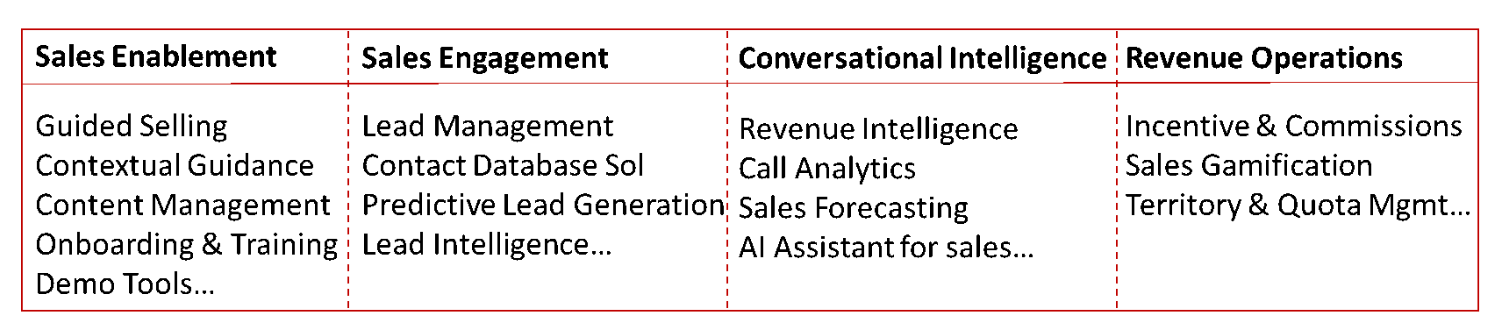
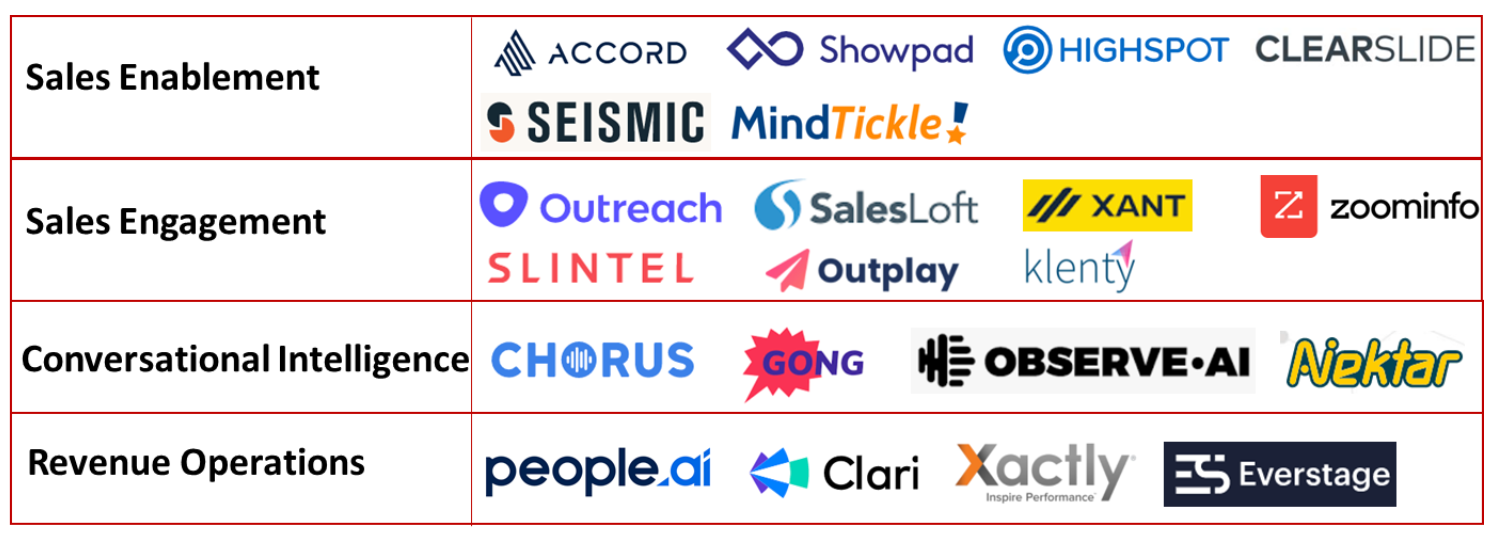
Sales Stack can be broadly categorized into four interconnected functions-

Sales stack works on top of systems of records like CRM and systems of communications/engagement like Zoom, Slack, and LinkedIn.

  1. Sales Enablement– It is the core of the sales stack, it enables the sales team with the content, guidance and training to perform their job effectively. It helps reps understand what to know, say and show to the prospects.
  2. Sales Engagement– It equips sales reps to reach and communicate with customers in a personalized and efficient way. It helps reps send the right information to the customer and keep track of actions on the leads.
  3. Conversational Intelligence– It helps managers monitor and interpret the conversations of reps and prospects. It is helpful in identifying the areas of improvement for reps. Simply put, it helps to listen and learn from sales calls.
  4. Revenue Operations– It is an end-to-end business process to provide transparency across marketing, sales, and renewals. In simple words, it streamlines the processes to align revenue teams, providing them with better visibility of the sales funnel.
We at Kae Capital are very keen on the sales stack. We have been analyzing this space for quite some time, there are many startups that emerged in the last year. Startups are working on land and expand strategy, entering with a piece of problem in the above four core functions with an aim to eventually provide integrated offerings for the entire sales stack. We believe a product-focused team with unique insights about the target category can tap this expanding opportunity. If you are building a sales stack software or intrigued to have a discussion, do write to me at veenu@kae-capital.com

Claim Processing Engines with Healthcare Delivery Networks

The vision to build a seamless link between healthcare delivery and insurance remains the goal

This is a topic which is of great interest in investing circles – health insurance; however, in order to paint a holistic picture, it has to be seamlessly integrated with healthcare delivery. India is notorious for heavy out-of-pocket expenses and a terribly inefficient claim settlement landscape – out of the USD 110bn+ healthcare market in India, IPD spends would amount to around 40-45% of which only USD 5-6 bn are processed in claims, indicating significant headroom for growth; and despite a large chunk of the market spends in OPD, the OPD insurance piece is completely untapped thus far. One of the major pain points to solve for in order to unlock value here is the claim settlement process – the vision is to make every settlement function and feel like a cashless claim.

Private insurance has been growing at 23-25% CAGR over the last few years – people are solving for distribution; however, the claim settlement piece remains to be solved, but this has to be done in tandem with creating a healthcare delivery network at the back

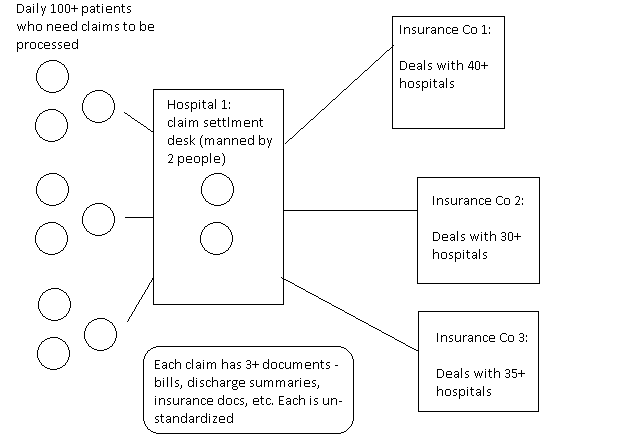
A healthcare provider network is critical to solving for cashless insurance claims while ensuring standardized healthcare delivery in the process. Patients are plagued with a very stressful journey in settling claims – managing documents, bills, and low visibility across the process. Hospitals need fast claim processing with minimum deductions and also suffer from poor visibility on the TPA process. Insurance companies need a broad healthcare delivery network to increase their premiums and lower operational costs during claim processing which is currently very manual.

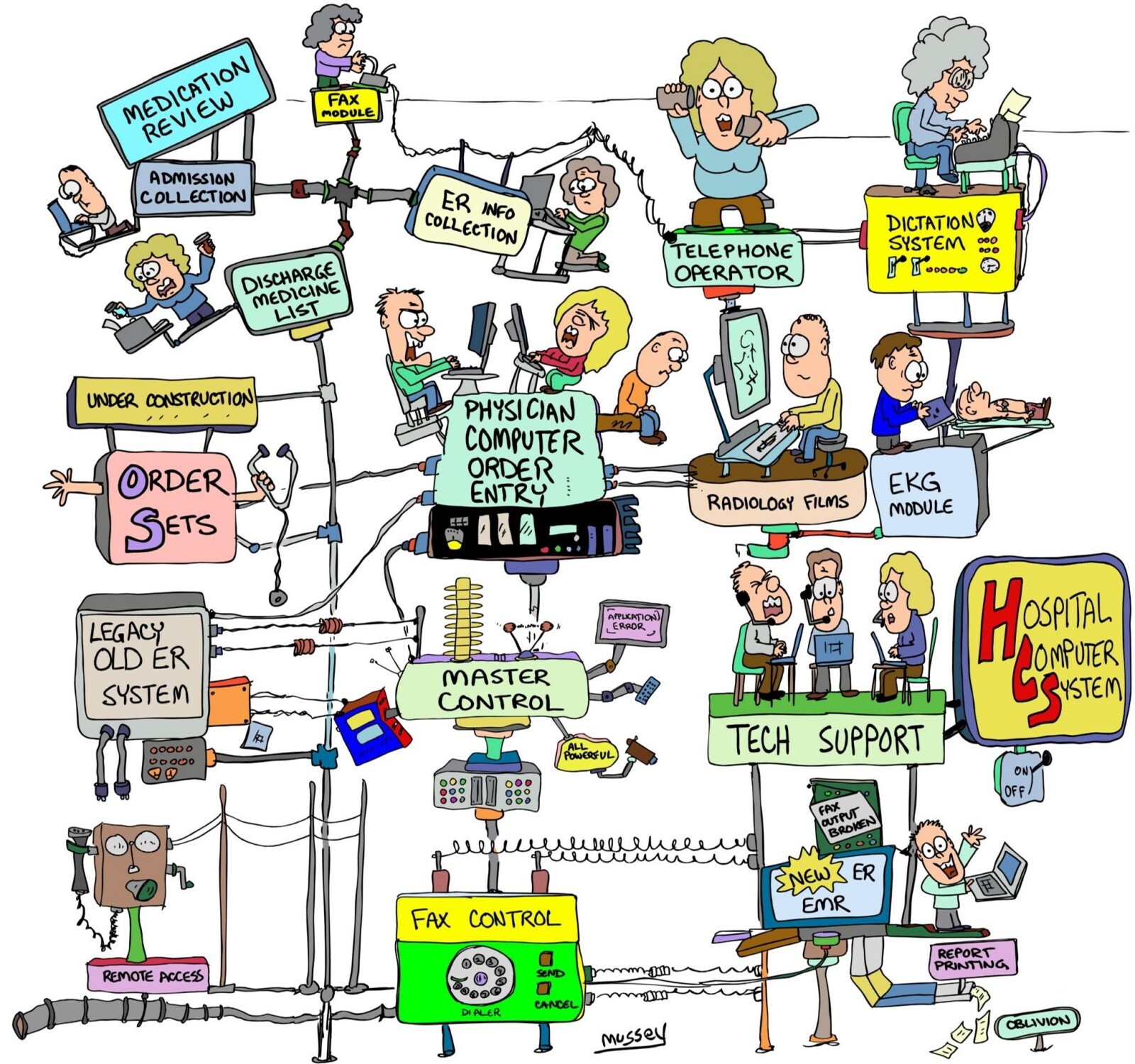
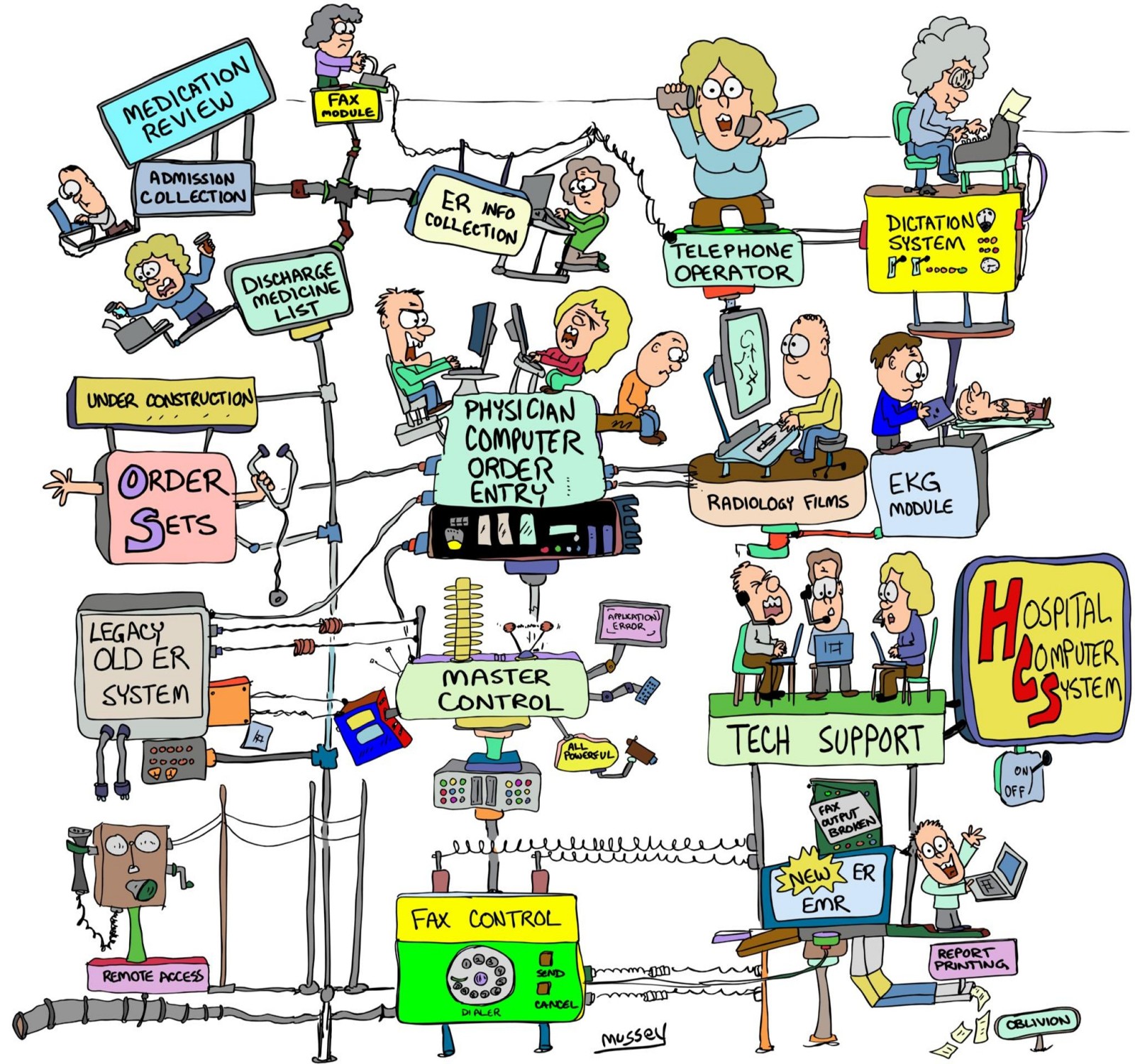
The current workflow in settling claims is severely impaired ->

The TPA desk at any hospital is manned by 1 or 2 people who in turn have to address hundreds of unique claims on a daily basis from the customers/patients and have to coordinate this with 30+ TPAs on the other end with each having their own guidelines. Similarly, Insurance cos and TPAs need to reconcile the billing information, discharge summaries, and insurance documents of different hospitals and process the claims manually – neither the hospitals nor patients have any visibility on which stage the claim is at.

There is an urgent need to solve for an automated claim processing engine with seamless information flow between the different stakeholders on a singular platform -> the patient, the hospital and the insurance company so that TATs in claim settlement can be reduced, deductions can be reduced and a patient can have a seamless experience from hospital selection to discharge, the hospitals can settle claims in a speedy fashion and insurance companies get a strong healthcare delivery network to maximize premiums.

Using technology to integrate hospitals and insurance cos on one platform is very difficult and business model positioning is complex

Since it is clear all three stakeholders need to be integrated on one platform for seamless communication and processing, there arise some critical questions which need to be addressed -> Will the start-up be positioned as a claim processing engine with a network of healthcare delivery providers in the backend and if that is the case, who will the core customer be?

By positioning as a claim processing engine with a network of hospitals at the backend, does the business model build a large enough outcome? The odds are that start-ups will charge a take rate for every claim processed. From our research, this seems to draw anywhere between 2-4% take rates which may limit the size of the opportunity, however, there seems to be a case for generating strong leads for hospitals which convert to procedures/tests for the hospital where an 8%+ take rate might work.

We are looking for companies who have unique insight into cracking the technology integration piece across all the stakeholders

Platformization of the communication and processing of claims seems to be plagued with very high adoption friction across stakeholders. The following become possible channels to drive adoption:

· The insurance companies (and TPAs) themselves –There are a limited number of health insurance providers with even fewer having a high willingness to adopt technology – seems like a tough sell on the legacy players; new age players with a tech DNA might be a low-hanging fruit.

· Hospitals – Will be a tough sell whichever way we look at it, it is common knowledge that changing/upgrading HMS systems in hospitals itself is an uphill task – making it a difficult proposition for new-age tech adoption.

Thinking out of the box to crack technology integration

· HMS systems – Since all data integrations with hospitals need to start from the hospital HMS, another viable option may be to tap into HMS cos – a single HMS provider might have access to 5k-7k hospital beds across different hospitals.

· WhatsApp – With initial indications of health start-ups having demonstrated Whatsapp-first approaches to onboarding and activating doctors, there may be a case for interesting claim processing engines being built atop of Whatsapp in a way which seamlessly connects across all stakeholders

With so many questions and such few answers, we feel putting out our thoughts will help us get some closure on the open questions surrounding a unified healthcare and insurance play.

We are on the lookout for a solution which can be adopted with minimum friction and has a scalable monetization model – if you feel you have cracked/or have insight into a stronger business model, we would love to hear it!